Hedi Kaddour - Waltenberg
Здесь есть возможность читать онлайн «Hedi Kaddour - Waltenberg» весь текст электронной книги совершенно бесплатно (целиком полную версию без сокращений). В некоторых случаях можно слушать аудио, скачать через торрент в формате fb2 и присутствует краткое содержание. Год выпуска: 2009, Издательство: Vintage, Жанр: Современная проза, на английском языке. Описание произведения, (предисловие) а так же отзывы посетителей доступны на портале библиотеки ЛибКат.
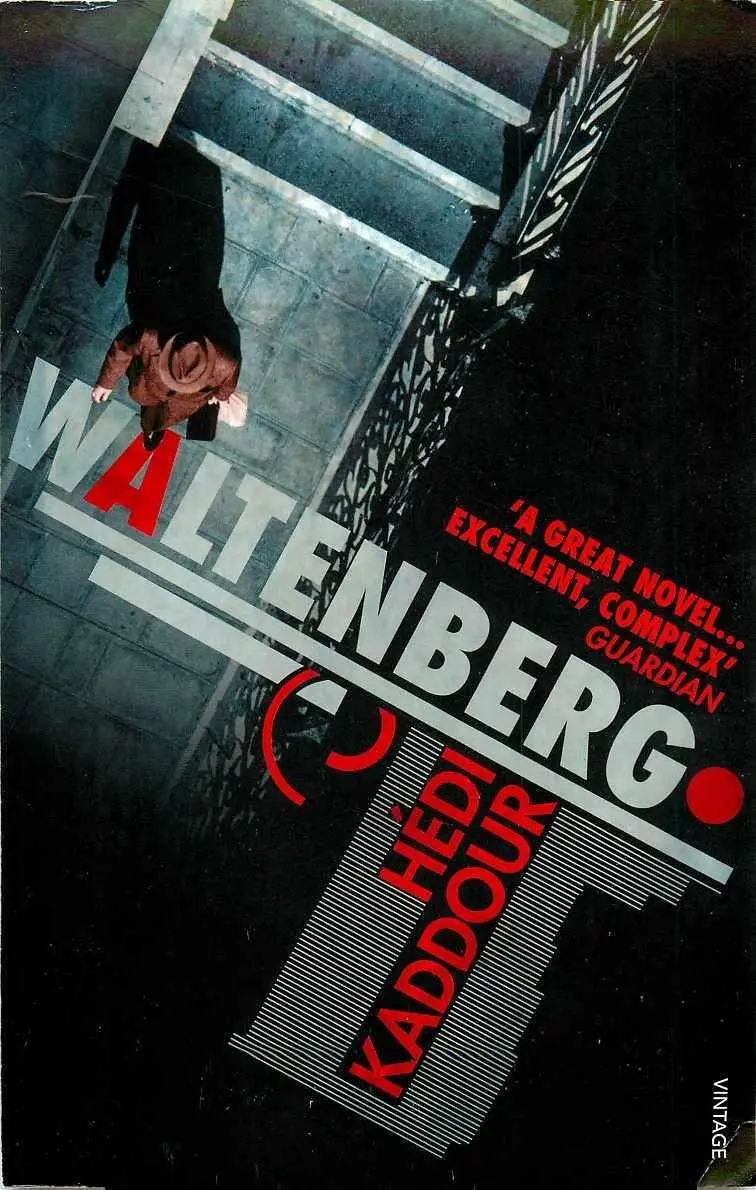
- Название:Waltenberg
- Автор:
- Издательство:Vintage
- Жанр:
- Год:2009
- ISBN:нет данных
- Рейтинг книги:3 / 5. Голосов: 1
-
Избранное:Добавить в избранное
- Отзывы:
-
Ваша оценка:
Waltenberg: краткое содержание, описание и аннотация
Предлагаем к чтению аннотацию, описание, краткое содержание или предисловие (зависит от того, что написал сам автор книги «Waltenberg»). Если вы не нашли необходимую информацию о книге — напишите в комментариях, мы постараемся отыскать её.
Waltenberg
Waltenberg — читать онлайн бесплатно полную книгу (весь текст) целиком
Ниже представлен текст книги, разбитый по страницам. Система сохранения места последней прочитанной страницы, позволяет с удобством читать онлайн бесплатно книгу «Waltenberg», без необходимости каждый раз заново искать на чём Вы остановились. Поставьте закладку, и сможете в любой момент перейти на страницу, на которой закончили чтение.
Интервал:
Закладка:
De Vèze stops by the water’s edge, life was good, it was inevitable that Bantam Bum would have turned up at the Embassy sooner or later, no, it had all started much earlier, much earlier, one day in Moscow or Berlin or Prague a bureaucrat had pulled out de Vèze’s file and added a note recommending that he should be made the target of an operation, the note was circulated, it rose higher and higher until it reached the level at which the decision was taken.
Alternatively, someone high-ranking said find me a target, and the order went all the way down to the minor bureaucrat who sent de Vèze’s file back up, and it was de Vèze who had beaten off the competition from other contending files, something to be proud of, he was made a target, he’s certain of it, they used him for a propaganda operation, otherwise they’d never have allowed him so much freedom in Moscow, with Vassilissa, the French security services won’t admit it but he is certain he has been the object of what is called a ‘treatment’.
And now the French too are giving him the ‘treatment’, but as if he were a minor story, whereas he is certain he was at the centre of the plot, it ought to have been enough to leave him at his post in Moscow and see what happened, they might have learned a great many things, they might have made the people on the other side believe that France had known all along, that all they’d been given was duff intelligence, they could have turned the operation round, but no, the clique now in charge took the opportunity to eliminate a Gaullist, the new clique, the heirs of Pétain and the OAS, they’d wanted his hide for a long, long time.
Or again: it was the mole himself who’d fingered him, that’s it, had the mole run into him one day in Singapore? In Moscow? Or here in Paris? It was he who had written the note, who had flagged up de Veze’s name for a possible propaganda operation, de Vèze had been under surveillance since the middle of the 1960s, and one day he’d been used to protect the mole, de Vèze spoke about all this in Paris, he had been listened to, highly ingenious, one of the committee members said it was the stuff of high art, thinking of how to protect the mole even as he was being planted, with de Vèze as circuit-breaker and Berthier as fallback, and anyway the whole thing was a shambles.
And now? go away? or write a book he’d want to read? not enough money to buy a boat, I don’t even have enough money to live off, I’ve resigned, it’ll be years before I start getting my pension, someone cannier would have negotiated some sort of paid part-time contract, have to look for a job in business, won’t have time to write.
Thirty years, all of them defunct, de Vèze is now level with the Petit Pont, no, the Pont au Double, you’re mixing them up, the Petit Pont is the one before, the one that leads to the Hôtel-Dieu, the wind sweeps the slates of the buildings clean, their roof-ridges too, everything is clear and bright, a man stands in profile, facing the river, grey overcoat, very worn, houndstooth cap, an old man, virtually a tramp, he leans on his stick looking distinguished, his eyes are fixed on the opposite bank, Notre-Dame.
De Vèze halts, thinks he is closer to this man than to his own youth, and if I’ve got time to look at him it’s because I am now nothing, the currently powerful right has got rid of a Gaullist, even the Americans must have been consulted, for de Vèze it’s the end of everything, he is certain that his Minister and the President wanted to keep the Americans happy, in particular the CIA man they talk about, Walker, the whatsit-thrower, they gave him the head of a Gauilist to keep him happy.
The end of everything, de Vèze wonders if he should try to get even, if I get even will my revenge have also been planned by whoever landed me in this mess?
At the far end of the Pont au Double, just before the square in front of Notre-Dame, a number of teenagers are roller-skating, they’ve set up rows of empty Coca-Cola cans, they slalom at crazy speeds through the cans, hardly ever knock one over, it’s virtuoso stuff, they are virtuosos.
Still facing the Seine, the old man has not moved, grey coat, stick, cap, almost a tramp, suddenly he cries out:
‘ On les aura ! We’ll get them!’
Chapter 7. 1965, The Uses of Croquet
In which Max Goffard meets up once more with his author in Singapore and recalls the Riff wars.
In which de Vèze speaks of Bir Hakeim and decides to seduce a young woman who reads novels.
In which you rejoin Lilstein at the Waldhaus Hotel so that you might share with him the scruples of a Paris-based spy.
In which Lilstein reassures you by relating the history of Tukhachevsky.
In traditional organisations, self-esteem always begins as a provocation.
René Fraimond, La Fin du monde ruralSingapore, July 1965
The grounds of a large house, pre-dinner drinks are being served.
The guest of honour, the man de Vèze admires is not here yet. There are a good half-dozen of them waiting for him on the lawn, the French Consul at Singapore and his lady, two other diplomats both over thirty, one grey with a beard like a monkey’s arse, the other pink in a salmon shirt with a double-barrelled Christian name. Also just arrived are a young historian very much in vogue, Philippe Morel, and his wife Muriel.
The most striking figure in the group is a man relatively advanced in years, quick movements, old-fashioned monocle, very sprightly, brings to mind a comic character in a play, the engaging con man, jug ears, he plays to the gallery while they wait, he has introduced himself to de Vèze: I am Baron de Clappique.
De Vèze would never have believed that there had actually been such a person as Clappique.
‘It’s not his real name,’ whispers the Consul, ‘actually he’s a journalist, Max Goffard, he’s promised me he will behave himself, but he’s getting restless, he came expressly to meet our guest of honour, spring a surprise on him, I thought it would be a good idea to bring them together, they’ve known each other for ages, but our Monsieur Goffard has decided he wants to be called Clappique, I’m afraid there might be trouble.’
The journalist steps up his brusqueness.
‘Ears, lie down! They are radar dishes not cauliflowers, for years I was called ‘Cauliflower’, I fought the first war with these cauliflowers, it was modern technology that saved me, I went through the second with my radar receivers, the war-correspondent’s ultimate weapon! ah yes, I remember the soldiers in their red trousers, the summer of 1914, the Cossacks already close to Berlin, the Germans surrendering for bread and butter, and yesterday morning Johnson decided to unleash his B52s on Vietnam, it’s a funny old business!’
Everyone on the lawn is outraged, the Americans haven’t understood a thing, they’ve got to be stopped one way or another, or at least restrained.
The Consul has told de Vèze in confidence that the journalist fought all through the First World War and that in 1918 he was the only survivor of his whole Company.
‘But the experience didn’t turn him into a stay-at-home, did you know he was also one of the survivors of the Hindenburg disaster? Not easy, not easy at all. Between the two world wars he wandered round the colonies, Morocco especially, the Riff wars in the 1920s, they called him “African” Goffard. Ask him to tell you about it,’ said the Consul, drawing on his meerschaum pipe, ‘then maybe he’ll stop calling himself Clappique.’
At seventy, Max Goffard is back in Asia again, working for a news agency.
‘Yeah,’ says he, ‘I don’t know if you’re like me but I can’t take Paris, the banks of the Seine, for a more than a week, that’s my limit, so off I toddle to Vietnam, the last of the colonial wars, I’ll have seen them all, all their struggles for independence since the Riff, the inter-war years, too right, that was a real war too, they were in a sense the forerunners, with some habits left over from the old days, not in the best taste, Vietnam is the end of an era, I’ve come full circle, I also wanted to go to Peking, but no visa, and no one intervened to help me get one, I’m not liked everywhere, people complain that I cast a shadow.’
Читать дальшеИнтервал:
Закладка:
Похожие книги на «Waltenberg»
Представляем Вашему вниманию похожие книги на «Waltenberg» списком для выбора. Мы отобрали схожую по названию и смыслу литературу в надежде предоставить читателям больше вариантов отыскать новые, интересные, ещё непрочитанные произведения.










Обсуждение, отзывы о книге «Waltenberg» и просто собственные мнения читателей. Оставьте ваши комментарии, напишите, что Вы думаете о произведении, его смысле или главных героях. Укажите что конкретно понравилось, а что нет, и почему Вы так считаете.