Hedi Kaddour - Waltenberg
Здесь есть возможность читать онлайн «Hedi Kaddour - Waltenberg» весь текст электронной книги совершенно бесплатно (целиком полную версию без сокращений). В некоторых случаях можно слушать аудио, скачать через торрент в формате fb2 и присутствует краткое содержание. Год выпуска: 2009, Издательство: Vintage, Жанр: Современная проза, на английском языке. Описание произведения, (предисловие) а так же отзывы посетителей доступны на портале библиотеки ЛибКат.
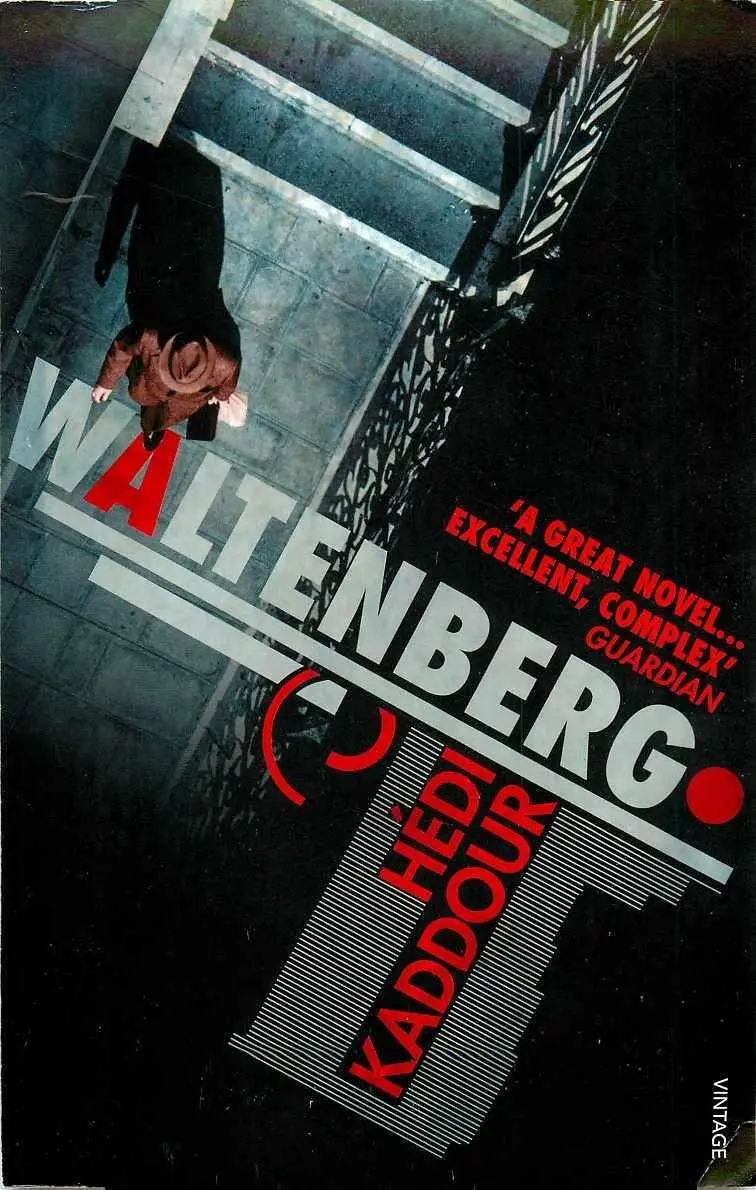
- Название:Waltenberg
- Автор:
- Издательство:Vintage
- Жанр:
- Год:2009
- ISBN:нет данных
- Рейтинг книги:3 / 5. Голосов: 1
-
Избранное:Добавить в избранное
- Отзывы:
-
Ваша оценка:
Waltenberg: краткое содержание, описание и аннотация
Предлагаем к чтению аннотацию, описание, краткое содержание или предисловие (зависит от того, что написал сам автор книги «Waltenberg»). Если вы не нашли необходимую информацию о книге — напишите в комментариях, мы постараемся отыскать её.
Waltenberg
Waltenberg — читать онлайн бесплатно полную книгу (весь текст) целиком
Ниже представлен текст книги, разбитый по страницам. Система сохранения места последней прочитанной страницы, позволяет с удобством читать онлайн бесплатно книгу «Waltenberg», без необходимости каждый раз заново искать на чём Вы остановились. Поставьте закладку, и сможете в любой момент перейти на страницу, на которой закончили чтение.
Интервал:
Закладка:
And you know that you will pass on this intelligence to Lilstein.
The President walks you to the door of his office, his tone is kindly:
‘There’s someone here who would benefit greatly from talking to you, it would do her good, broaden her ideas, she has a difficult, a very wearing job, her horizons are narrow, true she loathes you, I know you never called her Lady Piddle, but I’ve heard about one very coarse word; she deliberately provoked you but it surprised me coming from you, I never realised you had such a short fuse, and now she hates you.
‘She says terrible things about you, though she doesn’t really believe them, I’d like you to have a few sessions with her, I like the people around me to get on with each other, true you don’t come here often anyway, now you mustn’t start taking offence, you know how fond I am of you, I try to keep it simple, you’re the only one who refused to go with me to Africa, I know some who’d strangle their mother and father to go hunting with me, I’m not asking that, and I forbid you to tell Chagrin what you tell me, I want exclusive access to you, or don’t talk to her, that’s all right too, and when you’re next in Switzerland you could try to be a tiny bit less brilliant, is that so hard? Will you come to dinner on Saturday? I command you!’
*
On the quais de Vèze continues his walk, he starts laughing to himself, a memory of that evening in Singapore in 1965, he remembers a gag, a practical joke that was played on him during dinner, he never found out who was responsible, he suspected Jug Ears of setting him up.
But he never succeeded in finding out who had played that damnable trick on him. It might even have been the man whom de Vèze admires, the guest of honour, no, it couldn’t have been. Besides, the man de Vèze admires told the story of that dinner party in 1965 in one of his books, de Vèze was rather put out not to have been mentioned, the book said most about Jug Ears, spoke of him with affection, whereas in fact he had behaved very ungraciously with the man de Vèze admires, at one point they’d been on the verge of having a rather serious incident.
But basically, in the book, Jug Ears and the man de Vèze admires see more or less eye to eye, the man does not actually say ‘The Great Adventure is buggered!’ but in his introduction he does observe that comedy is as important in history as tragedy, that the presence of comedy is everywhere irrefutable and as elusive as a cat, that the Great Adventure is now just an empty apartment, that thought can never cancel time’s lease, he is on the verge of pronouncing the end of History.
As he turned the pages, de Vèze thought it was all beginning to sound rather grim but here and there he caught echoes of what he had felt that evening in Singapore in 1965, words spoken from sheer enjoyment which buzz like bees in a hedge seen against the sun.
De Vèze continues walking along the quais of the Seine, he is beginning to feel tired, he remembers the Kessel book, just when everything seemed to have sorted itself out, try to find the bookseller again, buy Wagon-lit, he hadn’t been fair, ‘I felt the thrill of the fever’, you can’t get by without clichés and books of that kind have their uses, people say I could write as well as that, that helps, everyone knows what it is to have had the thrill of a fever.
Now Lord Jim or Typhoon are a different kettle of fish, but you feel so slow-witted, that is the paradox of Conrad’s novels, when you’re into them you feel both happy and stupid, and to be happy you forget you’re stupid, it’s only if you, personally, want to write that it comes back and hits you. De Vèze has a great many books, almost as many in Moscow as in Paris, often he has two copies of a book, he’s always taking books to Moscow and when he feels like dipping into any of them in Paris he buys another copy.
And every evening always the same problem, which book to read before he goes off to sleep? Thousands of books within easy reach and not one to suit his mood, to help him make his peace with his own breathing even if it’s only for a moment, something light to read before he drops off, every evening de Vèze runs his eye over the shelves of his library, a friend once told him if you’ve never bought a house in the country it’s because you’ve got one here, on your bookshelves.
A partiality for fiction especially, these last few years, and all this so he can have something he can read or reread, he would hesitate, pick up a tome, read a page, put it back, hum-and-ha for maybe an hour while the moment for sleep passed, comes the evening and nothing takes his fancy, La Route des Flandres for instance, during the day he can get absorbed in it, saying he’s not to be disturbed, but in the evening, he can’t find a thing to read, to be fair he doesn’t know what he wants exactly, one day he made a particular effort with an assistant in a Latin Quarter bookshop who was pressing him.
In the end he said I want a novel full of action with a happy ending, the young woman looked at him with a smile:
‘You want him to get married? Or earn a lot of money? Or both together?’
She answered her own question:
‘I’m afraid we don’t have anything like that, or else if it’s a classic you want, how about War and Peace? ’
‘Yes,’ said de Vèze, ‘that ends fairly happily, after twelve hundred pages the heroine has got fat, she has acquired homely tastes, takes up needlework and treats her hubby like her teddy bear, Natasha she’s called, puts on twenty kilos, but all women end up fat, you’re right, I’ll have a copy of War and Peace.’
‘You’ll find it on the shelves,’ the girl said frostily.
Then, more winningly:
‘Unless you prefer it in the deluxe Pléiade edition?’
‘No, I’ll go on browsing,’ said de Vèze.
He asked her where the crime novels were kept, crime fiction is simple, you just turn to the last page, not the back of the cover but the last page of the story, and you can see at a glance if it ends happily, then the first page, for how well the plot is set up, two basic conditions, and if he has time de Vèze skims two or three pages in the middle, to get the rhythm, the tone, as he did with the Kessel, ten years ago he was able to read an Ellroy last thing, even the murkiest of them. He can’t do that any more, nowadays he can read them during the day, especially when he’s travelling, but not the evening, in the morning an Ellroy works well, a whack with a baseball bat in the crotch or a headless woman, it inoculates you against pity and terror, you shut the book and you can go forth and confront the denizens of the new day with a soul that’s been fortified.
But no way can he read The Black Dahlia late at night, so how did you manage it ten years ago? Ten years ago you could read James Hadley Chase, in one of those crime novels this guy has a model train layout, he rapes a woman on it, the woman could feel a part of the station dig into her shoulder, it must have been Miss Callaghan Comes to Grief, someone punished a girl by pouring turps over her pubis, it took her a few moments to grasp what was happening, the idea is to rid yourself of feelings of pity and terror with turpentine tales before you drift off into sleep.
You didn’t like sleep, you fell into it still clutching a James Hadley Chase or a James Ellroy, bur nowadays you can no longer cope with violent crime thrillers before going to sleep, it means you no longer need to be inoculated against your dreams, you’re not afraid of sleep any more, that’s progress, so why do you spend an hour lingering in front of your books every night? you’re not afraid of your dreams any more and you can’t get off to sleep, and in the morning you find it harder and harder to get started, you stay up too late, you’re losing your inner buoyancy, hundreds of bloody books within easy reach and you can’t even find one in the whole mountain to keep your pillow company for half an hour, except, for the umpteenth time, Les Secrets de la princesse de Carignan.
Читать дальшеИнтервал:
Закладка:
Похожие книги на «Waltenberg»
Представляем Вашему вниманию похожие книги на «Waltenberg» списком для выбора. Мы отобрали схожую по названию и смыслу литературу в надежде предоставить читателям больше вариантов отыскать новые, интересные, ещё непрочитанные произведения.









Обсуждение, отзывы о книге «Waltenberg» и просто собственные мнения читателей. Оставьте ваши комментарии, напишите, что Вы думаете о произведении, его смысле или главных героях. Укажите что конкретно понравилось, а что нет, и почему Вы так считаете.