Hedi Kaddour - Waltenberg
Здесь есть возможность читать онлайн «Hedi Kaddour - Waltenberg» весь текст электронной книги совершенно бесплатно (целиком полную версию без сокращений). В некоторых случаях можно слушать аудио, скачать через торрент в формате fb2 и присутствует краткое содержание. Год выпуска: 2009, Издательство: Vintage, Жанр: Современная проза, на английском языке. Описание произведения, (предисловие) а так же отзывы посетителей доступны на портале библиотеки ЛибКат.
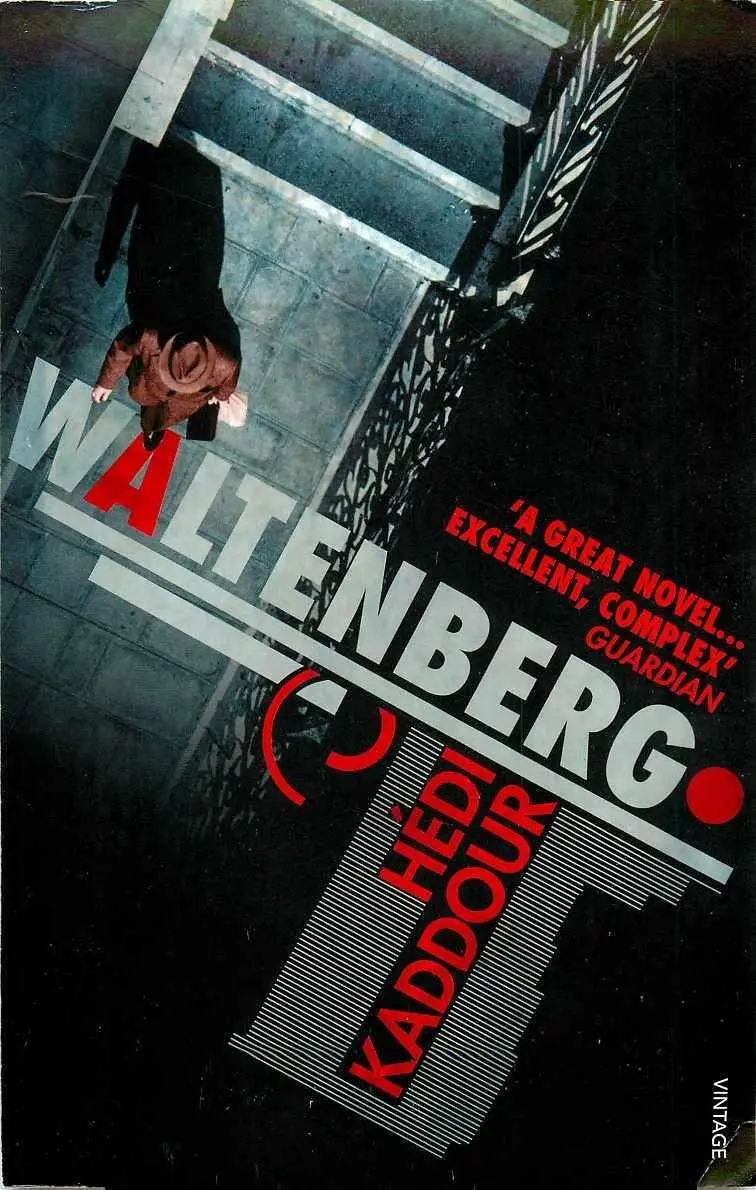
- Название:Waltenberg
- Автор:
- Издательство:Vintage
- Жанр:
- Год:2009
- ISBN:нет данных
- Рейтинг книги:3 / 5. Голосов: 1
-
Избранное:Добавить в избранное
- Отзывы:
-
Ваша оценка:
Waltenberg: краткое содержание, описание и аннотация
Предлагаем к чтению аннотацию, описание, краткое содержание или предисловие (зависит от того, что написал сам автор книги «Waltenberg»). Если вы не нашли необходимую информацию о книге — напишите в комментариях, мы постараемся отыскать её.
Waltenberg
Waltenberg — читать онлайн бесплатно полную книгу (весь текст) целиком
Ниже представлен текст книги, разбитый по страницам. Система сохранения места последней прочитанной страницы, позволяет с удобством читать онлайн бесплатно книгу «Waltenberg», без необходимости каждый раз заново искать на чём Вы остановились. Поставьте закладку, и сможете в любой момент перейти на страницу, на которой закончили чтение.
Интервал:
Закладка:
The commanding officer gives a sign to an SS man who steps forward, chalks a mark on the inside of the windscreen, my regards, Madame, and my unalloyed admiration, he clicks his heels, points to the chalk mark, that will ensure you won’t be bothered again, he then limps back towards the next vehicle, Lena sets off again.
Two days later Ulrich is sent for by Goering, three generals are there, Goering curtly: Lieutenant Ulrich, when an officer of my Luftwaffe has his eye on one of the most alluring weapons in the enemy’s arsenal what should he do? Ulrich standing to attention, voice metallic, impeccable: fire all guns, quick bursts, direct hits, Marshal — laughs all round which bounce back off the marble walls of the huge office, quick bursts!
Goering laughs until the tears come, he resumes, slow and serious voice, the killer, in future if ever your inveterate drinking prevents you from carrying out the mission of an officer of the Reich you will get six months’ latrine fatigues and be banned from flying, dismiss, and get yourself married fast to some good young German girl, we need children. Ulrich does not understand everything Goering tells him but he does not try to defend himself, he does drink a lot, he is let off lightly, usually an order to appear before the fat man turns out rather more painfully, he reckons he’s been fortunate, he’ll follow the Marshal’s recommendation, get married.
That is how Lena succeeded in ferrying her radio operator as far as the Swiss frontier, with whisky sprinkled over a Flugleutnant 's uniform, a seamstress at the opera house in Stuttgart had brought her a shawl one evening where there was no performance, to her hotel, for you, tonight also it’s going to turn very cold, very quickly.
Instead of keeping out of sight, Lena makes a few arrangements and speeds off in her car to pick up her radio operator before he can set foot in the street where they’re waiting for him, she was lucky, a good tip about the cold, and for a while in London an Australian transmissions instructor repeated to students training to be spies, this is a very interesting business to be in, take me for example, it gave me an opportunity to be the lover of a great singer, for one night only, in a car, somewhere in Europe, a very fine motor, a Maybach Zeppelin.
Lena had given herself a real fright, anyone else would have fled Germany after pulling a stunt like that, would have taken a harmless little trip for example to Lucerne, in fact she did go to Lucerne, a visit to a very old girlfriend, but she went back to Germany immediately afterwards, not the sort who gave up easily, and whatever she might say she loved the atmosphere, the uniforms against which her dress could positively shine, she loved the parties, the last time I met her in Berlin was at the Opera, a gala for the Wehrmacht , in 1938, at the time of the Munich talks.
She was radiant surrounded by all those uniforms, I pointed this out to her, she got angry, she said, ‘Goffard, you’re just a footling Frenchman’, she bawled me out in front of everyone, said I was small-minded, I thought she was going to slap my face, I beat a retreat, I felt quite ill for the rest of the evening, I was aware that she had just shattered our friendship, it was my fault, I watched out for an opportunity to have another word with her, she saw me coming, she withered me with a look, the people around us, Nazi dignitaries and generals in full dress uniform, the swine were waiting for her to slap my face, she spat a few words in my direction, she spoke through gritted teeth, white-hot fury, I hardly heard what she said, I walked out of the Opera, got into my car, left Berlin, I was weeping, I took the Munich road, Lena had just said to me ‘Max, you see the company I keep these days, go back to your poker-playing friends, tell them not to sign, they are to be told not to sign, you see the company I keep?’
I ran the errand, told the English and the French, but in Munich sign they did, they weren’t interested in knowing what German generals were telling them not to do.
In the cockpit of the plane, Max’s voice has grown louder, more articulate, anxious to hide nothing from de Vèze:
‘I spent nearly twenty years, de Vèze, twenty years adding it all up, sifting through it, then it all became perfectly clear one evening in Paris in the early fifties, in the Officers’ Club, the room for Senior Men and special guests, a dinner for Allied Generals, with Marlene Dietrich and other luminaries, press barons who were being honoured for their efforts on behalf of the cause of freedom, when Lena came in there was a ripple of interest which took in Marlene too, they’d both sung that afternoon in support of the charitable work of the Allied armies, Lena was magnificent, very handsome at fifty, figure like a model but with talents and ideas, the most important man there that evening was Gruenther, the NATO boss, he was first to get to his feet, he went over to her.
‘He gave a military salute, saluted a woman, a civilian, the farm-boy from Nebraska, a yokel, instead of bringing his heels together smartly and lowering his head to kiss her hand he gave a soldier’s salute, very snappy, parade-ground stuff, the other men all stood up, she was their guest, clicking of heels, bows, hand-kissing, only Gruenther blundered, he saluted military fashion, everyone thought it was a bloomer, and then he compounded his mistake, proud to be standing next to her, not the way a man is when he has swept a beautiful woman off her feet, proud as if he’d been standing next to Patton.
‘At that moment I more or less got it, in London I’d seen French officers salute sober family men in grey suits who wore a small ribbon in their buttonhole, a shot-silk ribbon, green, black edging, you know, the sort of men who derail trains using only a mackintosh, she wasn’t wearing a ribbon, the other officers did not salute, she responded by offering Gruenther her hand, smiled like a lady of fashion, it was perfect.
‘Other things came back to me, in the end I knew all of it, just had to get the right angle, in 1947 she sang with Stirnweiss, Elisabeth Stirnweiss, no one protested, picture it, Madame Stirnweiss, once a card-carrying member of the Nazi Party, not one of the top names, nothing terrible against her, Austrian, with a big heart, but even so, she’d sung for the Führer, she’d dined with him, Stirnweiss wasn’t a Nazi but she had an NSDAP card, during the post-war years it was enough to limit her to giving private lessons to middle-class Viennese citizens for ten years, long enough for her to lose her voice.
‘And dear scatterbrained Lena agrees to sing with her, yes, in ’47 the request came directly from Stirnweiss, or indirectly, and Lena did not respond indirectly, she came to Stirnweiss, tears in Stirnweiss’s eyes, their paths had crossed in Berlin and Vienna, in the thirties, two friends, Stirnweiss had given her an entrée to the best salons, the best society, and Lena loved that, once she’d turned up with Lindbergh, she saw the Prince of Wales and Mrs Simpson, but Lena never went as far as those people, she loved a party but she got angry every time the Nazis tried to exploit her presence, and the Nazis back-pedalled because she knew a few personal telephone numbers and because she wasn’t afraid to give people a roasting.
‘So in ’47 she reopened doors closed to Stirnweiss, from friendship, with no second thoughts, out of artistic preference, but there was also something else, she must have discussed it with Washington before leaving, people from the East should not be allowed to deliver Persil-white certificates of cleanliness to wayward talents, with or without NSDAP cards, like Furtwängler or Stirnweiss, or Karajan, people like that should not be allowed to scoot off to Dresden or East Berlin, the Soviets had just reopened the Staatsoper, with Orpheus, Eugene Onegin, Rigoletto, to which add a magnificent Arts Centre on Unter den Linden, the cold war was just beginning, shifting alliances, one side salvaged von Braun, the other von Whoever, Lena whisked Stirnweiss off to Salzburg, for the festival, and no one turned a hair.
Читать дальшеИнтервал:
Закладка:
Похожие книги на «Waltenberg»
Представляем Вашему вниманию похожие книги на «Waltenberg» списком для выбора. Мы отобрали схожую по названию и смыслу литературу в надежде предоставить читателям больше вариантов отыскать новые, интересные, ещё непрочитанные произведения.










Обсуждение, отзывы о книге «Waltenberg» и просто собственные мнения читателей. Оставьте ваши комментарии, напишите, что Вы думаете о произведении, его смысле или главных героях. Укажите что конкретно понравилось, а что нет, и почему Вы так считаете.