Hedi Kaddour - Waltenberg
Здесь есть возможность читать онлайн «Hedi Kaddour - Waltenberg» весь текст электронной книги совершенно бесплатно (целиком полную версию без сокращений). В некоторых случаях можно слушать аудио, скачать через торрент в формате fb2 и присутствует краткое содержание. Год выпуска: 2009, Издательство: Vintage, Жанр: Современная проза, на английском языке. Описание произведения, (предисловие) а так же отзывы посетителей доступны на портале библиотеки ЛибКат.
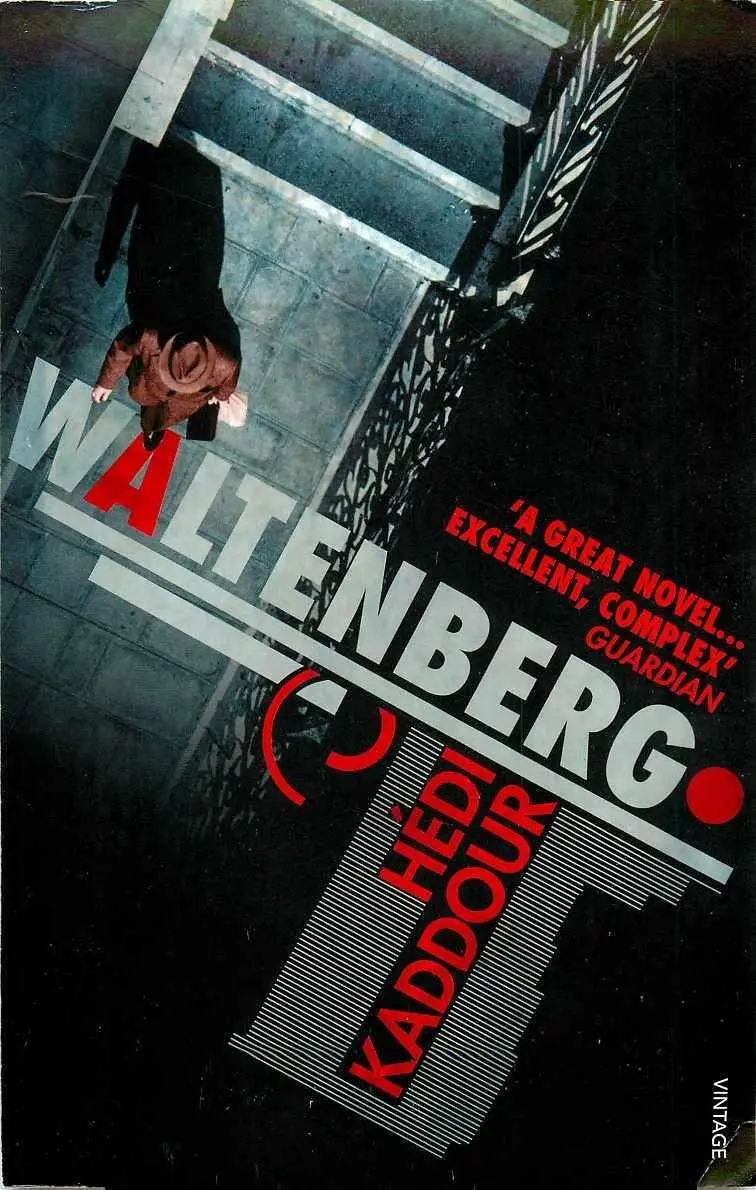
- Название:Waltenberg
- Автор:
- Издательство:Vintage
- Жанр:
- Год:2009
- ISBN:нет данных
- Рейтинг книги:3 / 5. Голосов: 1
-
Избранное:Добавить в избранное
- Отзывы:
-
Ваша оценка:
Waltenberg: краткое содержание, описание и аннотация
Предлагаем к чтению аннотацию, описание, краткое содержание или предисловие (зависит от того, что написал сам автор книги «Waltenberg»). Если вы не нашли необходимую информацию о книге — напишите в комментариях, мы постараемся отыскать её.
Waltenberg
Waltenberg — читать онлайн бесплатно полную книгу (весь текст) целиком
Ниже представлен текст книги, разбитый по страницам. Система сохранения места последней прочитанной страницы, позволяет с удобством читать онлайн бесплатно книгу «Waltenberg», без необходимости каждый раз заново искать на чём Вы остановились. Поставьте закладку, и сможете в любой момент перейти на страницу, на которой закончили чтение.
Интервал:
Закладка:
‘It’s not even in your interest to remain an orthodox Marxist, I mean deep down, if you cling to all your ideals and all your thoughts life will become impossible, there’ll be no one left you can talk to frankly, except me, and I’m becoming more and more sceptical as I grow older.’
*
Seen from the plane, the Rhine is beautiful, altitude three hundred metres, vineyards, woods, bends in the river, villages, the great floodgates, the slanting sun lights up the river bank on their left.
‘Look, Max,’ says de Vèze, ‘to the west, where the Moselle joins, makes you think of some pretty little valley, it was the great highway for invasions, massacres, we’ll soon be passing Bacharach.’
A dreamy look in de Vèze’s eye:
‘Don’t speak, Ambassador, concentrate on flying the plane, if you tell me about the Lorelei and her lilac-coloured comb, I’ll denounce you.’
De Vèze smiles, allows Max a lot of latitude.
‘I don’t give a damn for legends, Max, nor for the wild beauties of the river.’
He points to one of the engines through the plane’s window:
‘Intake stroke, compression, combustion, outlet stroke, thousands of times every minute, long live technology, Max! There’s a thousand times more crazy beauty in the pistons of that rig there than in the entire history of the Rhine.’
He leans on the joystick, the Rhine comes nearer.
De Vèze turns to Max. He knows Max won’t tell him any more about Lena.
‘Your friend Linus Mosberger, when we were all together earlier, he took the opportunity to ask me for an interview. He’d like to hear about Pompidou. Was it you who put him up to it? Is your chum Linus to be trusted? Known him long?’
Linus Mosberger, an old story about a contract, which still does the rounds of editorial offices, writes extremely well, drips experience, de Vèze can trust him, Max is very fond of him, Max and Linus got to know each other properly in Prague in 1938. In those days Mosberger was freelance, an independent reporter, but he’d just signed a contract with the Chicago Guardian, becomes their European correspondent, fifty dollars a week, eighty if war breaks out and for three extra weeks after the armistice which would end the war. For those days it’s pretty good pay but the paper thinks it’s got a bargain, that the war won’t last long.
When Max meets Linus in Prague, in May 1938, he gets a fright. Linus is just back from Vienna. He is ashen-faced, attack of the shivers, covered with spots, one giant itch, he tries to write two or three pages, a scoop, he could do without this, what he has is more like an anxiety attack.
Three days earlier, in Vienna, a very thin man shut a door on Linus, turned the bolt, eleven at night, Linus is alone, locked in for the night, he wanders among the tables, Linus has an article to write about what he is about to discover, he wants to begin the article with that, the man shutting the door on him and turning the key, it’s dark, Linus has only a torch for light, he feels as if he’s going to be sick.
‘I didn’t want to be sick when I was in that room in Vienna, Max, it’s now that it’s come on me, now that I’ve nothing to fear any more, now that I’m here, in Prague, sitting at my Underwood.’
The man pushed the bolt home, it’s dark, Linus wanders among the tables, on a large desk there are ledgers, Max, I can’t even write that properly, ledgers, the very thin man, with his black cap and oniony breath left me alone in this room, at that point I was terrified, Max, but not anguished, I was in Vienna, in a large room, I was taking action, didn’t have spots all over my body, not like now, terror in action.
Linus reads what has been entered with a dip pen in the ledgers, he deciphers what is written, his torch dims, in the ledgers are names and dates, he moves among the tables, then returns to the ledgers, six names of people who have committed suicide.
‘Max, I’m never going to be able to write the story, my hands are shaking all over the keyboard, whisky doesn’t help, I went back to the tables with those names in my head.’
Back to the tables, bodies laid out on the tables, with labels, Linus locates the names of the suicides.
‘One of them committed suicide by beating himself over the head, Max, so hard his eyes were expelled from their sockets, another had this serene expression on his face, I lift the sheet, bruises everywhere, only suicides, I wanted to describe what I’d seen but I dropped everything, the medic in Prague told me what was wrong with me, he advised me to go to Carlsbad, I’m about to leave, fields of wheat, hops, rape, the Jewish section, I’d paid the man to shut me up for a night in the Jewish section of the Vienna morgue, only bodies of suicides and urns.’
Linus had given three dollars baksheesh to an Austrian functionary to let him spend one night in the Vienna morgue, the functionary returned at dawn.
‘I asked him about the urns, he said “no family has ever turned up to claim any of them”, according to the functionary all members of all the families were already dead, Max, I’m going away now to see those hop fields, no, there’s no point even in trying to see for yourself, I’ve no idea where they put them nowadays, there are more and more, I’ll try later, ever since the Nazis came the American Embassy in Vienna has been issuing twenty visas a week to refugees, and it’s practically the only one doing so, today the morgue symbolises the whole of History, Max, and I’m going to Carlsbad.’
Max has fallen silent, de Vèze has concentrated on flying the plane, at one moment he said, without looking at Max:
‘What was it like when she sang, Max?’
*
As he left the Waldhaus, Lilstein said this to you:
‘The greatest danger in our profession comes from noble sentiments and ideals, young gentleman of France, look at what happened to Tellheim, one of the great men of the East-West balancing act, he was part of the team that made the Hiroshima bomb, it’s partly down to him that there wasn’t an atomic war, he gave us the information we needed, Soviet laboratories made up for lost time, he kept them informed for eight years, they only started to have suspicions from 1949 onward, when an H-bomb was exploded in Kazakhstan, the Americans and the British thought that the USSR was still ten years away from doing that, Beria was in charge of the nuclear programme. ‘By ’49 Tellheim has already been gone from the United States for some time, he was at Harwell, he sensed that the Intelligence Service had identified him but he didn’t try to save himself, you grasp the situation, everyone suspects him, in his lab at Harwell no one speaks to him any more, he moves forward in a vacuum, the British question him, let him go, question him again two weeks later, he feels relieved, he dreams of giving it all up, of returning to the GDR, his father is there, now retired, a Protestant, member of the consistory for the town where he lives.
‘Instead of slipping quietly away, Tellheim turns up for questioning, and he admits everything, even owns up to things they do not ask him about — well, almost everything, let’s be honest, he kept two or three small items to himself — he threw his hand in, like a man who believes too much in what he was doing and drops everything all at once, the fox snared, but he didn’t get away by biting his leg or tail off, he gave himself up, according to my Russian colleagues it was because he was ideologically under-nourished, he jettisoned the part of himself he could no longer feed.
‘In the end, the antifascist man of science packed the game in and made way for the angler fishing for his debts, a gloomy fox, he lived among the English, in a world whose ideas he had to pretend to share, he had two systems of thought, the one he despised and the one he kept hidden, the kind of thinking he despised loomed increasingly large, while the other continued to be valid. The strain was too much for him, he talked to the English who actually would have preferred him not to say as much.
Читать дальшеИнтервал:
Закладка:
Похожие книги на «Waltenberg»
Представляем Вашему вниманию похожие книги на «Waltenberg» списком для выбора. Мы отобрали схожую по названию и смыслу литературу в надежде предоставить читателям больше вариантов отыскать новые, интересные, ещё непрочитанные произведения.







Обсуждение, отзывы о книге «Waltenberg» и просто собственные мнения читателей. Оставьте ваши комментарии, напишите, что Вы думаете о произведении, его смысле или главных героях. Укажите что конкретно понравилось, а что нет, и почему Вы так считаете.