Hedi Kaddour - Waltenberg
Здесь есть возможность читать онлайн «Hedi Kaddour - Waltenberg» весь текст электронной книги совершенно бесплатно (целиком полную версию без сокращений). В некоторых случаях можно слушать аудио, скачать через торрент в формате fb2 и присутствует краткое содержание. Год выпуска: 2009, Издательство: Vintage, Жанр: Современная проза, на английском языке. Описание произведения, (предисловие) а так же отзывы посетителей доступны на портале библиотеки ЛибКат.
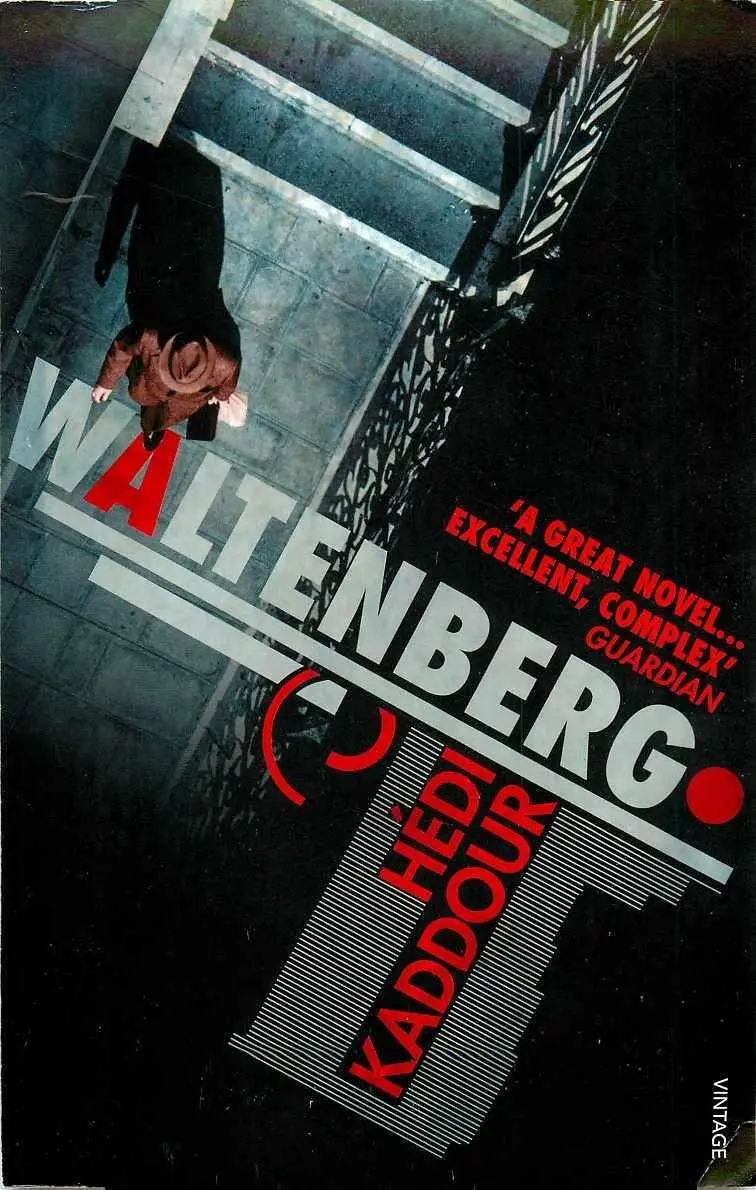
- Название:Waltenberg
- Автор:
- Издательство:Vintage
- Жанр:
- Год:2009
- ISBN:нет данных
- Рейтинг книги:3 / 5. Голосов: 1
-
Избранное:Добавить в избранное
- Отзывы:
-
Ваша оценка:
Waltenberg: краткое содержание, описание и аннотация
Предлагаем к чтению аннотацию, описание, краткое содержание или предисловие (зависит от того, что написал сам автор книги «Waltenberg»). Если вы не нашли необходимую информацию о книге — напишите в комментариях, мы постараемся отыскать её.
Waltenberg
Waltenberg — читать онлайн бесплатно полную книгу (весь текст) целиком
Ниже представлен текст книги, разбитый по страницам. Система сохранения места последней прочитанной страницы, позволяет с удобством читать онлайн бесплатно книгу «Waltenberg», без необходимости каждый раз заново искать на чём Вы остановились. Поставьте закладку, и сможете в любой момент перейти на страницу, на которой закончили чтение.
Интервал:
Закладка:
‘Today he is a sad man, he lives in the GDR, he’s still a useful physicist for his age, but he doesn’t do much thinking now, in the thirties and forties he was really one of the three or four top men in world physics, he’s gone into a decline, he believed in too many things at the same time, Marxism-Leninism and democracy, science, free debate, he celebrated the benefits of the group but he was one of the strangest individuals of his generation, tremendous pride, he wanted to do everything.
‘For our work as regulators, it’s vital from the very start that we shouldn’t believe too ardently in what we do, when I was a young man, too many people advised me to read Lenin, you’re better off reading Shakespeare and Faust instead.’
*
When she sang? In the small plane Max does not answer de Vèze’s question immediately, he doesn’t look at him, he looks at the Rhine, the landscape.
Lena’s singing, now if he could say what it was like, he’d have written it down long ago, once I tried to get it down on paper but I never succeeded, I lack the flair for it, Malraux was right, not bold enough, I’m just not capable of expressing it, all that happens is a tightening of the pharynx when I think about it, I could say a few words but not to de Vèze, too complicated, he likes planes, women, adventure stories, motor cars, novels for men, Max can’t imagine saying to de Vèze very simple harmony, start of the last Lied, Schumann, D minor, first note, fourth, dominant, tonic, the voice initially on a single note, the D, simple chords, then the diminished sevenths, she stood before us, she had arranged her red hair in thick twists coiled in spirals at each side, neckline low, marvellous shoulders, no jewellery, the great lounge of the Waldhaus, just one Schumann, the penultimate evening of the 1929 Seminar, the recital, Stirnweiss cannot continue, Madame de Valréas has said we’re not slave drivers, Stirnweiss sang first, Mozart, then a few Lieder from Woman’s Love and Life, the altitude caused her throat to go dry, she ignored it, Stirnweiss sang very well, surprise, joy, love, fragile voice, Max listened to La Stirnweiss, pure sung delight, everyone reconciled with everyone else.
Then there’d been a halt in the proceedings, Madame de Valréas had looked daggers at a few smokers and then introduced an American artiste idolised throughout Europe, Lena and her nerve, sheer nerve to start with the last Lied of the cycle Stirnweiss had just been singing, Stirnweiss had said with a smile I’ll leave the last one for you, Lena had accepted, like a shot, actually not a very nice thing to do when you think about it, off she started, Nun hast du mir den ersten Schmerz getan … you were the cause of my first pain.
Not much in the bass for the left hand for the first few bars, beginning of a recitative not in strict time, without the bass notes differences in tempo are less noticeable, the first beat is a rest, and on the third beat the piano attacks with its major chord of D, ditto at the start of the second line, a rising scale of sleep and death, her man is dead, Max did you practise your scales? How old was I? Ten, twelve? I was already on the living-room carpet eating bread and butter and caster sugar, I loved sight-reading on the piano but scales less, for the following lines, from Es blicket, harmonies held longer and the negative of the sorrowing recitative, the diminished sevenths, the high point on leer, in the Lied ’s high compass, another day Lena lying on the floor, on her back, Maxie, be a sweetie, pass me that big book next to the croissants, quarto, glossy paper, at least two kilos, she rests it on her abdomen, breathes in, holds her breath, breathes out slowly, the book sinks back down, what are you doing Lena? Singing exercises, Max, diaphragm and muscles low down, very low down, says Max, if I may say so it’s not very far from a certain spot, are you sure pubic muscles are used in singing? Absolutely Max, that’s where it all starts, if you want to put feeling into a high note you start from there; does a few minutes’ exercise, gets up, stands back to the wall, heels, buttocks, back, head all pressed against the wall, legs apart, hands against her ribs, her red hair thick and untamed, she breathes out, that, says Max, is more decent, still working on those high notes? Maxie, if you knew what I’m doing, I can see, you’re stretching your back straight, you’re controlling the expansion of your rib-cage, that I can understand, she laughs, you don’t know everything, well never mind.
Then she sang.
To start with that last Lied, the sad one, the one her friend had been unable to sing, the one she had left to her, the moment of death, like the one which had to be sung with even more expression than the previous ones, which had conveyed surprise, pleasure or joy, the last one, death, the one which called for a strength of feeling even greater and more intense than the six others, gentle Elisabeth had left it for her friend as a homage, so that she might go one better than her, there was that hiatus in the lounge of the Waldhaus, while Madame de Valréas had withered a few smokers with her glance, then the resumption, she did it cold in a sense, the second part of the recital beginning with Schumann’s last Lied, the most dramatic, the audience waited with a certain impatience to hear what an American could do with this masterpiece of European romantic sensibility, there was silence.
She sang, and people in the audience knew what was coming, that was why, from the start, for singing like this, it was crucial to be possessed of an unsuspected power of feeling, the declaration, with the very first notes, of the very heart of the piece, the death of the beloved, all the women in the audience are ready to live, relive, anticipate, imagine, transpose, imitate the death of the beloved in music, the pain she makes them feel, not one of them who has not at some point imagined the death of her beloved to see what it feels like, and all the men are ready to listen to the pain a woman feels when death deprives her of the companion life has given her, not one of them who has not already imagined himself dead so that he can see an inner picture of the pain of a woman he loves when she is confronted by the spectacle of his death.
And all of them, men and women, know how great the need for a delicate quality of voice, the dying fall of one accent into the next, seesawing syncopated notes running trippingly in pursuit of each other, full of pain, they wander, lacerated by pleas, as if the soul were suddenly discovering what it carries within it and to which it cannot deny expression, moans, distress, desires, memories and nameless terrors, syncopated rhythms harassed by quavers, while the spurts of fear take shape, gather into a melody, and the moment ends with a surge in which they become a song of entreaty which calms the milling agitation of the pain, then the initial theme returns, the subsiding of one tone into another, violent agitation of accents laden with savage resolve, all of which makes everyone at the same moment wonder: what is happening?
Everyone expectant of that succession of tonal adventures sustained by the deep-eyed, lost expression on a beautiful American face, red hair gleaming in swaying coils at her temples, hands clasped so tight they are snow white, a rising chromatic scale full of wild nostalgia, stippled with sudden pianissimi, convulsions of a pain it’s no longer possible to contain.
And the initial theme returns yet again, trembling, lyrical, exulting, sobbing, advancing in triumph, clad in all the growling splendour of the left hand, a melody almost perverse in the avidity with which it is savoured and exploited, until at last, slowed by lassitude, a long, languid, minor arpeggio wells up, rises a tone, resolves into the major and fades to silence with melancholy diffidence.
Читать дальшеИнтервал:
Закладка:
Похожие книги на «Waltenberg»
Представляем Вашему вниманию похожие книги на «Waltenberg» списком для выбора. Мы отобрали схожую по названию и смыслу литературу в надежде предоставить читателям больше вариантов отыскать новые, интересные, ещё непрочитанные произведения.










Обсуждение, отзывы о книге «Waltenberg» и просто собственные мнения читателей. Оставьте ваши комментарии, напишите, что Вы думаете о произведении, его смысле или главных героях. Укажите что конкретно понравилось, а что нет, и почему Вы так считаете.