Chimamanda Adichie - Americanah
Здесь есть возможность читать онлайн «Chimamanda Adichie - Americanah» весь текст электронной книги совершенно бесплатно (целиком полную версию без сокращений). В некоторых случаях можно слушать аудио, скачать через торрент в формате fb2 и присутствует краткое содержание. Год выпуска: 2013, Издательство: Knopf, Жанр: Современная проза, на английском языке. Описание произведения, (предисловие) а так же отзывы посетителей доступны на портале библиотеки ЛибКат.
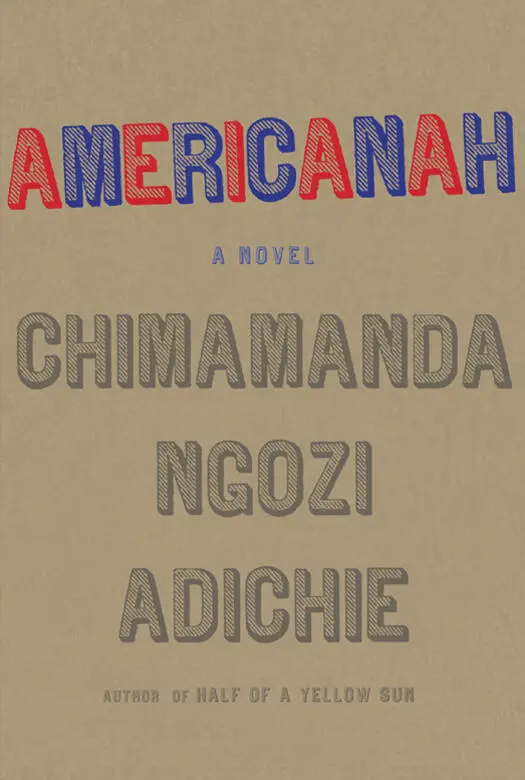
- Название:Americanah
- Автор:
- Издательство:Knopf
- Жанр:
- Год:2013
- ISBN:нет данных
- Рейтинг книги:4 / 5. Голосов: 1
-
Избранное:Добавить в избранное
- Отзывы:
-
Ваша оценка:
Americanah: краткое содержание, описание и аннотация
Предлагаем к чтению аннотацию, описание, краткое содержание или предисловие (зависит от того, что написал сам автор книги «Americanah»). Если вы не нашли необходимую информацию о книге — напишите в комментариях, мы постараемся отыскать её.
, a dazzling new novel: a story of love and race centered around a young man and woman from Nigeria who face difficult choices and challenges in the countries they come to call home.
As teenagers in a Lagos secondary school, Ifemelu and Obinze fall in love. Their Nigeria is under military dictatorship, and people are leaving the country if they can. Ifemelu — beautiful, self-assured — departs for America to study. She suffers defeats and triumphs, finds and loses relationships and friendships, all the while feeling the weight of something she never thought of back home: race. Obinze — the quiet, thoughtful son of a professor — had hoped to join her, but post-9/11 America will not let him in, and he plunges into a dangerous, undocumented life in London.
Years later, Obinze is a wealthy man in a newly democratic Nigeria, while Ifemelu has achieved success as a writer of an eye-opening blog about race in America. But when Ifemelu returns to Nigeria, and she and Obinze reignite their shared passion — for their homeland and for each other — they will face the toughest decisions of their lives.
Fearless, gripping, at once darkly funny and tender, spanning three continents and numerous lives,
is a richly told story set in today’s globalized world: Chimamanda Ngozi Adichie’s most powerful and astonishing novel yet.
Americanah — читать онлайн бесплатно полную книгу (весь текст) целиком
Ниже представлен текст книги, разбитый по страницам. Система сохранения места последней прочитанной страницы, позволяет с удобством читать онлайн бесплатно книгу «Americanah», без необходимости каждый раз заново искать на чём Вы остановились. Поставьте закладку, и сможете в любой момент перейти на страницу, на которой закончили чтение.
Интервал:
Закладка:

SOME YEARS LATER, at a dinner party in Manhattan, a day after Barack Obama became the Democratic Party’s candidate for President of the United States, surrounded by guests, all fervent Obama supporters who were dewy-eyed with wine and victory, a balding white man said, “Obama will end racism in this country,” and a large-hipped, stylish poet from Haiti agreed, nodding, her Afro bigger than Ifemelu’s, and said she had dated a white man for three years in California and race was never an issue for them.
“That’s a lie,” Ifemelu said to her.
“What?” the woman asked, as though she could not have heard properly.
“It’s a lie,” Ifemelu repeated.
The woman’s eyes bulged. “You’re telling me what my own experience was?”
Even though Ifemelu by then understood that people like the woman said what they said to keep others comfortable, and to show they appreciated How Far We Have Come; even though she was by then happily ensconced in a circle of Blaine’s friends, one of whom was the woman’s new boyfriend, and even though she should have left it alone, she did not. She could not. The words had, once again, overtaken her; they overpowered her throat, and tumbled out.
“The only reason you say that race was not an issue is because you wish it was not. We all wish it was not. But it’s a lie. I came from a country where race was not an issue; I did not think of myself as black and I only became black when I came to America. When you are black in America and you fall in love with a white person, race doesn’t matter when you’re alone together because it’s just you and your love. But the minute you step outside, race matters. But we don’t talk about it. We don’t even tell our white partners the small things that piss us off and the things we wish they understood better, because we’re worried they will say we’re overreacting, or we’re being too sensitive. And we don’t want them to say, Look how far we’ve come, just forty years ago it would have been illegal for us to even be a couple blah blah blah, because you know what we’re thinking when they say that? We’re thinking why the fuck should it ever have been illegal anyway? But we don’t say any of this stuff. We let it pile up inside our heads and when we come to nice liberal dinners like this, we say that race doesn’t matter because that’s what we’re supposed to say, to keep our nice liberal friends comfortable. It’s true. I speak from experience.”
The host, a Frenchwoman, glanced at her American husband, a slyly pleased smile on her face; the most unforgettable dinner parties happened when guests said unexpected, and potentially offensive, things.
The poet shook her head and said to the host, “I’d love to take some of that wonderful dip home if you have any left,” and looked at the others as though she could not believe they were actually listening to Ifemelu. But they were, all of them hushed, their eyes on Ifemelu as though she was about to give up a salacious secret that would both titillate and implicate them. Ifemelu had been drinking too much white wine; from time to time she had a swimming sensation in her head, and she would later send apology e-mails to the host and the poet. But everyone was watching her, even Blaine, whose expression she could not, for once, read clearly. And so she began to talk about Curt.
It was not that they avoided race, she and Curt. They talked about it in the slippery way that admitted nothing and engaged nothing and ended with the word “crazy,” like a curious nugget to be examined and then put aside. Or as jokes that left her with a small and numb discomfort that she never admitted to him. And it was not that Curt pretended that being black and being white were the same in America; he knew they were not. It was, instead, that she did not understand how he grasped one thing but was completely tone-deaf about another similar thing, how he could easily make one imaginative leap, but be crippled in the face of another. Before his cousin Ashleigh’s wedding, for example, he dropped her off at a small spa near his childhood home, to get her eyebrows shaped. Ifemelu walked in and smiled at the Asian woman behind the counter.
“Hi. I’d like to get my eyebrows waxed.”
“We don’t do curly,” the woman said.
“You don’t do curly?”
“No. Sorry.”
Ifemelu gave the woman a long look; it was not worth an argument. If they did not do curly, then they did not do curly, whatever curly was. She called Curt and asked him to turn around and come back for her because the salon did not do curly. Curt walked in, his blue eyes bluer, and said he wanted to talk to the manager right away. “You are going to fucking do my girlfriend’s eyebrows or I’ll shut down this fucking place. You don’t deserve to have a license.”
The woman transformed into a smiling, solicitous coquette. “I’m so sorry, it was a misunderstanding,” she said. Yes, they could do the eyebrows. Ifemelu did not want to, worried that the woman might scald her, rip her skin off, pinch her, but Curt was too outraged on her behalf, his anger smoldering in the closed air of the spa, and so she sat, tensely, as the woman waxed her eyebrows.
As they drove back, Curt asked, “How is the hair of your eyebrows curly anyway? And how is that hard to fucking wax?”
“Maybe they’ve never done a black woman’s eyebrows and so they think it’s different, because our hair is different, after all, but I guess now she knows the eyebrows are not that different.”
Curt scoffed, reaching across to take her hand, his palm warm. At the cocktail reception, he kept his fingers meshed with hers. Young females in tiny dresses, their breaths and bellies sucked in, trooped across to say hello to him and to flirt, asking if he remembered them, Ashleigh’s friend from high school, Ashleigh’s roommate in college. When Curt said, “This is my girlfriend, Ifemelu,” they looked at her with surprise, a surprise that some of them shielded and some of them did not, and in their expressions was the question “Why her?” It amused Ifemelu. She had seen that look before, on the faces of white women, strangers on the street, who would see her hand clasped in Curt’s and instantly cloud their faces with that look. The look of people confronting a great tribal loss. It was not merely because Curt was white, it was the kind of white he was, the untamed golden hair and handsome face, the athlete’s body, the sunny charm and the smell, around him, of money. If he were fat, older, poor, plain, eccentric, or dreadlocked, then it would be less remarkable, and the guardians of the tribe would be mollified. And it did not help that although she might be a pretty black girl, she was not the kind of black that they could, with an effort, imagine him with: she was not light-skinned, she was not biracial. At that party, as Curt held on to her hand, kissed her often, introduced her to everyone, her amusement curdled into exhaustion. The looks had begun to pierce her skin. She was tired even of Curt’s protection, tired of needing protection.
Curt leaned in and whispered, “That one, the one with the bad spray tan? She can’t even see her fucking boyfriend’s been checking you out since we walked in here.”
So he had noticed, and understood, the “Why her?” looks. It surprised her. Sometimes, in the middle of floating on his bubbly exuberance, he would have a flash of intuition, of surprising perception, and she would wonder if there were other more primal things she was missing about him. Such as when he told his mother, who had glanced at the Sunday newspaper and mumbled that some people were still looking for reasons to complain even though America was now color-blind, “Come on, Mother. What if ten people who look like Ifemelu suddenly walked in here to eat? You realize our fellow diners would be less than pleased?”
Читать дальшеИнтервал:
Закладка:
Похожие книги на «Americanah»
Представляем Вашему вниманию похожие книги на «Americanah» списком для выбора. Мы отобрали схожую по названию и смыслу литературу в надежде предоставить читателям больше вариантов отыскать новые, интересные, ещё непрочитанные произведения.







Обсуждение, отзывы о книге «Americanah» и просто собственные мнения читателей. Оставьте ваши комментарии, напишите, что Вы думаете о произведении, его смысле или главных героях. Укажите что конкретно понравилось, а что нет, и почему Вы так считаете.