Chimamanda Adichie - Americanah
Здесь есть возможность читать онлайн «Chimamanda Adichie - Americanah» весь текст электронной книги совершенно бесплатно (целиком полную версию без сокращений). В некоторых случаях можно слушать аудио, скачать через торрент в формате fb2 и присутствует краткое содержание. Год выпуска: 2013, Издательство: Knopf, Жанр: Современная проза, на английском языке. Описание произведения, (предисловие) а так же отзывы посетителей доступны на портале библиотеки ЛибКат.
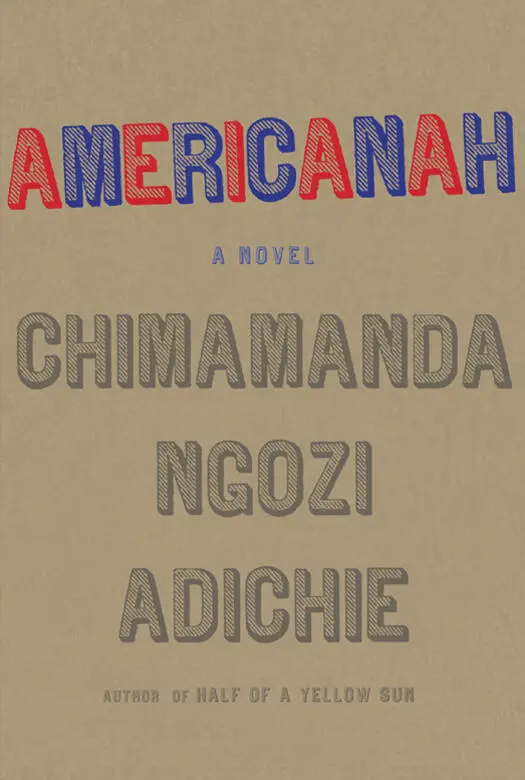
- Название:Americanah
- Автор:
- Издательство:Knopf
- Жанр:
- Год:2013
- ISBN:нет данных
- Рейтинг книги:4 / 5. Голосов: 1
-
Избранное:Добавить в избранное
- Отзывы:
-
Ваша оценка:
Americanah: краткое содержание, описание и аннотация
Предлагаем к чтению аннотацию, описание, краткое содержание или предисловие (зависит от того, что написал сам автор книги «Americanah»). Если вы не нашли необходимую информацию о книге — напишите в комментариях, мы постараемся отыскать её.
, a dazzling new novel: a story of love and race centered around a young man and woman from Nigeria who face difficult choices and challenges in the countries they come to call home.
As teenagers in a Lagos secondary school, Ifemelu and Obinze fall in love. Their Nigeria is under military dictatorship, and people are leaving the country if they can. Ifemelu — beautiful, self-assured — departs for America to study. She suffers defeats and triumphs, finds and loses relationships and friendships, all the while feeling the weight of something she never thought of back home: race. Obinze — the quiet, thoughtful son of a professor — had hoped to join her, but post-9/11 America will not let him in, and he plunges into a dangerous, undocumented life in London.
Years later, Obinze is a wealthy man in a newly democratic Nigeria, while Ifemelu has achieved success as a writer of an eye-opening blog about race in America. But when Ifemelu returns to Nigeria, and she and Obinze reignite their shared passion — for their homeland and for each other — they will face the toughest decisions of their lives.
Fearless, gripping, at once darkly funny and tender, spanning three continents and numerous lives,
is a richly told story set in today’s globalized world: Chimamanda Ngozi Adichie’s most powerful and astonishing novel yet.
Americanah — читать онлайн бесплатно полную книгу (весь текст) целиком
Ниже представлен текст книги, разбитый по страницам. Система сохранения места последней прочитанной страницы, позволяет с удобством читать онлайн бесплатно книгу «Americanah», без необходимости каждый раз заново искать на чём Вы остановились. Поставьте закладку, и сможете в любой момент перейти на страницу, на которой закончили чтение.
Интервал:
Закладка:
“Yes, yes, I have come to take charge of you! Welcome home!” he said humorously, and he reminded Obinze of that Nigerian ability to laugh, to so easily reach for amusement. He had missed that. “We laugh too much,” his mother once said. “Maybe we should laugh less and solve our problems more.”
The uniformed man led them to an office, and handed out forms. Name. Age. Country you have come from.
“Did they treat you well?” the man asked Obinze.
“Yes,” Obinze said.
“So do you have anything for the boys?”
Obinze looked at him for a moment, his open face, his simple view of the world; deportations happened every day and the living went on living. Obinze brought from his pocket a ten-pound note, part of the money Nicholas had given him. The man took it with a smile.
Outside, it was like breathing steam; he felt light-headed. A new sadness blanketed him, the sadness of his coming days, when he would feel the world slightly off-kilter, his vision unfocused. At the cordoned-off area near Arrivals, standing apart from the other expectant people, his mother was waiting for him.
Part 4
CHAPTER 31
After Ifemelu broke up with Curt, she told Ginika, “There was a feeling I wanted to feel that I did not feel.”
“What are you talking about? You cheated on him!” Ginika shook her head as though Ifemelu were mad. “Ifem, honestly, sometimes I don’t understand you.”
It was true, she had cheated on Curt with a younger man who lived in her apartment building in Charles Village and played in a band. But it was also true that she had longed, with Curt, to hold emotions in her hand that she never could. She had not entirely believed herself while with him — happy, handsome Curt, with his ability to twist life into the shapes he wanted. She loved him, and the spirited easy life he gave her, and yet she often fought the urge to create rough edges, to squash his sunniness, even if just a little.
“I think you are a self-sabotager,” Ginika said. “That’s why you cut off Obinze like that. And now you cheat on Curt because at some level you don’t think you deserve happiness.”
“Now you are going to suggest some pills for Self-Sabotage Disorder,” Ifemelu said. “That’s absurd.”
“So why did you do it?”
“It was a mistake. People make mistakes. People do stupid things.”
She had done it, in truth, because she was curious, but she would not tell Ginika this, because it would seem flippant; Ginika would not understand, Ginika would prefer a grave and important reason like self-sabotage. She was not even sure she liked him, Rob, who wore dirty ripped jeans, grimy boots, rumpled flannel shirts. She did not understand grunge, the idea of looking shabby because you could afford not to be shabby; it mocked true shabbiness. The way he dressed made him seem superficial to her, and yet she was curious about him, about how he would be, naked in bed with her. The sex was good the first time, she was on top of him, gliding and moaning and grasping the hair on his chest, and feeling faintly and glamorously theatrical as she did so. But the second time, after she arrived at his apartment and he pulled her into his arms, a great torpor descended on her. He was already breathing heavily, and she was extracting herself from his embrace and picking up her handbag to leave. In the elevator, she was overcome with the frightening sense that she was looking for something solid, flailing, and all she touched dissolved into nothingness. She went to Curt’s apartment and told him.
“It meant nothing. It happened once and I am so sorry.”
“Stop playing,” he said, but she knew, from the unbelieving horror that was deepening the blue of his eyes, that he knew she was not playing. It took hours of side-stepping each other, of drinking tea and putting on music and checking e-mail, of Curt lying faceup on the couch, still and silent, before he asked, “Who is he?”
She told him the man’s name. Rob.
“He’s white?”
She was surprised that he would ask her this, and so soon. “Yes.” She had first seen Rob months before, in the elevator, with his unkempt clothes and unwashed hair, and he had smiled at her and said, “I see you around.” After that, whenever she saw him, he looked at her with a kind of lazy interest, as though they both knew that something would happen between them and it was only a matter of when.
“Who the fuck is he?” Curt asked.
She told him that he lived on the floor above hers, that they said hello to each other and nothing else until that evening when she saw him coming back from the liquor store and he asked if she’d like to have a drink with him and she did a stupid, impulsive thing.
“You gave him what he wanted,” Curt said. The planes of his face were hardening. It was an odd thing for Curt to say, the sort of thing Aunty Uju, who thought of sex as something a woman gave a man at a loss to herself, would say.
In a sudden giddy fit of recklessness, she corrected Curt. “I took what I wanted. If I gave him anything, then it was incidental.”
“Listen to yourself, just fucking listen to yourself!” Curt’s voice had hoarsened. “How could you do this to me? I was so good to you.”
He was already looking at their relationship through the lens of the past tense. It puzzled her, the ability of romantic love to mutate, how quickly a loved one could become a stranger. Where did the love go? Perhaps real love was familial, somehow linked to blood, since love for children did not die as romantic love did.
“You won’t forgive me,” she said, a half question.
“Bitch,” he said.
He wielded the word like a knife; it came out of his mouth sharp with loathing. To hear Curt say “bitch” so coldly felt surreal, and tears gathered in her eyes, knowing that she had turned him into a man who could say “bitch” so coldly, and wishing he was a man who would not have said “bitch” no matter what. Alone in her apartment, she cried and cried, crumpled on her living room rug that was so rarely used it still smelled of the store. Her relationship with Curt was what she wanted, a crested wave in her life, and yet she had taken an axe and hacked at it. Why had she destroyed it? She imagined her mother saying it was the devil. She wished she believed in the devil, in a being outside of yourself that invaded your mind and caused you to destroy that which you cared about.
She spent weeks calling Curt, waiting in front of his building until he came out, saying over and over how sorry she was, how much she wanted to work through things. On the day she woke up and finally accepted that Curt would not return her calls, would not open the door of his apartment no matter how hard she knocked, she went alone to their favorite bar downtown. The bartender, the one who knew them, gave her a gentle smile, a sympathy smile. She smiled back and ordered another mojito, thinking that perhaps the bartender was better suited for Curt, with her brown hair blow-dried to satin, her thin arms and tight black clothes and her ability always to be seamlessly, harmlessly chatty. She would also be seamlessly, harmlessly faithful; if she had a man like Curt, she would not be interested in a curiosity copulation with a stranger who played unharmonious music. Ifemelu stared into her glass. There was something wrong with her. She did not know what it was but there was something wrong with her. A hunger, a restlessness. An incomplete knowledge of herself. The sense of something farther away, beyond her reach. She got up and left a big tip on the counter. For a long time afterwards, her memory of the end with Curt was this: speeding down Charles Street in a taxi, a little drunk and a little relieved and a little lonely, with a Punjabi driver who was proudly telling her that his children did better than American children at school.
Читать дальшеИнтервал:
Закладка:
Похожие книги на «Americanah»
Представляем Вашему вниманию похожие книги на «Americanah» списком для выбора. Мы отобрали схожую по названию и смыслу литературу в надежде предоставить читателям больше вариантов отыскать новые, интересные, ещё непрочитанные произведения.









Обсуждение, отзывы о книге «Americanah» и просто собственные мнения читателей. Оставьте ваши комментарии, напишите, что Вы думаете о произведении, его смысле или главных героях. Укажите что конкретно понравилось, а что нет, и почему Вы так считаете.