Chimamanda Adichie - Americanah
Здесь есть возможность читать онлайн «Chimamanda Adichie - Americanah» весь текст электронной книги совершенно бесплатно (целиком полную версию без сокращений). В некоторых случаях можно слушать аудио, скачать через торрент в формате fb2 и присутствует краткое содержание. Год выпуска: 2013, Издательство: Knopf, Жанр: Современная проза, на английском языке. Описание произведения, (предисловие) а так же отзывы посетителей доступны на портале библиотеки ЛибКат.
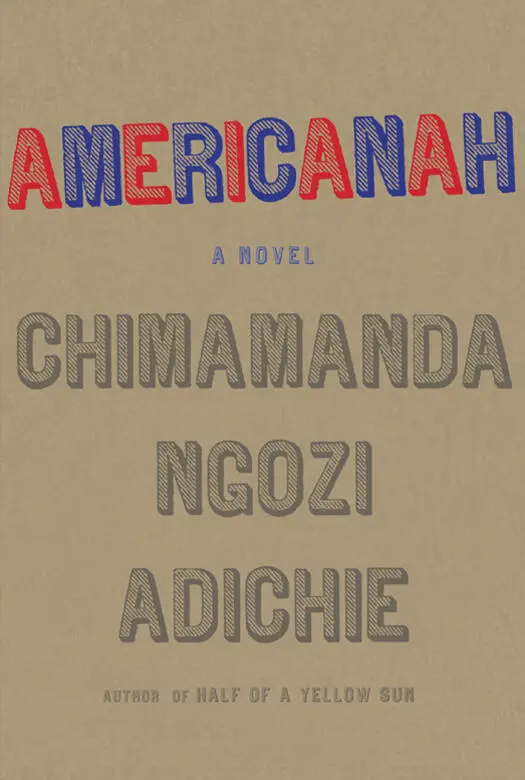
- Название:Americanah
- Автор:
- Издательство:Knopf
- Жанр:
- Год:2013
- ISBN:нет данных
- Рейтинг книги:4 / 5. Голосов: 1
-
Избранное:Добавить в избранное
- Отзывы:
-
Ваша оценка:
Americanah: краткое содержание, описание и аннотация
Предлагаем к чтению аннотацию, описание, краткое содержание или предисловие (зависит от того, что написал сам автор книги «Americanah»). Если вы не нашли необходимую информацию о книге — напишите в комментариях, мы постараемся отыскать её.
, a dazzling new novel: a story of love and race centered around a young man and woman from Nigeria who face difficult choices and challenges in the countries they come to call home.
As teenagers in a Lagos secondary school, Ifemelu and Obinze fall in love. Their Nigeria is under military dictatorship, and people are leaving the country if they can. Ifemelu — beautiful, self-assured — departs for America to study. She suffers defeats and triumphs, finds and loses relationships and friendships, all the while feeling the weight of something she never thought of back home: race. Obinze — the quiet, thoughtful son of a professor — had hoped to join her, but post-9/11 America will not let him in, and he plunges into a dangerous, undocumented life in London.
Years later, Obinze is a wealthy man in a newly democratic Nigeria, while Ifemelu has achieved success as a writer of an eye-opening blog about race in America. But when Ifemelu returns to Nigeria, and she and Obinze reignite their shared passion — for their homeland and for each other — they will face the toughest decisions of their lives.
Fearless, gripping, at once darkly funny and tender, spanning three continents and numerous lives,
is a richly told story set in today’s globalized world: Chimamanda Ngozi Adichie’s most powerful and astonishing novel yet.
Americanah — читать онлайн бесплатно полную книгу (весь текст) целиком
Ниже представлен текст книги, разбитый по страницам. Система сохранения места последней прочитанной страницы, позволяет с удобством читать онлайн бесплатно книгу «Americanah», без необходимости каждый раз заново искать на чём Вы остановились. Поставьте закладку, и сможете в любой момент перейти на страницу, на которой закончили чтение.
Интервал:
Закладка:
“You were making such progress. Is there anything we can do to make you change your mind?” her manager asked, very surprised.
“It’s personal, family reasons,” Ifemelu said vaguely. “I really appreciate all the opportunities you’ve given me.”
So What’s the Deal?
They tell us race is an invention, that there is more genetic variation between two black people than there is between a black person and a white person. Then they tell us black people have a worse kind of breast cancer and get more fibroids. And white folk get cystic fibrosis and osteoporosis. So what’s the deal, doctors in the house? Is race an invention or not?
CHAPTER 33
The blog had unveiled itself and shed its milk teeth; by turns, it surprised her, pleased her, left her behind. Its readers increased, by the thousands from all over the world, so quickly that she resisted checking the stats, reluctant to know how many new people had clicked to read her that day, because it frightened her. And it exhilarated her. When she saw her posts reposted on another site, she flushed with accomplishment, and yet she had not imagined any of this, had never nursed any firm ambition. E-mails came from readers who wanted to support the blog. Support. That word made the blog even more apart from her, a separate thing that could thrive or not, sometimes without her and sometimes with her. So she put up a link to her PayPal account. Credits appeared, many small and one so large that when she saw it, she let out an unfamiliar sound, a blend of a gasp and a scream. It began to appear every month, anonymously, as regular as a paycheck, and each time it did, she felt abashed, as though she had picked up something valuable on the street and kept it for herself. She wondered if it was from Curt, just as she wondered if he followed the blog, and what he thought of being referred to as The Hot White Ex. It was a halfhearted wondering; she missed what could have been, but she no longer missed him.
She checked her blog e-mail too often, like a child eagerly tearing open a present she is not sure she wants, and read from people asking for a drink, telling her she was a racist, giving her ideas to blog about. A fellow blogger who made hair butters first suggested advertising and, for a token fee, Ifemelu put up the image of a bounteous-haired woman on the top right side of the blog page; clicking on it led to the hair butter website. Another reader offered more money for a blinking graphic that showed, first, a long-necked model in a tight dress, then the same model in a floppy hat. Clicking on the image led to an online boutique. Soon there were e-mails about advertising Pantene shampoos and Covergirl makeup. Then an e-mail from the director of multicultural life at a prep school in Connecticut, so formal she imagined it typed on hand-cut paper with a silver crest, asking if she would speak to the students on diversity. Another e-mail came from a corporation in Pennsylvania, less formally written, telling her a local professor had identified her as a provocative race blogger and asking if she would lead their annual diversity workshop. An editor from Baltimore Living e-mailed to say that they wanted to include her in a Ten People to Watch feature; she was photographed next to her laptop, her face doused in shadow, under the caption “The Blogger.” Her readers tripled. More invitations came. To receive phone calls, she wore her most serious pair of trousers, her most muted shade of lipstick, and she spoke sitting upright at her desk, legs crossed, her voice measured and sure. Yet a part of her always stiffened with apprehension, expecting the person on the other end to realize that she was play-acting this professional, this negotiator of terms, to see that she was, in fact, an unemployed person who wore a rumpled nightshirt all day, to call her “Fraud!” and hang up. But more invitations came. Hotel and travel were covered and the fees varied. Once she said, on an impulse, that she wanted twice what she had been offered the previous week, and was shocked when the man calling from Delaware said, “Yeah, we could do that.”
Most of the people who attended her first diversity talk, at a small company in Ohio, wore sneakers. They were all white. Her presentation was titled “How to Talk About Race with Colleagues of Other Races,” but who, she wondered, would they be talking to, since they were all white? Perhaps the janitor was black.
“I’m no expert so don’t quote me,” she started, and they laughed, warm encouraging laughter, and she told herself that this would go well, she need not have worried about talking to a roomful of strangers in the middle of Ohio. (She had read, with mild worry, that openly sundown towns still existed here.) “The first step to honest communication about race is to realize that you cannot equate all racisms,” she said, and then launched into her carefully prepared speech. When, at the end, she said, “Thank you,” pleased with the fluidness of her delivery, the faces around her were frozen. The leaden clapping deflated her. Afterwards, she was left only with the director of human resources, drinking oversweet iced tea in the conference room, and talking about soccer, which he knew Nigeria played well, as though keen to discuss anything but the talk she had just given. That evening she received an e-mail: YOUR TALK WAS BALONEY. YOU ARE A RACIST. YOU SHOULD BE GRATEFUL WE LET YOU INTO THIS COUNTRY .
That e-mail, written in all capital letters, was a revelation. The point of diversity workshops, or multicultural talks, was not to inspire any real change but to leave people feeling good about themselves. They did not want the content of her ideas; they merely wanted the gesture of her presence. They had not read her blog but they had heard that she was a “leading blogger” about race. And so, in the following weeks, as she gave more talks at companies and schools, she began to say what they wanted to hear, none of which she would ever write on her blog, because she knew that the people who read her blog were not the same people who attended her diversity workshops. During her talks, she said: “America has made great progress for which we should be very proud.” In her blog she wrote: Racism should never have happened and so you don’t get a cookie for reducing it . Still more invitations came. She hired a student intern, a Haitian American, her hair worn in elegant twists, who was nimble on the Internet, looking up whatever information Ifemelu needed, and deleting inappropriate comments almost as soon as they were posted.
Ifemelu bought a small condominium. She had been startled, when she first saw the listing in the real estate section of the paper, to realize she could afford the down payment in cash. Signing her name above the word “homeowner” had left her with a frightening sense of being grown-up, and also with a small astonishment, that this was possible because of her blog. She converted one of the two bedrooms into a study and wrote there, standing often by the window to look down at her new Roland Park neighborhood, the restored row homes shielded by old trees. It surprised her, which blog posts got attention and which were hardly clicked on. Her post about trying to date online, “What’s Love Got to Do with It?” continued to draw comments, like something sticky, after many months.
So, still a bit sad about the breakup with The Hot White Ex, not into the bar scene, and so I signed up for online dating. And I looked at lots of profiles. So here’s the thing. In that category where you choose the ethnicity you are interested in? White men tick white women, and the braver ones tick Asian and Hispanic. Hispanic men tick white and Hispanic. Black men are the only men likely to tick “all,” but some don’t even tick Black. They tick White, Asian, Hispanic. I wasn’t feeling the love. But what’s love got to do with all that ticking, anyway? You could walk into a grocery store and bump into someone and fall in love and that someone would not be the race you tick online. So after browsing, I cancelled my membership, thankfully still on trial, got a refund, and will be walking around blindly in the grocery store instead.
Читать дальшеИнтервал:
Закладка:
Похожие книги на «Americanah»
Представляем Вашему вниманию похожие книги на «Americanah» списком для выбора. Мы отобрали схожую по названию и смыслу литературу в надежде предоставить читателям больше вариантов отыскать новые, интересные, ещё непрочитанные произведения.







Обсуждение, отзывы о книге «Americanah» и просто собственные мнения читателей. Оставьте ваши комментарии, напишите, что Вы думаете о произведении, его смысле или главных героях. Укажите что конкретно понравилось, а что нет, и почему Вы так считаете.