Nicola Gardini - Lost Words
Здесь есть возможность читать онлайн «Nicola Gardini - Lost Words» весь текст электронной книги совершенно бесплатно (целиком полную версию без сокращений). В некоторых случаях можно слушать аудио, скачать через торрент в формате fb2 и присутствует краткое содержание. Год выпуска: 2016, Издательство: New Directions, Жанр: Современная проза, на английском языке. Описание произведения, (предисловие) а так же отзывы посетителей доступны на портале библиотеки ЛибКат.
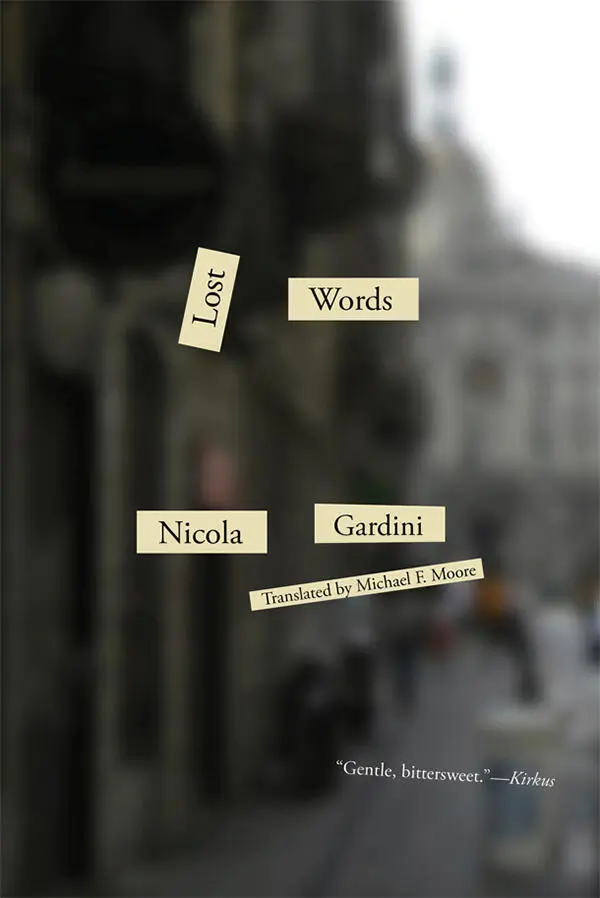
- Название:Lost Words
- Автор:
- Издательство:New Directions
- Жанр:
- Год:2016
- ISBN:нет данных
- Рейтинг книги:5 / 5. Голосов: 1
-
Избранное:Добавить в избранное
- Отзывы:
-
Ваша оценка:
Lost Words: краткое содержание, описание и аннотация
Предлагаем к чтению аннотацию, описание, краткое содержание или предисловие (зависит от того, что написал сам автор книги «Lost Words»). Если вы не нашли необходимую информацию о книге — напишите в комментариях, мы постараемся отыскать её.
Lost Words — читать онлайн бесплатно полную книгу (весь текст) целиком
Ниже представлен текст книги, разбитый по страницам. Система сохранения места последней прочитанной страницы, позволяет с удобством читать онлайн бесплатно книгу «Lost Words», без необходимости каждый раз заново искать на чём Вы остановились. Поставьте закладку, и сможете в любой момент перейти на страницу, на которой закончили чтение.
Интервал:
Закладка:
Before midnight we collected our baking dishes because my mother wanted to go to mass. My father protested that he was tired, but eventually he gave in.
In church we had to find room in the back, in the last available spots. After we were seated, we realized that the pew in front of us was occupied by the Rovigos and the Paolinis, and we hadn’t spoken to them since the day that Rita had fallen in the fountain. My father was so tense he couldn’t listen to a word of the sermon. A second before the Sign of Peace he tried to escape, but my mother held him back by his coattails. “Stay where you are,” she whispered into his ear, “the last thing we need is to feel like we’re not even free in the house of the Lord!”
Padre Aldo commanded, “The time has come to exchange a sign of peace,” and the Rovigos and Paolinis shook each others’ hands. When they turned around to shake the hand of the persons behind them, they were startled to find themselves facing the doorwoman’s family. For a second I thought they would turn back around, but they didn’t. Once they got over their surprise, they extended their hands to us. But they did not look us in the face. Nor did they say, “Peace be with you.”
*.
“This year you have to come with me,” my father insisted. My mother didn’t want to hear about it. What was wrong with him? He’d always gone by himself. She didn’t care for the movies. To spend all that time in the dark, surrounded by strangers… she wouldn’t dream of it! She would rather stay home, safe and sound, watching television. Why throw money away on the movies?
“I’ll take you to see a nice film, The Scientific Cardplayer , with Bette Davis and Alberto Sordi. You’ll like it, you’ll see,” he promised. “Can’t I ask you this one small favor? Or is ‘no’ the only word in your vocabulary?”
For the first time ever, on December 25, 1972, I saw my parents go out together like a normal couple.
I went upstairs to the fifth floor. Finally I could see the Maestra again. I rapped my knuckles on the door three times. No answer.
I went back home and poured myself a shot of grappa. I took one sip and spat it out. After wetting my lips two or three times, I poured the rest down the sink. I filled our little bathtub to the top with hot water and lowered myself in, hugging my knees and leaning my lower back against the bottom. I felt the hot water grazing my nostrils and I reminisced about the Maestra’s lessons. I imagined English words being written in white light on the screen of my lowered eyelids and bleeding out into my memories and thoughts… The glass door started to shake.
“Who is it?” I cried out, startled.
A hoarse voice asked for my mother.
“She’s not in,” I replied. “She went to the movies with my father…” I emphasized the word ‘movies’ out of spite. A few seconds of silence followed. I got out of the tub and approached the door, dripping wet. Mantegazza was standing there waiting for me to open, but I didn’t move or say a word. “Tell your mother that last night Signora Armanda departed,” she said. I thought to myself, “So what? Who cares? She can go wherever she wants…” She realized that I hadn’t understood.
“Signora Armanda died last night.”
This was followed by the click of the main door. From the window, through an opening in the curtain, I saw Mantegazza weighted down with trash bags, waddling in her yellow fur coat toward the dumpster. I suddenly felt a desperate longing for the Maestra. For the first time I thought that she, too, might die and abandon me forever. I turned the intercom back on and called her. Still no answer.
When they got home my parents were arguing. “You women are all alike!” my father shouted. “Nothing is ever good enough for you. And whose fault is it? The husband’s, of course, who else?”
“Of course,” my mother protested. “Don’t tell me you thought that idiot Sordi was right! He was the ruin of that poor woman.”
“Look, if they lost everything, it’s because Mangano decided to keep on playing. She still wasn’t satisfied after cheating the old lady out of all that money!”
My mother shrugged her shoulders. “Whatever you say. In her place I would have left immediately! She was right to ask for help from Modugno, who is a much better man — one hundred percent better!”
“Modugno lost just as much at cards as Sordi, if not more. You didn’t get the meaning of the film. The old lady represents the bosses. You can never beat the bosses. You can never put them in their place. Otherwise you turn into a boss yourself, just like them, and the injustice remains. And you’ve become the oppressor!”
“Better an oppressor than a beggar!.. And I’d make a better boss than the old lady. Sometimes I wonder how much of a communist you are. As far as you’re concerned, things should never change.”
When I heard them mention the old lady in the film, I remembered the news Mantegazza gave me. “The old lady died!” I hollered. My father turned two questioning eyes on me. “Our old lady!” I clarified. “Signora Armanda! She’s dead!”
My mother turned pale. “The old lady died?”
My father burst into laughter, having grasped the misunderstanding. “So, the old lady died,” he repeated to himself. “That old fascist is dead.”
My mother expected us to go upstairs with her. In the event of a tenant’s death, she claimed, her professional duties required that we, too, the family of the custodian, had to participate in the expression of condolences.
My father muttered the word “condolences” between gritted teeth, and went straight back home. I stayed behind with my mother. There was no one in the apartment except for the younger Mantegazza, their dog Bella, and the deceased, who had been laid out on the large double bed. Not even death had managed to tame the shrewish expression furrowing the skin between her almost invisible eyebrows. The dog howled from its prone position on the sheepskin rug near the bed.
“Poor Signora Armanda! Did she suffer?” my mother asked.
“Hardly!” said Mantegazza — perfectly coifed and made up — without the least emotion, as if she were reporting a news story she’d heard on TV. “This morning I got up, prepared breakfast, and called out to her. I went in the bedroom to see because she didn’t answer. She was already cold. The doctor thinks she died last night, after going to bed. At one point, I heard her gasp for air. That’s when she must have died. In my opinion, it was indigestion from the Christmas cake. It’s really awful, the panettone they make nowadays… when I was a little girl, it had a completely different taste…”
“You’re right,” my mother agreed, although she had never laid eyes on panettone when she was growing up.
Mantegazza asked her to prepare the body for the priest’s visit and started to hand her a ten-thousand-lira bill. “I wouldn’t think of it,” my mother protested, taking a step back. “I was really fond of Signora Armanda!”
Mantegazza waved her hands impatiently, in her theatrical manner, as if she was drying the money in the air. “Come on — take the money! I don’t want to argue.”
Without wasting a moment, my mother undressed the body and gave it a sponge bath. She noticed there was no hair between the dead woman’s legs. Amused, she said that Miss Armanda had reverted to being a little girl. The corpse didn’t bother her in the least. She dressed it in nice clothes and painted its sunken cheeks and lips with a little rouge. “We really are nothing but dust,” she commented while arranging the curls over the corpse’s gray forehead.
Padre Aldo arrived close to suppertime. He lit a candle, said a prayer, and blessed the remains. He didn’t linger because he was expected back at six o’clock for the Christmas greetings. Mantegazza extended a banknote that quickly disappeared into his outstretched hand. “This is the first time I’ve blessed a deceased person on Christmas Day,” he observed. And at the door, he asked me, “Why have you stopped going to Mass?”
Читать дальшеИнтервал:
Закладка:
Похожие книги на «Lost Words»
Представляем Вашему вниманию похожие книги на «Lost Words» списком для выбора. Мы отобрали схожую по названию и смыслу литературу в надежде предоставить читателям больше вариантов отыскать новые, интересные, ещё непрочитанные произведения.







Обсуждение, отзывы о книге «Lost Words» и просто собственные мнения читателей. Оставьте ваши комментарии, напишите, что Вы думаете о произведении, его смысле или главных героях. Укажите что конкретно понравилось, а что нет, и почему Вы так считаете.