Sara Baume - Spill Simmer Falter Wither
Здесь есть возможность читать онлайн «Sara Baume - Spill Simmer Falter Wither» весь текст электронной книги совершенно бесплатно (целиком полную версию без сокращений). В некоторых случаях можно слушать аудио, скачать через торрент в формате fb2 и присутствует краткое содержание. Год выпуска: 2015, Издательство: William Heinemann, Жанр: Современная проза, на английском языке. Описание произведения, (предисловие) а так же отзывы посетителей доступны на портале библиотеки ЛибКат.
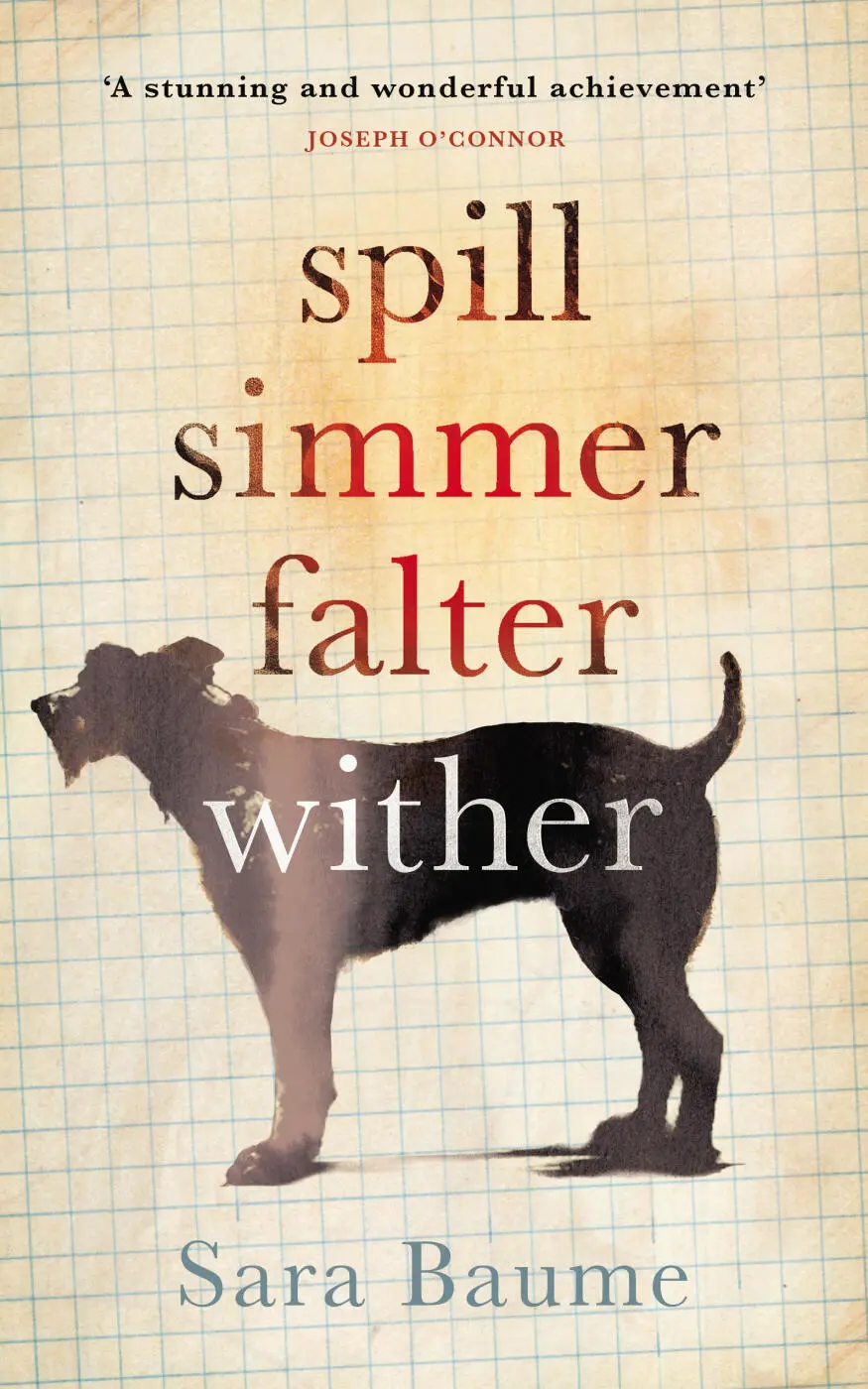
- Название:Spill Simmer Falter Wither
- Автор:
- Издательство:William Heinemann
- Жанр:
- Год:2015
- ISBN:нет данных
- Рейтинг книги:5 / 5. Голосов: 1
-
Избранное:Добавить в избранное
- Отзывы:
-
Ваша оценка:
Spill Simmer Falter Wither: краткое содержание, описание и аннотация
Предлагаем к чтению аннотацию, описание, краткое содержание или предисловие (зависит от того, что написал сам автор книги «Spill Simmer Falter Wither»). Если вы не нашли необходимую информацию о книге — напишите в комментариях, мы постараемся отыскать её.
Spill Simmer Falter Wither
Spill Simmer Falter Wither — читать онлайн бесплатно полную книгу (весь текст) целиком
Ниже представлен текст книги, разбитый по страницам. Система сохранения места последней прочитанной страницы, позволяет с удобством читать онлайн бесплатно книгу «Spill Simmer Falter Wither», без необходимости каждый раз заново искать на чём Вы остановились. Поставьте закладку, и сможете в любой момент перейти на страницу, на которой закончили чтение.
Интервал:
Закладка:

It seems almost incredible, how far we can drive in a country so small, without ever really reaching anywhere. But then I am slow, I suppose. I forget I am slow.
How many weeks now? What day is it, what month? Sometimes you look so much as though you’re about to talk, as though you’re trying so hard to answer me. October, of course. Now it must be October. See the primary school with paper chains cut into witch shapes and strung across the windows. See the white pillowcases slung over balloons and hung by their heads from the trees at the edge of the playground.
Soon the grocery shops will be selling fat pumpkins too floury-fleshed for eating, monkey nuts roasted in their knobbled shells and elasticated plastic faces with the eyes cut out. Soon it will be the time of year when it’s vaguely acceptable to be crepuscular, to be wonkety.
I don’t know where we are, and I wonder if I took the handbrake off would the car remember for itself and roll us home again to the footpath outside the terrace of the village that hums, but I haven’t the courage to put it to the test.
I stopped following the board game weeks ago, now I’ve stopped reading the signposts too. Even though we’re lost, it seems as if you’re at ease in our car home now, as if your safe space has spread from door to door and devoured the entire seat. Now our backyard is the limitless countryside. Now our neighbours are grazing stock, hedgerow birds, hibernating mammals, an infinity of insects. No longer are we creatures of routine; now we’re creatures of possibility. I think of all the years I spent living in so many rooms and how I used to believe I needed a different room for everything. A room for preparing a meal, another for sitting down to eat in, another again for shitting the digested meal out and flushing it away through a network of pipes secreted within the plasterwork. Do you remember all of those tiny rooms between rooms with no use at all? The hall, the porch, the corridor. Rooms just for passing through, for cluttering up with a panoply of objects more purposeless than the tiny rooms themselves, do you remember? Even though I’m at ease in our car home now too, still sometimes, I miss my father’s house. I miss it more the farther we go and the less I know where we are going. Everything I remember is caught in the void between its stained carpets and slanted slates. All my memories are cast to a honeyed hue by its yellow walls.
I remember how my father used to hum. He hummed even after he’d ceased to talk. The hum was a soundtrack for whatever it was he happened to be doing: for moving, for thinking, for sitting, for smoking, for tinkering. From the needless room adjacent to his needless room I’d hear his humming leach through the plasterboard between us. It was always the same tune but I could never exactly identify it, and I never asked. Maybe my father was just repeating it wrong, like the way I always mishear the lyrics of songs which play between items on the talking station, and make up my own lines instead, substituting noises that aren’t even words. Or maybe my father’s tune was from some phase of his life which preceded fatherhood, from so many decades ago he couldn’t have identified it even if I’d summoned the question. Maybe my father’s humming was drawn from no fixed point of reference, but as involuntary as a yawn.
This might sound strange to you, but now when I think of the house, I picture it precisely as we left it, except that my father is still alive. I picture his unslippered feet planted firmly on the carpeted boards again, and he’s humming and shambling between rooms, even though the lights are out, the curtains drawn and all the appliances switched off. I picture the painted men in painted Puerto Rico bartering their cockerels on the wall behind him, the bathroom beads gently knocking against one another in his wake. And Mr Buddy behind the washing machine with his button nose pressed to the cold wall, listening as my father passes.
I lose you.
At first light in a manmade forest. Most of its trees have been felled; between each slim copse there’s an expanse of sorry stumps. Here in this clearing, there’s a solitary Scots pine left standing. Branches severed, bark stripped. It looks like a lightening bolt driven into the earth and turned to wood.
I’m contemplating the surface of a stump when I lose you. There’s some strange substance growing from it; strange because I can’t decide whether it’s a plant-like mushroom or a mushroom-like plant. After a couple of rainless days, the mud of the forest floor is pale and dry and the stump’s dead roots push through the pale, dry mud like a network of veins on the back of a skinny hand. Now see here how the old rain has made a pond beneath the upraised roots of a fallen beech.
But when I look up I can’t see you. I turn to where I think I saw you last. The clump of undergrowth where you were rummaging still holds the indentation of your disturbance. Now I kick through it, trying to go the way you could have gone, calling your name. There isn’t any path here, and I don’t know where I’m going, and I can’t see you anywhere.
ONEEYE ONEEYE ONEEYE, I shout.
How can I know for sure you went this way? I can’t. You could have gone any way. You could have gone on. I go on.
ONEEYE ONEEYE ONEEYE, I shout.
I use my angry voice, my angriest voice, even though I’m much more worried than I am enraged. How many minutes? Ten, fifteen, twenty? I feel sick with panic. What if you’re looking for me now too? What if you went back to the car, and are waiting? I go back.
But there isn’t any sign of you in the clearing where the car’s parked. The only different thing is a mess of bird shit across the windscreen. I stare into the empty branches of the overhead tree. I think it’s a eucalyptus, and I wonder how it ended up here and what sort of bird has made this foreign species its home. I sit on the edge of the passenger seat with the door open, facing into the forest. I wait. I know there are lots of things I could be doing as I wait. I could make coffee, read my book, check the oil, shake the blanket out. But I don’t feel like anything but sawing the hard skin from my fingertips. I don’t look at the time on the dashboard, and the minute hand of the clock inside me grinds as though towing a grain truck in its wake.
It’s only now you’re gone I see how you’re my reason for doing things. Now I’m a stiltwalker with the stilts removed. My emptied trouser legs flap in the wind and I can’t remember how to walk without being precipitously propped.
Now I hear a soft tinkling coming toward me through the ferns, a grunt. Now I see your black head pushing through the green fronds.
BOLD! I yell, but I don’t mean it.
Up ahead, there’s a man standing with one foot on the tarmac and the other in the ditch gully, and he’s swaying in the wind like a bendy tree.
As we approach, I see his grey head’s bowed against the horizontal drizzle and his right hand’s stuck out into the roadway with a crooked thumb raised. It’s early in the evening on a wide stretch of back road. There’s nothing interesting on the radio and the rain’s too weak to stifle the blare of my thoughts. So I slow down, pull in just beyond the hitchhiker. I shove the gas cooker and snacks from the passenger seat into the back. I pummel my bedding a little deeper into the cranny beneath the dash.
The hitchhiker is a man about my age. Too old for starting over, too young for giving up. He’s chunky around the waist yet gangly in the limbs, sparse of hair and puffy of face. His nose is particularly bulbous and purple, scribbled with thread veins like craquelure on a masterpiece. He’s wearing no jacket, just a woollen jumper worn to thousands and thousands of fluff bobbles. ‘I’m local,’ he says, ‘just a few miles home along the road here.’ He points west. ‘Thanks very much.’
Читать дальшеИнтервал:
Закладка:
Похожие книги на «Spill Simmer Falter Wither»
Представляем Вашему вниманию похожие книги на «Spill Simmer Falter Wither» списком для выбора. Мы отобрали схожую по названию и смыслу литературу в надежде предоставить читателям больше вариантов отыскать новые, интересные, ещё непрочитанные произведения.










Обсуждение, отзывы о книге «Spill Simmer Falter Wither» и просто собственные мнения читателей. Оставьте ваши комментарии, напишите, что Вы думаете о произведении, его смысле или главных героях. Укажите что конкретно понравилось, а что нет, и почему Вы так считаете.