Olga Grushin - Forty Rooms
Здесь есть возможность читать онлайн «Olga Grushin - Forty Rooms» весь текст электронной книги совершенно бесплатно (целиком полную версию без сокращений). В некоторых случаях можно слушать аудио, скачать через торрент в формате fb2 и присутствует краткое содержание. Город: New York, Год выпуска: 2016, ISBN: 2016, Издательство: Penguin, Жанр: Современная проза, на английском языке. Описание произведения, (предисловие) а так же отзывы посетителей доступны на портале библиотеки ЛибКат.
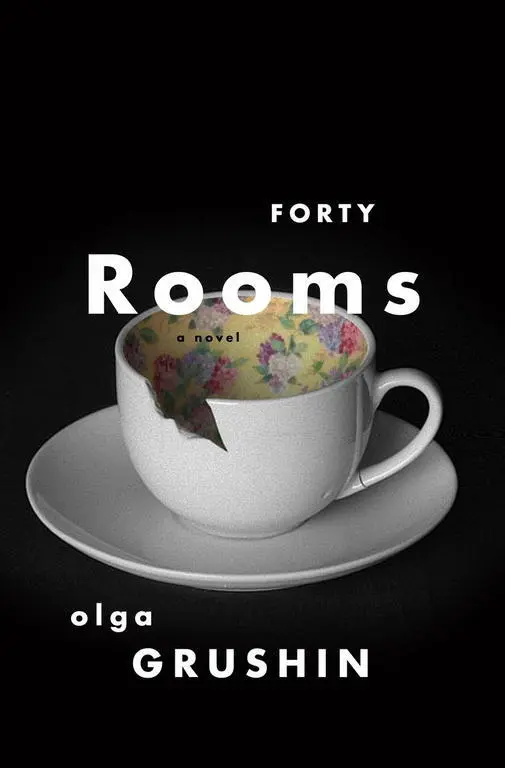
- Название:Forty Rooms
- Автор:
- Издательство:Penguin
- Жанр:
- Год:2016
- Город:New York
- ISBN:978-1-101-98309-6
- Рейтинг книги:3 / 5. Голосов: 1
-
Избранное:Добавить в избранное
- Отзывы:
-
Ваша оценка:
Forty Rooms: краткое содержание, описание и аннотация
Предлагаем к чтению аннотацию, описание, краткое содержание или предисловие (зависит от того, что написал сам автор книги «Forty Rooms»). Если вы не нашли необходимую информацию о книге — напишите в комментариях, мы постараемся отыскать её.
now returns to gift us with
, which outshines even that prizewinning novel. Totally original in conception and magnificently executed,
is mysterious, withholding, and ultimately emotionally devastating. Olga Grushin is dealing with issues of women’s identity, of women’s choices, that no modern novel has explored so deeply.
“Forty rooms” is a conceit: it proposes that a modern woman will inhabit forty rooms in her lifetime. They form her biography, from childhood to death. For our protagonist, the much-loved child of a late marriage, the first rooms she is aware of as she nears the age of five are those that make up her family’s Moscow apartment. We follow this child as she reaches adolescence, leaves home to study in America, and slowly discovers sexual happiness and love. But her hunger for adventure and her longing to be a great poet conspire to kill the affair. She seems to have made her choice. But one day she runs into a college classmate. He is sure of his path through life, and he is protective of her. (He is also a great cook.) They drift into an affair and marriage. What follows are the decades of births and deaths, the celebrations, material accumulations, and home comforts—until one day, her children grown and gone, her husband absent, she finds herself alone except for the ghosts of her youth, who have come back to haunt and even taunt her.
Compelling and complex,
is also profoundly affecting, its ending shattering but true. We know that Mrs. Caldwell (for that is the only name by which we know her) has died. Was it a life well lived? Quite likely. Was it a life complete? Does such a life ever really exist? Life is, after all, full of trade-offs and choices. Who is to say her path was not well taken? It is this ambiguity that is at the heart of this provocative novel.
Forty Rooms — читать онлайн бесплатно полную книгу (весь текст) целиком
Ниже представлен текст книги, разбитый по страницам. Система сохранения места последней прочитанной страницы, позволяет с удобством читать онлайн бесплатно книгу «Forty Rooms», без необходимости каждый раз заново искать на чём Вы остановились. Поставьте закладку, и сможете в любой момент перейти на страницу, на которой закончили чтение.
Интервал:
Закладка:
“No, that one she kept for herself,” Mrs. Caldwell said.
“So the last baby didn’t make her happy?”
“Oh. No, no, it’s just that she wanted to keep one song for herself.”
“So she was selfish.” Celia yawned and closed her eyes, and mumbled into her pillow, “Or maybe the last song was a bad one. Or maybe her father forgot to put it in the box and gave her only six. Or maybe the princess lost it when she opened the box the time before. Or maybe—”
Mrs. Caldwell sighed. “Maybe,” she said. Bending over the drowsy girl, she smoothed the matted blond locks on her forehead, then whispered, her lips against the child’s warm cheek: “Would you like a little sister?” Celia did not answer; she too had fallen asleep. (Celia dreamed that she lived in a house just like their house from the outside but completely different inside. There was no furniture anywhere at all, and the empty rooms had clear glass walls; through the walls she could see disappearing vistas of tantalizing, brilliantly colored places—gardens, mountains, amusement parks with the most delightful carousels—to which, however, she could discover no entrance, for when she walked through the doors, she found herself in other glass-walled rooms that were just like the rooms she had left. The floors were likewise glass, and when she peered closely, she could see roots and insects stirring in the soil under her feet, though she could not touch them through the thick transparent plate. None of the rooms had ceilings; no matter what floor she was on, wherever she looked up, she saw white curly clouds scurrying across the skies and, in one spot, a gathering thunderstorm. A few times she thought she glimpsed, through the glass of the walls, her mother passing slowly, rooms away, her eyes cast down, her face pale—but she could never get close to her. And once, a man appeared before her and looked her over thoughtfully. So you are one of the brats for whom your mother the princess has given up her songs, he said. I wonder if you’re worth it. He smiled at her then, but it was not a nice smile. She felt a little afraid, and fascinated at the same time.)
Mrs. Caldwell slipped off the bed and sat down in her reading chair to wait. All five children and the dog were sleeping now. Outside the girls’ room, the house shifted, settling deeper into its mysterious nocturnal life, filling with odd creaks, groans, and murmurs—the sock monster rummaging through the laundry basket, the cantankerous ghost of her grandmother muttering in the exercise room, two shadowy lovers embracing among the bottles down in the cellar—but inside the girls’ warmly glowing pink-and-white room there reigned a tranquil stillness, not altogether soundless, and yet separate from the rest of the world, as if they were sheltered within some luminous rosy seashell, and while the seashell hummed gently with the rumble of the ocean, the ocean’s chilled, roiling vastness was reduced in the seashell’s pearly, blushing spiral to something toylike, and soothing, and remote. Mrs. Caldwell watched her daughters sleep—Emma lying still and serene on her back, her dark hair framing the solemn clarity of her profile, Celia tossing, pulling the covers on, throwing them off, revealing the scratches on her arms and the scabs on her knees, hugging her bunny closer to her chest, muttering something with a quiet but fierce conviction—“Yes, yes, I am, I swear,” Mrs. Caldwell heard, or thought she heard. Two small, self-contained worlds, two perfect, unknowable mysteries, and down and across the hallway, three more—and she loved each of them completely, loved them more than anything else in the world, more even than her songs.
Another pair of headlights flooded the inside of the seashell with a cold, sliding glare, but this time the car did slow down, the gates glided open, gravel crunched under the tires. She did not rise to meet him—she had chosen this room for their talk, had meant to stay within its rosy safety. When his ponderous steps thumped up the stairs, she called him in an undertone, and called again, louder. The steps hesitated on the landing before turning toward her. Then he stood in the doorway—an imposing, impeccably dressed man with the heavy face of a tired stranger.
“Come,” she said, “look at them. Look how sweet they are.”
“Yes,” he said from the threshold, and was silent. She saw his face harden with a sudden resolve. He took a step into the room.
“Sit down for a minute,” she said, and while her voice was low with tenderness, her stomach lurched with worry.
She could smell whiskey on his breath from where she sat.
He remained standing, looking away from her, at the girls in their beds.
“Time has flown,” he said. She wished she could see his eyes. “It’s hard to believe Cecilia is turning five in another week. Not a baby any longer… Look, there is something I’ve been meaning to tell you.”
Panic split her asunder. She had prepared for their conversation with care, had watched her face in the mirror as she had practiced saying the loving words leading to the hinting words leading to the shocking words to be followed up quickly by the calming words—but there was no time for it now. He was going to tell her about the other woman, she knew, and then he was going to leave her, leave her and the children, because none of them were babies now, because they would manage—
“Wait, I have something to tell you too,” she cried. “I’m pregnant!”
The seashell nightlight glowed, the girls’ breathing was peaceful in their sleep.
He looked at her stonily, without speaking.
“I’m pregnant, Paul,” she said again, softly, and forced herself to smile.
The expressions shifted in rapid succession on his face, like a shuffled deck of cards, until the one that settled on it was anger.
“How is that possible?” he said. His tone was even, but she felt the boil of his fury beneath. Her smile flickered out. She could no longer tell what expression her own face bore. “How is that possible? It’s only been once or twice in the past few months, if that. And I thought you were taking the pill—”
Her panic grew. She had not practiced for this.
“But I am,” she pleaded, untruthfully. “Accidents happen.”
He sat down on Emma’s bed, placed his hands squarely on his knees.
“Look,” he said. “Things aren’t… We already have five children. You only ever wanted two. I wanted three. The twins—the twins were a blessing, of course, and little Celia… Well, you know I was against it, but you talked me into it, and I wouldn’t have it any other way, that goes without saying, but this time… We’re both forty years old, my job security isn’t what it used to be, and—and things are different. You have to talk to your doctor—”
“Paul.” She was crying. “I can’t. I can’t now. It’s too late.”
“What do you mean, too late?”
“Do you remember that night—the night your father told you he needed surgery—”
“Do you mean,” he began, and stopped, and stood back up, towering over her, staring down at her as she pressed, feeling small and frightened, into her chair. “That was almost five months ago.”
“Five months and a week,” she whispered.
“You are five months pregnant, and you haven’t told me?”
“Don’t shout, please don’t shout, you’ll wake them up… I didn’t know. Please. Paul. I didn’t know myself. I thought I was just…” ( Old. Fat. Say it. The cold voice inside nudged her, but she disregarded its promptings.) “I only just found out myself. Paul. It’s going to be a girl. A healthy girl. Look at them. Look at them!”
And there were the upside-down mermaids floating on the wallpaper, and the warm seashell nightlight, and Emma’s papier-mâché model of a human heart on her desk, and Celia’s one-eared blue bunny hanging half off her bed, and two heads on the pillows, one blond, one dark. And as he stood before them, the big hulk of a man, the big husk of a man, his shoulders drooped, his mouth sagged, and she saw defeat in his eyes, and underneath it, possibly, just possibly, the touch of old warmth, of old kindness.
Читать дальшеИнтервал:
Закладка:
Похожие книги на «Forty Rooms»
Представляем Вашему вниманию похожие книги на «Forty Rooms» списком для выбора. Мы отобрали схожую по названию и смыслу литературу в надежде предоставить читателям больше вариантов отыскать новые, интересные, ещё непрочитанные произведения.







Обсуждение, отзывы о книге «Forty Rooms» и просто собственные мнения читателей. Оставьте ваши комментарии, напишите, что Вы думаете о произведении, его смысле или главных героях. Укажите что конкретно понравилось, а что нет, и почему Вы так считаете.