Andrea Barrett - The Air We Breathe
Здесь есть возможность читать онлайн «Andrea Barrett - The Air We Breathe» весь текст электронной книги совершенно бесплатно (целиком полную версию без сокращений). В некоторых случаях можно слушать аудио, скачать через торрент в формате fb2 и присутствует краткое содержание. Год выпуска: 2007, Издательство: W. W. Norton & Company, Жанр: Современная проза, на английском языке. Описание произведения, (предисловие) а так же отзывы посетителей доступны на портале библиотеки ЛибКат.
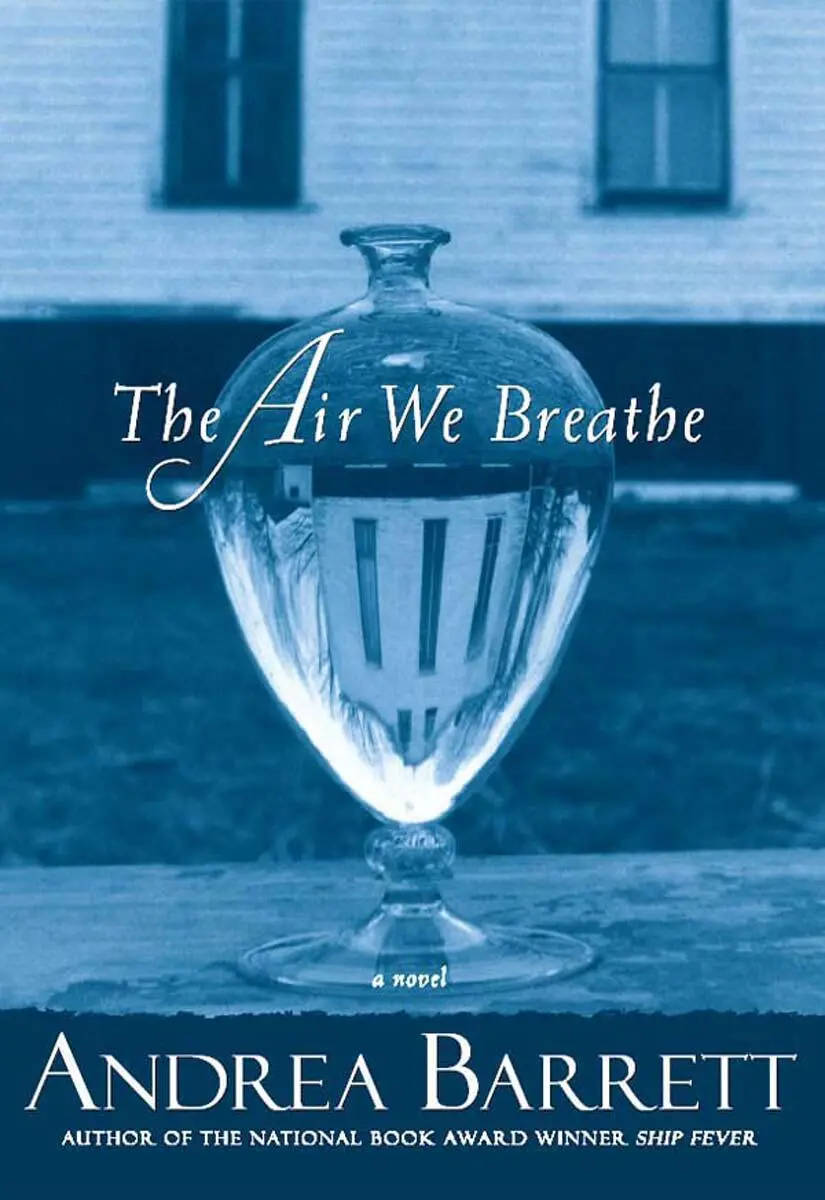
- Название:The Air We Breathe
- Автор:
- Издательство:W. W. Norton & Company
- Жанр:
- Год:2007
- ISBN:нет данных
- Рейтинг книги:3 / 5. Голосов: 1
-
Избранное:Добавить в избранное
- Отзывы:
-
Ваша оценка:
The Air We Breathe: краткое содержание, описание и аннотация
Предлагаем к чтению аннотацию, описание, краткое содержание или предисловие (зависит от того, что написал сам автор книги «The Air We Breathe»). Если вы не нашли необходимую информацию о книге — напишите в комментариях, мы постараемся отыскать её.
) by the National Book Award-winning author of
. In the fall of 1916, America prepares for war — but in the community of Tamarack Lake, the focus is on the sick. Wealthy tubercular patients live in private cure cottages; charity patients, mainly immigrants, fill the large public sanatorium. Prisoners of routine, they take solace in gossip, rumor, and — sometimes — secret attachments. But when the well-meaning efforts of one enterprising patient lead to a tragic accident and a terrible betrayal, the war comes home, bringing with it a surge of anti-immigrant prejudice and vigilante sentiment.
The Air We Breathe — читать онлайн бесплатно полную книгу (весь текст) целиком
Ниже представлен текст книги, разбитый по страницам. Система сохранения места последней прочитанной страницы, позволяет с удобством читать онлайн бесплатно книгу «The Air We Breathe», без необходимости каждый раз заново искать на чём Вы остановились. Поставьте закладку, и сможете в любой момент перейти на страницу, на которой закончили чтение.
Интервал:
Закладка:
“—think what?” Leo said, walking in just then.
The fingers on his right hand were stained with ink and his wool pants badly needed mending. His hair was shaggy, like everyone’s; our barber hadn’t visited yet that month. Naomi took a step toward him, but before she could say anything, Eudora seized her arm.
“I’m so sorry,” she said, gripping Naomi just above the elbow. “We were walking down the hall together and then Naomi suddenly got dizzy”— Me! Naomi thought, pulling her arm free—“and she stumbled.”
Twining her hands in her ugly blue apron, Eudora continued to spin her lies. Because she knew how much of his free time Leo spent in the library now, she’d guessed that his room might be empty and had led Naomi inside for a minute’s privacy: “So she wouldn’t faint. So we wouldn’t upset the patients.”
How ridiculous, Naomi thought. If she hadn’t fainted when her brother died, when her mother took her from Chester or when she first saw a dead body, why would she start now? But Leo must have sensed that, simply from looking at her. She could feel that she was the opposite of pale, her face hot both from the thrill of being in the room with him and from knowing she had a scrap of him tucked between her waistband and her skin.
“You’re welcome to use anything you need,” he said gently. “Maybe Naomi should lie down on the bed?”
He was looking at Eudora as he said this, but Naomi could feel how much he actually wanted to be looking at her, how conscious he was of her, so nearby. How much he wanted for her to lie down, for Eudora to vanish, for the door to close behind her.
“Really, I’m so sorry,” Eudora said again. She looked at him as if trying to distract attention from what Naomi had done, while he looked at Eudora as if, Naomi thought, by not looking directly at her he could deny the attraction between them. She stood there, mutely watching, until Eudora seized her elbow again and hustled her away.
THEY HAD A few sharp words in the parking lot — Celia saw them, from her porch, also Sadie and Pearl and Bea — and then Naomi drove home alone, leaving Eudora behind to whatever she did in that basement with Irene. Eudora’s annoyance was nothing, Naomi thought, a misunderstanding she could explain away later. What she wanted to think about was that brief encounter with Leo. She was so excited she stalled the car twice and bumped the fender entering the carriage house. Inside, serving dinner, her mouth responding to her mother’s orders and the boarders’ comments, her eyes avoiding Miles’s face, she mulled over all she’d learned. She’d seen a new part of Leo, and she was sure — his eyes were the same transparent blue as her own — that for the first time, he’d really seen her . As if that weren’t a big enough gift, she also had what she’d stolen.
She’d meant to take a scarf, or a pillowcase — something that, if he were to miss it, he could imagine had been lost in the wash. She would have, if Eudora hadn’t barged in and she hadn’t had to act so swiftly. On the drive home, she’d been disappointed to end up with something so impersonal, but in the dining room she reconsidered. She served the hazelnut torte, poured coffee, cleared the dishes. By the time she got up to her room and could examine her treasure, it seemed like the one perfect thing. When she rolled it in her hand she told herself: It’s not a pencil . Then she stood it alongside the others in the cup, the point hidden and the long seam almost invisible — and it was a pencil, no different from any other. She could leave it anywhere without a person noticing; carry it in her pencil case or in a pocket. Holding it made her feel like she could see inside Leo’s brain.
LEO, WHO DIDN’T know the pencil was missing, went to supper and, as he had done with Miles, told no one about the visit. Not, the rest of us think, because he wanted to hide it, or because he feared what some of us might say (and it’s true that any of us could have pointed out Naomi’s growing interest in him), but simply because he didn’t think it was important. Eudora he’d been thrilled to see, Naomi he’d hardly noticed; he’d taken Eudora’s story at face value and forgotten it the minute she left. The box tucked in the back of his locker hadn’t crossed his mind. Weeks ago, right after Ephraim’s departure, he’d methodically examined everything in it, dissected the pencil, diagrammed its workings, and then, reassured that he knew all he could about it, put it back and moved on to more interesting matters. When he thought about pencils, he thought about a page he’d found in his Mendeleeff: If sugar be placed in a charcoal crucible and a powerful galvanic current passed through it, it is baked into a mass similar to graphite . If the sugar refinery in Williamsburg was hit by lightning, would it fuse into a shiny black mass? He’d turned to the footnote below, which concerned the best sources of graphite for pencils: In Russia the so-called Aliberoffsky graphite is particularly renowned; it is found in the Altai Mountains near the Chinese frontier…
Why should those sentences, about a part of Russia he’d never seen and a substance interesting only for its unusual molecular structure, have caused such a massive fit of homesickness in him? Yet they had, they’d made him see not only the places where he’d lived as a boy but all of Russia spread out in his mind’s eye, taiga and tundra and Lake Baikal, St. Petersburg and Moscow, spots as distant from his childhood homes as he was now from California. Just that afternoon, in the library, he’d found an out-of-date atlas and spent his free hour hunched over maps showing the advance and retreat of Napoleon’s army, the location of salt mines, the average number of bushels of buckwheat a field might yield. He’d taken notes, without knowing why. When he’d stopped by his room to find Eudora and Naomi confused and guilty-looking inside, his imagination had been a jumble of maps and politics and molecular structures, against which the women had seemed, for a second, as insubstantial as ghosts.
Then Eudora had solidified enough for him to realize that he’d caught her and Naomi in an awkward moment, some female difficulty perhaps, into which it was best not to pry. A waste, he thought; there was no way, given the situation, for him to ease Naomi gently from his room so that he could talk to Eudora alone, although he badly wanted her advice. The atlas, with its hints of home, had made him think about his mother and the dim hours between four and six when she used to go over his lessons with him. She sat on the green sofa with her skirts spread out, one of his books in her hands, and he stood before her. The sun slanted over her left shoulder and onto the pages and her knees. He recited a stanza of a poem or a bit of elementary German, whatever he’d studied for the day, and she read along in the book, checking his recitation. When he was done she smiled, clapped her hands softly together, and held out her arms to him.
So we might applaud, or at least understand him better, once he’d given a Wednesday talk. In the library he’d finally thought of a topic and he’d wanted Eudora’s opinion: what if he talked about synthesis, the glory of chemistry? Surely everyone would be interested in that. All scientists, he imagined saying, analyze complex objects and processes, breaking them into smaller and simpler bits until they can be understood. But chemists also, thrillingly, make things. Even as a boy, with a schoolboy’s tools, he’d made things himself. He could use examples from his Mendeleeff and the books he’d borrowed from Irene and Dr. Petrie to illustrate the process of linking small, simple molecules into larger, more complicated structures, until from what had seemed like thin air something useful arose, essential even, fertilizer or indigo dye.
Читать дальшеИнтервал:
Закладка:
Похожие книги на «The Air We Breathe»
Представляем Вашему вниманию похожие книги на «The Air We Breathe» списком для выбора. Мы отобрали схожую по названию и смыслу литературу в надежде предоставить читателям больше вариантов отыскать новые, интересные, ещё непрочитанные произведения.






Обсуждение, отзывы о книге «The Air We Breathe» и просто собственные мнения читателей. Оставьте ваши комментарии, напишите, что Вы думаете о произведении, его смысле или главных героях. Укажите что конкретно понравилось, а что нет, и почему Вы так считаете.