Andrea Barrett - The Air We Breathe
Здесь есть возможность читать онлайн «Andrea Barrett - The Air We Breathe» весь текст электронной книги совершенно бесплатно (целиком полную версию без сокращений). В некоторых случаях можно слушать аудио, скачать через торрент в формате fb2 и присутствует краткое содержание. Год выпуска: 2007, Издательство: W. W. Norton & Company, Жанр: Современная проза, на английском языке. Описание произведения, (предисловие) а так же отзывы посетителей доступны на портале библиотеки ЛибКат.
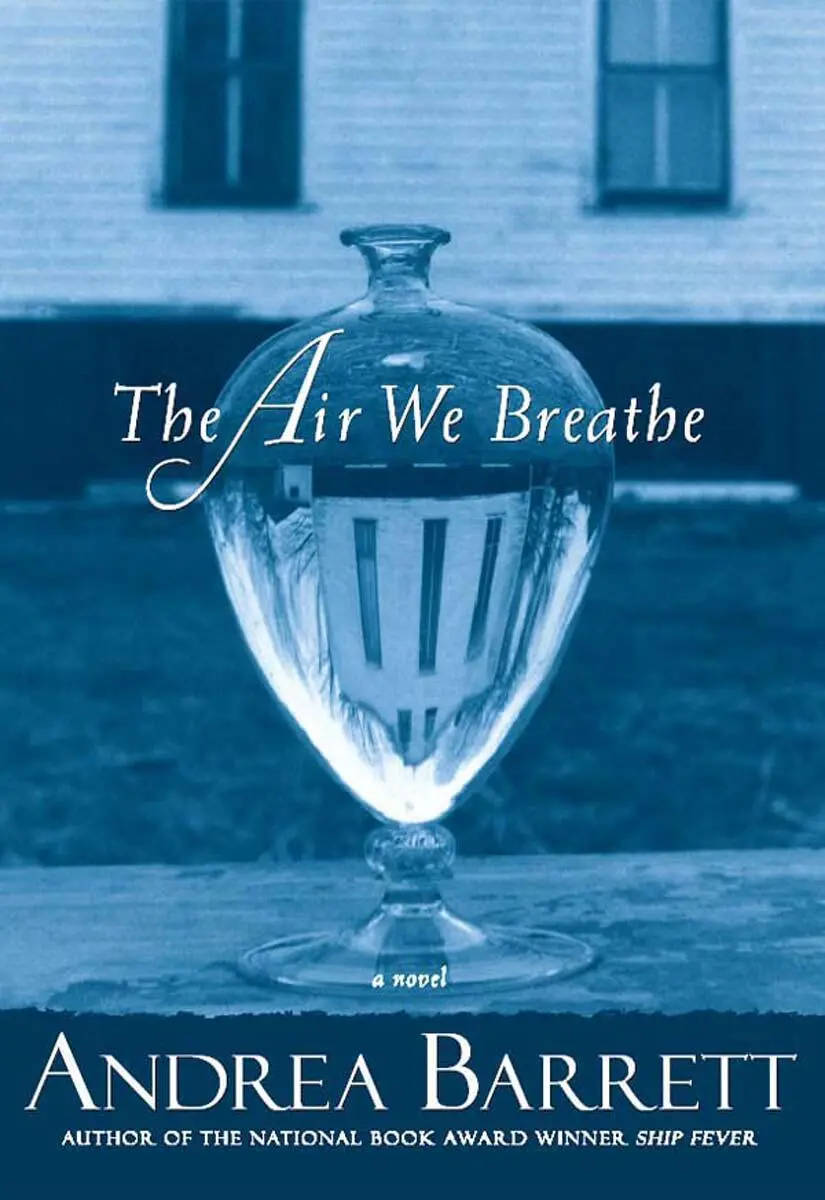
- Название:The Air We Breathe
- Автор:
- Издательство:W. W. Norton & Company
- Жанр:
- Год:2007
- ISBN:нет данных
- Рейтинг книги:3 / 5. Голосов: 1
-
Избранное:Добавить в избранное
- Отзывы:
-
Ваша оценка:
The Air We Breathe: краткое содержание, описание и аннотация
Предлагаем к чтению аннотацию, описание, краткое содержание или предисловие (зависит от того, что написал сам автор книги «The Air We Breathe»). Если вы не нашли необходимую информацию о книге — напишите в комментариях, мы постараемся отыскать её.
) by the National Book Award-winning author of
. In the fall of 1916, America prepares for war — but in the community of Tamarack Lake, the focus is on the sick. Wealthy tubercular patients live in private cure cottages; charity patients, mainly immigrants, fill the large public sanatorium. Prisoners of routine, they take solace in gossip, rumor, and — sometimes — secret attachments. But when the well-meaning efforts of one enterprising patient lead to a tragic accident and a terrible betrayal, the war comes home, bringing with it a surge of anti-immigrant prejudice and vigilante sentiment.
The Air We Breathe — читать онлайн бесплатно полную книгу (весь текст) целиком
Ниже представлен текст книги, разбитый по страницам. Система сохранения места последней прочитанной страницы, позволяет с удобством читать онлайн бесплатно книгу «The Air We Breathe», без необходимости каждый раз заново искать на чём Вы остановились. Поставьте закладку, и сможете в любой момент перейти на страницу, на которой закончили чтение.
Интервал:
Закладка:
“They’re too grim to show anyone,” Miles said. “If people here really knew what was going on there, they would want—”
“To stay out of it?” Leo said.
Miles looked at him appraisingly. “To get into it. I’m sure we’ll declare war any day now, but why have we already wasted so much time? We should have committed ourselves much earlier. If we had, maybe Lawrence wouldn’t be dead.”
Below Leo, a shadow moved across the drift — it had finally snowed — and from above a bird plunged. Back home, he thought, in the marshes and hollows he’d known as a boy, all the men must have gone off to fight, leaving behind only the birds and the fish and the empty forest. Lawrence wouldn’t be dead if he hadn’t volunteered; how would it help to send more men after him?
“One thing I can’t stop thinking about,” Miles said. “Jaroslav reminded me of it, when he mentioned the fossil bones. Lawrence wrote that some nights, when he was lying awake in the mud, he thought of the river we floated down as a river through time. He said for him, our boat journey might have started in the nineteenth century, in his father’s world, and mine. When it ended it dropped him into another century and another world.”
They looked out the window again, eyes averted from each other, fixed on the women below. Lawrence, Miles continued, had described all too vividly the trench walls where he was stuck, slick and slippery and caving in daily, dotted with bones and body parts: a nightmare version, he’d written, of the cliffs from which they’d excavated the cleanly layered fossils.
“It makes me sick,” Miles said, slapping his hand against the windowsill. “Not just his death, but what happened before it, what’s in those letters — I think he wanted to die. What’s wrong with the French and the British, that they can’t organize matters better than this? The inefficiency, the sheer waste of life and idealism — when we get over there, when Americans are in charge, things will be different.”
“Will they?” Leo said, not thinking how his words might sound.
“Of course they will,” Miles said. “If you saw the way my cement plant runs, or the way Edward’s factories are organized — we’d never let men rot like this. Not just physically but morally, spiritually. Lawrence and his friends were trapped.”
Leo tried to envision Miles’s cement plant in Doylestown. Different from the sugar refinery, not chaotic and filthy but well run and organized, workers calmly tending their machines before stopping for useful after-hours classes, encouraged by small rewards to produce more and still more — was that what Miles meant? Those same men, overseas, would climb docilely out of the trenches and march toward the bullets.
He glanced down and saw that Eudora was leaving the garden; the sky had darkened further and he’d missed his chance to speak with her again. “I wish I could help,” he said to Miles. “Truly.”
Miles drew himself up a bit straighter. “It was kind of you simply to listen. I expect you have to go—”
“—to supper,” Leo said. “But I’ll see you next week.”
LEO TOLD NO ONE about this conversation; only later would the rest of us hear a version of what, at the time, seemed private. His imagination was dark with those images of Lawrence, and he felt more sympathy for Miles than he would have thought possible. He was startled — all of us were — to hear later that, while we were sitting down to supper, Miles had stopped by Dr. Petrie’s office. There he spoke not about Lawrence and the letters, but about Naomi.
“Maybe you could talk to her for me?” he asked. “Convince her to give me a chance…”
“Convince her, more likely, to avoid you completely,” Dr. Petrie said impatiently. Hadn’t they already talked about this? “I know this is a terrible time for you, it’s natural to look for comfort anywhere you can find it — but infatuations are as common up here as colds. You need to find some way to control this. I would never have expected you to take these feelings so seriously.”
“I gave her the book Edward gave me,” Miles said miserably. “That was terrible of me, but I thought she’d like it because it’s old, and a curiosity. But she didn’t, and—”
“Look outward, ” Dr. Petrie said. Even to himself he sounded harsh, but nothing was more important than preserving Miles’s health. “Stop focusing so much on yourself. Naomi can’t console you for losing Lawrence. There isn’t a person up here who hasn’t lost a friend or a family member. Do you think you’re alone?”
Miles slumped once more in the gray chair. “You think I am self-indulgent,” he said. “You think I’m ridiculous.”
“Not at all,” Dr. Petrie said wearily. “I’m only trying to help. Of course you’re grieving, you’ve had a terrible blow. No wonder you feel confused. But sometimes the best cure is to think about other people, involve yourself in their lives. The way you helped Lawrence when he was a boy.”
“If you had lost someone,” Miles said, “I would be more sympathetic. Or if you were in love.”
Later he sent Dr. Petrie this:
I do thank you for your conversation and advice. I take it seriously. I know I should have written, should now be writing, further letters of consolation and condolence to Edward. I know I should tell him about the awful letters that Lawrence wrote to me and maybe I should send them on: but I can’t, they’re all I have left of him. Nor can I let go of my hopes for Naomi. What else am I to look forward to?
I am taking one bit of your advice at least. Lawrence is gone, I can’t help him; perhaps I can help someone else. It has struck me that Leo Marburg seems more than a little lost since his roommate has left us. I have formulated a plan that may assist him, which I hope to discuss with him, and then you, sometime soon. In the meantime I promise not to trouble you with personal matters again
12
ON THE MONDAY following Jaroslav’s talk, Leo fell asleep on the porch during afternoon rest hours and woke to the hollow chock, chock, chock of someone splitting wood near the barns, a sound that in the last moments of his dream made him see an ax in his cousin’s stout arms and his mother, framed between two giant beech trees, smiling off to one side. Rising groggily, already late, he pushed open the door of his room and, turning toward the library, nearly crashed into Miles.
“Sorry,” said Miles, who still had his overcoat on, buttoned up to the neck. “I know I’m not supposed to be here.”
“That’s true,” Leo agreed. “We’re not allowed to have visitors in our rooms.”
“I’m not exactly a visitor, ” said Miles.
Leo drew a breath, remembering all that Miles had lost. “Who are you looking for?”
“You,” Miles said, “actually. I want to talk to you about something.” As Leo struggled not to look at the clock on the wall — so little time to work before supper, and so much he wanted to do — Miles added, “I think you should consider coming to stay at Mrs. Martin’s house.”
“I’m sorry?”
“At my expense,” Miles continued. “A room just opened up on the first floor. It’s not the nicest one; it’s in the front, and modestly sized. But it’s clean, and private, and very much nicer than here. Plus Mrs. Martin keeps a marvelous table.”
Leo shivered, too cold in the windy corridor to think of the right thing to say. As if he’d leave when Ephraim might still come back and when, two floors below him, Irene and Eudora were working with equipment that might someday be available to him. In the weeks since his visit to the basement, he’d been slowly, painfully, trying to recover what he’d once known. Thus matter does not disappear and is not created, but only undergoes various physical and chemical transformations — that is to say, changes its locality and form. Matter remains on the earth in the same quantity as before; in a word it is, so far as we are concerned, everlasting. Somehow that sounded more surprising in English than he remembered it being in Russian. All of it surprised him, really; digging down through the rubble that, during his six years in New York, had buried his mind, he’d felt like a worker excavating a subway tunnel. He’d set himself the task of relearning all of Mendeleeff’s book, not because Irene expected it — he knew she didn’t — or because he needed more than a scrap of that knowledge to help her out in the laboratory, but because he was looking forward, still, to speaking at one of our Wednesday gatherings and he wanted to draw not on his scattered, broken American self but on who he really was.
Читать дальшеИнтервал:
Закладка:
Похожие книги на «The Air We Breathe»
Представляем Вашему вниманию похожие книги на «The Air We Breathe» списком для выбора. Мы отобрали схожую по названию и смыслу литературу в надежде предоставить читателям больше вариантов отыскать новые, интересные, ещё непрочитанные произведения.








Обсуждение, отзывы о книге «The Air We Breathe» и просто собственные мнения читателей. Оставьте ваши комментарии, напишите, что Вы думаете о произведении, его смысле или главных героях. Укажите что конкретно понравилось, а что нет, и почему Вы так считаете.