Andrea Barrett - The Air We Breathe
Здесь есть возможность читать онлайн «Andrea Barrett - The Air We Breathe» весь текст электронной книги совершенно бесплатно (целиком полную версию без сокращений). В некоторых случаях можно слушать аудио, скачать через торрент в формате fb2 и присутствует краткое содержание. Год выпуска: 2007, Издательство: W. W. Norton & Company, Жанр: Современная проза, на английском языке. Описание произведения, (предисловие) а так же отзывы посетителей доступны на портале библиотеки ЛибКат.
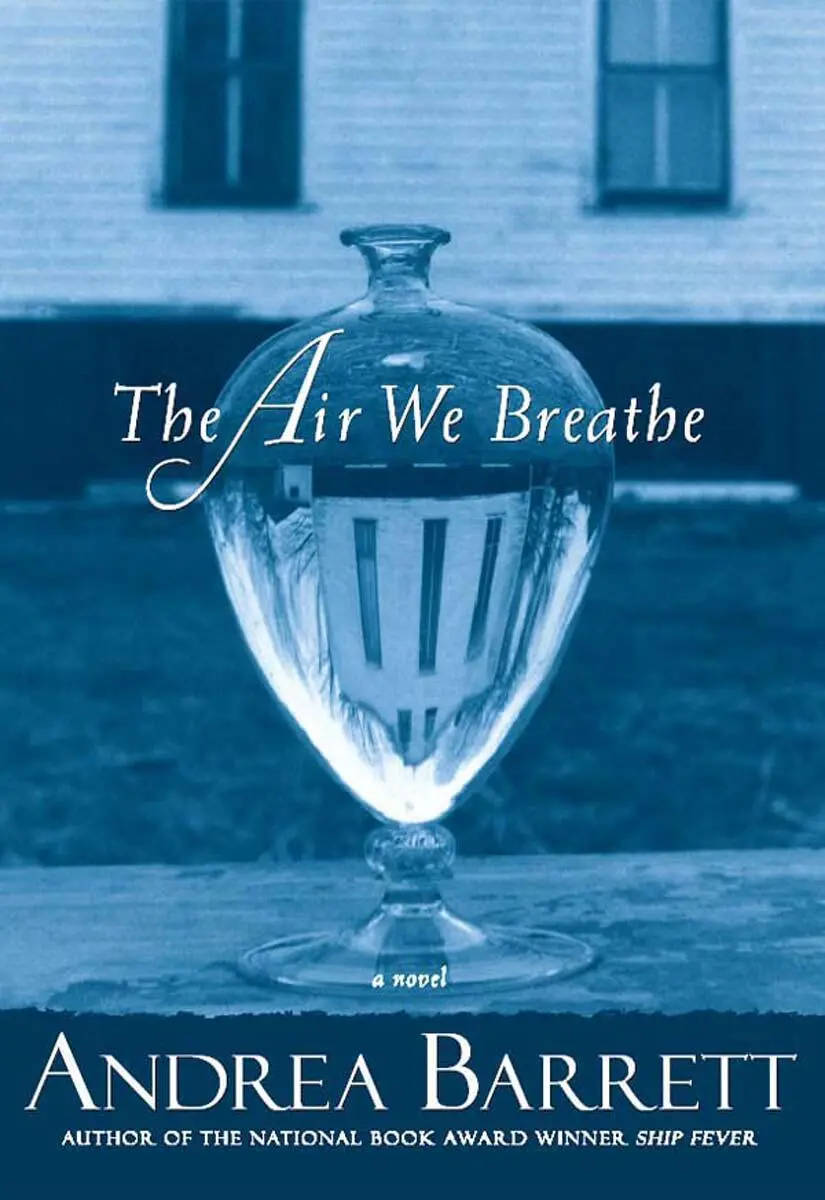
- Название:The Air We Breathe
- Автор:
- Издательство:W. W. Norton & Company
- Жанр:
- Год:2007
- ISBN:нет данных
- Рейтинг книги:3 / 5. Голосов: 1
-
Избранное:Добавить в избранное
- Отзывы:
-
Ваша оценка:
The Air We Breathe: краткое содержание, описание и аннотация
Предлагаем к чтению аннотацию, описание, краткое содержание или предисловие (зависит от того, что написал сам автор книги «The Air We Breathe»). Если вы не нашли необходимую информацию о книге — напишите в комментариях, мы постараемся отыскать её.
) by the National Book Award-winning author of
. In the fall of 1916, America prepares for war — but in the community of Tamarack Lake, the focus is on the sick. Wealthy tubercular patients live in private cure cottages; charity patients, mainly immigrants, fill the large public sanatorium. Prisoners of routine, they take solace in gossip, rumor, and — sometimes — secret attachments. But when the well-meaning efforts of one enterprising patient lead to a tragic accident and a terrible betrayal, the war comes home, bringing with it a surge of anti-immigrant prejudice and vigilante sentiment.
The Air We Breathe — читать онлайн бесплатно полную книгу (весь текст) целиком
Ниже представлен текст книги, разбитый по страницам. Система сохранения места последней прочитанной страницы, позволяет с удобством читать онлайн бесплатно книгу «The Air We Breathe», без необходимости каждый раз заново искать на чём Вы остановились. Поставьте закладку, и сможете в любой момент перейти на страницу, на которой закончили чтение.
Интервал:
Закладка:
“I can’t,” he finally said, drawing his hands up into his sleeves. “Those places are very expensive, not to mention all the doctors’ bills I’d have. I could never pay you back.”
“It’s not a loan,” Miles said. He’d lost weight in the last few weeks and his shirt, which normally fit so tidily, gaped at the neck. “It’s a gift. Room, board, medical care — it’s what I’d give Lawrence, if he needed it. Since I can’t help him any longer, I’d like to be of some service to you. When we’re both better, I thought I could offer you work as a chemist at my plant. The work you were trained for.”
Leaning forward, his lips trembling, he rested one hand on the doorframe — too upset, Leo assumed, by the very thought of Lawrence to remember the rule against touching the woodwork. “Cement can be interesting,” Miles added. “The nature and proportion of the lime, the temperature and time in the kiln and the grinding of the clinker, the exact blending of the different constituents, the lime with the silica and the alumina — everything depends on the skill and accuracy of the chemist. I need good help.”
“That’s kind of you,” Leo said, “truly, but…” Once more he caught himself, continuing as patiently as he could. “Unfortunately,” he said, “my training’s in quite a different area. Fermentation chemistry, mostly. Organic chemistry.”
The chemistry, his teacher had explained years ago, of carbon and its compounds — vegetable matter, animal matter, wax and oil and tar and wood, wine and vinegar and starch. Everything alive, which had nothing to do with gray cement. Each day he’d been working through a few of Mendeleeff’s pages. Carbonic anhydride, formed during alcoholic fermentation and found in nature near extinct volcanoes and in caves and mountain fissures, had been this morning’s lesson. Insects flew into those hollows and died, Mendeleeff wrote in one of his footnotes. Also the birds chasing the insects, and the animals pursuing the birds. A man mining or digging a well in such an area may be suffocated. In a sunny classroom, Leo remembered, he’d once placed a mouse in a bell jar and measured the amount of carbon it expelled before it died.
“Don’t you want to think about my offer?” Miles said.
“I wouldn’t be any use to you,” said Leo. “Anyway I wouldn’t leave my friends here.” He gestured toward Miles’s hand, still grasping the doorframe. “You should wash before you go.”
Miles lifted his fingers from the wood. “I’m trying to help you,” he said stiffly. “Mrs. Martin’s house has amenities that this place can’t provide. I thought the arrangement might be good for both of us, but I see I was wrong.”
He turned and hurried away, the hand that had been touching the wood now held, Leo noted, some inches from his body, just as if he were someone healthy enough to worry about getting sick.
That evening, alone in his room with a newspaper propped against his knees — the czar had abdicated, the czar had abdicated: no matter how many times he read the headline and the columns that followed, he couldn’t believe it — Leo reviewed Miles’s offer only to dismiss it again. Why would Miles think he’d accept that kind of charity? In Russia, he read, everything was on the verge of changing, the rational and harmonious order so many had proposed for so long about to sweep away the corrupt, the foolish, and the antiquated; every day brought a new astonishment. The people rose up, the czar fell down, a provisional government appeared by what seemed like consensus: how could this be? If only he could talk with Ephraim. Since his friend’s departure he’d been trying to imagine the community in Ovid and what might be going on there. What might go on here, if we were left to our own devices. In Russia everything seemed possible but here — here, we seemed blocked at every turn, the conversations of our Wednesday afternoons the one place we were free.
NOW, WHEN THE February Revolution seems like a child’s dream and we’ve seen the consequences of the Bolsheviks’ October triumph, when we read daily the terrible news of Russia’s civil war and dread what comes next, the optimism of those weeks seems laughable. But it didn’t feel that way, then. It felt, Leo thought — many of us thought — as if we were walking into a new world. During the last two weeks of March we had two more excellent gatherings, Pietr talking about the constellations visible from our porches, and then Zalmen and Seth, together describing the design and manufacture of machine tools; these raised everyone’s spirits and even Miles, so quiet since Lawrence’s death, asked questions at both sessions. Those were the same weeks during which Leo, working steadily, regained his old familiarity with Mendeleeff’s work and borrowed other books from Dr. Petrie and Irene, which delighted both of them. Meanwhile Eudora, who cheered Leo on whenever she saw him, nearly finished tuning up the old X-ray apparatus.
Three or four nights a week, sometimes with Irene and sometimes alone, she’d been working in the basement. Finally she understood what Naomi had meant about her hand seeming to draw without conscious instruction; her own hands seemed to understand the tubes and wires without interference from her brain. She couldn’t explain to Irene why she did what she did; she couldn’t have written down what she was doing or justified her actions according to any rules. Yet as she stared at the apparatus, her hands knew that this part should be moved here and that part there, this connection resoldered. It looked better that way; it made more sense. When the images improved, even she was surprised. It wasn’t so different, really, from the implements and appliances in her parents’ house, which she’d always been the one to repair. She’d sharpened her father’s skinning knives, fixed the telephone when it broke, repaired not only her own bicycle but everyone else’s too. Only Naomi’s Model T had eluded her — and that, she thought, watching the dead animals yield their secrets under her hands, might after all have been because she’d known it was something Naomi wanted to keep as her own.
Naomi, during those March weeks, found herself watching Leo even more closely. With Ephraim gone, his face radiated a kind of loneliness that she herself had known as a child and, now that Eudora never had time for her, was painfully feeling again. No wonder, if Leo felt so abandoned, that he’d be driven to spending most of his free time in the library with the books Irene had given him. Old things, useless things. Anything to fill his empty hours. She’d examined Irene’s frizzy hair and worn face, her shapeless dress and absurd purple glove, and reassured herself that however much Leo liked her books, he could not like her. If Irene meant to Leo what Miles meant to her, she had nothing to worry about. How tiresome Miles was when he caught her alone! He pulled his chair close and couldn’t stop talking: had she enjoyed the book he’d given her, did she like old things?
Like me, he meant. What did she care about his interests? The book had left thick brown smudges on her hands and clothes and she couldn’t stand to touch it. If Miles would just give his books to Irene, they could talk with each other and leave her and Leo alone. She had her own plans, the thought of which made her able to smile blandly at Miles no matter what he said.
ON APRIL 3, the day after President Wilson went to Congress and asked for a declaration of war, Naomi drove up the hill to Tamarack State, parked near the power plant, and entered the men’s annex through the service door. Although it was spring by the calendar, the ground was still frozen, the woods thick with snow, and Leo was in the library, as he was during every free hour. The door to his room was partway open and Naomi knocked on it twice.
Читать дальшеИнтервал:
Закладка:
Похожие книги на «The Air We Breathe»
Представляем Вашему вниманию похожие книги на «The Air We Breathe» списком для выбора. Мы отобрали схожую по названию и смыслу литературу в надежде предоставить читателям больше вариантов отыскать новые, интересные, ещё непрочитанные произведения.






Обсуждение, отзывы о книге «The Air We Breathe» и просто собственные мнения читателей. Оставьте ваши комментарии, напишите, что Вы думаете о произведении, его смысле или главных героях. Укажите что конкретно понравилось, а что нет, и почему Вы так считаете.