Amy Greene - Long Man
Здесь есть возможность читать онлайн «Amy Greene - Long Man» весь текст электронной книги совершенно бесплатно (целиком полную версию без сокращений). В некоторых случаях можно слушать аудио, скачать через торрент в формате fb2 и присутствует краткое содержание. Год выпуска: 2014, Издательство: Knopf, Жанр: Современная проза, на английском языке. Описание произведения, (предисловие) а так же отзывы посетителей доступны на портале библиотеки ЛибКат.
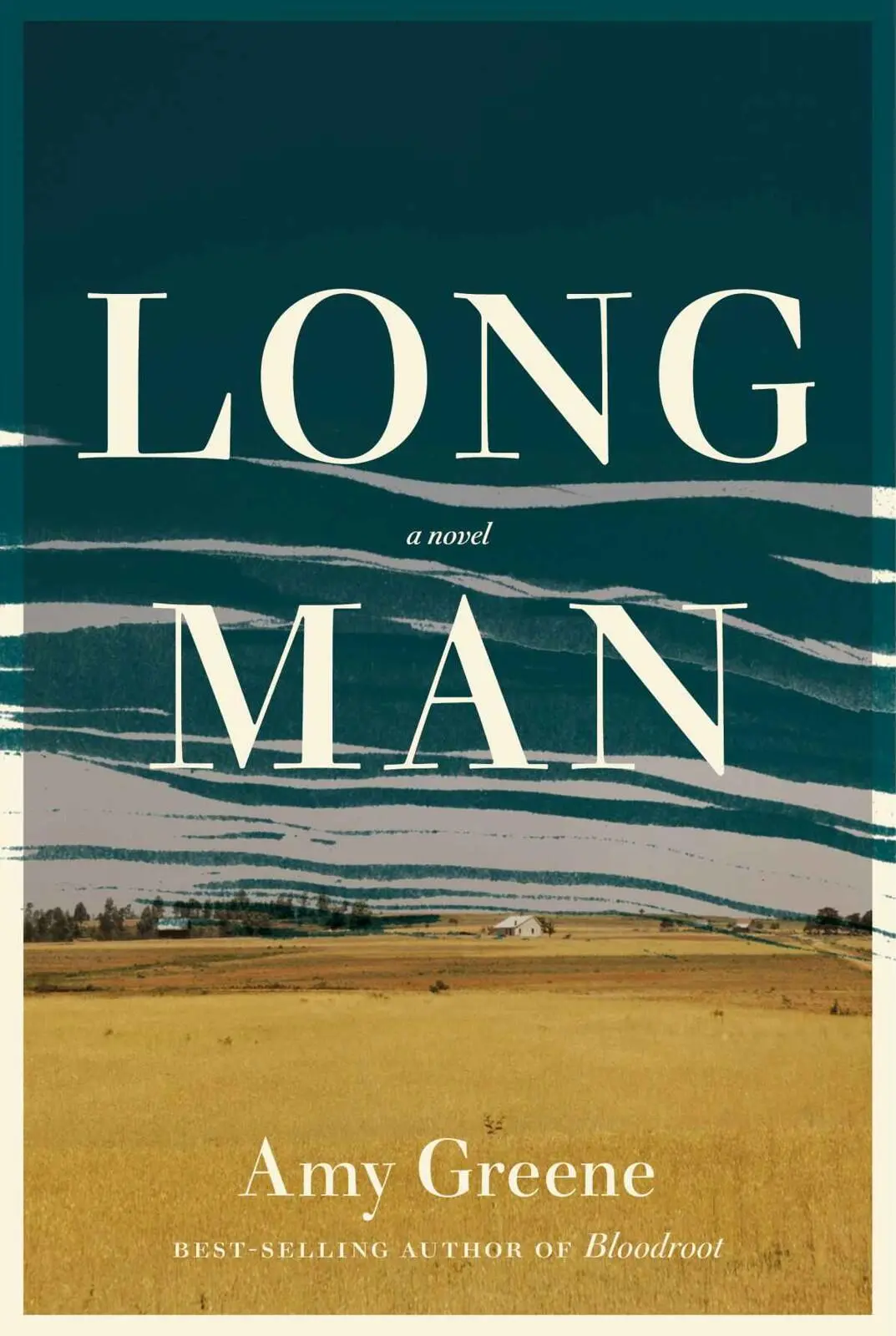
- Название:Long Man
- Автор:
- Издательство:Knopf
- Жанр:
- Год:2014
- ISBN:нет данных
- Рейтинг книги:5 / 5. Голосов: 1
-
Избранное:Добавить в избранное
- Отзывы:
-
Ваша оценка:
Long Man: краткое содержание, описание и аннотация
Предлагаем к чтению аннотацию, описание, краткое содержание или предисловие (зависит от того, что написал сам автор книги «Long Man»). Если вы не нашли необходимую информацию о книге — напишите в комментариях, мы постараемся отыскать её.
Long Man — читать онлайн бесплатно полную книгу (весь текст) целиком
Ниже представлен текст книги, разбитый по страницам. Система сохранения места последней прочитанной страницы, позволяет с удобством читать онлайн бесплатно книгу «Long Man», без необходимости каждый раз заново искать на чём Вы остановились. Поставьте закладку, и сможете в любой момент перейти на страницу, на которой закончили чтение.
Интервал:
Закладка:
Amos had watched the dam site all night, camped in the trees at the edge of the cliff on the west side. Up there the limestone was so sheer and wet that he had to crouch on an incline clinging to saplings. He was perched there for so long that his leaking boots had given him trench foot and his fingers had shriveled like those of the dead. A salamander had shinnied up his arm and hung by its spatulate toes to his coat shoulder. Rainwater had run off his brow to pool in the curve of his eye socket. For now the site was as vacant as the town but at dusk yesterday a watchman in a slicker had patrolled the perimeter of the chain-link fence surrounding the transformer pad and the paved path along the bank up to the powerhouse. After midnight when Amos was certain the watchman was gone he had scrambled down, showering pebbles before him, to look up close at the waters in the dark. On the downstream side of the dam there was no shore to stand on, nothing but an edging of bleached rocks crowded with poplar, cottonwood and elderberry trees. On the reservoir side peninsulas of red sand peeked from beneath the skirts of thick evergreens. The lake was much deeper and bluer than the river, rilled with waves. Looking out across the water from the bluff Amos had seen two rowboats lined up for use by the workers, painted orange with numbers stenciled on their sides, anchored by tie-off pins to a small dock.
Now that there was more light, Amos turned and walked through the misty rain down the double yellow lines of the highway. He went back across the dam and through the fog over to the east side where he stood atop a rolling hill among a sparse copse of hardwoods with power wires strung between them. From this vantage point he had a side view of the transformer pad and beyond it the low powerhouse set on the riverbed with its rows of reflective windows, its great generators connected to the turbine inside the dam. He followed the slope downward along the east abutment wall where the concrete met the grass, tar hardened in patches and rivets bleeding rust down its slanted face. At the bottom of the slope he hunkered for a while behind a crop of milkweed, studying the transformers through the chain-link fence, the chalky white metal of the framework bars. Then Amos went around the transformer pad and picked his way over the rock rubble of the shore until the river entered his boots. He craned his neck to see the dam’s tower from below, a castle turret with its drooping flags. He left his bindle and waded out, icy water riding up his legs, toward the bluff where he’d spent the night. He went farther across the foggy river, drawing closer to the dam, battling the outflow until his toes bumped the cement edge of the spillway. He stepped up onto it, the thunderous spray cascading over his boots, and inched forward to where the west abutment wall joined the cliffside. The seam was drifted with trailing scarves of scattered leaves, almost hidden by vines. Amos probed among them, parting the strands enough to see several snaking chinks. Settling like this wouldn’t affect the structure but he figured the TVA was worried about leaks anyway, wondering if their unproven dam would hold as fast as the reservoir was backing up. Whatever their concerns they’d keep them quiet. They wouldn’t draw unwelcome attention to their business in Yuneetah. In this same spot on the other side the structure would be most vulnerable, where it clung to the weak limestone. This was a gravity dam. It would have to be struck at the base to cause a breach near the bottom. Then the pressure of the water the wall held back would sweep it away, releasing the surging lake.
Amos knew as much because he understood explosives. If he had been born for anything, it was to handle dynamite. He had the steady hands it took. Once he’d worked as a powder monkey at a gravel quarry, the first job he found after leaving Yuneetah. His duty was to bring tools and explosives to the other men. Eventually they saw how fearless he was in spite of his young age and let him insert the fuses in the dynamite, punching holes in the cylindrical sticks with crimpers. Then for a time after the Federal-Aid Highway Act of 1925 was passed, bringing with it rest areas and filling stations and eyesore bridges of steel, Amos had blasted tunnels in mountainsides to make room for the roads. He’d watched as motorcars caught on and blacktop reached deeper into the backwoods, cutting down whatever was in the way, sickened by what he saw. It used to be that he could walk a trail with deer grazing in open fields on both sides of him, plovers leading chicks through the bracken. These days traffic was running the plovers off and killing the deer. The bird nests Amos used to plunder gone. The gullies he once slept in fouled with roadkill. But however much he hated road building he sought the work out wherever he could find it. If he put himself in the right situations, sometimes an opportunity arose to hinder the government’s progress. It was then a matter of deciding whether or not to take it.
Yesterday before sunset after his camp was made, his guinea hen eggs boiled and eaten, the dog bite on his shin cleaned and wrapped with a strip torn from his shirt, Amos walked southeast until he saw a gap in the trees near the Whitehall County line where he knew the dam would be. Because there was still some daylight he avoided the site itself and ventured down an access road to the dormitories where the workmen used to be housed. He climbed the embankment alongside the dam into the woods where he discovered a stone wall marking the boundaries of the watershed. He followed the wall to a cinder-block hut with a padlocked door and stood contemplating it. When he pried a heavy rock from the mud and tried to smash the pendulous lock, the rock broke to pieces in his hands. But there were other ways to open it. There might be nothing inside but he was willing to wager there had been dynamite left after blasting the dam’s foundation. He wasn’t impatient to find out. He had learned to wait and see. He made decisions when the time came and not before, his actions dictated by what his instincts told him in the moment. If he discovered a shed full of explosives behind the door he might turn and walk away from them. But standing there he felt the opposition that had been inside him since his first memories of consciousness, thrusting like a fist under his breastbone, to all forms of government and hierarchy and authority. His resistance to all those who tried to keep him out with their locks.
In the Midwest where Amos had spent most of the last five years he could buy cheap plastic explosives with fuses and blasting caps at hardware stores. The farmers out there used them to clear their land of trees and stumps for pasture. He had carried a length of detonating cord across the country rolled in his bindle. Anyone who found it among his possessions would take it for a spool of rope. Amos had spent a longer time in Nebraska than he did in most places. He had a woman there. He’d seen her son first, bringing in water from a well. He remembered that day with fondness, moving between seas of pale witchgrass on an old wagon road underneath a wide blue sky. A hawk had swooped down to snatch up a blacksnake stretched basking across the road not a yard ahead of him. He had watched it rise and soar out of sight with the snake dangling from its clutches, the only witness. The only human being for miles, he’d assumed. A little farther on he’d come to a stretch where a path was mown through the grasses out to an oak tree. Beneath its shade, aged stones marked what Amos had supposed to be graves. He’d lowered himself down and sat looking ahead at the cloud shadows on the swells of the cedar hills at the end of the plains for most of an afternoon, until he saw the boy’s towhead moving above the high weeds and got up to follow. He had hung back unnoticed watching the boy lug the bucket home, sloshing water onto his legs, until he came at last into the yard of a run-down farmhouse. The woman had been on her knees bent over a washtub. She’d looked up startled when Amos asked for a drink. He’d thought then she must have been comely as a child. Her hair was something like her son’s but dulled by years of field work. She’d stared at Amos with fevered brown eyes as he drained the dipper. Then she’d asked if he wanted to come in where it was cooler. There was only her and the boy. Her husband had abandoned them and the land had gone to seed. She grew a garden and took in washing to feed her son. She made no demands of Amos. It was enough to have him sometimes in her bed. She was the one who told him about the man from the county Farmers’ Holiday Association. He had knocked on her door and invited her to a meeting.
Читать дальшеИнтервал:
Закладка:
Похожие книги на «Long Man»
Представляем Вашему вниманию похожие книги на «Long Man» списком для выбора. Мы отобрали схожую по названию и смыслу литературу в надежде предоставить читателям больше вариантов отыскать новые, интересные, ещё непрочитанные произведения.












Обсуждение, отзывы о книге «Long Man» и просто собственные мнения читателей. Оставьте ваши комментарии, напишите, что Вы думаете о произведении, его смысле или главных героях. Укажите что конкретно понравилось, а что нет, и почему Вы так считаете.