Amy Greene - Long Man
Здесь есть возможность читать онлайн «Amy Greene - Long Man» весь текст электронной книги совершенно бесплатно (целиком полную версию без сокращений). В некоторых случаях можно слушать аудио, скачать через торрент в формате fb2 и присутствует краткое содержание. Год выпуска: 2014, Издательство: Knopf, Жанр: Современная проза, на английском языке. Описание произведения, (предисловие) а так же отзывы посетителей доступны на портале библиотеки ЛибКат.
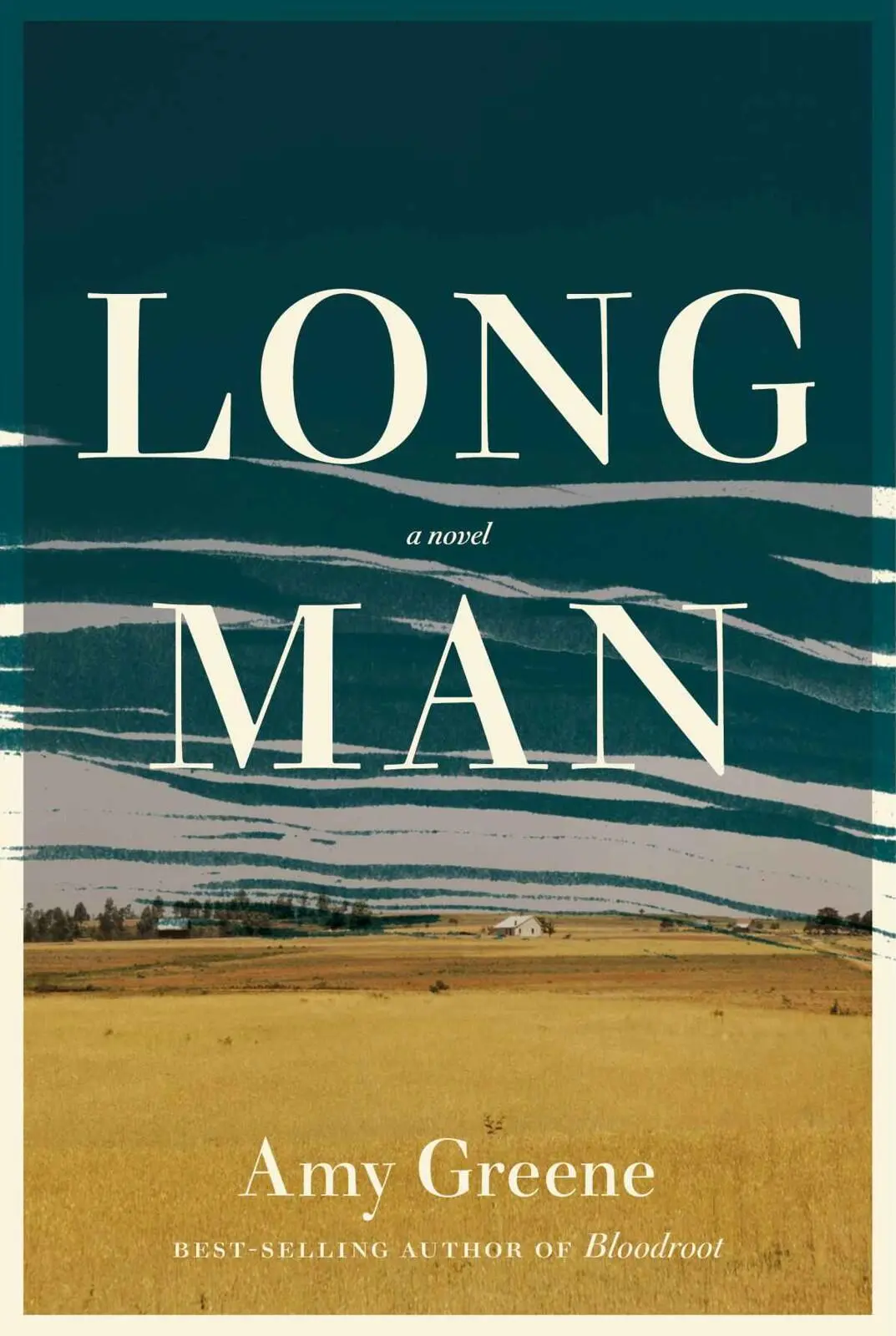
- Название:Long Man
- Автор:
- Издательство:Knopf
- Жанр:
- Год:2014
- ISBN:нет данных
- Рейтинг книги:5 / 5. Голосов: 1
-
Избранное:Добавить в избранное
- Отзывы:
-
Ваша оценка:
Long Man: краткое содержание, описание и аннотация
Предлагаем к чтению аннотацию, описание, краткое содержание или предисловие (зависит от того, что написал сам автор книги «Long Man»). Если вы не нашли необходимую информацию о книге — напишите в комментариях, мы постараемся отыскать её.
Long Man — читать онлайн бесплатно полную книгу (весь текст) целиком
Ниже представлен текст книги, разбитый по страницам. Система сохранения места последней прочитанной страницы, позволяет с удобством читать онлайн бесплатно книгу «Long Man», без необходимости каждый раз заново искать на чём Вы остановились. Поставьте закладку, и сможете в любой момент перейти на страницу, на которой закончили чтение.
Интервал:
Закладка:
With his mind wandering, Ellard was startled when James’s Model A Ford loomed out of the rain ahead. By then they were within sight of the Walker farm, which meant James had walked over five miles to town. Ellard guessed without looking at his pocket watch that it was sometime around eight o’clock. He guided the car through the slough and around the truck as well as he could, his wheels spinning but not getting stuck. James didn’t look at the mired Ford as they passed. He kept his eyes on the rills streaming down the window until Ellard turned beside the cornfield, headlamps cutting through the downpour and sweeping the stalks. But partway up the track Ellard slammed on his brakes. Something else had appeared like a ghost in the glow of his headlamps. It took an instant for him to recognize Annie Clyde Dodson. He’d come close to running her down. She came around to his side of the car and took his arm as soon as he stepped out, her fingers biting in deep. “Come,” she panted, water dripping off her chin.
Ellard stood in the rain trying to light the lantern he’d brought. “Hold up, Annie Clyde—”
“That old woman’s lying,” she said.
“If you’ll just be still for a minute—”
“Beulah Kesterson claims he was with her.”
Ellard’s eyes flicked to James. “Can you fetch us another lantern?” he asked. After James disappeared in the dark he turned back to Annie Clyde. “I need you to talk sense.”
“What did James tell you?”
“That your little one slipped off from the house.”
Annie Clyde shook her head. “No.”
“Well, what did happen then?”
“Somebody took her.”
“You seen somebody take her?”
“I saw him with her.”
“Who did you see?”
“Amos.”
Ellard covered her hand with his own. “Amos was here?”
“He was down there in the corn.”
“Are you sure about that?”
“Come on,” she repeated. “We don’t have time.”
“Wait, now,” Ellard said. “Let’s figure this out.”
She snatched her hand away. “I’m trying to tell you. There’s a footprint.”
“All right,” he said, stepping back some. “Here comes your husband with the light.”
When James reached them, the lantern he carried haloed in mist, the three of them headed out to the hayfield together. Ellard’s thoughts were racing. There were few people he disliked, but Amos was one of them. Ellard’s father had been kind to Amos because he was an orphan. He had taught Ellard and Amos both to shoot. Ellard thought back to the night that, for the first time, his father allowed the boys to carry rifles. They were around ten years old. It was November and cold on the mountainside where they turned loose the hounds. While they trudged over the crackling leaves Amos’s eyes were fixed on Ellard and not the path before them. As Ellard’s father went on with the neighbors in their mackinaws and caps, Ellard lagged behind. Amos matched his stride, holding back even though he was nimble enough to move faster. Then the dogs took off baying and the men ran after them. Ellard hustled to keep up, but their lanterns grew farther off. Soon the high yelping of the dogs faded and the men were out of sight over a ridge. There was silence except for the sound of his feet on the trail. He could barely make out the faint glow of light through the woods ahead. Clumsy in the oversized boots he was wearing, Ellard tripped forward and lay in the powdery snow. He was about to get up when he heard the cock of a rifle. He turned himself over on the frozen ground and saw Amos standing above him with the gun pointed at his heart. He gaped up at the other boy’s soulless face, unable to breathe. At the age of ten, Ellard already had a sense of his fate being decided. He covered his eyes. There was nothing but the cold and the yelping dogs. In his mind he saw the hounds gathered around the tree, leaping over each other to get at the coon as it clung to the tip of a branch. He waited for the gunshot, but nothing happened. “Blam,” Amos said. Ellard uncovered his face. Amos lowered the rifle. “What’s wrong with you?” he asked. “I was just funning you.”
There was no way of knowing why Amos did such things or when he would do them. He was unpredictable. Ellard had learned back then to stay away from him. He had felt from the time they were children together in the hollow that darkness seeping out of Amos. In later years he’d had clearer reasons, but as a boy Ellard couldn’t have explained his loathing. It seemed they were born enemies. Of course, it was hard to tell if Amos had enough human feeling in his breast to love or hate Ellard either one. At the least, he was a troublemaker. As sheriff, Ellard had kept the town as ordered as his rooms at the courthouse. He had seen himself to Yuneetah’s upkeep, appointing crews to repair any storm damage done to the roofs each spring and to dig drainage ditches along the roads. The town was for the most part peaceful, until Amos would arrive. He always brought disorder. There were more fights for Ellard to break up, more farming accidents. There seemed even to be more deaths of natural causes when Amos passed through. He never left Yuneetah without making some manner of mess, if it was only a shattered storefront window. One autumn he had failed to smother a campfire he’d lit in Buck Shelton’s back field and burned down the pole barn. Ellard was sure Amos had left that fire going on purpose.
But to accuse Amos of taking a child, that was something else. Amos hadn’t done serious harm in Yuneetah that Ellard knew of, although he got a feeling the man might be capable of murder just from the deadness in his one eye. Amos was dangerous aside from any threat he posed to the Dodsons. It had been so long since Ellard last saw Amos he’d begun to hope the drifter had finally landed himself in the penitentiary somewhere. There must be a reason he was in Yuneetah during its last days that had nothing to do with Gracie Dodson, but Amos being seen hours before she disappeared seemed like too much of a coincidence. Whether she’d drowned or not, he might well have had a hand in whatever happened to her.
If Ellard had known before leaving the courthouse that Amos was around he could have radioed the other counties to be on the lookout for the drifter as well as for Gracie. He wished James had said more about the situation up front. Amos was a worse menace than the lake. He moved faster and with more cunning. He would be hard to track and Ellard needed backup if he meant to catch him, maybe more than the boys from Whitehall County. He would have to get the state police involved if Gracie didn’t turn up by morning. Now he moved around the house behind Annie Clyde with rain pouring off his hat brim. Nearly half an hour had passed from the time he turned up the track by the cornfield until they stopped at the elm beside the barn. “We can’t find the dog either,” James spoke up, his voice hoarse. “He was tied here. Gracie must have turned him loose.” Ellard bent with his lantern, drops falling from the leaves onto his back. He plucked the chain out of the bog at the base of the trunk. The links and hasp were unbroken. The slurry was marred with prints from both feet and paws, too mottled to tell Ellard anything useful. He stood and held the lantern aloft, lighting the tree’s skinned bark and the ropy twist of its roots. His brow knitted. Every second evidence was washing away and there was nothing he could do to prevent it. When he was ready to go on, they crossed the hayfield under the starless sky. Weeds whisked over Ellard’s slicker, water bounced off his shoulders. It had become nighttime. Looking up he saw that the clouds were dark shapes against a darker backdrop. The weather was dulling his senses, muffling his hearing, blurring his vision. It seemed to Ellard that everything was working against him and the Dodsons. The hour, the empty town, nature.
Читать дальшеИнтервал:
Закладка:
Похожие книги на «Long Man»
Представляем Вашему вниманию похожие книги на «Long Man» списком для выбора. Мы отобрали схожую по названию и смыслу литературу в надежде предоставить читателям больше вариантов отыскать новые, интересные, ещё непрочитанные произведения.









Обсуждение, отзывы о книге «Long Man» и просто собственные мнения читателей. Оставьте ваши комментарии, напишите, что Вы думаете о произведении, его смысле или главных героях. Укажите что конкретно понравилось, а что нет, и почему Вы так считаете.