Amy Greene - Bloodroot
Здесь есть возможность читать онлайн «Amy Greene - Bloodroot» весь текст электронной книги совершенно бесплатно (целиком полную версию без сокращений). В некоторых случаях можно слушать аудио, скачать через торрент в формате fb2 и присутствует краткое содержание. Год выпуска: 2010, Издательство: Knopf, Жанр: Современная проза, на английском языке. Описание произведения, (предисловие) а так же отзывы посетителей доступны на портале библиотеки ЛибКат.
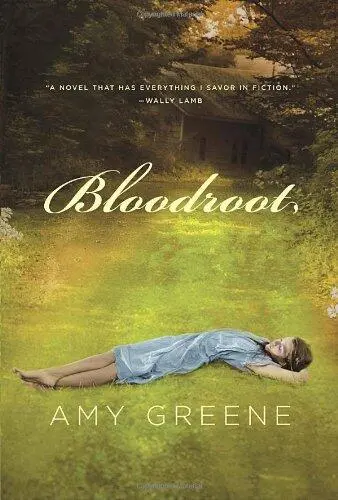
- Название:Bloodroot
- Автор:
- Издательство:Knopf
- Жанр:
- Год:2010
- ISBN:нет данных
- Рейтинг книги:4 / 5. Голосов: 1
-
Избранное:Добавить в избранное
- Отзывы:
-
Ваша оценка:
Bloodroot: краткое содержание, описание и аннотация
Предлагаем к чтению аннотацию, описание, краткое содержание или предисловие (зависит от того, что написал сам автор книги «Bloodroot»). Если вы не нашли необходимую информацию о книге — напишите в комментариях, мы постараемся отыскать её.
is a stunning fiction debut about the legacies — of magic and madness, faith and secrets, passion and loss — that haunt one family across the generations, from the Great Depression to today.
The novel is told in a kaleidoscope of seamlessly woven voices and centers around an incendiary romance that consumes everyone in its path: Myra Lamb, a wild young girl with mysterious, haint blue eyes who grows up on remote Bloodroot Mountain; her grandmother Byrdie Lamb, who protects Myra fiercely and passes down “the touch” that bewitches people and animals alike; the neighbor boy who longs for Myra yet is destined never to have her; the twin children Myra is forced to abandon but who never forget their mother’s deep love; and John Odom, the man who tries to tame Myra and meets with shocking, violent disaster. Against the backdrop of a beautiful but often unforgiving country, these lives come together — only to be torn apart — as a dark, riveting mystery unfolds.
With grace and unflinching verisimilitude, Amy Greene brings her native Appalachia — and the faith and fury of its people — to rich and vivid life. Here is a spellbinding tour de force that announces a dazzlingly fresh, natural-born storyteller in our midst.
Bloodroot — читать онлайн бесплатно полную книгу (весь текст) целиком
Ниже представлен текст книги, разбитый по страницам. Система сохранения места последней прочитанной страницы, позволяет с удобством читать онлайн бесплатно книгу «Bloodroot», без необходимости каждый раз заново искать на чём Вы остановились. Поставьте закладку, и сможете в любой момент перейти на страницу, на которой закончили чтение.
Интервал:
Закладка:
“Come to think of it,” he said, “I ain’t seen that pocketbook since yesterday. I bet you it dropped out of my britches when I was out yonder pulling weeds.” He paused, appraising me in a way that made my ears warm. “Are you good at finding things?”
“What?”
“Two pairs of eyes is better than one. Come on out here with me and look for it.”
I stepped blinking into the sun behind him, out the back door and down the steps into the yard. My feet were heavy as if in protest, the bleach-smelling rag still in my fist. I looked down at it numbly and dropped it in the dirt beside the stoop. He stopped, hands on his hips, surveying the yard. I stood a few paces behind him, waiting for him to go on. Finally, I shaded my eyes against the sun and asked, “Where were you pulling weeds at?”
“Out in the garden.”
I saw it across the yard, dry cornstalks leaning over a patch of snarled briars and weeds, a few tomato vines and green bean plants rising out of the ruins. I wondered what good it would do to pull weeds in all that mess. I followed Hollis across the yard and up close it was even more overrun. He stood at the edge and said, “Go ahead, your eyes is keener than mine. A woman pays more attention than a man.” When I didn’t move right away, he took me by the elbow and guided me into the patch. “A man can’t do without his pocketbook,” he said. “My driver license is in there.” He stooped and began to pick his way across the rows. “It’s odd how my eyes works. I can’t find nothing when I’m looking for it, even if it’s right under my nose.” I was relieved when he fell silent. We searched for a while without speaking, but I should have known he wouldn’t keep quiet. I was learning fast about his awkward need to tell me things. “But you take any kind of pattern and my eyes will make a picture out of it,” he blurted, startling me. “Like when I was little, I got to seeing faces. The worst one came out of this water stain over my bed. Had an open mouth with pointed teeth and the meanest eyes you ever seen. You might say I was dreaming it, except I seen it other places. I seen it in the wallpaper and the spots on the mirrors. It got to where it followed me everywhere. Then one day, I told John about it. He was washing the dishes and I was drying them. I was seeing it right then, in the suds of the dishwater. You know what John said to me? He said, ‘I see it, too.’ That was all. Not another word about it to this day. But that was all I needed. After that, we was brothers in a way that went deeper than blood.” I didn’t know how to respond. I concentrated on looking for the wallet, hoping to find it fast. I was beginning to feel frantic, green flies buzzing around my head as I ran my hands over the ground. When my fingers finally passed over the wallet, hidden under the bug-bitten leaves of a melon vine, I almost sighed with relief. I held it up, black cowhide warm from the sun. He laughed and said, “I knowed you’d find it quicker than me. I’m a pretty good judge of people.”
We stood up and I handed him the wallet, thinking I would escape. Then he said, “Let me show you something.” It was all I could do to remain there beside him, half sick from his closeness and the heat. He opened the wallet and reached in with thumb and forefinger to pull out what looked like a clump of gray hair, pressed flat and bound with a rubber band. “I ain’t never showed nobody this,” he said. “But me and you can tell each other things.” He held his hand near my face. “Did John ever say how Mama died?”
I closed my eyes against what lay in Hollis’s palm. “John doesn’t like talking about it,” I said, wishing he wouldn’t talk about it either. But somehow I knew he wouldn’t let me go. I wondered if he’d even left his wallet in the garden on purpose.
“We was boys when it happened. John and Lonnie and Eugene was off to the store with Daddy but I wasn’t old enough yet to go. Mama was sick with the stomach flu. I heard a thump in her room. I went up the stairs and when I opened the door I seen her laying facedown on the floor. I reckon she had fell out of the bed. I turned her over and soon as I seen her face, I knowed she was gone. I don’t know what made me do it, but Daddy had give me a little old pocketknife. I knelt down there and sawed off a hank of her hair before I went in and called anybody.” I stared down at the dull gray clump, a gag rising in my throat. “I like to keep it on me somewheres,” he said. “Blood kin is worth a lot to me.” I looked at his face because I couldn’t stand to look at the hair. He stared into my eyes, as always standing too close. “Just like these dogtags,” he said, not taking his eyes off mine as he pulled them by the chain out of his collar. “My daddy fought in the Second World War. He killed a bunch of Japs with these right here around his neck. I think family’s about the most important thing there is. Don’t you?”
He had edged even closer to me. I stepped backward, turning my ankle. “I better get to work,” I said. My voice came out no more than a whisper.
Hollis reached and took a strand of my hair, held it without looking at it, his black eyes still boring into me. “You reckon you and John’ll have a son one day?”
I didn’t say what came to me. I hope not, if he would turn out anything like you.
I wish I didn’t remember Hollis so well. I used to believe certain houses were haunted but now I think it’s just me. One day not long ago, I saw the tail of Granny’s dress disappearing around a bend, walking along the fencerow with a bag looking for greens to cook. She always soaked them in vinegar to kill the poison. One frozen morning last winter I woke to the sounds of squealing, sure I would find Granddaddy at the barn scraping a hog, the ground beneath steaming from its warm blood. But the barn was empty and shadowed and still. I stood listening for echoes but there was only the rushing creek. If this place is haunted, at least it has good spirits along with the bad.
Not like the house where John grew up, the sulfur smell clinging to windowsills and sink drains and doorsteps. Being away from Granny and the mountain wore on me after so long, did something to my mind. I knew it was probably rats, but sometimes I heard voices behind the walls there, like babbling in a foreign language. Sometimes I saw flashes of John as a boy with a mop of black hair, hooded eyes and white skin, crouching behind doors and peering around corners, disappearing when I turned around. There was, like Hollis said, a feeling of being watched. Part of it was the pictures. Dusting the frames I examined John’s mother, wiping her face clean with my rag. Her eyes were chilling behind her glasses, dead and vacant as a wax dummy’s.
I was less nervous when Frankie left me alone in the house, driving off in his old Cadillac to check on the store. I preferred whatever ghosts or demons there were to my father-in-law, hawking phlegm into his handkerchief and chain-smoking at the kitchen table as he listened to the radio, sleeping in his chair with his mouth open and his head lolling on his shoulder. When Hollis came home for dinner, he leaned on the counter with arms folded and ankles crossed, watching me cook. Sometimes he helped with the dishes and I winced when his fingers met mine under the water, always touching me on purpose.
I had Hollis’s full attention, but it was John’s that I longed for. More and more he seemed preoccupied, his eyes seldom settling on me. If we had conversations, I started them. Sometimes after work on Fridays he didn’t come home and I knew he was at the only bar in town. When his eyes did find me I saw his disappointment. I wasn’t what he had expected or wanted. Spending my days in haunted houses, I felt like a ghost myself. By the first of September, I was starving for a little bit of life. That’s why when I saw a burning bush sprouting up by the back steps of the Odom house, something moved in me.
Читать дальшеИнтервал:
Закладка:
Похожие книги на «Bloodroot»
Представляем Вашему вниманию похожие книги на «Bloodroot» списком для выбора. Мы отобрали схожую по названию и смыслу литературу в надежде предоставить читателям больше вариантов отыскать новые, интересные, ещё непрочитанные произведения.





Обсуждение, отзывы о книге «Bloodroot» и просто собственные мнения читателей. Оставьте ваши комментарии, напишите, что Вы думаете о произведении, его смысле или главных героях. Укажите что конкретно понравилось, а что нет, и почему Вы так считаете.