Amy Greene - Bloodroot
Здесь есть возможность читать онлайн «Amy Greene - Bloodroot» весь текст электронной книги совершенно бесплатно (целиком полную версию без сокращений). В некоторых случаях можно слушать аудио, скачать через торрент в формате fb2 и присутствует краткое содержание. Год выпуска: 2010, Издательство: Knopf, Жанр: Современная проза, на английском языке. Описание произведения, (предисловие) а так же отзывы посетителей доступны на портале библиотеки ЛибКат.
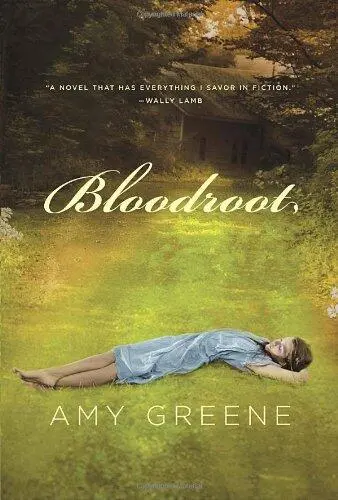
- Название:Bloodroot
- Автор:
- Издательство:Knopf
- Жанр:
- Год:2010
- ISBN:нет данных
- Рейтинг книги:4 / 5. Голосов: 1
-
Избранное:Добавить в избранное
- Отзывы:
-
Ваша оценка:
Bloodroot: краткое содержание, описание и аннотация
Предлагаем к чтению аннотацию, описание, краткое содержание или предисловие (зависит от того, что написал сам автор книги «Bloodroot»). Если вы не нашли необходимую информацию о книге — напишите в комментариях, мы постараемся отыскать её.
is a stunning fiction debut about the legacies — of magic and madness, faith and secrets, passion and loss — that haunt one family across the generations, from the Great Depression to today.
The novel is told in a kaleidoscope of seamlessly woven voices and centers around an incendiary romance that consumes everyone in its path: Myra Lamb, a wild young girl with mysterious, haint blue eyes who grows up on remote Bloodroot Mountain; her grandmother Byrdie Lamb, who protects Myra fiercely and passes down “the touch” that bewitches people and animals alike; the neighbor boy who longs for Myra yet is destined never to have her; the twin children Myra is forced to abandon but who never forget their mother’s deep love; and John Odom, the man who tries to tame Myra and meets with shocking, violent disaster. Against the backdrop of a beautiful but often unforgiving country, these lives come together — only to be torn apart — as a dark, riveting mystery unfolds.
With grace and unflinching verisimilitude, Amy Greene brings her native Appalachia — and the faith and fury of its people — to rich and vivid life. Here is a spellbinding tour de force that announces a dazzlingly fresh, natural-born storyteller in our midst.
Bloodroot — читать онлайн бесплатно полную книгу (весь текст) целиком
Ниже представлен текст книги, разбитый по страницам. Система сохранения места последней прочитанной страницы, позволяет с удобством читать онлайн бесплатно книгу «Bloodroot», без необходимости каждый раз заново искать на чём Вы остановились. Поставьте закладку, и сможете в любой момент перейти на страницу, на которой закончили чтение.
Интервал:
Закладка:
I followed John across the sooty lot, our feet scuffing up grit. It was so hot it seemed I could hear my skin sizzling. It struck me that these were the tracks where my mother was killed. I thought I might faint. There was no color. I was used to the trees setting the mountain on fire in fall and all the blooming bushes in spring and every shade of green in summer. Even the mountain ground was spotted with shade and light, blanketed with moss and deep trenches of fallen leaves, ridged with cool-colored sparkling rock, springing with mottled toadstools. But this was all still and flat and buzzing with flies. The smell of factory chemicals made my head ache.
There was a chipped concrete stoop and a light fixture beside the door covered in sticky webs. John put the key in the lock and I watched as he jiggled it, turned it, and cursed under his breath. We were both caught by surprise when the door swung in with a whine. In those first seconds my eyes played a trick that I kept to myself but never forgot. I saw the dark shape of a woman standing in the front room, tall and bone thin with wild clumps of hair and no discernible face. I stopped and clutched at the door jamb. John said, “What?” and she was gone. “I thought I saw something,” I said, my voice as creaky as the rusty door hinges. I was still shaking when we went into the hot stink of the house.
But once John was touching me again, his warm hands moving over my skin, it didn’t take long for me to bury my doubts about the place he had rented. I told myself it didn’t matter where we lived, as long as we were together. We got married a few days later in the preacher’s kitchen, a coffeepot slurping on the counter. I could barely wait to kiss him. I smelled his aftershave and his clean black hair even over the coffee. I didn’t realize, putting Granddaddy’s ring on his finger, how fitting it was that Granny had passed it down to me. Like her, I had given in to temptation and done wrong in the name of bloodred love. Outside in the car John and I kissed each other longer and harder before driving away, his flesh hot under the thin white fabric of his dress shirt.
My wedding night was not how I expected. Later on there was pleasure, but that first night alone in our bedroom, it was painful, not just between my legs but in my heart. I would never be Granny’s little girl again. I felt the mountain falling through my fingers, but I was foolish enough to think as I clung to him in the dark that at least we belonged to each other. At least the pact we made by the springhouse was finally sealed.
John took a week off work and we spent most of it at home, leaving only to buy groceries. I came to know his body better than my own, from the peak of his hairline to the arches of his feet. I loved the blue veins of his temples, the tender bracelets of his wrists, the intricate folds of his ears. The house was depressing but I forgot when I saw him sleeping late in a stripe of sun or in the bathtub with his wet knees poking out of soapy water. I worshipped everything about him, even how he took greedy bites at supper and there was always a crumb left on the corner of his mouth. In the night he’d tickle me with the ends of my hair, trailing it up and down my naked arms, along my jaw and chin. Sometimes I read poems to him and I didn’t mind when they put him to sleep. I kept reading after his eyes were closed. All these years later, watching over my twins as they sleep on Granny’s rag rug, I try to remember the first whispers of fear. I try to mark the time when everything changed. It happened the night I asked about his mother. It was almost dawn and the house was still, no trains rattling the bedroom window as they passed. We were lying curled together under the sheet, my head nestled in the hollow of his shoulder, when I realized we had never discussed the thing we had most in common.
“Tell me something about your mother,” I said.
He was breathing slow, almost asleep. “Huh?”
“We never talk about it.”
“Talk about what?”
“Not having a mother.”
He opened his eyes. “I had a mother.”
“But you were just twelve when she died.”
“Yeah,” he said. “I don’t remember much.”
“How did she die?”
There was a long pause. “What do you mean?”
“I mean, what did she die of?”
He paused again. “They said it was a heart attack. But that ain’t what killed her.”
I sat up and pushed back the sheet. The air in the room had changed somehow. Even my legs were sweating in the summer heat. I already knew then that the contented feeling of John and me being the last two people on earth was fading away. I began to wish I’d never brought up his mother, but it seemed too late to turn back. “Then what do you think she died of?”
He looked at the ceiling. “I don’t think. I know. Because I’m the one caused it.”
For a moment I didn’t know how to respond. I leaned over him, trying to see his face in the early morning light falling through the parted curtains, coloring our room the dark blue of an ink stain. “A heart attack is nobody’s fault,” I said at last.
He rolled over to face the wall. “I told you, it wasn’t no heart attack.”
“Whatever it was, it’s not your fault.”
He got quiet again. Then he said, “Tell that to my daddy.”
“He blamed you for your mother dying?”
“No. He never blamed me for it. It’s about the only thing he’s proud of me over.”
“John,” I said, knots forming in my stomach. “What are you talking about?”
A long time passed. I willed him not to go on. Whatever he was trying to tell me, I was afraid to hear it. “Nothing,” he said after a while. “I’m done talking about it.”
I slipped my arms around him. “I’m sorry I brought it up. I didn’t know it would bother you. I just never had anybody to talk about my mother with. Even Granny didn’t talk about her much, and she wouldn’t talk about my father at all. If I asked about the Mayeses, she said, ‘Them people wouldn’t piss on you if you was on fire.’ It’s the closest I ever heard Granny come to cussing.” I paused and there was only the sound of his breathing. I rushed on to fill the silence. “I never tried to see them while I was living at home. Now I figure I can go visit them without Granny knowing about it. They might have pictures I haven’t seen, or stories they can tell me. Granny said the Mayeses owned a pool hall around here.” I stopped again and there was still no response. I began to think he had fallen asleep. I nudged his side. “Do you know where it’s at? The pool hall?”
When he finally answered, his voice was cold. “It’s over on Miller Avenue.”
I hesitated. “Will you take me there?”
“No,” he said, in the same harsh voice. “And you might as well get it out of your head. I ain’t having my wife hanging around no pool hall. I’d be the jackass of the town.”
John was never the same after our talk. The next morning he sat up in the tangled sheets with eyes dead as coal. When I saw the emptiness in his face, I had a flash of Granny and me standing beside the wringer washer. Her story of a black-haired Bible salesman flew over my head like a bird I didn’t allow to nest. I draped my arms over his back and said, “Let’s go for a drive.” He seemed not to hear. “Fix me some coffee,” he mumbled. I tried to hum as he sat with his cup at the kitchen table. I made small talk as I fried the eggs and hovered over him while he ate breakfast. My palms sweated and I kept wiping them on my nightgown. Then John stood up. “Say you want to go for a ride?”
I released the breath I hadn’t realized I was holding and hurried to throw on my clothes. I ran out to the car with him chasing after me, sure I had imagined whatever cold had crept between us in the night. Riding with the windows down on familiar roads, John began to talk as usual. I thought he would tell one of his funny stories, about pranks he had pulled on his brothers or trouble he got into in grade school. But he looked out the windshield, brow clouded over, and asked, “You ever feel out of place around here?”
Читать дальшеИнтервал:
Закладка:
Похожие книги на «Bloodroot»
Представляем Вашему вниманию похожие книги на «Bloodroot» списком для выбора. Мы отобрали схожую по названию и смыслу литературу в надежде предоставить читателям больше вариантов отыскать новые, интересные, ещё непрочитанные произведения.




Обсуждение, отзывы о книге «Bloodroot» и просто собственные мнения читателей. Оставьте ваши комментарии, напишите, что Вы думаете о произведении, его смысле или главных героях. Укажите что конкретно понравилось, а что нет, и почему Вы так считаете.