Amy Greene - Bloodroot
Здесь есть возможность читать онлайн «Amy Greene - Bloodroot» весь текст электронной книги совершенно бесплатно (целиком полную версию без сокращений). В некоторых случаях можно слушать аудио, скачать через торрент в формате fb2 и присутствует краткое содержание. Год выпуска: 2010, Издательство: Knopf, Жанр: Современная проза, на английском языке. Описание произведения, (предисловие) а так же отзывы посетителей доступны на портале библиотеки ЛибКат.
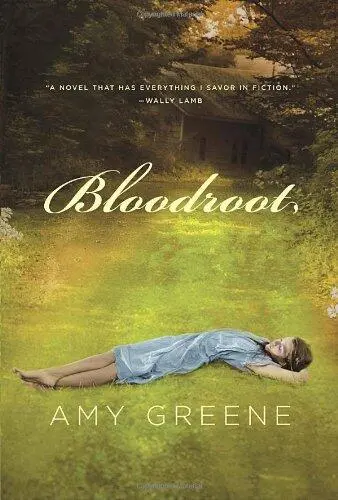
- Название:Bloodroot
- Автор:
- Издательство:Knopf
- Жанр:
- Год:2010
- ISBN:нет данных
- Рейтинг книги:4 / 5. Голосов: 1
-
Избранное:Добавить в избранное
- Отзывы:
-
Ваша оценка:
Bloodroot: краткое содержание, описание и аннотация
Предлагаем к чтению аннотацию, описание, краткое содержание или предисловие (зависит от того, что написал сам автор книги «Bloodroot»). Если вы не нашли необходимую информацию о книге — напишите в комментариях, мы постараемся отыскать её.
is a stunning fiction debut about the legacies — of magic and madness, faith and secrets, passion and loss — that haunt one family across the generations, from the Great Depression to today.
The novel is told in a kaleidoscope of seamlessly woven voices and centers around an incendiary romance that consumes everyone in its path: Myra Lamb, a wild young girl with mysterious, haint blue eyes who grows up on remote Bloodroot Mountain; her grandmother Byrdie Lamb, who protects Myra fiercely and passes down “the touch” that bewitches people and animals alike; the neighbor boy who longs for Myra yet is destined never to have her; the twin children Myra is forced to abandon but who never forget their mother’s deep love; and John Odom, the man who tries to tame Myra and meets with shocking, violent disaster. Against the backdrop of a beautiful but often unforgiving country, these lives come together — only to be torn apart — as a dark, riveting mystery unfolds.
With grace and unflinching verisimilitude, Amy Greene brings her native Appalachia — and the faith and fury of its people — to rich and vivid life. Here is a spellbinding tour de force that announces a dazzlingly fresh, natural-born storyteller in our midst.
Bloodroot — читать онлайн бесплатно полную книгу (весь текст) целиком
Ниже представлен текст книги, разбитый по страницам. Система сохранения места последней прочитанной страницы, позволяет с удобством читать онлайн бесплатно книгу «Bloodroot», без необходимости каждый раз заново искать на чём Вы остановились. Поставьте закладку, и сможете в любой момент перейти на страницу, на которой закончили чтение.
Интервал:
Закладка:
The bush was sick and stunted-looking, just beginning to turn red. I had been sweeping the back stoop and stopped to lean on the broom for a closer look, half expecting a voice to come out of it. When a car door slammed somewhere down the street, I woke up and glanced around. The yard was bare, the garden still weed-choked. On impulse, I ran to Frankie Odom’s shed, a lean-to with a rusted tin roof like a half-peeled-off scab. I scraped back the splintery door and saw a shovel against the far wall. I climbed over piles of junk to reach it, a nail from a rotten board scratching my leg in the process. I carried the shovel out, looking left and right to make sure no one saw.
Beside the stoop, I stood on the shovel and dug into the hard ground. When the dirt was loose enough I reached into the hole I had made and lifted the burning bush out by a rich-smelling ball of roots and soil. I took it up the steps and into the kitchen, shedding black crumbs I would sweep up before Frankie or Hollis came home. I leaned the bush in an empty mop bucket while I soaked a dish towel to wrap around its roots. Frankie had left a brown grocery sack of half-rotten tomatoes on the counter, the only yield of his miserable garden. He’d said on his way out the door that morning, “Them’s for you and John to take home.” I unloaded the tomatoes and found the burning bush was small enough to fit inside. One by one I replaced the tomatoes and folded over the sack. I sat for a while looking at my handiwork, feeling guilty and alive. When John came to pick me up I ran out holding the bag by its bottom. “Your daddy gave us some tomatoes,” I said. He looked away, switching a toothpick from one corner of his mouth to the other.
The next day I didn’t have to go to the Odom house. I watched John eat breakfast, anxious for him to leave. When he was gone I went to the back of the lot beside the tracks where the landlord had a shed much like Frankie Odom’s. I didn’t have to look far for the shovel. It was leaning inside the door shrouded in cobwebs. Until then, I hadn’t tried planting anything where it looked like nothing would grow. But this burning bush was different somehow. If I was careful, maybe it would live. I took the grocery bag around the house, heading for a back corner where John might never see what I had stolen. On the way, I passed the wood stacked under the bedroom window for winter, sprouting fungus and crawling with bugs. That’s when I noticed for the first time a squat door in the house’s block foundation near the woodpile, made of weathered gray boards and fastened shut with a rusty hasp. I paused to inspect it, the shovel in one hand and the grocery bag in the other. Just as I was about to move on, I heard a noise coming from under the house. I froze, not sure I had heard anything. I put down the bag and knelt before the door. Then it came again, a sly shifting. I hesitated before reaching to unlock the hasp. I pulled the door open, hinges groaning, and lowered myself on all fours. What I saw when my eyes adjusted to the gloom made my stomach turn. Under the house it was moldy and earthen and tomblike. The dirt was littered with broken dishes and Mason jar fragments, pipes close overhead with the protective mummy wrappings of winter still clinging to their joints. Thoughts of closed caskets and burial alive flickered through my head. Then, not far from my hand, I saw something from a nightmare. It was a long blacksnake, coiled around what looked like a rabbit’s nest. I gasped and scrambled backward into the light. I sat for a moment catching my breath. I had never been afraid of snakes. Granny had taught me about them. Once I held her hand in a field, looking up at one dangling from a tree branch like a black noose. “It’s just an old rat snake,” she said. “It ain’t poison.” I wasn’t afraid then because she told me not to be. But lately I hadn’t been myself. It felt suddenly important to take another look, if only because I knew Granny would have.
The rabbit’s nest was made from a ring of dried grass and puffs of cottony fur. In the middle were the babies, tiny and almost hairless, eyes still closed, noses and ears the color of flesh. One was caught in the snake’s unhinged mouth, only its back legs left to be consumed. I backed silently out and rose to my feet without taking my eyes off the snake. I reached for the shovel and chopped at the long rope of its body the best I could, until it lay in raw, pink pieces around the nest. I stood back panting and leaned the shovel against the house. Then I got down on my belly and went as far under the house as I was willing to venture. Looking closer, I saw punctures in one of the tiny bodies. I reached over the snake and prodded with my finger at the baby rabbit, dead but still warm. Then the third one began to squeal, a high, piercing alarm that made me scramble out backward again, bumping my head on the pipes. After a while I crawled back under and took the baby rabbit still screaming into my palm, unable to believe something so small could have such a voice. I held it in the sun begging it to stop, whispering into my cupped palms until the cries died away. I took the baby rabbit inside, the burning bush leaning forgotten against the house, one secret traded for another.
I had to hurry so I wouldn’t be late making supper. I put the sightless creature in a shoebox stuffed with strips torn from one of John’s flannel shirts. I searched the kitchen drawers until I found an old medicine dropper and climbed on my bed to feed it drips of warm milk. At first it stiffened like it would choke but after a while it was content. When it was close to time for John to come home I took the shoebox and hid the rabbit in the hall closet, behind the water heater with the box Granddaddy carved for me. I had realized long ago the box was something John would despise and might destroy. Now I knew the rabbit was something he wouldn’t stand for either, because it comforted me.
All that night during supper I worried the rabbit would cry in its shattering way, but the house was still as we sat at the table over our plates. When John was finished he went to drink in front of the television set he’d bought one week with our grocery money. He didn’t question why I was warming milk or why I went to the bathroom so many times. If he noticed me leaving our bed all through the night, he didn’t seem to care. As long as I kept the baby rabbit full, maybe I could have something of my own for a while.
For almost a month, I took the shoebox with me to the Odom house hidden in a bag of cleaning supplies. Once or twice I thought Hollis would find me out, the way he always hovered close. But, as if by instinct, the baby rabbit kept quiet when he was around. It was fattening up, its fur thickening, its eyes opening, thriving despite the cow’s milk and the dark closet where it lived. It liked to nestle under my chin, still and warm and breathing fast. Granny always said I had a touch with animals. Holding the rabbit close to my heart, I promised when it was strong enough I’d find a way to turn it loose on the mountain. I felt more like myself in those few weeks, having something alive that depended on me, something that knew in its blood and bones what it meant to be wild.
Then Hollis showed up on my doorstep one day near the end of September, while I was feeding the baby rabbit from its dropper. When the knock came, I hurried to settle the rabbit in its bed of rags and hide it behind the water heater. I thought it might cry out because its feeding had been interrupted, but it only rooted at the stuffing of its bed. I looked down at myself on the way to answer the door. It was noon but I was still in my nightgown. I wanted to throw on some clothes or at least a housecoat, but the knocking came again, louder and more persistent. When I opened the door and saw Hollis, my shoulders slumped. He took off his cap and scratched at his flattened hair. “I was about to think you was gone somewheres,” he said. When I didn’t respond, he replaced his cap and sighed. “Well. I was on my dinner break and thought I’d look in on you.”
Читать дальшеИнтервал:
Закладка:
Похожие книги на «Bloodroot»
Представляем Вашему вниманию похожие книги на «Bloodroot» списком для выбора. Мы отобрали схожую по названию и смыслу литературу в надежде предоставить читателям больше вариантов отыскать новые, интересные, ещё непрочитанные произведения.









Обсуждение, отзывы о книге «Bloodroot» и просто собственные мнения читателей. Оставьте ваши комментарии, напишите, что Вы думаете о произведении, его смысле или главных героях. Укажите что конкретно понравилось, а что нет, и почему Вы так считаете.