Amy Greene - Bloodroot
Здесь есть возможность читать онлайн «Amy Greene - Bloodroot» весь текст электронной книги совершенно бесплатно (целиком полную версию без сокращений). В некоторых случаях можно слушать аудио, скачать через торрент в формате fb2 и присутствует краткое содержание. Год выпуска: 2010, Издательство: Knopf, Жанр: Современная проза, на английском языке. Описание произведения, (предисловие) а так же отзывы посетителей доступны на портале библиотеки ЛибКат.
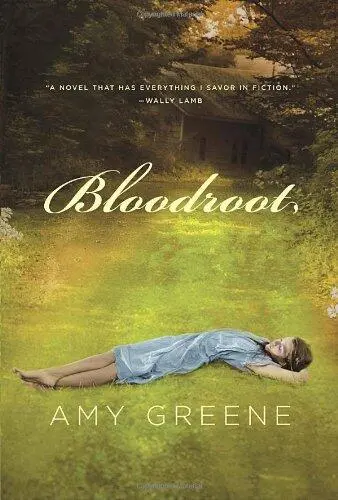
- Название:Bloodroot
- Автор:
- Издательство:Knopf
- Жанр:
- Год:2010
- ISBN:нет данных
- Рейтинг книги:4 / 5. Голосов: 1
-
Избранное:Добавить в избранное
- Отзывы:
-
Ваша оценка:
Bloodroot: краткое содержание, описание и аннотация
Предлагаем к чтению аннотацию, описание, краткое содержание или предисловие (зависит от того, что написал сам автор книги «Bloodroot»). Если вы не нашли необходимую информацию о книге — напишите в комментариях, мы постараемся отыскать её.
is a stunning fiction debut about the legacies — of magic and madness, faith and secrets, passion and loss — that haunt one family across the generations, from the Great Depression to today.
The novel is told in a kaleidoscope of seamlessly woven voices and centers around an incendiary romance that consumes everyone in its path: Myra Lamb, a wild young girl with mysterious, haint blue eyes who grows up on remote Bloodroot Mountain; her grandmother Byrdie Lamb, who protects Myra fiercely and passes down “the touch” that bewitches people and animals alike; the neighbor boy who longs for Myra yet is destined never to have her; the twin children Myra is forced to abandon but who never forget their mother’s deep love; and John Odom, the man who tries to tame Myra and meets with shocking, violent disaster. Against the backdrop of a beautiful but often unforgiving country, these lives come together — only to be torn apart — as a dark, riveting mystery unfolds.
With grace and unflinching verisimilitude, Amy Greene brings her native Appalachia — and the faith and fury of its people — to rich and vivid life. Here is a spellbinding tour de force that announces a dazzlingly fresh, natural-born storyteller in our midst.
Bloodroot — читать онлайн бесплатно полную книгу (весь текст) целиком
Ниже представлен текст книги, разбитый по страницам. Система сохранения места последней прочитанной страницы, позволяет с удобством читать онлайн бесплатно книгу «Bloodroot», без необходимости каждый раз заново искать на чём Вы остановились. Поставьте закладку, и сможете в любой момент перейти на страницу, на которой закончили чтение.
Интервал:
Закладка:
“Under the couch.”
“Well,” she said, “I guess he’ll come out when he’s ready.” We looked at each other one more time. Her eyes was shiny. Then she went about getting Larry’s coffee. I could tell by her humming that she was happy. The next day when my hand swelled up she let me stay out of school. She took me to the doctor. After that we had milkshakes and she bought me a purse. From then on, it was easier to live at the Moffetts’ house.
JOHNNY
After what I did to Steven, I was sent to the Briar Mountain Children’s Home. It was a red-brick building with a bell tower behind iron gates, nestled in a grove of pine woods. On the highway there, past fields and gas stations and through dark tunnels, I felt home receding. Our empty house, my mama in the asylum, my father’s finger bone, and most of all Laura. It was like I didn’t fully exist without her. I drifted among the other boys and girls, around the main building where we slept in a dorm, the chapel where we sat through the sermons of the pastor who ran the home, the fellowship hall where we ate tasteless meals, the room with folding chairs where the pastor’s son counseled us in groups. I spent the whole hour looking out the window at the mountains wreathed in fog. They were not the same mountains I had grown up with. I was almost certain somewhere among those hazy blue ridges was Chickweed Holler, where my great-granny had come from. I pictured shady thickets and cool ledges of rock, tree bark wriggling with bugs. Soon I began skipping the counseling sessions and disappearing into the woods outside the iron fence for hours at a time. Whenever I came wandering back, the pastor’s son always took me by the arm and asked if I wanted to be living there forever, if I never wanted to have a real home. I didn’t say what I was thinking, that there’s no such thing.
Some of the boys whispered that the grounds were haunted, telling ghost stories after the lights went out. They said it was once a Civil War hospital where many soldiers had died, but I never saw or felt the presence of anything there. The main building was the oldest, its corroded pipes spitting brown water when we washed our hands. All night in the dorms we heard the drip-drip of the leaky showers down the hall. In the summer opening windows gave no relief from the heat and in winter the boiler always went out, leaving our teeth to chatter on frozen mornings, making the other children sick so that I couldn’t sleep for their coughing. But I never caught their croups and colds and bouts of bronchitis. I was an outsider among them, made of something different than they were.
In the five years I lived at the children’s home, I saw my sister twice. Nora Graham said visits were hard to arrange because we lived in separate counties. On our twelfth birthday, she drove Laura an hour from Millertown to see me. She left us alone on the playground behind the main building, a patch of worn grass with swings hanging limp at the ends of their chains. Laura was taller and her face was longer. She had grown up behind my back. Sitting on the swings together, I was reminded of things I’d tried hard to forget. I heard my mama’s screams, saw Laura’s handprint on Steven’s cheek. When she gave me the present she had made, a drawing of our house on the mountain, I crumpled it in my fist. She studied me with sad eyes. Then she reached out and guided a lock of my hair back into place. For a long time I could still feel the brush of her fingers on my brow.
When Laura was gone I climbed the iron fence and got lost between the pines. I ran through the woods half blind with unshed tears, clambering across gullies and over rises, tripping and falling again and again. It was almost dusk when I came to a bluff of stacked rock shelves with more pines perched high on top. Near the ground I saw a crack under an overhang. When I ducked inside, the cave smelled of algae and minerals and wet stone. Within the sun’s reach the limestone walls were mottled with moss, shaggy near the top with russet-colored roots like the pelt of some mythical forest animal. Farther in, I found what looked at first like three old trash barrels leaning on uneven piles of rock. On closer inspection I realized it was an abandoned moonshine still. There was a tin tub with a pipe running down from its rust-eaten lid into a weathered barrel made of rotten gray boards, and from it a length of tubing coiled into another metal barrel, brittle and fiery orange with rust. Not far from the still, I noticed something glinting on the ground. I bent down, startling a lizard up the stone wall, and found a silver cigarette lighter. I held it in the sun falling through the cave’s opening and saw initials engraved on one side. I stopped breathing. The initials were J.O., like mine. But I didn’t think of my own name. I thought of my father’s. It was like somebody had left the lighter there for me to find.
A few months after I discovered the cave, a girl named Libby came to live at the children’s home. Boys and girls ate together in the fellowship hall and one morning at breakfast I caught her staring at me. She had brown hair and green eyes and a chicken pox scar on her forehead. I learned later that she was fourteen but she was built like a woman, breasts straining at the buttons of her blouse. When I saw her later at the middle school, I almost didn’t know her. There was a dumpster out back where I went to smoke. She was standing with a group of boys wearing blue eye shadow and blowing smoke rings through the shiny oval of her lips. She asked how old I was. When I told her, she smiled and said, “You don’t look no thirteen.” On the bus back to the children’s home she was the same plain girl from breakfast again, no trace of teased bangs or lip gloss.
That afternoon she followed me into the woods. I heard her footfalls on the pine needles behind me but I didn’t turn around. I let her trail me all the way to the cave. When we reached the opening I turned and she almost bumped into me, face flushed and pulse fluttering in her throat. I took her by the arm and we ducked into the crack in the rocky bluff. For what seemed a long time, we knelt facing each other in the murky gloom. Then her hand slid up my thigh. My muscles tensed under her touch. The black holes of her pupils widened to draw me in, opening to show me what was inside of her, heaps of cinder and mud and things left out in the rain, wells where living things fell inside and drowned. I pulled her close by the nape of the neck, kissing her so hard I tasted blood. I twisted my hands up in her hair, bit her shoulders, sank my fingers into her flesh. She didn’t pull away. She was drawn to me in spite of or maybe because of my darkness. She was only there for a month, but after her there were others that I lay tangled with on the cool dirt floor of the cave, pinning them down with my body, pulling their hair until they cried out. Like Libby, they always wanted more, as if they craved my meanness.
Not long before I left the Briar Mountain Children’s Home, when we were fourteen, the state arranged another visit with Laura. It was an overcast day in March so we sat at a table in the fellowship hall, where the windows faced the mountains. I wasn’t prepared for how much she looked like our mama. She was wearing a skirt down to her ankles and had hair to her waist because her foster parents were Church of God people.
“You look skinny,” she said.
“So do you,” I said.
She smiled. “I learnt how to make biscuits. I wish I could fix you some.”
I turned my head. “I don’t like biscuits.”
There was an awkward silence. We sat listening to the clanking radiator, smelling the dampness of the long, drafty room. She pulled her cardigan tighter around her. When she spoke again it startled me. “What’s it like in here, with all these other kids?”
Читать дальшеИнтервал:
Закладка:
Похожие книги на «Bloodroot»
Представляем Вашему вниманию похожие книги на «Bloodroot» списком для выбора. Мы отобрали схожую по названию и смыслу литературу в надежде предоставить читателям больше вариантов отыскать новые, интересные, ещё непрочитанные произведения.








Обсуждение, отзывы о книге «Bloodroot» и просто собственные мнения читателей. Оставьте ваши комментарии, напишите, что Вы думаете о произведении, его смысле или главных героях. Укажите что конкретно понравилось, а что нет, и почему Вы так считаете.