Amy Greene - Bloodroot
Здесь есть возможность читать онлайн «Amy Greene - Bloodroot» весь текст электронной книги совершенно бесплатно (целиком полную версию без сокращений). В некоторых случаях можно слушать аудио, скачать через торрент в формате fb2 и присутствует краткое содержание. Год выпуска: 2010, Издательство: Knopf, Жанр: Современная проза, на английском языке. Описание произведения, (предисловие) а так же отзывы посетителей доступны на портале библиотеки ЛибКат.
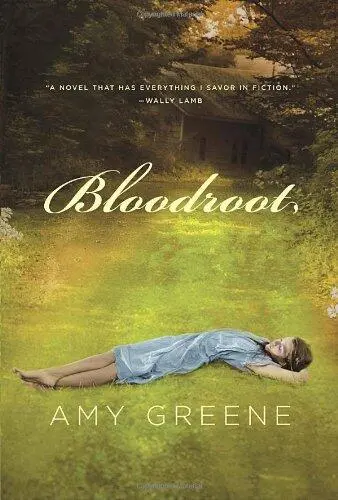
- Название:Bloodroot
- Автор:
- Издательство:Knopf
- Жанр:
- Год:2010
- ISBN:нет данных
- Рейтинг книги:4 / 5. Голосов: 1
-
Избранное:Добавить в избранное
- Отзывы:
-
Ваша оценка:
Bloodroot: краткое содержание, описание и аннотация
Предлагаем к чтению аннотацию, описание, краткое содержание или предисловие (зависит от того, что написал сам автор книги «Bloodroot»). Если вы не нашли необходимую информацию о книге — напишите в комментариях, мы постараемся отыскать её.
is a stunning fiction debut about the legacies — of magic and madness, faith and secrets, passion and loss — that haunt one family across the generations, from the Great Depression to today.
The novel is told in a kaleidoscope of seamlessly woven voices and centers around an incendiary romance that consumes everyone in its path: Myra Lamb, a wild young girl with mysterious, haint blue eyes who grows up on remote Bloodroot Mountain; her grandmother Byrdie Lamb, who protects Myra fiercely and passes down “the touch” that bewitches people and animals alike; the neighbor boy who longs for Myra yet is destined never to have her; the twin children Myra is forced to abandon but who never forget their mother’s deep love; and John Odom, the man who tries to tame Myra and meets with shocking, violent disaster. Against the backdrop of a beautiful but often unforgiving country, these lives come together — only to be torn apart — as a dark, riveting mystery unfolds.
With grace and unflinching verisimilitude, Amy Greene brings her native Appalachia — and the faith and fury of its people — to rich and vivid life. Here is a spellbinding tour de force that announces a dazzlingly fresh, natural-born storyteller in our midst.
Bloodroot — читать онлайн бесплатно полную книгу (весь текст) целиком
Ниже представлен текст книги, разбитый по страницам. Система сохранения места последней прочитанной страницы, позволяет с удобством читать онлайн бесплатно книгу «Bloodroot», без необходимости каждый раз заново искать на чём Вы остановились. Поставьте закладку, и сможете в любой момент перейти на страницу, на которой закончили чтение.
Интервал:
Закладка:
Mama turned and knelt down by her bed. She reached into the mattress and pulled out the box. A puff of dirty stuffing came out behind it. She shoved the box in my hand but my fingers didn’t want to close around it. Mama made them. She pressed them so hard around the wood it hurt. That’s when I heard the front door breaking open. She lifted me under the arms and pushed me towards the window. “Run,” she said.
Johnny wasn’t gone. He was crouched under the window. I knelt down with him. We listened to Mama’s screams and things breaking as she fought. We couldn’t leave her, even if she had left us so many times. After the fighting was over, it didn’t take them long to find me and Johnny huddled there. By then, Mama was gone from us forever.
JOHNNY
All that happened after we were found under our mama’s bedroom window is like a blur in my memory. A social worker took us to a house in Valley Home, about ten miles from Bloodroot Mountain. She left us with a couple named Ed and Betty Fox and their two children. The man owned a carpet-cleaning business and drove a white van with a fox painted on the door. The woman was obese and Laura and I couldn’t stop staring at her. She asked us to call her Mother Betty as she led us to the kitchen, where it smelled like cookies baking. We stopped in the doorway gaping at the shiny appliances, the row of cabinets, the plants hanging in the window. The bright rooster wallpaper hurt my eyes.
Laura and I never ate the cookies. We stood at the table staring at the plate while the Foxes talked to the social worker. When we were sure they weren’t paying attention we slipped out through the sliding glass doors into the street-lit yard. Laura said, “Let’s run away,” but our feet didn’t move. We stood paralyzed with fear of the houses on both sides and the cars passing by and of being unable to see the mountain. That’s when it sank in that we were stuck, maybe for a long time. Laura whispered, “Look.” She raised her blouse and showed me our mama’s box, stuffed behind the waistband of her corduroy pants. She glanced back at the house and asked, “What if they take it away from us?”
I looked around in a panic until I saw the garden, its tomato-vine stakes rising up in the dark. I took Laura’s arm and we ran across the cut grass into the rows, trampling the plants under our shoes still caked with mud from Bloodroot Mountain. I dropped to my knees and dug with my fingers the best I could, rocks jabbing under my fingernails. Laura put the box in the ground and we used our hands to cover it over. I stamped the mound down and Laura tried to hide the spot with a curling green cucumber vine. She was panting, a mess of sweaty hair in her eyes. I reached out to touch her back. “We’ll come back in the daylight and do it better,” I promised. Then I looked to the house and saw a silhouette in the glass door. We ran back across the yard with black dirt on our hands and staining the knees of our pants. Mother Betty opened the door to let us in.
I never closed my eyes that first night, lying in the top bunk above the Foxes’ fat son. All I could think about was Laura’s face when they led her away from me to sleep in another room. For most of the next day Laura and I stood silent and wide-eyed in the hall. Sitting down made our situation seem more permanent so we stayed on our feet, lurking in corners and hidden spaces, hoping to be forgotten about. Mother Betty was talking on the kitchen telephone as she cleared the breakfast dishes. I heard her say we were found living like animals in the woods and our mama was locked up in a Nashville crazyhouse. I prayed Laura hadn’t heard, but when I turned her face was pale and still. “Is that true?” she whispered. “What she said about Mama?” I couldn’t answer but she knew anyway. A light went out of her eyes then and never came back. I had the urge to destroy something, like the time I burned my mama’s scarf. I took a pair of bronzed baby shoes from the console table and flung them against the wall but they didn’t break. Mother Betty came thundering, rattling dishes in the cabinets, the phone still in her hand with its long cord stretched tight. When she saw my face her plump cheeks reddened. She stood staring, mouth hanging open. I stared back at her. Neither one of us said we were sorry.
At least there was plenty to eat at the Foxes’ house. At the edge of the backyard there was a high bank overlooking a newly built gas station, with the main road running in front of it. Not long after Laura and I moved in, the Foxes’ children, Pamela and Steven, asked us to climb down to the gas station parking lot with them. I wouldn’t have gone if Laura hadn’t wanted me to. I went to protect her, but standing inside among the aisles, the racks of powdered doughnuts and fruit pies and cakes, the humming dairy case against the wall, my palms were sweating. We had gone hungry so many times on the mountain, unable to sleep at night for the pain in our empty stomachs. Pamela and Steven offered to share what they bought. We followed them out and stood facing each other in the hot parking lot, stuffing candy into our mouths. Laura’s cheeks were packed tight and when she smiled around a mouthful of wet chocolate I couldn’t help smiling back. Soon Laura and I were going to the gas station by ourselves with the quarters we earned doing chores. It was a ritual with a meaning only we could know. The Foxes’ children could never understand how it felt to be Laura and me, what a relief it was to eat until we were full.
Almost a month after she left us with the Foxes, the social worker came back to visit. Her name was Nora Graham. Her hair was a frizzy tumbleweed and she wore half glasses low on her nose. She sat between us on a green glider out by the garden, as sloppy and disheveled as the night we were taken from the mountain. “We’re trying to find your father,” she had told us then, searching for something in a folder on top of her cluttered metal desk. “Are you sure you don’t know where he is?” When I shook my head she had smiled at me. “That’s okay. We’ll find him.” She was trying to be comforting, but if my father was dead, I hoped she was wrong. Now she sat with us beside the garden, asking questions to determine how well we were getting along. After a while Laura spoke up. “I reckon you never found our daddy.” I stopped breathing and Nora’s pen stopped moving on her clipboard. There was a long silence. Then she said, “No. We never found him.”
That night in the bunk bed with Steven snoring over me, I thought of my father, the imaginary man whose presence had been with me on the mountain. I realized I might be close to where my mama had once lived with him, to where they had made Laura and me together. Even if he was dead, there might be a way to know something about him. I might find another piece of him and of myself. I wasn’t like Laura or my mama. In my heart, I knew I was like him. I had other people than the ones in my mama’s photo album and I could look for them. The question was whether or not I wanted to. I had a chance now to leave behind the mountain and my missing father and my crazy mama for good. I shut my eyes, trying not to picture her locked up somewhere dark and far from home.
When summer ended Laura and I started elementary school. It was a long brick building across a two-lane highway from a patch of deep woods. Seeing Laura among the other schoolchildren, silent and awkward with her pale skin and black hair, I understood that I must look the same way to my classmates. They didn’t laugh at me. They only stared. I made myself look back until they dropped their eyes, but I was scared of them.
Sometime during those first days of school, my fear turned into hatred. I taught the other children not to stare. I bent back fingers and twisted arms and pinched tender baby fat. It didn’t hurt when the teacher paddled me. Nothing did after my copperhead bite. If they had fought back I wouldn’t have felt it. I never got used to being among them, but Laura had an easier time. She was different away from the mountain. My separation from her began long before what happened with Steven. I could see in small gestures how she was adapting. The way she fastened her hair back with barrettes each morning before school, how she chewed with her mouth closed and clipped her toenails and said please as she had been taught by Mother Betty. I knew she wanted to play with Pamela and Steven. I tried to make them leave her alone. I hid behind the living room curtains and chopped up the windowsill with a knife. I threw rocks at the carpet van’s windshield, leaving pings in the glass. I tore the heads off Pamela’s dolls, smashed Steven’s model cars. I warned them but they wouldn’t stop reeling Laura in.
Читать дальшеИнтервал:
Закладка:
Похожие книги на «Bloodroot»
Представляем Вашему вниманию похожие книги на «Bloodroot» списком для выбора. Мы отобрали схожую по названию и смыслу литературу в надежде предоставить читателям больше вариантов отыскать новые, интересные, ещё непрочитанные произведения.








Обсуждение, отзывы о книге «Bloodroot» и просто собственные мнения читателей. Оставьте ваши комментарии, напишите, что Вы думаете о произведении, его смысле или главных героях. Укажите что конкретно понравилось, а что нет, и почему Вы так считаете.