Stephan Clark - Sweetness #9
Здесь есть возможность читать онлайн «Stephan Clark - Sweetness #9» весь текст электронной книги совершенно бесплатно (целиком полную версию без сокращений). В некоторых случаях можно слушать аудио, скачать через торрент в формате fb2 и присутствует краткое содержание. Год выпуска: 2014, ISBN: 2014, Издательство: Hachette Book Group USA, Жанр: Современная проза, на английском языке. Описание произведения, (предисловие) а так же отзывы посетителей доступны на портале библиотеки ЛибКат.
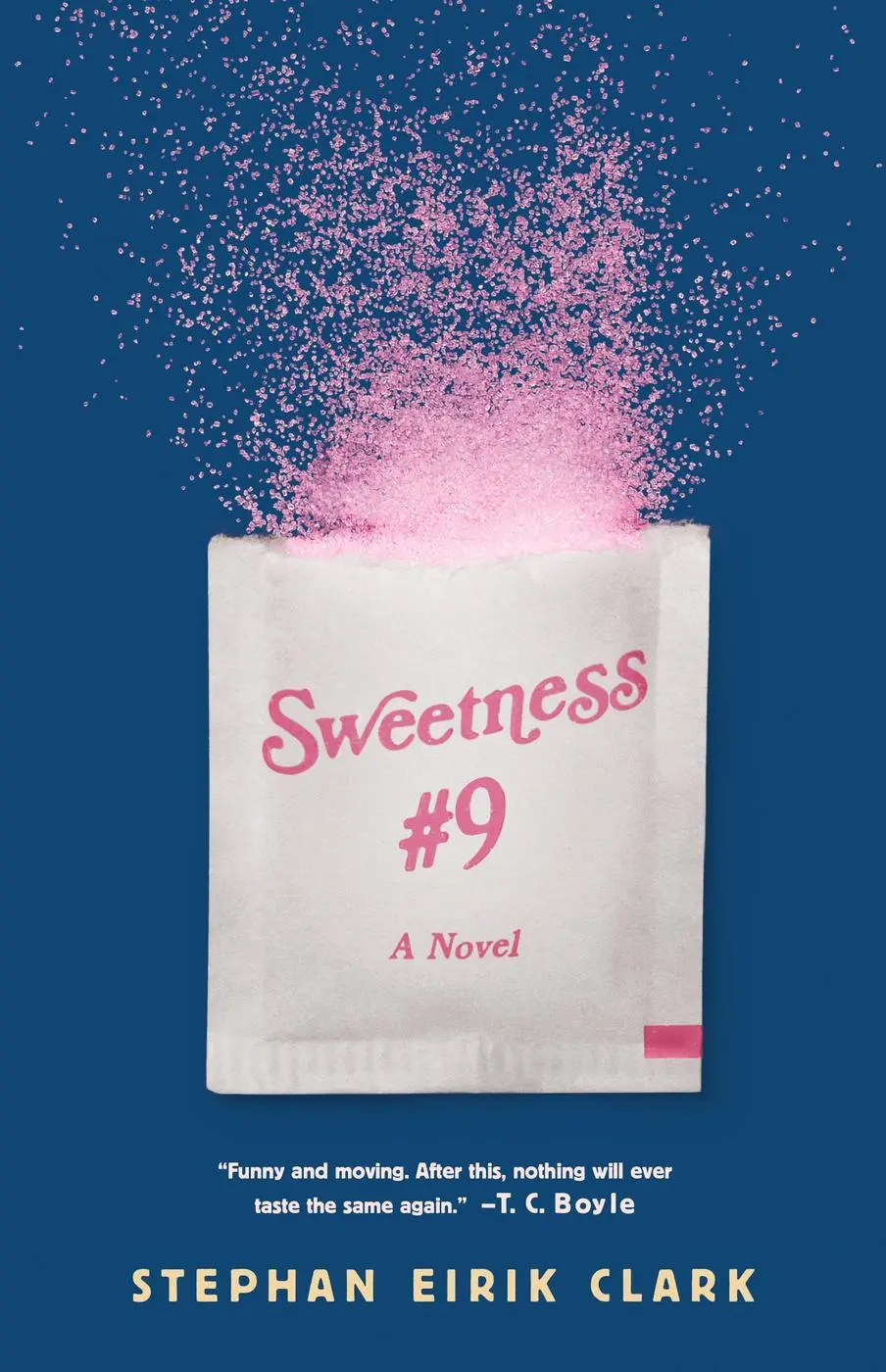
- Название:Sweetness #9
- Автор:
- Издательство:Hachette Book Group USA
- Жанр:
- Год:2014
- ISBN:9780316370103
- Рейтинг книги:4 / 5. Голосов: 1
-
Избранное:Добавить в избранное
- Отзывы:
-
Ваша оценка:
Sweetness #9: краткое содержание, описание и аннотация
Предлагаем к чтению аннотацию, описание, краткое содержание или предисловие (зависит от того, что написал сам автор книги «Sweetness #9»). Если вы не нашли необходимую информацию о книге — напишите в комментариях, мы постараемся отыскать её.
David Leveraux is an Apprentice Flavor Chemist at one of the world's leading flavor production houses. While testing Sweetness #9, he notices that the artificial sweetener causes unsettling side-effects in laboratory rats and monkeys. But with his career and family at risk, David keeps his suspicions to himself.
Years later, Sweetness #9 is America's most popular sweetener-and David's family is changing. His wife is gaining weight, his daughter is depressed, and his son has stopped using verbs. Is Sweetness #9 to blame, along with David's failure to stop it? Or are these just symptoms of the American condition?
An exciting literary debut, SWEETNESS #9 is a darkly comic, wildly imaginative investigation of whether what we eat makes us who we are.
Sweetness #9 — читать онлайн бесплатно полную книгу (весь текст) целиком
Ниже представлен текст книги, разбитый по страницам. Система сохранения места последней прочитанной страницы, позволяет с удобством читать онлайн бесплатно книгу «Sweetness #9», без необходимости каждый раз заново искать на чём Вы остановились. Поставьте закладку, и сможете в любой момент перейти на страницу, на которой закончили чтение.
Интервал:
Закладка:
I sat in silence, breathing into my paper bag until I couldn’t resist the need to check. I pinched my wrist. My pulse was high, very high, higher than it should be.
“Are you okay?”
“Mmm.”
“You look a little pale.”
I released my seat-belt to relieve the pressure it placed on my heart and carotid artery, then breathed in deeply, free of the bag, detecting again the smell of my wife’s perfume. I opened the window.
“David, I’ve got the air conditioning going.”
“Your perfume. It makes my nose itch.”
I held my nose up to the crack in the window. Like a dog. Twenty-five years of marriage and here I was, a dog.
“They wouldn’t take me seriously if I wore that stuff you like.”
“It was good enough for you when we were dating.”
“So was the same amount of work for half the pay.” Betty turned off the A/C. “You sure there’s nothing you’d like to tell me?”
It wasn’t the time for further confession. I could barely breathe. It took everything for me to say, “There’s no Jezebel. I’m not sleeping with some Spanish woman in a budget hotel.”
“Because the last time you fainted…”
I grabbed the side of my neck.
“You’re not gay, are you?”
I moaned.
“What? It happens. People wake up one day and realize it, or they admit it’s not going away. I’m okay if that’s the case.”
“You’re okay?”
“I just want to know the truth. Tell me the truth, David.”
“My wife of twenty-five years is okay if I’m gay?”
She spoke to the road. “It’s not like we’re the most amorous couple in the world.”
“And how could we be? I don’t buy you lingerie anymore, because everything I like you find insulting. The last time I bought a bottle of perfume, you sprayed it into the air and said, ‘Smells like cheap whore.’ I’ve only got so many senses, you know, and you don’t exactly access my heart through the stomach.”
“Don’t get so excitable.”
“Excitable?! Twenty-five years of marriage, two kids, a beautiful house in South Battle Station Township, and you’re asking me, ‘Are you gay?’” I pinched my wrist, holding my arm high up on my chest. I groaned — my pulse couldn’t be that high — and yanked the lever at my side, falling back into a flat position.
“Hold on,” Betty said, snatching a CD from the floor. “We’re almost there.”
She pushed the disc into the stereo. The sounds of the rain forest played. We drove the rest of the way in a sort of Amazonian silence. I counted the number of times the monkey cried.
~ ~ ~
WE’D LEFT FLAVAMERICA in such a hurry that I’d forgotten to change out of my lab coat. This caused a minor scene in Dr. White’s waiting room when I came in from the street with one arm thrown around my wife for support. People looked up from their magazines and exchanged nervous glances, as if I were a symbol of the failures of modern medicine.
Betty argued the urgency of my case at the front counter, and then I was being waved through and shown to a windowless room in back.
I sat in isolation on a strip of sanitary paper. All about me, educational posters were crowded with the warning signs of disease and death. One showed a cutaway of the stomach that revealed a gastric and duodenal ulcer; another showed the yellow plaque buildup inside an unhealthy artery. I was standing and reading a poster’s sidebar about lung disease when Dr. White stepped through the door holding an aluminum clipboard. I must have jumped at the sound of him.
“Sorry about that.” He was a deep-voiced man with a torso like the trunk of a redwood tree. There was no fatness to his girth. He was all solid strength. “Didn’t mean to startle you.”
“You didn’t startle me.” Years ago, when the kids were still little more than so much promise and I was riding high on a swell of optimism in the Reagan Years, Dr. White and I, along with an attorney he knew, had been members of the same threesome, traveling to courses all around the tri-state area on the weekends like the manifestation of an old joke: an atheist, a black man, and a Jew. I never did understand what my friends so loved about the game (it is a beer-fueled inefficiency, if you ask me), but since forging a bond on the greens and fairways, I had felt free to speak my mind around him.
“It’s natural to jump at the unexpected,” I said. “The fight-or-flight instinct, isn’t it?”
“Something wrong with your neck?”
I was clutching it with one hand. It felt better this way.
“Well.” He flipped open the cover of his clipboard and spoke while making a quick notation in my file. “I think you might benefit from a regime of anti-anxiety medication.”
My voice rose like a flock of scattering birds. “Christ! You leave me in here surrounded by posters detailing diseases of the heart, liver, and lung, and then you storm in without so much as a knock and have the gall to suggest I’ve got anxiety? Just like that? I know talk therapy has fallen out of favor, but really.”
He set his clipboard down and went to the sink to wash his hands, telling me if it was a little time on the couch I wanted, he couldn’t help. “With what little the government pays anymore and the rising cost of malpractice insurance, to say nothing of all the forms they’ve got me filling out, it’s seven minutes per patient or I don’t meet my monthly nut.” He reached for a paper towel and dried his hands. “But that doesn’t change the fact that your wife tells me you fainted at work.”
“One of our employees came into my office holding a shotgun,” I said.
He turned to me, pushing one hand into a pair of latex gloves. “Anxiety is a physical reaction to a misappraisal of the facts. It is both fear-based and irrational.”
“He had a shotgun!”
He snapped the second glove on.
“What are you doing?” I said.
He was applying lubricant to two fingers now.
“You refused the prostate exam last time.” He motioned for me to spin around. “There’s no reason we can’t kill two birds with one stone.”
“Are you serious?”
“It’s called multitasking, and a man your age can’t afford to refuse a doctor twice. Now drop those pants.”
I stood, reaching for my zipper, and turned to lean in over the examining table. He moved behind me. “Betty says this happened once before?”
I glanced back over my shoulder.
He inserted two fingers. “She’s worried about you, David.”
I dropped my face into the strip of sanitary paper and grunted.
“Easy now.”
I squeezed the sides of the padded table. Tears pushed up into my eyes.
“Yes,” I said. “Yes.”
Dr. White snapped his gloves off into a upright canister marked HAZARDOUS WASTE. I turned round slowly and accepted a wad of Kleenex, ready to tell him everything.
“That’s not for your eyes.” He smiled and handed me another.
As I cleaned up, he sat in a chair against the wall and wrote a few more notes in my file. “I’ll send you to get a CAT scan, just to eliminate the possibility of a tumor.”
“You think I have a tumor?”
“I’m ninety-nine percent certain you don’t, but you fainted, so we’d better be sure. I’d like you to start taking something now, though.”
“A pill?”
“Do you some good.” He stood and went to a supply closet, then came over to me with a trifold booklet that contained two rows of foil-backed pills. “That’s enough for ten days. If you find yourself having a reaction—”
“What kind of reaction?”
“Some people experience increased anxiety.”
“Isn’t that what this is supposed to treat?”
He nodded. “It’s only for the first seven days. Then it’s clear sailing. Just let me know if you’re feeling out of sorts. We can always adjust the dose.”
Читать дальшеИнтервал:
Закладка:
Похожие книги на «Sweetness #9»
Представляем Вашему вниманию похожие книги на «Sweetness #9» списком для выбора. Мы отобрали схожую по названию и смыслу литературу в надежде предоставить читателям больше вариантов отыскать новые, интересные, ещё непрочитанные произведения.










Обсуждение, отзывы о книге «Sweetness #9» и просто собственные мнения читателей. Оставьте ваши комментарии, напишите, что Вы думаете о произведении, его смысле или главных героях. Укажите что конкретно понравилось, а что нет, и почему Вы так считаете.