Stephan Clark - Sweetness #9
Здесь есть возможность читать онлайн «Stephan Clark - Sweetness #9» весь текст электронной книги совершенно бесплатно (целиком полную версию без сокращений). В некоторых случаях можно слушать аудио, скачать через торрент в формате fb2 и присутствует краткое содержание. Год выпуска: 2014, ISBN: 2014, Издательство: Hachette Book Group USA, Жанр: Современная проза, на английском языке. Описание произведения, (предисловие) а так же отзывы посетителей доступны на портале библиотеки ЛибКат.
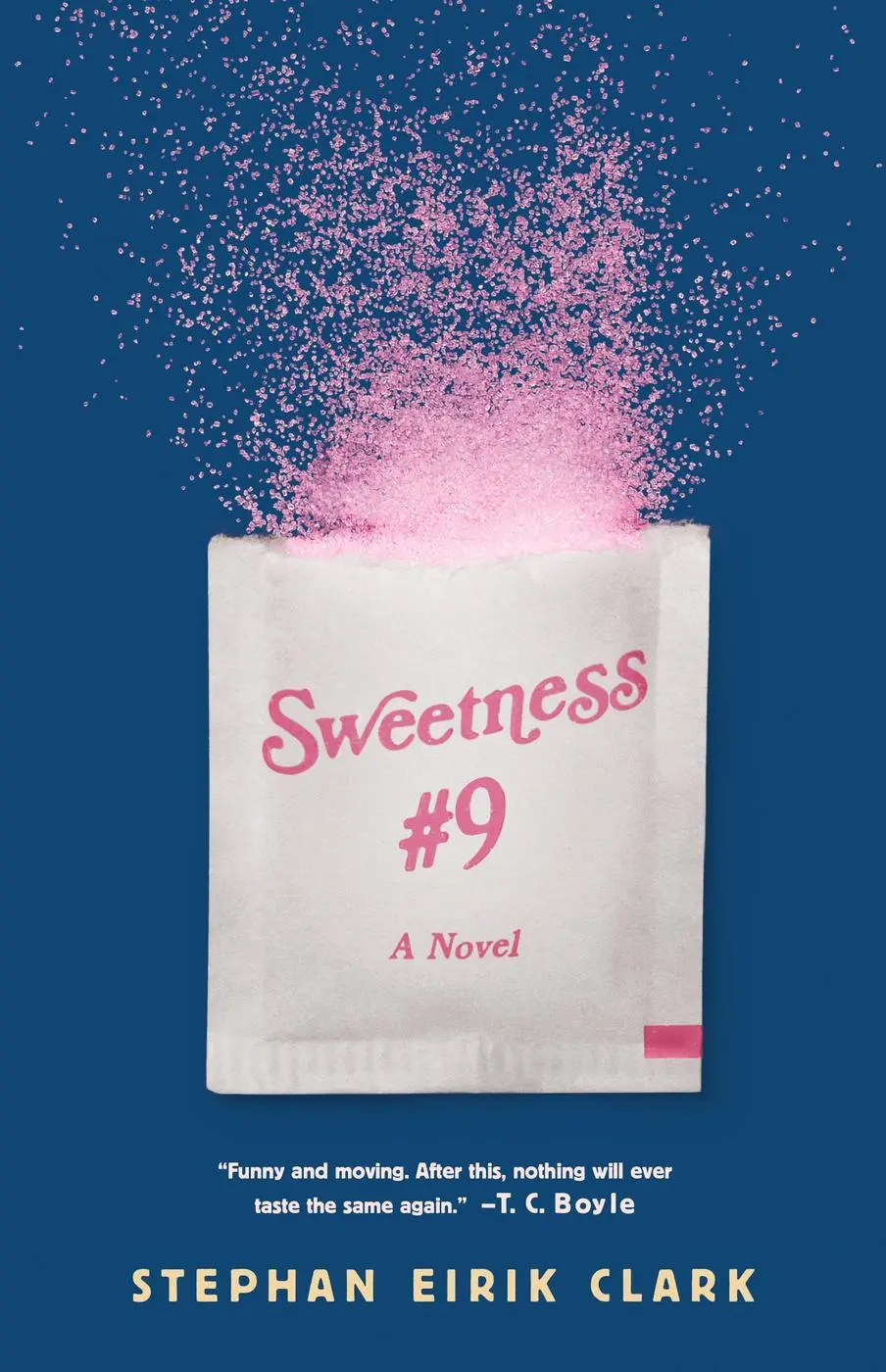
- Название:Sweetness #9
- Автор:
- Издательство:Hachette Book Group USA
- Жанр:
- Год:2014
- ISBN:9780316370103
- Рейтинг книги:4 / 5. Голосов: 1
-
Избранное:Добавить в избранное
- Отзывы:
-
Ваша оценка:
Sweetness #9: краткое содержание, описание и аннотация
Предлагаем к чтению аннотацию, описание, краткое содержание или предисловие (зависит от того, что написал сам автор книги «Sweetness #9»). Если вы не нашли необходимую информацию о книге — напишите в комментариях, мы постараемся отыскать её.
David Leveraux is an Apprentice Flavor Chemist at one of the world's leading flavor production houses. While testing Sweetness #9, he notices that the artificial sweetener causes unsettling side-effects in laboratory rats and monkeys. But with his career and family at risk, David keeps his suspicions to himself.
Years later, Sweetness #9 is America's most popular sweetener-and David's family is changing. His wife is gaining weight, his daughter is depressed, and his son has stopped using verbs. Is Sweetness #9 to blame, along with David's failure to stop it? Or are these just symptoms of the American condition?
An exciting literary debut, SWEETNESS #9 is a darkly comic, wildly imaginative investigation of whether what we eat makes us who we are.
Sweetness #9 — читать онлайн бесплатно полную книгу (весь текст) целиком
Ниже представлен текст книги, разбитый по страницам. Система сохранения места последней прочитанной страницы, позволяет с удобством читать онлайн бесплатно книгу «Sweetness #9», без необходимости каждый раз заново искать на чём Вы остановились. Поставьте закладку, и сможете в любой момент перейти на страницу, на которой закончили чтение.
Интервал:
Закладка:
The next snippet spoke of E3CL9 as being alive and in good spirits and showing no signs of obesity at the conclusion of the study, but this cheerier entry held no sway over me. I knew the truth now: my Louie was dead; my Louie had most certainly killed himself.
It was at this moment that Beekley stepped into my office. The lights flickered behind him, casting strange shadows across his face as he stopped just inside the door. He held a shotgun diagonally across his chest. A shotgun? I half rose from my chair, wondering if I had been so absorbed in my reading that I’d failed to hear the blasts in back. Was there a pile of bodies in the lab? Koba still twitching underneath his desk, his last words lost in a gurgle of blood at the back of his throat? I opened my mouth and let out a quiet croak of protest, but that was it, that was all, because then, like Louie’s, my whole world went dark.
When I came to, I was lying on the sofa in the break room, Koba’s face just inches from my own. “He’s all right,” he said. “He’s back.”
I sat up, slowly, and saw Eliza turn away from me into the hallway. A handful of others remained: Koba, Tennessee, and Beekley, and then our team of food scientists — Anthony, Amaka, and Uche.
“David, I’m so sorry,” Beekley said. He pointed to the shotgun, leaning against the wall next to the refrigerator. I could see a price tag dangling from its trigger casing. “I only wanted to talk to you about my new plans for Y2K. I thought we should put together a company armory.”
I drank from a cup of water Tennessee handed me, then looked to Beekley with a pained expression.
“I was just telling the others,” he said. “Everything’s computerized, and every computer’s connected. Don’t tell me this is a minor matter of ones and zeroes that can be fixed by a couple of ambitious computer programmers. Nothing will be spared when the system shuts down at the stroke of midnight. Come the first day of the new millennium, the lights will go dark and prison doors will slide open, spilling rapists and murderers into our streets. People will panic, David. It will be unlike anything we’ve seen since the Black Plague.”
My neck felt buttery, my pulse was all a-rumble. I could only manage to say, “A shotgun, Beekley?”
“Think about it. Have you thought about it? The great industrial system of food production will grind to a halt, and when people have finished the last frozen entrées they’ve kept stashed in the cold of a stream, what do you think will happen? The common man won’t know what to do with bruised fruit and soft potatoes, with lettuce half devoured by aphids and the stringy meat of wild game. Forget Mad Max. When people are cut off from their natural papaya flavoring and essence of lobster, that movie will look as welcoming as a Disney cartoon. Men, women, and children will give up the pleasures of their bodies for a hoarded can of Campbell’s soup. They will realize the power of their food additives only when they are forced to endure a diet of gruel and colorless pastes, when what’s for dinner is a soft carrot as rotten as their souls or another helping of tree bark soup.”
He knelt before me, while the others stood at his rear, as rapt and silent as disciples.
“When people learn who we are and what we can do with all the chemicals we store in bulk, they will come for us.” He stood, going for his shotgun. “They will come, David”—again, he held it diagonally across his chest—“and there will be blood. The only question we have to ask is, Will we be masters or will we be slaves?”
I felt a tickle in my nose and began to cough. Betty. I looked to the door, sure it must be her — the smell was that unmistakable, like a rain cloud moving low over a lush forest as a musky creature ran about through the shadows below. The scent was so different from the one I’d known as a newlywed. Back then, I had plunged my nose into the hollows of her collarbone and lingered like a man in an opium den, breathing in the sultry and exotic perfume she’d daubed against her skin. Ever since business school, however, Betty had been embarrassed by the bold Oriental scents she’d once worn. Now she bought her fragrances in the same department that sold men’s ties, and the memories of the most passionate encounters of our youth were lost to me unless I happened to run into some woman just up from one of the developing patriarchies of the third world. A year or two back, when I’d gone to the national meeting of the Society of Flavor Chemists in Anaheim, California, my nose had alerted on this lost scent one afternoon when I stepped into an elevator at the Doubletree Inn where I was staying. A Spanish-speaking woman in a baby blue housekeeping outfit was already in there, and when the doors of the elevator closed, sealing us off from the distractions of the world, her perfume, my god — I wanted to hit the red button and bring our carriage to a jarring stop, to turn and tear at her uniform and lift her leg up toward my hip, and then do it, plunge my nose deep down into the swales of her neck and breath in that glorious fragrance.
The sound of my wife’s heels grew louder. Then their clickety-click was turning in to the break room and she was coming straight for me. “David? What happened? Eliza called and said you fainted?”
I covered my nose as she drew near. I held the top of my head and moaned softly.
She glanced at Beekley — then the shotgun — and reached for my hand, pulling me up to my feet. “C’mon, Dr. White’s agreed to see you.”
While fighting traffic on Highway 1, Betty asked if I was having an affair.
I had been breathing into a brown bag that I’d found on the floor. It smelled of peanut butter and jelly.
Betty pointed at the glove box. I popped it open and found a crumpled supermarket receipt inside.
“I found it while doing the wash,” she said. “Has it been going on long?”
I turned it over and saw what I’d written. Jezebel. The Holiday Inn. A blue dress.
“I’d rather know the truth than be left guessing. The truth I can handle, David. But lies and guessing…”
It was too shameful to say to her face, so I turned to tell it out my window.
“They’re talking points,” I said.
“What?”
I told her about the stop-watch, and the piece of graph paper I’d hidden away in the garage beneath the map of the world.
“You thought Ernest would get better if you’d spend more time with him?”
I nodded. “But every time I stepped in front of him, I didn’t know what to say. When did we all become such strangers?”
Betty stopped at a red light. She didn’t look at me.
“So I started jotting down notes,” I said. “Something would come to me in the shower, or I’d pull over on the side of the road and scribble a few words down. They’re talking points,” I said. “I’m no better than Nixon; my fatal flaw’s a need to record. The blue dress is Lewinsky’s. The rest”—I set the receipt on the dash—“I don’t know. I thought I could speak to him about fidelity and commitment. I was building up this whole speech in my mind.”
Betty looked at me, then pulled away with the green light.
“I’m sorry I wasn’t the mother you’d hoped I’d be,” she said.
It was only then that I realized I wasn’t the only one implicated by my confession.
“If I’d been a better mother, I’m sure we would’ve been a better family. It’s always a bad mother storyline, isn’t it?” Her body jumped from a little hiccup of a laugh. “And to think I wanted it so badly when I was young. If the police brought that woman to our house tonight, bleeding and desperate for a glass of water, I’d turn her away — I’d tell the police I didn’t have the slightest idea who she was.”
Читать дальшеИнтервал:
Закладка:
Похожие книги на «Sweetness #9»
Представляем Вашему вниманию похожие книги на «Sweetness #9» списком для выбора. Мы отобрали схожую по названию и смыслу литературу в надежде предоставить читателям больше вариантов отыскать новые, интересные, ещё непрочитанные произведения.






Обсуждение, отзывы о книге «Sweetness #9» и просто собственные мнения читателей. Оставьте ваши комментарии, напишите, что Вы думаете о произведении, его смысле или главных героях. Укажите что конкретно понравилось, а что нет, и почему Вы так считаете.