Iain Sinclair - London Orbital
Здесь есть возможность читать онлайн «Iain Sinclair - London Orbital» весь текст электронной книги совершенно бесплатно (целиком полную версию без сокращений). В некоторых случаях можно слушать аудио, скачать через торрент в формате fb2 и присутствует краткое содержание. Год выпуска: 2003, Издательство: Penguin Books Ltd, Жанр: Современная проза, Путешествия и география, Публицистика, на английском языке. Описание произведения, (предисловие) а так же отзывы посетителей доступны на портале библиотеки ЛибКат.
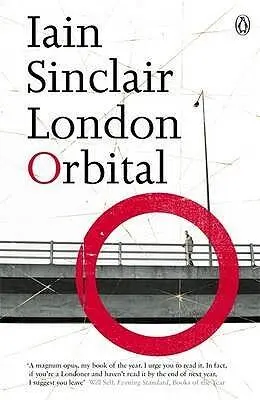
- Название:London Orbital
- Автор:
- Издательство:Penguin Books Ltd
- Жанр:
- Год:2003
- ISBN:нет данных
- Рейтинг книги:4 / 5. Голосов: 1
-
Избранное:Добавить в избранное
- Отзывы:
-
Ваша оценка:
London Orbital: краткое содержание, описание и аннотация
Предлагаем к чтению аннотацию, описание, краткое содержание или предисловие (зависит от того, что написал сам автор книги «London Orbital»). Если вы не нашли необходимую информацию о книге — напишите в комментариях, мы постараемся отыскать её.
Encircling London like a noose, the M25 is a road to nowhere, but when Iain Sinclair sets out to walk this asphalt loop — keeping within the 'acoustic footprints' — he is determined to find out where the journey will lead him. Stumbling upon converted asylums, industrial and retail parks, ring-fenced government institutions and lost villages, Sinclair discovers a Britain of the fringes, a landscape consumed by developers. London Orbital charts this extraordinary trek and round trip of the soul, revealing the country as you've never seen it before.
'My book of the year. Sentence for sentence, there is no more interesting writer at work in English'John Lanchester, 'A magnum opus, my book of the year. I urge you to read it. In fact, if you're a Londoner and haven't read it by the end of next year, I suggest you leave'Will Self, 'A journey into the heart of darkness and a fascinating snapshot of who we are, lit by Sinclair's vivid prose. I'm sure it will be read fifty years from now'J. G. Ballard, Iain Sinclair is the author of
(winner of the James Tait Black Memorial Prize and the Encore Award);
(with Rachel Lichtenstein);
and
. He is also the editor of
.
London Orbital — читать онлайн бесплатно полную книгу (весь текст) целиком
Ниже представлен текст книги, разбитый по страницам. Система сохранения места последней прочитанной страницы, позволяет с удобством читать онлайн бесплатно книгу «London Orbital», без необходимости каждый раз заново искать на чём Вы остановились. Поставьте закладку, и сможете в любой момент перейти на страницу, на которой закончили чтение.
Интервал:
Закладка:
I love it. I like frontiers. Zones that float, unobserved, over other zones. Road users have no sense of the Lee Navigation, they’re goal-orientated. Going somewhere. Noticing Atkins, foot on barrier, perched in the central reservation, snapping away, drivers in their high cabs see a nuisance, an obstacle. A potential snoop. They’d be happy to run him down. Atkins sees a speedy blur, abstraction, the chimney of London Waste Ltd blasting steam.
Visible evil. Pollution from a low-level castle, remaindered Gothic. Better and better. The London Waste facility is battleship-grey, a colour that is supposed to make it invisible in the prevailing climate: rain, exhaust fumes, collapsed skies. The expectation is that on an average Edmonton morning, diesel fug and precipitation will disguise the 100-foot tower of the biggest incinerator in Britain.
The Waste Zone, that’s one they left out of the brochure. You arrive at the edge of the city, out of sight of Canary Wharf, and you take a dump. Surgical waste, pus, poison, plague. Corruption. All the muck we spew out. It has to go somewhere. Edmonton seems a reasonable choice.
In October 2000, a group of Greenpeace protesters occupied the summit of the burning tower. Gridlock on the M25 is a modest fantasy compared to a blockage in the procedure for the destruction of clinical waste. The Edmonton furnaces dispose of 1,800 tons of putrid stuff, contaminated bandages, body tissue, dirty nappies, used hypodermic needles, every day. At the time of the protest, waste material was piling up in seven boroughs (Camden, Enfield, Barnet, Hackney, Haringey, Islington, Waltham Forest). Hackney had its own long-running dispute, black bags burst on the streets, as a consequence of the council’s bankruptcy and cutbacks. Generations of braggadoccio incompetence, a system built on institutionalised malpractice.
Waste that couldn’t be shipped to Edmonton was transported to landfill sites in Essex and Huntingdon. Convoys took advantage of the M25, which increasingly functioned as an asteroid belt for London’s rubble, the unwanted mess of the building boom, the destruction of tower blocks, the frenzied creation of loft-living units along every waterway.
We’re intrigued by London Waste Ltd and their Edge of Darkness estate. What was once grey belt, the grime circuit inside the green belt, is now called upon to explain itself. Before the Lee Valley Regional Park Authority, Euro slush funds and council tax tithes, it didn’t matter. Reclamation was never mentioned. Fish and fowl were there to be hunted. Dirty and dangerous industries provided employment, built cottages for the workers. Now we have Best Value.
The incineration industry, and the London Waste Ltd plant at Edmonton in particular, were investigated by television journalist Richard Watson, on behalf of the Newsnight programme. A predictable story of fudging, economy with the truth, buck-passing and ministerial denial. Until August 2000, London Waste were guilty of mixing relatively safe bottom ash with contaminated fly ash. The end product was then used in road building, and for the manufacture of the breeze blocks out of which the plethora of dormitory estates were being assembled. Waltham Abbey and its satellites as Pompeii and Herculaneum.
The defoliant Agent Orange, 50 million litres of which had been dropped by the Americans on Vietnam, registers around 900 nanograms of dioxin to one kilogram of soil. Mixed ash from the incinerators, used on chicken runs in Newcastle, registered 9,500 nanograms. Eggs concentrated the effect. They didn’t need shells. You could see right through them. Dioxins are carcinogenic. Combined with dust, when householders carry out repairs, hang paintings, drill holes in breeze blocks, they are guaranteed to keep future surgeries and hospices busy.
The Environment Agency fed the relevant minister, Michael Meacher, the usual soft soap. The firms responsible for working mixed ash into conglomerates used in surfacing new roads declined to reveal the location of their handiwork, the 12,000 tons of aggregate dropped on the landscape. Their spokesman, sweating lightly, sported a Buffalo Bill beard: frontiersman peddling a treaty to the Sioux. One major recipient of this dubious cargo was uncovered by Watson’s researches: the car park of the Ford plant at Dagenham. The A13, yet again, had something to make it glow at night. A topdressing of contaminated Edmonton ash.
‘No more dangerous than Guy Fawkes night,’ declared Meacher to the House. When ash, removed from Edmonton, was tested, it registered dioxin levels ten times higher than the figure floated by the Environment Agency.
Walking north towards Picketts Lock, we turn our backs on the incinerators, the smoke. Frame it out, it’s not there. Go with the Dufy doodle on the side of London Waste’s rectangular box, the company’s upbeat logo: limpid blue sky, lush grass, a pearl-grey building like a Norfolk church.
Edmonton is the Inferno and Picketts Lock the garden, the paradise park. In the past, on hot summer walks with my family, we used to come off the Navigation path for a swim at the Picketts Lock Leisure Complex. (How complex can leisure be?) This modest development, on the edge of a hacker’s golf course, was an oasis. It didn’t take itself too seriously and it filled the gap between the London Waste burning chimney and the Enfield Sewage Works.
The polyfilla theory of Leisure Complex placement, the old treaty between developers, land bandits, and improve-the-quality-of-life councillors, worked pretty well. Another chlorine-enhanced waterhole on ground nobody could think of any other way to exploit.
But that won’t wash in these thrusting millennial times. The name Picketts Lock starts to appear in the broadsheets — and it acquires a bright new apostrophe: Pickett’s Lock . Pickett’s Lock will be reinvented as a major sports stadium (convenient access to the M25). It will be the venue for the 2005 World Athletic Championships; thereby conferring enormous benefits on the Lea Valley; tourists, media, retail spin-offs. Computer-generated graphics omit the chimney at the end of the park, the smoke pall. Nobody is bad-mannered enough to mention the fact that London Waste have put in an application to extend their site. The application has been approved by Nick Raynsford, Minister for the Capital. It is awaiting final approval from Trade and Industry Secretary, Stephen Byers. (Poor man. It was going to get worse, much worse. Byers epitomised the New Labour attitude of glinting defiance. Fiercely tonsured and spectacled, tight-lipped, he would suffer assault by flashbulbs, while sitting bolt-upright in the back seat of a ministerial limo. He would be attacked by forests of furry microphones at the garden gate. He would be sideswiped from Trade and Industry to Transport. Pickett’s Lock to Purgatory. Official pooper-scooper. Ordered to clean up after all those years of misinformation, neglect and underinvestment. A man undone by his own spinners and fixers, he came, with every fresh appearance before the media inquisitors, to look more and more like a panicked automaton, a top-of-the-range cryogenic model of The Public Servant.)
When this matter is raised, the site’s owners (Lee Valley Regional Park Authority) become quite huffy, insisting that additional incinerators will ‘pose no risk’ to the health of athletes or spectators. ‘Better far than Los Angeles in the past and Athens in the future as venues for the Olympics,’ states Peter Warren, Lee Valley’s head of corporate marketing.
Lee Valley’s Strategic Business Plan (2000–2010) is preparing the ground for change and innovation. ‘The Leisure Centre is an ageing building over 25 years oldand the whole complex is subject to emerging, modern competition.’ Horror: ‘25 years old’! Disgusting, obscene. Tear it down. The swimming pool and poolside café might look clean and friendly to the untrained eye, but they are older than David Beckham. The cinema, video arcade part of the enterprise will remain.
Читать дальшеИнтервал:
Закладка:
Похожие книги на «London Orbital»
Представляем Вашему вниманию похожие книги на «London Orbital» списком для выбора. Мы отобрали схожую по названию и смыслу литературу в надежде предоставить читателям больше вариантов отыскать новые, интересные, ещё непрочитанные произведения.








Обсуждение, отзывы о книге «London Orbital» и просто собственные мнения читателей. Оставьте ваши комментарии, напишите, что Вы думаете о произведении, его смысле или главных героях. Укажите что конкретно понравилось, а что нет, и почему Вы так считаете.