Iain Sinclair - London Orbital
Здесь есть возможность читать онлайн «Iain Sinclair - London Orbital» весь текст электронной книги совершенно бесплатно (целиком полную версию без сокращений). В некоторых случаях можно слушать аудио, скачать через торрент в формате fb2 и присутствует краткое содержание. Год выпуска: 2003, Издательство: Penguin Books Ltd, Жанр: Современная проза, Путешествия и география, Публицистика, на английском языке. Описание произведения, (предисловие) а так же отзывы посетителей доступны на портале библиотеки ЛибКат.
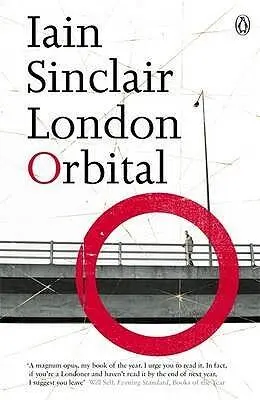
- Название:London Orbital
- Автор:
- Издательство:Penguin Books Ltd
- Жанр:
- Год:2003
- ISBN:нет данных
- Рейтинг книги:4 / 5. Голосов: 1
-
Избранное:Добавить в избранное
- Отзывы:
-
Ваша оценка:
London Orbital: краткое содержание, описание и аннотация
Предлагаем к чтению аннотацию, описание, краткое содержание или предисловие (зависит от того, что написал сам автор книги «London Orbital»). Если вы не нашли необходимую информацию о книге — напишите в комментариях, мы постараемся отыскать её.
Encircling London like a noose, the M25 is a road to nowhere, but when Iain Sinclair sets out to walk this asphalt loop — keeping within the 'acoustic footprints' — he is determined to find out where the journey will lead him. Stumbling upon converted asylums, industrial and retail parks, ring-fenced government institutions and lost villages, Sinclair discovers a Britain of the fringes, a landscape consumed by developers. London Orbital charts this extraordinary trek and round trip of the soul, revealing the country as you've never seen it before.
'My book of the year. Sentence for sentence, there is no more interesting writer at work in English'John Lanchester, 'A magnum opus, my book of the year. I urge you to read it. In fact, if you're a Londoner and haven't read it by the end of next year, I suggest you leave'Will Self, 'A journey into the heart of darkness and a fascinating snapshot of who we are, lit by Sinclair's vivid prose. I'm sure it will be read fifty years from now'J. G. Ballard, Iain Sinclair is the author of
(winner of the James Tait Black Memorial Prize and the Encore Award);
(with Rachel Lichtenstein);
and
. He is also the editor of
.
London Orbital — читать онлайн бесплатно полную книгу (весь текст) целиком
Ниже представлен текст книги, разбитый по страницам. Система сохранения места последней прочитанной страницы, позволяет с удобством читать онлайн бесплатно книгу «London Orbital», без необходимости каждый раз заново искать на чём Вы остановились. Поставьте закладку, и сможете в любой момент перейти на страницу, на которой закончили чтение.
Интервал:
Закладка:
If this was Kent, you’d look for oast houses. Structures designed for a purpose, drying hops, take on a second life: women drowsy, aroused; men tilting golden liquid in a tall glass. From the car park of the Tesco superstore, we acknowledge the clocktower of Three Mills, the drying kilns. (I’ve done the tour, seen the flood pool, the four twenty-foot-in-diameter water-wheels; listened to the creaks and groans. I’ve admired the shape of the building, the bare boards. The work that is now a show, a museum piece.)
There’s a café, brasserie or wine bar, with window looking out on Abbey Creek, on the junction of various streams, backwaters: Limehouse Cut, the Lea, City Mill river, Channelsea. A shuttle of silver trains over Gasworks Bridge. Industrial ghosts are loud here, but the café exists to serve media folk from the studios. And it isn’t open. It used to be the bottling plant of a distillery, another kind of mill, a gin mill. Water, the flow of the Lea impounded, was a great resource. Now it comes in blue bottles, carbonated. We make do with a Tesco sandwich and a carton of something. Atkins, the veggie, takes his sugar hit from a choc bar.
The island around Three Mills will be the epicentre of a new media empire; the intoxicating sweep of the landscape stimulating concept-generating faculties. You won’t actually see river, gas holders, exotic weeds, allotments, Bazalgette’s minarets in the mustard-Gothic cathedral of sewage, but they will inform the sensibilities of the programmers. Nicholson’s Gin Distillery, dark and forbidding, kept the workers anaesthetised, took the edge off middle-class anxiety. Nothing changes. The distillery peddles a different kind of fantasy, a new addiction: Big Brother . Prison Portakabins for jaded peepers. The TV show in which nothing happens on a twenty-four-hour feed.
Hence the Berlin effect, checkpoints, border guards, security cameras. A faint whiff of celebrity blends with the bindweed drench, the marsh gas, and that sharp smell that braking trains give off. Celebrity is fear, testosterone, oestrogen, unease. Celebrity is heat. Remove it from its natural habitat, the heart of the city (club, restaurant), and it rots, stinks. Celebrity is having a bunch of people standing around on the pavement, waiting while you eat.
At the back of Three Mills, Xerox celebrity hurts. It hurts place. The point of this area is to be obscure, a discovery any urban wanderer can make. Overgrown paths, turf islands. The imagination can reach out towards ambiguity. Find yourself by accident on the Northern Sewage Outfall path (now designated a ‘Green Way’) and you can follow the march of pylons, relish privileged views across West Ham; Canary Wharf glimpsed through the gravestones and memorials of the East London Cemetery. You can make your way, with the tide of shit, towards the A13 and the Thames. Gas, electricity, water, elements that shape the grid. Polluted streams picking a route, unacknowledged, through disposable landscapes.
When I walked around Channelsea creek with Chris Petit, who was carrying a small Sony DV camera, we were tracked by a security guard with a large dog, a German shepherd. When we stopped, they stopped. Petit was very taken with a silver building like an upturned boat. It had no design features, no detail, no architect’s signature; that’s what Petit liked. The absence of windows. The way it stood in the middle of nothing, minding its own business.
I felt some sympathy for the dog handler. How much fun could it be following two men who appear to have all the time in the world and nothing better to do with it than to stare at a large aluminium kennel? Security is a growth industry. It’s the job you get if you’re running away from something. Doctors and diplomats, asylum seekers. With their mobiles. Wired to an unseen control. Putting in the hours. It used to be a glamorous career choice, celebrity hoodlums like Dave Courtney, Lennie McClean, working the door. Getting dolled up for gangland funerals. The Look: long black coat, shaved head, earring, dark glasses. But the Look crossed the line into camp, self-consciousness, when Vinnie Jones took over the franchise, designer knucklebreaker. The new villains are pimping for film deals, closeted with ghosts, while they Archer their drab CVs.
The Channelsea guards are depressed. They are the real prisoners. The fame-succubi inside the huts are being watched. Somebody loves them. Somebody wants to eavesdrop on their dim lives and tiny ambitions. Nobody gives a toss about the watchers, the hang-around-the-gate uniforms. They can’t skive off. They’re surrounded by a thicket of gently panning CCTV cameras. Nobody comes here. Then, for one night a week, the world switches on to see who will be expelled, made to walk the plank, the bridge that takes them back to reality, the Three Mills studio.
I like this bridge. It doesn’t wobble. And it’s got an ironic title: Prescott Channel. Mud, surveillance, dereliction. The best skies in London. The nightmare of the New Labour suits, the mean spectacles who blink at life like a software package, smoothed and revised. Channelsea has no use for consensus, market research, Best Value. Channelsea is off-limits.
I spent a Saturday afternoon, in the rain, observing a pair of middle-aged mudlarks, up to the elbows in liquid sewage. One of them dragged an old tin bath out into the river, at low tide. The other worked with a sieve like a grizzled prospector, Walter Huston in The Treasure of the Sierra Madre . They spent hours laboriously sifting shit, hoping for the odd ring or coin. And I stuck with them, watching. This was about as far as you could travel from John Prescott. He couldn’t, even if it were explained to him, find anywhere to place such humans. Demographically, they had pulled it off. They didn’t register.
In the past I’ve taken photographs of the picket fence outside The Big Breakfast cottage at Old Ford Lock. But I can’t resist repeating myself. The messages change so quickly. Every white-painted blade is covered with names, telephone numbers. NICK CARTER IS THE FATHER OF MY BABY. TAMMY SEAMARK LIKES FREE SEX (WITH ALL SORTS). DENISE VAN OUTEN IS A BITCH, SEE YOU SEEM, OR ELSE. Shorthand stalker fantasies. The cottage, which marks the end of the Lee Valley Media Zone (goodbye soaps, goodbye hysteria), has lost its edge. Dead TV. In time a blue plaque to Denise Van Outen (‘lived here from 2 September 1996 to 1 Jan 1999’) will appear, playing games with fuddy-duddy notions of heritage and culture. An ironic memorial to the absence of memory. An Alice in Wonder land makeover. Giant toadstools, paddling pools, artificial grass. You gaze over the picket fence and the surveillance cameras, the security guards, stare right back at you. The lock-keeper’s cottage, beginning as a rural fantasy (sinister in Charles Dickens, jolly in H.G. Wells), ends in self-parody, colours louder than life, a cottage industry on magic mushrooms. The bricks are too bright, which isn’t surprising, they’re wallpaper. The security man in his little hut, guarding the pool and the synthetic grass, is too bored to bother with us, the crusty trio staring hungrily at his thermos and miniature pork pies.
Asylum seekers, border jumpers, paroled humans, those without status: they collect a uniform, lousy wages, an area to patrol, a free TV monitor playing real-time absences. In Don DeLillo’s ghost story, The Body Artist , there’s a woman who hangs on to her sanity by snacking on a ‘live-streaming video feed from the edge of a two-lane blacktop’. Somewhere unknown, Finland. ‘Twenty-four hours a day.’ A prison fantasy, the weary body hauling itself upright to peer into a frosty window. ‘She imagined that someone might masturbate to this.’
Security is (mostly) unactivated masturbation. Low arousal tapes, low definition: you watch the landscape breathe. The canal at night. Wavering reflections of sodium lamps.
Читать дальшеИнтервал:
Закладка:
Похожие книги на «London Orbital»
Представляем Вашему вниманию похожие книги на «London Orbital» списком для выбора. Мы отобрали схожую по названию и смыслу литературу в надежде предоставить читателям больше вариантов отыскать новые, интересные, ещё непрочитанные произведения.





Обсуждение, отзывы о книге «London Orbital» и просто собственные мнения читателей. Оставьте ваши комментарии, напишите, что Вы думаете о произведении, его смысле или главных героях. Укажите что конкретно понравилось, а что нет, и почему Вы так считаете.