Iain Sinclair - London Orbital
Здесь есть возможность читать онлайн «Iain Sinclair - London Orbital» весь текст электронной книги совершенно бесплатно (целиком полную версию без сокращений). В некоторых случаях можно слушать аудио, скачать через торрент в формате fb2 и присутствует краткое содержание. Год выпуска: 2003, Издательство: Penguin Books Ltd, Жанр: Современная проза, Путешествия и география, Публицистика, на английском языке. Описание произведения, (предисловие) а так же отзывы посетителей доступны на портале библиотеки ЛибКат.
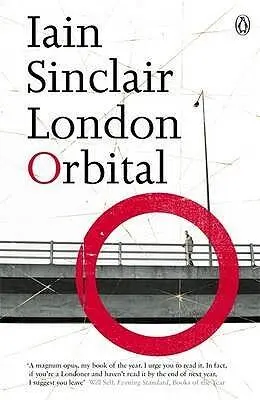
- Название:London Orbital
- Автор:
- Издательство:Penguin Books Ltd
- Жанр:
- Год:2003
- ISBN:нет данных
- Рейтинг книги:4 / 5. Голосов: 1
-
Избранное:Добавить в избранное
- Отзывы:
-
Ваша оценка:
London Orbital: краткое содержание, описание и аннотация
Предлагаем к чтению аннотацию, описание, краткое содержание или предисловие (зависит от того, что написал сам автор книги «London Orbital»). Если вы не нашли необходимую информацию о книге — напишите в комментариях, мы постараемся отыскать её.
Encircling London like a noose, the M25 is a road to nowhere, but when Iain Sinclair sets out to walk this asphalt loop — keeping within the 'acoustic footprints' — he is determined to find out where the journey will lead him. Stumbling upon converted asylums, industrial and retail parks, ring-fenced government institutions and lost villages, Sinclair discovers a Britain of the fringes, a landscape consumed by developers. London Orbital charts this extraordinary trek and round trip of the soul, revealing the country as you've never seen it before.
'My book of the year. Sentence for sentence, there is no more interesting writer at work in English'John Lanchester, 'A magnum opus, my book of the year. I urge you to read it. In fact, if you're a Londoner and haven't read it by the end of next year, I suggest you leave'Will Self, 'A journey into the heart of darkness and a fascinating snapshot of who we are, lit by Sinclair's vivid prose. I'm sure it will be read fifty years from now'J. G. Ballard, Iain Sinclair is the author of
(winner of the James Tait Black Memorial Prize and the Encore Award);
(with Rachel Lichtenstein);
and
. He is also the editor of
.
London Orbital — читать онлайн бесплатно полную книгу (весь текст) целиком
Ниже представлен текст книги, разбитый по страницам. Система сохранения места последней прочитанной страницы, позволяет с удобством читать онлайн бесплатно книгу «London Orbital», без необходимости каждый раз заново искать на чём Вы остановились. Поставьте закладку, и сможете в любой момент перейти на страницу, на которой закончили чтение.
Интервал:
Закладка:
The river, as it flows beneath the gentle rise of Springfield Park, that Middle European reservation where orthodox Jews yatter on benches, reminds Campbell of a trip he made by coracle to the source of the Lea. The river slows consciousness. I could never survive in Ken Campbell’s retreat. I wouldn’t write a word. I’d spend my mornings at a table in the café, skying, watching patterns of flow, oil spill psychedelia. But Campbell’s a native, you feel the realpolitik of Leytonstone in everything he says.
He put on a durational, science fiction epic at Three Mills. And now he’s up for a ‘pidgin’ Macbeth at the Middlesex Filter Beds. He’s right. There’s a sense of theatre about these abandoned industrial spaces; trenches, dark water, tumbled concrete menhirs. The experience of going up west for an overpriced musical, a rejigged Priestley, is hell. Move the National Theatre to Walthamstow Marshes.
From his days as a pop-eyed stooge for Warren Mitchell, a bent lawyer for G.F. Newman, or anything that called for extreme physicality, Campbell graduated into a professional explainer (nutty experiments, Citroën ads). Whatever it takes to fund his own brand of spectacle and monologue, Campbell’s up for it. He’s not shy of self-promotion. Pidgin as a world-language is his current obsession.
With his soft black hat and his small cigars, he’s a piratical, actor/manager figure. The bushy eyebrows have, unilaterally, declared their independence. He has to cope with a tangle of dogs and leads, stagy business that involves feeding them a constant stream of broken biscuits. His teeth are magnificently shipwrecked, the colour of ancient dominoes. He’s performed as a duck in Alice in Wonderland , with Ken Dodd as a rat; he’s given underwater concerts with Heathcote Williams. He wears a Dreamcatcher T-shirt. He raps through the ‘Tomorrow and tomorrow’ speech in pidgin to the amazement of the riverside loungers.
The café serves filter coffee and has calamari on the breakfast menu. We settle in, calling for additional rounds of tea and toast. Drummond is scribbling in his notebook. He tells us about The Unabomber Manifesto . ‘Today,’ he would write, in his account of the walk, ‘I’m a born-again would-be terrorist.’ From that landmine laugh, you might believe it. The look is right: sensible, corduroy, with pale-rimmed specs. What’s in that rucksack? (He carries it looped over one shoulder, so that it doesn’t actually qualify as a twitcher’s pouch.) Bona fide terrorists are lab technicians, junior lecturers, schoolteachers with a grievance. Bill has some of that, but he’s too tall, too much of a walker. He knows his wildlife. As we strolled alongside the Marshes, the reservoir embankments, he pointed out grey wagtail, dunnock. We aren’t going to challenge him. Atkins knows two kinds of birds: seagulls and the ones that aren’t seagulls. He’s telling Drummond about his time as a Heavy Metal roadie.
*
Gradually, landscape induces confidences. The cycle gates become less of an irritation. Road bridges energise us, traffic noise plays against pastoral tedium. Ferry Hale Road, Forest Road. On my first walks up the Lea, I used to think that an old fisherman’s pub, here on the fringe of Walthamstow, was truly rustic. Izaak Walton in the back bar stuffing a pike. There must have been a ferry somewhere near this clapboard ghost. A haunt of narrowboat skippers and their dogs.
The site is now distinguished by a frivolous display of marine architecture. It thinks it’s on the Algarve: balconies, furled parasols, greenery dripping from window ledges, blue glass. The Heron Hospitality Centre. Even the herons are embarrassed by it, they spindle away to Tottenham Marsh. Perch, in solitude, on convenient branches, trying to pretend — which is impossible given their size, the design faults — that they’re not really there. Neo-Romantic doodles, scissor-beaks and Anglepoise knees.
Drummond is gobsmacked. Hand on hip, he tries to make sense of this latte -coloured folly. Why would anyone position a glass and plaster box alongside a scummy lock on the high road to Walthamstow and Epping Forest? Blatant white space-ism: architects ignore the implications of where their buildings will be sited. Nothing exists beyond the frame of an idealised sketch. Invertebrate people with identikit faces lounging on an imaginary deck. There’s no road, no marsh, no industry.
It’s enough to get Drummond started on another of his current projects, a heart-of-darkness voyage up the Congo with Mark Manning (aka Zodiac Mindwarp). Along with the inevitable Gimpo (covert camera). The African voyage, with all its logistical problems (paranoia, corruption, disease, river-stink), is the second part of a wildly ambitious trilogy. One: a journey through Finland towards the North Pole, with an icon of Elvis Presley. Two: the Conrad revival. Three: the final (terminal) trip to the moon.
Jessie Weston’s tag — ‘the otherworld is not a myth, but a reality’ — underwrites everything Drummond attempts. Plotting his adventures is better, much better, than carrying them out. The moon jaunt involves a swim, clutching a buoyancy barrel or life preserver, from Cuba to Cape Canaveral. The next bit is vague: blag themselves aboard Apollo-whatever, or lift off by force of will (a Georges Méliès stunt). The moon’s a dead rock and also a state of mind. The secret history of popular music (which Drummond celebrates) couldn’t exist without it — as a rhyme, a simile. Rhymes are dangerous things, forging connections which can never be broken. Rhymes are addictive. They clog up the memory files.
If Florida doesn’t work out (troubled back story: exiled Cubans, Chicago hoods, hit men; the missing sliver of Kennedy’s skull), Drummond and Manning will move on to Peru. Straight lines in the desert, clear skies. They’ll take every pharmaceutical, mushroom, cactus extract, loco weed, they can get their hands on. That should do it, bring the moon down. Until they can snort its dust.
There wasn’t much definition in the sky. Pylons and earthworks, water you can’t see. The occasional horse hoping for a handout. I thought of Jock McFadyen’s painting Horse Lamenting the Invention of the Motor Car (1985). A blue pantomime beast with a bandaged foreleg on a carpet of wasted turf, surrounded by a stream of toy cars. David Cohen called McFadyen ‘the Stubbs of the automobile’.
The reservoir nags of the Lea Valley, scab-eyed and shaggy, are cousins to animals that live on Dublin housing estates. They stretch necks over barbed wire fences, toss at an irritation of fleas. Wet brown eyes couldn’t be set further apart, without falling off. The horses have a melancholy presence, never finding a comfortable direction in which to set their too heavy heads.
Atkins is beginning to limp. This walk is a relatively gentle one, but for some reason — perhaps the monotony of the track, the uneven pebbles — it hurts the unwary.
Drummond can’t decide if our expedition is asking the right questions. The land is too anonymous, no major blight, a steady stream of I — Spy water fowl. Fish corpses (nothing more exciting than white-bellied carp).
I think we can assume that we have penetrated the Lea Valley’s recreational zone. Boats. Wet suits. Easy access to the North Circular Road, the broken link of an earlier orbital fantasy. This border is marked by a permanent pall of thick black smoke. Urban walkers perk up; we’re back in the shit. The noise. The action.
The situation, at the junction of the North Circular and the Lee Valley Trading Estate, is readable. It’s what we are used to, what we advocate; faux-Americana, waste disposal, spray from twelve-wheeled rigs. Powerhouse, Currys. A Mercedes franchise. Signs and signatures. Zany neon calligraphy. Warehouses parasitical on the road, on the notion of movement, easy parking. Old riverside enterprises that basked in obscurity have been forced to come to terms with brutalist tin, container units with ideas above their station. The aesthetic of the North Circular retail park favours colours that play, ironically, with notions of the pastoral: lime-green (pond weed), yellow (oil seed rape), blood-red. Road names aren’t literary, they’re chemical. Argon Road is a memory trace of Edmonton’s contribution to the manufacture of fluorescent lamps. Light is troubled, unnatural. The scarlet scream of the furniture warehouse fights with the graded slate-greys of the road, the river and the sky.
Читать дальшеИнтервал:
Закладка:
Похожие книги на «London Orbital»
Представляем Вашему вниманию похожие книги на «London Orbital» списком для выбора. Мы отобрали схожую по названию и смыслу литературу в надежде предоставить читателям больше вариантов отыскать новые, интересные, ещё непрочитанные произведения.



Обсуждение, отзывы о книге «London Orbital» и просто собственные мнения читателей. Оставьте ваши комментарии, напишите, что Вы думаете о произведении, его смысле или главных героях. Укажите что конкретно понравилось, а что нет, и почему Вы так считаете.