Iain Sinclair - London Orbital
Здесь есть возможность читать онлайн «Iain Sinclair - London Orbital» весь текст электронной книги совершенно бесплатно (целиком полную версию без сокращений). В некоторых случаях можно слушать аудио, скачать через торрент в формате fb2 и присутствует краткое содержание. Год выпуска: 2003, Издательство: Penguin Books Ltd, Жанр: Современная проза, Путешествия и география, Публицистика, на английском языке. Описание произведения, (предисловие) а так же отзывы посетителей доступны на портале библиотеки ЛибКат.
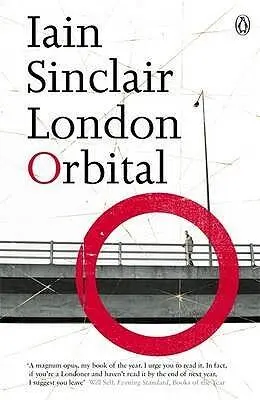
- Название:London Orbital
- Автор:
- Издательство:Penguin Books Ltd
- Жанр:
- Год:2003
- ISBN:нет данных
- Рейтинг книги:4 / 5. Голосов: 1
-
Избранное:Добавить в избранное
- Отзывы:
-
Ваша оценка:
London Orbital: краткое содержание, описание и аннотация
Предлагаем к чтению аннотацию, описание, краткое содержание или предисловие (зависит от того, что написал сам автор книги «London Orbital»). Если вы не нашли необходимую информацию о книге — напишите в комментариях, мы постараемся отыскать её.
Encircling London like a noose, the M25 is a road to nowhere, but when Iain Sinclair sets out to walk this asphalt loop — keeping within the 'acoustic footprints' — he is determined to find out where the journey will lead him. Stumbling upon converted asylums, industrial and retail parks, ring-fenced government institutions and lost villages, Sinclair discovers a Britain of the fringes, a landscape consumed by developers. London Orbital charts this extraordinary trek and round trip of the soul, revealing the country as you've never seen it before.
'My book of the year. Sentence for sentence, there is no more interesting writer at work in English'John Lanchester, 'A magnum opus, my book of the year. I urge you to read it. In fact, if you're a Londoner and haven't read it by the end of next year, I suggest you leave'Will Self, 'A journey into the heart of darkness and a fascinating snapshot of who we are, lit by Sinclair's vivid prose. I'm sure it will be read fifty years from now'J. G. Ballard, Iain Sinclair is the author of
(winner of the James Tait Black Memorial Prize and the Encore Award);
(with Rachel Lichtenstein);
and
. He is also the editor of
.
London Orbital — читать онлайн бесплатно полную книгу (весь текст) целиком
Ниже представлен текст книги, разбитый по страницам. Система сохранения места последней прочитанной страницы, позволяет с удобством читать онлайн бесплатно книгу «London Orbital», без необходимости каждый раз заново искать на чём Вы остановились. Поставьте закладку, и сможете в любой момент перейти на страницу, на которой закончили чтение.
Интервал:
Закладка:
Which is a relief. This is a rather wonderful building, with a long straight approach, a tiled, mosaic walkway. The Alhambra of Enfield. A Moorish paradise of plashing water features, ordered abstraction, glass that reflects the passing clouds. Everything leads the eye to the cinema palace, lettering that looks like the announcement of a coming attraction: WELCOME TO LEE VALLEY. Cathedral windows catching cloud vapours, the floating dome of another burger bar.
Nothing is cramped and mean about this approach. The Pickett’s Lock multiplex is one of the wonders of our walk; we begin to understand how a commercial development can be integrated into the constantly shifting, constantly revised aspect of the Lea Valley. With its strategic use of dark glass and white panels, the generous space allowed between constituent elements in the overall design, Pickett’s Lock presents itself as a retreat, a respite from the journey. Buffered by the golf course, it remains hidden from the Navigation path. But, should you take the trouble to search it out, here is green water (swimming pool, ponds and basins); here is refreshment (motorway standard nosh, machine-dispensed coffee froth); here are public areas in which to sit and rest and study maps.
Pickett’s Lock works best, as a concept, if you don’t step inside. If you avoid the full Americana of burger reek (foot-and-mouth barbecues with optional ketchup), popcorn buckets, arcade games in which you can attack the M25 as a virtual reality circuit, UP TO TWO PLAYERS MAY RACE AT ONCE. INSERT COINS. In fact, this sideshow at Pickett’s Lock represents the Best Value future for the motorway; grass it over and let would-be helldrivers take out their aggression on the machines.
This pleasing sense of being removed from the action, the imposed-from-above imperatives, that we must enjoy ourselves, take healthy (circular) walks, observe bittern and butterfly, nod sagely over ghosts of our industrial heritage, is fleeting. The builders, the earth-movers, the JCBs, will soon be rolling in; hacking up meadows to make way for another stadium, another crowd puller; more promised, but postponed pleasure.
Postponed indefinitely. New Labour couldn’t face another Dome situation. Another money pit. They waited for Bad News Day, 11 September 2001. Then slipped the announcement into the small print. The Pickett’s Lock athletic stadium was aborted. No mention of London Waste. Economic considerations only. The apostrophe was withdrawn like Princess Di’s royal status. Picketts Lock, now surrounded by an ever-growing retail park with suspiciously bright roads, could go back to being a community centre for a community of transients.
Why, I wondered, as we hit the stretch from Ponders End to Enfield Lock, were there no other walkers? As a Best Value attempt at drumming up clients for their recreational facilities, the Lee Valley marketing men were not having a good day. Most people who live for any length of time in East London, even Notting Hill journalists with friends in Clapton, or connections in Hoxton, claim to walk the Lea. Filter Beds, Springfield Park Marina, Waltham Abbey, they boast of an intimate knowledge. Any free moment, there they are, out in the fresh air, hammering north. But the towpath stays empty. A few dog walkers, the odd shorthaul cyclist. Where are the professionals, the psychogeographers, note-takers who produce guides to ‘The London Loop’ or the Green Way? Local historians uncovering our industrial heritage: do they work at night?
We’re on our own, exposed; under a cradle of sagging wires in a pylon avenue, on a red path. Marc’s foot is swollen and he’s beginning to lag behind. Bill Drummond is still buzzing; logging blackthorn blossom and brooding on his Unabomber assignment. The Lee Navigation, keeping us company for so many hours, provokes Drummond into a rhapsody on crashed cars, the road movie he made with Jimmy Cauty in homage to Chris Petit’s Radio On .
‘The film made Jimmy and I think you didn’t have to be Wim Wenders to make a road movie. So we made one and it was dire. And that put me off the whole notion of movie making for the rest of my life.’
On the path were rusted sculptures that should have been milestones. They’d been sponsored and delivered, but they didn’t belong. ‘Art,’ I muttered. ‘Watch out.’ Objects that draw attention to themselves signal trouble. We were walking into an area that wanted to disguise its true identity, deflect attention from its hot core.
Drummond already had too much of this day, too many anecdotes, too many pertinent observations. That night, on the train home, he would look over his notes, ‘crossing out anything descriptive’. Text is performance. The only memorial of the synapse-burn in which it is composed. ‘Zero characterisation,’ said Bill. Don’t burden yourself with the manufacture of copy-cat reality. The more I read Drummond’s short tales, the more I admired them; envied their insouciance. He’d learnt how to lie; a man sitting at a kitchen table with a mug of tea, talking about an episode that he feels compelled to relive or exorcise. Confessing his subterfuges, his strategies, he wins the confidence of the reader: trick and truth. His stories never outstay their welcome. The Drummond he reveals is the Drummond who writes. Writes himself into existence.
The Royal Small Arms Factory at Enfield Lock is an island colony, once enclosed, independent, now up for grabs. It’s surrounded by water so it has to be desirable real estate. The Italianate water tower, or clock tower, will be preserved and the low, barrack buildings transformed into first-time flats, housing stock. The nature of government land, out on the perimeter, changes. Originally, work was life, work was freedom (the cobbled causeway running towards what looks like a guard tower triggers an authentic concentration camp frisson); now work is secondary, it takes place elsewhere. Sleeping quarters have become the principal industry. Compulsory leisure again. The factory revealed as a hive of non-functional balconies, satellite-dishes monitoring dead water.
Enfield Lock is imperialist. It has signed the Official Secrets Act — in blood. A scaled-down version of Netley, the Royal Victoria Military Hospital on Southampton Water. Hospitals, ordnance, living quarters: the same pitch, the same hollow grandiloquence. Public footpaths, where they cross recently acquired government land, will be ‘extinguished’.
If you come east from the town of Enfield, from the station at Turkey Street, you march down Ordnance Road. This was the route the poet John Clare took, travelling in the other direction, when he walked away from the High Beach madhouse in Epping Forest. Powder-burns on privet. Suburban avenues, lacking pedestrians, with front gardens just big enough to take a parked car. Vandalised vehicles, cannibalised for spare parts, stay out on the street. There’s not much rubbish, no graffiti. Military rule is still in place.
The Royal Small Arms Factory was a Victorian establishment, post-Napoleonic Wars. Private traders couldn’t produce the quantity of guns required for maintaining a global empire. The cottages of Enfield Lock were built to house workers from the machine rooms and grinding mills. The River Lea was the energy source, driving two cast-iron water wheels. The name of the river and the name of the small country town on the Essex/Middlesex border came together to christen the magazine rifle familiar to generations of cadet forces, training and reserve battalions: the Lee Enfield. This multiple-round, bolt-action rifle, accurate to 600 metres, was the most famous product of the Enfield Lock factory, the brand leader. In the First War it was known as ‘the soldier’s friend’. The factory survived until 1987. To be replaced by what promotional material describes as ‘a stylish residential village’.
Читать дальшеИнтервал:
Закладка:
Похожие книги на «London Orbital»
Представляем Вашему вниманию похожие книги на «London Orbital» списком для выбора. Мы отобрали схожую по названию и смыслу литературу в надежде предоставить читателям больше вариантов отыскать новые, интересные, ещё непрочитанные произведения.








Обсуждение, отзывы о книге «London Orbital» и просто собственные мнения читателей. Оставьте ваши комментарии, напишите, что Вы думаете о произведении, его смысле или главных героях. Укажите что конкретно понравилось, а что нет, и почему Вы так считаете.