Marie NDiaye - Ladivine
Здесь есть возможность читать онлайн «Marie NDiaye - Ladivine» весь текст электронной книги совершенно бесплатно (целиком полную версию без сокращений). В некоторых случаях можно слушать аудио, скачать через торрент в формате fb2 и присутствует краткое содержание. Год выпуска: 2016, Издательство: MacLehose Press, Жанр: Современная проза, на английском языке. Описание произведения, (предисловие) а так же отзывы посетителей доступны на портале библиотеки ЛибКат.
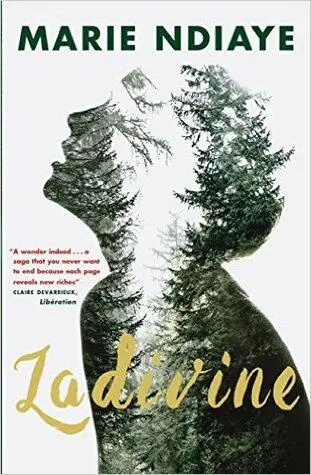
- Название:Ladivine
- Автор:
- Издательство:MacLehose Press
- Жанр:
- Год:2016
- ISBN:нет данных
- Рейтинг книги:4 / 5. Голосов: 1
-
Избранное:Добавить в избранное
- Отзывы:
-
Ваша оценка:
Ladivine: краткое содержание, описание и аннотация
Предлагаем к чтению аннотацию, описание, краткое содержание или предисловие (зависит от того, что написал сам автор книги «Ladivine»). Если вы не нашли необходимую информацию о книге — напишите в комментариях, мы постараемся отыскать её.
But Ladivine, her daughter, who is now married herself, cannot shake a bad feeling about her mother's new lover, convinced that he can bring only chaos and pain into her life. When she is proved right, in the most tragic circumstances, the only comfort the family can turn to requires a leap of faith beyond any they could have imagined.
Centred around three generations of women, whose seemingly cursed lineage is defined by the weight of origins, the pain of alienation and the legacy of shame,
is a beguiling story of secrets, lies, guilt and forgiveness by one of Europe's most unique literary voices.
Ladivine — читать онлайн бесплатно полную книгу (весь текст) целиком
Ниже представлен текст книги, разбитый по страницам. Система сохранения места последней прочитанной страницы, позволяет с удобством читать онлайн бесплатно книгу «Ladivine», без необходимости каждый раз заново искать на чём Вы остановились. Поставьте закладку, и сможете в любой момент перейти на страницу, на которой закончили чтение.
Интервал:
Закладка:
She remembered that Marko always needed her approval, express or implicit, in everything he did.
Never, she was sure, had he tried to exclude her from something in which he found happiness or satisfaction, as she had with that big brown dog, and she had even wondered if he was capable of any pleasure at all, of any kind, except insofar as Ladivine consented.
Those days were gone. With all her being, with all her flesh, she could feel Marko breaking free of everything that bound his gratification to Ladivine’s approval.
No less clearly, she saw the desire he still nonetheless felt, not desperate or cunning but simply companionable, to include her in his new enchantment.
A wave of regretful, anguished nausea swept over her.
She looked at him, that bewitching man, she remembered the deep tenderness she once felt for him, she recalled that he was the father of her children and could be hers again if she liked. She wanted to whisper “Marko, my love.” She reached out to touch his shoulder.
But just then he turned towards her, and in his eyes she thought she saw a gleam she’d never seen before, something she didn’t want to get close to for anything in the world, not even with love’s help
— a joyous, arrogant rejection of decency and rectitude, of fear and compunction.
The smile on Marko’s lips came to life, and it was his usual handsome smile, loving and slightly tremulous, put on to tempt her.
But in his eyes was there anything other than cold calculation?
Ladivine sensed a distance between that smile and himself, as if his wicked spirit had remembered that smile and realised its power to placate her, the deployment of his new omnipotence having failed to sway her.
Soon, she wondered, would he have even that smile to draw on?
Because his smile was hovering at the very edges of his lips, a faraway, uncertain memory of what even now was no more, while his gaze, turned inward, was fixed on another goal, a secret goal — oh no, not even secret, Marko’s new desires radiated from his whole body, the car thrummed with those waves, forbidding the children to take refuge in sleep.
Surprised by the sound of her own voice, Ladivine shouted:
“Wellington!”
Then she huddled on the edge of her seat, as far from Marko as possible.
Sullenly, he pretended to focus on the road ahead, roaring recklessly past overloaded old lorries and rusting, old-fashioned little cars whose drivers sometimes sent a vigorous gesture of hostility Marko’s way.
“I want to see him again,” Daniel whined.
“We’ll never see Wellington again,” said Annika, in a grave, superior voice.
“Why not?”
“Because Daddy says so.”
Never, in the old days, would that little girl have announced that something involving the whole family wouldn’t come to pass simply on Marko’s orders, Ladivine thought.
“From now on, it’s forbidden to speak Wellington’s name,” said Marko, calmly.
Annika burst into a painful, sharp, prolonged laugh, which seemed to brighten Marko’s gloomy heart.
To keep her company and express his approval, he began to laugh too, his fists pounding little blows on the steering wheel.
After two monotonous hours on the perfectly straight road, flanked by endless banana and sweet-potato plantations, Marko turned onto a yellow dirt road that soon entered the forest.
Ladivine had stopped looking back to see if Daniel and Annika were finally asleep — the atmosphere individually embracing each child was arousing enough that she could feel them holding themselves at the ready, unsure what they were waiting for but maniacally attentive to their father’s every move, his every word or sigh, anything that might give them a lead to follow, give them a place in the wake of his dazzling vigour.
Were they afraid they might fall from Marko’s favour if they slept, and so find themselves back in Ladivine’s camp, where a tedious remorse about Wellington was accompanied by an utter inability to bring him back?
Wellington!
Why shouldn’t the children have concluded that their father could produce the boy whenever he pleased, and that if he didn’t want to he must have had very good reasons, whereas, manifestly, Ladivine could only cry Wellington’s name in subdued, pointless sorrow, unable even to speak of him, to summon up his image with amusing words and anecdotes?
Wellington!
Why, for that matter, shouldn’t the children rather be forbidden to speak that name than hear it heartlessly cried into their mystified ears by their frightened, opaque, uncommunicative mother?
The poor little things must have feared that Ladivine would take over their minds if they slept, then drag them away from Marko’s wondrous influence, spirit them away from that radiant force.
She turned around in her seat and caressed Daniel’s bare thigh, squeezed Annika’s calf, trying to smile reassuringly.
The children’s flesh felt hard, clenched. They refused to meet her gaze, and she realised she was being a nuisance, but what did she care, if she didn’t want to lose them?
Because, she thought, could she still see in them her beloved children if they turned into depraved little monsters?
Wellington!
She longed to tell them the boy was dead, and that she and Marko, for all their pretentions to excellent parenting, were, with this refusal to speak of what they’d done to Wellington, lying to them.
But it was too late, she couldn’t talk to her children now, and her children didn’t want to hear, she could tell by their averted eyes, the way their limbs tensed beneath her fingers.
Suddenly a broad clearing appeared down the road, opening up in the forest.
“We’re there,” said Marko.
Ladivine felt a shared astonishment briefly reuniting her with Marko, for what they now saw was nothing like even the vaguest image they’d conjured up of Richard Rivière’s friends, whom Ladivine, not quite knowing why, had pictured as a couple of grizzled drifters temporarily stranded by a lack of funds or a need for rest, but the dozens of clearly brand-new four-wheel drives, white, black, or grey, parked in the clearing beneath sheet-metal roofs, and the big pink house, which reminded Ladivine of certain villas in Langon, revealed the presence, deep in this forest, of prosperous car dealers, and why not, thought Ladivine with a stab of ill will, since that’s what Richard Rivière had become once he left Clarisse Rivière (as if Clarisse Rivière had somehow been keeping him down), having gone from assistant manager in Langon, at the Alfa Romeo dealership he’d been hired to just out of high school, to the head of a Jeep dealership in the Haute-Savoie, and Ladivine always wondered how he’d settled on that area, having, to the best of her knowledge (which is to say from what Clarisse Rivière told her), never spent any time there before going off to make it, perhaps forever, his home.
Oh yes, she’d thought on being told by her father that he now lived in Annecy, Richard Rivière had been quietly plotting his Haute-Savoie escape for some time — because how to believe that he’d rushed straight from Langon to Annecy with no plan in mind, no prospects, no idea even what the city was like?
A couple emerged from the house and stood looking in their direction, hands shading their eyes.
But why, the insidious little voice of common sense whispered in Ladivine’s ear, why should Richard Rivière have revealed to his daughter that he wanted to leave Clarisse Rivière and make a fresh start in Annecy?
So she would try to talk him out of it?
And on what grounds would she have sought to persuade him to go on wasting away with Clarisse Rivière?
He did the one thing he could do, not uncaringly, and no reasonable person could blame him for failing to foresee that his wife would end up drowning in her own blood because he wasn’t there beside her, because he wasn’t there to keep her from foolishness — to keep her from being herself, that is, to keep her from being the slightly dim Clarisse Rivière.
Читать дальшеИнтервал:
Закладка:
Похожие книги на «Ladivine»
Представляем Вашему вниманию похожие книги на «Ladivine» списком для выбора. Мы отобрали схожую по названию и смыслу литературу в надежде предоставить читателям больше вариантов отыскать новые, интересные, ещё непрочитанные произведения.




![Fredrik Backman - Britt-Marie Was Here [Britt-Marie var här]](/books/61260/fredrik-backman-britt-marie-was-here-britt-thumb.webp)






Обсуждение, отзывы о книге «Ladivine» и просто собственные мнения читателей. Оставьте ваши комментарии, напишите, что Вы думаете о произведении, его смысле или главных героях. Укажите что конкретно понравилось, а что нет, и почему Вы так считаете.