Marie NDiaye - Ladivine
Здесь есть возможность читать онлайн «Marie NDiaye - Ladivine» весь текст электронной книги совершенно бесплатно (целиком полную версию без сокращений). В некоторых случаях можно слушать аудио, скачать через торрент в формате fb2 и присутствует краткое содержание. Год выпуска: 2016, Издательство: MacLehose Press, Жанр: Современная проза, на английском языке. Описание произведения, (предисловие) а так же отзывы посетителей доступны на портале библиотеки ЛибКат.
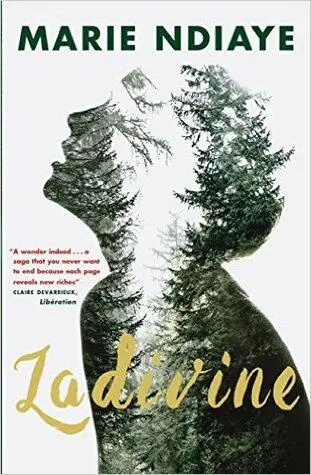
- Название:Ladivine
- Автор:
- Издательство:MacLehose Press
- Жанр:
- Год:2016
- ISBN:нет данных
- Рейтинг книги:4 / 5. Голосов: 1
-
Избранное:Добавить в избранное
- Отзывы:
-
Ваша оценка:
Ladivine: краткое содержание, описание и аннотация
Предлагаем к чтению аннотацию, описание, краткое содержание или предисловие (зависит от того, что написал сам автор книги «Ladivine»). Если вы не нашли необходимую информацию о книге — напишите в комментариях, мы постараемся отыскать её.
But Ladivine, her daughter, who is now married herself, cannot shake a bad feeling about her mother's new lover, convinced that he can bring only chaos and pain into her life. When she is proved right, in the most tragic circumstances, the only comfort the family can turn to requires a leap of faith beyond any they could have imagined.
Centred around three generations of women, whose seemingly cursed lineage is defined by the weight of origins, the pain of alienation and the legacy of shame,
is a beguiling story of secrets, lies, guilt and forgiveness by one of Europe's most unique literary voices.
Ladivine — читать онлайн бесплатно полную книгу (весь текст) целиком
Ниже представлен текст книги, разбитый по страницам. Система сохранения места последней прочитанной страницы, позволяет с удобством читать онлайн бесплатно книгу «Ladivine», без необходимости каждый раз заново искать на чём Вы остановились. Поставьте закладку, и сможете в любой момент перейти на страницу, на которой закончили чтение.
Интервал:
Закладка:
Although, although. . Deeply ashamed, she remembered their Warnemünde lapses.
Wasn’t it the summer after Clarisse Rivière died that all that started up?
She turned onto Wilmersdorfer Strasse, headed for Karstadt.
Still no crowd in the pedestrian street, which in two or three hours would fill with a parade of families whom Ladivine, remembering Langon’s one-street business district, always thought oddly provincial in their serene, ambling gait — but now a man had locked eyes with her, and now, as a game, she was returning his stare, a quiet smile on her lips, and the man’s typically German air, she mused, her mood brightening, made that little advance all the more special.
Because people rarely made passes in the streets of Berlin, more rarely even than in Langon, where it was largely the same people crossing paths, day in and day out.
Their elbows brushed and she looked away, her lips very slightly pinched, signalling that the game was over.
She immediately confessed to herself, with unusual candour — her habit was to sidestep upsetting thoughts, or shove them away with a violent mental thrust — she confessed to herself, then, as she turned towards Karstadt’s front door, that she was exceedingly grateful to men such as this, genteel, not the womanising type, who paid her the homage of an interested and even relishing glance, who met her own surprised or playful gaze with the look of a wistful and elegant “Why not?”
Once a shapely young girl, though not so tall, not so slender as Clarisse Rivière (how she used to envy her mother’s fine bones, willowy figure and slim legs, she who seemed stuck to the ground by a more powerful gravity, thanks to the ungainliness of her slightly thick ankles and short calves), she had become a woman of some heft, with a round, full face that made her eyes, mouth and nose seem almost incongruously delicate, as if out of proportion.
That was less apparent, she thought, when she was young, since she was thinner, and her face narrower.
But now that she’d done some living, as Clarisse Rivière sweetly put it, and filled out a bit, her little mouth and nose looked as though they’d been stolen from some other woman and glued onto her broad face as a joke.
Oh no, she took no pride in her physique, even as she looked on such questions with a scornful detachment, a disdain unfeigned even if belatedly acquired, at the cost of great struggles against longstanding, naive dreams of breathtaking beauty, or simply of piquant, Parisian charm — she would have loved to be a mere slip of a girl, here in Berlin, as svelte as she was distinguished, refined and sporty, her glamorous French accent the ideal finishing touch.
Which is why, though resigned to being just barely pretty, to being a very ordinary woman whose careful attention to her clothes, to the cut and colour of her hair, shoulder-length, warm-brown and wavy, compensated respectably for her homeliness, she was still moved and surprised when, like that man, someone caressed her face with a gaze full of a longing to know her, to touch her.
But she accepted that there was nothing special about her, she accepted it now, without heartache.
When, long ago, she stripped off her clothes before the men who were paying her, she always took care to conceal the parts of her body she found unlovely — her ankles, her knees, even her stomach, which she thought bulged more than it should.
At the time she saw those physical flaws as something like moral failings, and thought she could only be despised for not being magnificent.
She felt no shame today at those imperfections.
She even learned to show them off, when summer came, like inventive, slightly quirky accessories she’d chosen precisely for their novelty, and if her knees, which she’d always found pudgy, showed beneath the hem of the dress she was wearing that afternoon, a dark pink cotton swing dress with two big buttons fastening the straps, it was to suggest that she was as happy with those knees as she was with her curving, golden shoulders, that her shoulders complemented her knees in a harmony both subtle and bold, that this was just how it was supposed to be, that she wasn’t, for instance, supposed to be graced with the shapely, light, dimpled knees of Clarisse Rivière.
And so she made her way through the streets, not particularly tall but standing very straight, poised on her stout legs, mutely proclaiming: Am I not, all in all, a fine-looking woman?
She pushed open Karstadt’s glass door and headed straight for the timepiece department.
She immediately spotted Marko’s tall silhouette. With nothing to do at this hour, he’d risen from the uncomfortable chair where he spent most of his day, repairing watches or, more often, changing their batteries, and now, on his feet behind the counter, he was staring into space, hands in his pockets, with his usual gentle and serious air, which made him seem lost in profound meditation when he was only daydreaming, not a thought in his head.
She kept her eyes on him as she walked forward, surprised to feel how much she loved him.
Sometimes she feared she was emotionally cold or numbed, and excessively hardened.
But she had only to glimpse Marko or the children in their own distinctive pose, or even simply remember that pose, to feel her love for them throbbing inside her, though she now knew such emotions were not without danger, too easily leading her into similarly fond memories of Clarisse Rivière (that way she had of sticking her lower lip out so far that it almost completely covered the other when she had to read something complicated!).
And thinking of Clarisse Rivière was a very hard thing for her.
She could, fleetingly, imagine the scene of the murder and Clarisse Rivière’s blood, or perhaps the lawyers and the upcoming trial, but remembering the eloquent details of Clarisse Rivière’s personality drowned her in sorrow.
Now that she’d lost him, the memory of Richard Rivière was scarcely less painful.
Would he, she wondered, say that of his daughter Ladivine, that he’d lost her?
She had no answer. She only knew that she’d forever distanced herself from Richard Rivière not because he’d gone off to embark on a mysterious new life but because, left to her own devices and the hostile world through both of their faults, Clarisse Rivière had been bled dry in her own living room, her throat slashed like a poor quivering rabbit.
And Ladivine knew she and her father were guilty, but Richard Rivière had shown by his behaviour that he did not see it the same way.
Because he could speak of the events and the trial with no hitch in his voice and no faltering in his gaze, because he could complain of the slow workings of justice and curse the accused, he could think of that man, speak his name, if only with horror and loathing.
Healthily, he could feel horror and loathing, he could say “that monster”, as thousands of readers all across the country must surely have done when Clarisse Rivière’s story, and photographs of her face, her smiling, gullible face, open, modest and charming, had appeared in the papers, with Richard Rivière’s aid, for, raging, distraught, he’d handed over those photos of the wife he’d abandoned, the woman he’d offered up to be preyed on.
He could, in those same papers, proclaim his desire for vengeance.
His desire to see the monster spend the rest of his life behind bars.
He could be effusive and sincere, sometimes he could even feel the tears coming afresh to his eyes when a reporter asked what he’d felt on hearing the awful news.
This was what convinced Ladivine that Richard Rivière thought himself blameless, that no other possibility ever entered his mind, since he was clearly neither pretending nor lying nor exaggerating when he did these things.
Читать дальшеИнтервал:
Закладка:
Похожие книги на «Ladivine»
Представляем Вашему вниманию похожие книги на «Ladivine» списком для выбора. Мы отобрали схожую по названию и смыслу литературу в надежде предоставить читателям больше вариантов отыскать новые, интересные, ещё непрочитанные произведения.




![Fredrik Backman - Britt-Marie Was Here [Britt-Marie var här]](/books/61260/fredrik-backman-britt-marie-was-here-britt-thumb.webp)





Обсуждение, отзывы о книге «Ladivine» и просто собственные мнения читателей. Оставьте ваши комментарии, напишите, что Вы думаете о произведении, его смысле или главных героях. Укажите что конкретно понравилось, а что нет, и почему Вы так считаете.