György Spiró - Captivity
Здесь есть возможность читать онлайн «György Spiró - Captivity» весь текст электронной книги совершенно бесплатно (целиком полную версию без сокращений). В некоторых случаях можно слушать аудио, скачать через торрент в формате fb2 и присутствует краткое содержание. Год выпуска: 2015, Издательство: Restless Books, Жанр: Современная проза, на английском языке. Описание произведения, (предисловие) а так же отзывы посетителей доступны на портале библиотеки ЛибКат.
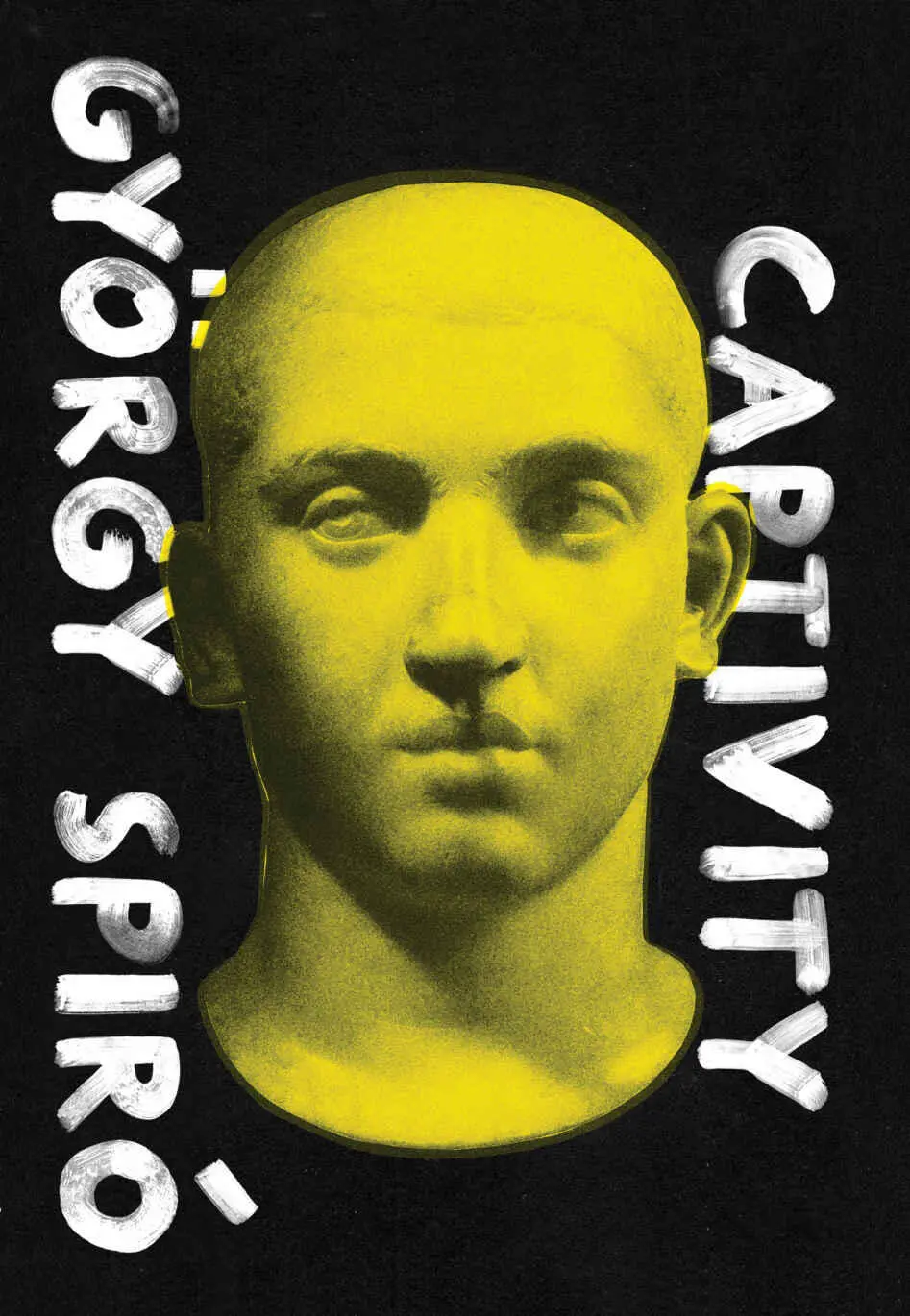
- Название:Captivity
- Автор:
- Издательство:Restless Books
- Жанр:
- Год:2015
- ISBN:нет данных
- Рейтинг книги:4 / 5. Голосов: 1
-
Избранное:Добавить в избранное
- Отзывы:
-
Ваша оценка:
Captivity: краткое содержание, описание и аннотация
Предлагаем к чтению аннотацию, описание, краткое содержание или предисловие (зависит от того, что написал сам автор книги «Captivity»). Если вы не нашли необходимую информацию о книге — напишите в комментариях, мы постараемся отыскать её.
A literary sensation in Hungary, György Spiró’s Captivity is both a highly sophisticated historical novel and a gripping page-turner. Set in the tumultuous first century A.D., between the year of Christ’s death and the outbreak of the Jewish War, Captivity recounts the adventures of the feeble-bodied, bookish Uri, a young Roman Jew.
Frustrated with his hapless son, Uri’s father sends the young man to the Holy Land to regain the family’s prestige. In Jerusalem, Uri is imprisoned by Herod and meets two thieves and (perhaps) Jesus before their crucifixion. Later, in cosmopolitan Alexandria, he undergoes a scholarly and sexual awakening — but must also escape a pogrom. Returning to Rome at last, he finds an entirely unexpected inheritance.
Equal parts Homeric epic, brilliantly researched Jewish history, and picaresque adventure, Captivity is a dramatic tale of family, fate, and fortitude. In its weak-yet-valiant hero, fans will be reminded of Robert Graves’ classics of Ancient Rome, I, Claudius and Claudius the God.
"With the novel Captivity, Spiró proved that he is well-versed in both historical and human knowledge. It appears that in our times, it is playfulness that is expected of literary works, rather than the portrayal of realistic questions and conflicts. As if the two, playfulness and seriousness were inconsistent with each other! On the contrary (at least for me) playfulness begins with seriousness. Literature is a serious game. So is Spiró’s novel.?"
— Imre Kertész, Nobel Prize — winning author of Fatelessness
"Like the authors of so many great novels, György Spiró sends his hero, Uri, out into the wide world. Uri is a Roman Jew born into a poor family, and the wide world is an overripe civilization — the Roman Empire. Captivity can be read as an adventure novel, a Bildungsroman, a richly detailed portrait of an era, and a historico-philosophical parable. The long series of adventures — in which it is only a tiny episode that Uri is imprisoned together with Jesus and the two thieves — at once suggest the vanity of human endeavors and a passion for life. A masterpiece."
— László Márton
“[Captivity is] an important work by yet another representative of Hungarian letters who has all the chances to become a household name among the readers of literature in translation, just like Nadas, Esterhazy and Krasznahorkai.… Meticulously researched.… The novel has been a tremendous success in Hungary, having gone through more than a dozen editions. The critics lauded its page-turning quality along with the wealth of ideas and the ambitious recreation of historical detail.”
— The Untranslated
“A novel of education and a novel of adventure that brings to life ancient Rome, Alexandria and Jerusalem with a vividness of detail that is stunning. Spiró’s prose is crisp and colloquial, the kind of prose that aims for precision rather than literary thrills. A serious and sophisticated novel that is also engrossing and highly readable is a rare thing. Captivity is such a novel.”
— Ivan Sanders, Columbia University
“György Spiró aspired at nothing less than (…) present a theory in novelistic form about the interweavedness of religion and politics, lay bare the inner workings of power and give an insight into the art of survival….This book is an incredible page turner, it reads easily and avidly like the greatest bestsellers while also going as deep as the greatest thinkers of European philosophy.”
— Aegon Literary Award 2006 jury recommendation
“What this sensational novel outlines is the demonic nature of History. Ethically as well as historically, this an especially grand-scale parable. Captivity gets its feet under any literary table you care to mention."
— István Margócsy, Élet és Irodalom
“This book is a major landmark for the year.”
— Pál Závada, Népszabadság
“It would not be surprising if literary historians were soon calling him the re-assessor and regenerator of the post-modern novel.”
— Gergely Mézes, Magyar Hírlap
“Impossibly engrossing from the very first page….Building on a huge volume of reference material, the novel rings true from both a historical and a literary point of view.”
— Magda Ferch, Magyar Nemzet
Captivity — читать онлайн бесплатно полную книгу (весь текст) целиком
Ниже представлен текст книги, разбитый по страницам. Система сохранения места последней прочитанной страницы, позволяет с удобством читать онлайн бесплатно книгу «Captivity», без необходимости каждый раз заново искать на чём Вы остановились. Поставьте закладку, и сможете в любой момент перейти на страницу, на которой закончили чтение.
Интервал:
Закладка:
Uri looked forward to Rosh Hashanah and the immense throng that would arrive for the long series of festivals. It would surely be interesting to observe how people celebrated at the city he had become an inhabitant of by chance. This was a time, said the workers, when it was possible to drink a lot and eat a lot, with the break from work lasting for two weeks. However, they had not heard anything about white-garbed brides-to-be for sale dancing on the Mount of Olives. If they didn’t know, it must be a fairy tale, Uri concluded.
They went into great detail about the festive garments of the high priest, because they had lived in Jerusalem for so long that most of them had been able to stand by the altar and see him. Even those who had not stood near the altar could visualize the priest’s exact appearance, with his breastplate, set with four rows of three small square gemstones each, representing the twelve tribes of Israel. It was as if anyone who happened to be staying anywhere near Jerusalem at the time had seen it with their own eyes.
They also recounted that wicked Edom laid claim to the high priest’s vestments the whole year round, storing them in the unclean palace that Herod had built. Only two days before the festivals did the prefect’s people hand the garments over to the high priest’s representative so that the high priest might don them for sacrifices, and at Passover, as the Law allows, and also for Yom Kippur, which the Law commands. After the festivals the garments would be handed back to the Edomites, thus becoming unclean again. The Sagan’s men would have to spend a whole day cleaning it before the high priest could clothe himself. The workers strongly objected to the humiliating practice; even Menachem himself was in agreement.
Uri was never asked about Rome, either by the workers or, for that matter, the peasants in the village, but they still had their own firm ideas about what the Roman Empire was. No question that it was Beelzebub’s snare, which the Everlasting Lord permitted; He had a habit of amusing himself by sowing dissent among men and waiting for the good to triumph even without his assistance. The Roman Empire was a test that the Lord had given his chosen people. He had made it so powerful so that it would be harder for the good ones to vanquish, so that they would brace themselves, strive a little. But Beelzebub would be defeated, the workers were quite convinced of that, and Jews would recover the right to look after the high priest’s vestments, and the foreign forces would clear out of the Holy Land at long last. What about the Lord’s works in Babylon? There had been just one language until He had confounded all the languages of the earth there, so that the people should no longer understand one another’s speech, which highly amused Him. The Tower of Babel fell down and Babylon’s power ended, yet the Jews had escaped, thanks to the mercifulness of the Eternal One.
Uri just nodded and did not attempt to point out that the chosen people were not the only ones the Eternal One had put under the yoke of this gigantic empire. Nevertheless, he too had often wondered what the sense was in having a single power rule over the Great Sea and all its coasts and the inner lands — to wit, all the known world, beyond which there was little, not counting the Parthians, India, and China, which were so far away that their existence seemed unfathomable beyond the silk that came from there.
The Creator must have some purpose with the Roman Empire, Uri supposed, but he did not know whether to adopt the standpoint of a Roman or a Judaean Jew. He could not imagine the tens of thousands of Jewish men who lived in Far Side all of a sudden marching off to the Forum and declaring that from that day onward all Rome should worship a single god and all the inhabitants of the empire’s seat being converted in one stroke, shattering all idols, and becoming eager servants of an Invisible Lord. Of course, Cicero on one occasion in a lawsuit had spoken of the Jews of Rome as being a nation of rascals. Uri had read the collected speeches the great orator made in tribunals and, now he came to think of it, a hint of fear seemed to be emanating from those contemptuous words, as if the advance of that dirty, loquacious riffraff could be a threat to Rome’s integrity. But the Jews were an overwhelmingly poor and humble people in Far Side, and just happy that they were tolerated.
As Uri saw it, he himself was a beneficiary of the power that the workers considered their deadly enemy and against whom they invoked their gravest curses when breathing their solitary prayers. This was now the third occasion when he had sensed how ambiguous his position was as a Roman citizen in Judaea, and if the truth be told, he was also in an ambiguous position as a Jew in Rome. He thought back to what had run through his head while watching the cohorts from Caesarea marching past: our army pushing our people from the road. But then what kind of soldiers were those? There had not been a single Italian or Roman citizen among them. It was all more complicated than something the Almighty could have created; he had created something beautiful and rational, then it slipped out of his hands.
It was the month of Elul, and Uri hoped that nothing would happen until Rosh Hashanah, at the beginning of next month, on Tishri 1–2, so that he could spend the long festival in Jerusalem. Ten days after Rosh Hashanah, the New Year, came Yom Kippur, the Day of Atonement, the biggest of all the Jewish festivals, and on Tishri 15 would come Sukkot, the Feast of Booths, and that festival would last until Tishri 23, the festival of Simhat Torah, the day of rejoicing in the Law, which would mark the end of a year of weekly Torah readings in the shul, and also the restarting of the cycle. Virtually the whole of Tishri, then, was a festival. By that time it would be September in Rome, and the Jews of Far Side asserted that the weather at Rosh Hashanah was always good for at least ten days, as it was necessary for it to be good on Yom Kippur. His mother too had said it each time August came around, nice and early: “You’ll see, the weather will be fine in September, when it gets to Rosh Hashanah.” And it had always been fine, and his mother was proud to be Jewish.
The weather was also fine in Jerusalem at Rosh Hashanah, on Tishri 1.
That day no one worked. In the evening a fire was lit in the hut, and they held a communal prayer with an informal family mood. The next morning they rambled down the Mount of Olives and crossed the River Kidron, but this time instead of entering the City through the Fountain Gate they went to the Valley of Hinnom where many people were already strolling ceremoniously. All the workers had taken with them some insignificant tiny article, which they threw into the Hinnom with a murmured prayer. Uri tossed a prutah into the water to carry away with it all his past year’s sins. He asked why it was that the Kidron was not good enough as a river for that purpose; the Hinnom had also dried to a brook as the autumn rains had not yet arrived. Their reply was that the Hinnom was the river of the wicked, where children had been sacrificed in Israel’s darkest days; the river could not forget this.
That evening it was possible to eat, but the next day was for fasting.
Rosh Hashanah in Jerusalem was a rather somber affair, Uri decided. He was expecting Yom Kippur and Sukkot to be more exciting, but the Almighty cannot have wished for Uri to see a glittering festival in Jerusalem, because on Tishri 4, when they resumed work on the palace, a man came and had a whispered conversation with Menachem, after which Menachem came over to Uri to say the man had come for him.
“Where am I going?” Uri asked.
Menachem did not know, but the man was following instructions from the Sanhedrin and would now accompany Gaius.
Читать дальшеИнтервал:
Закладка:
Похожие книги на «Captivity»
Представляем Вашему вниманию похожие книги на «Captivity» списком для выбора. Мы отобрали схожую по названию и смыслу литературу в надежде предоставить читателям больше вариантов отыскать новые, интересные, ещё непрочитанные произведения.







Обсуждение, отзывы о книге «Captivity» и просто собственные мнения читателей. Оставьте ваши комментарии, напишите, что Вы думаете о произведении, его смысле или главных героях. Укажите что конкретно понравилось, а что нет, и почему Вы так считаете.