Uwe Tellkamp - The Tower
Здесь есть возможность читать онлайн «Uwe Tellkamp - The Tower» весь текст электронной книги совершенно бесплатно (целиком полную версию без сокращений). В некоторых случаях можно слушать аудио, скачать через торрент в формате fb2 и присутствует краткое содержание. Год выпуска: 2014, Издательство: Penguin, Жанр: Современная проза, на английском языке. Описание произведения, (предисловие) а так же отзывы посетителей доступны на портале библиотеки ЛибКат.
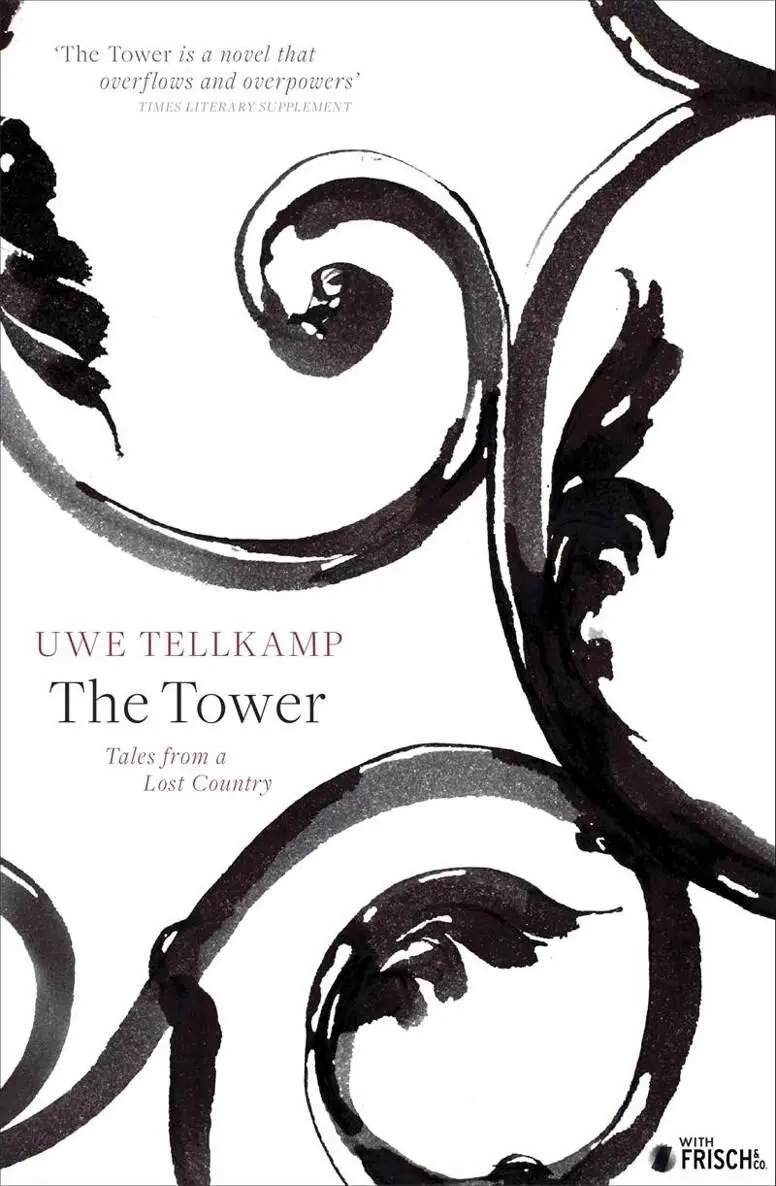
- Название:The Tower
- Автор:
- Издательство:Penguin
- Жанр:
- Год:2014
- ISBN:нет данных
- Рейтинг книги:5 / 5. Голосов: 1
-
Избранное:Добавить в избранное
- Отзывы:
-
Ваша оценка:
The Tower: краткое содержание, описание и аннотация
Предлагаем к чтению аннотацию, описание, краткое содержание или предисловие (зависит от того, что написал сам автор книги «The Tower»). Если вы не нашли необходимую информацию о книге — напишите в комментариях, мы постараемся отыскать её.
The Tower — читать онлайн бесплатно полную книгу (весь текст) целиком
Ниже представлен текст книги, разбитый по страницам. Система сохранения места последней прочитанной страницы, позволяет с удобством читать онлайн бесплатно книгу «The Tower», без необходимости каждый раз заново искать на чём Вы остановились. Поставьте закладку, и сможете в любой момент перейти на страницу, на которой закончили чтение.
Интервал:
Закладка:
Christian was given his bundle of blankets, a sheet of paper and a pencil. He was to write his CV. Mother, father, when did I join the Young Pioneers, the Thälmann Pioneers, when did I become a member of the Free German Youth. Hobbies, school career, job preferences.
The Custody Room . In the cell there were three bunks, two hanging cupboards, a washbasin, a mirror, a table folded down, beside it a lavatory bowl with a pipe and a chain made of white plastic links, a black plastic handle at the bottom.
‘The bed at the back’s yours, lad. I’m Kurt and this is — oh, tell him your name yourself.’
‘Korbinian Krause,’ the younger man said.
‘Christian Hoffmann.’
‘Your number? By the way, you can call me Kurtchen.’
‘Two-twenty.’
‘Him over there’ — the older man nodded at the younger one — ‘is in here for two-thirteen. IE — illegal emigration. And me — well, this and that.’
‘Kurtchen’s a murderer,’ the younger man with the odd name of Korbinian muttered.
‘Now let’s not exaggerate. I did kill someone, true. But that was in anger, that’s something different. When you’re angry, you don’t know what you’re doing. First everything goes red, then black, y’know.’
‘Because you haven’t found the way to God, because you shut your ear to Him, brother.’
The older man grinned, jerked his thumb at Korbinian, who didn’t look as if he’d been joking. ‘That’s his thing, y’know. He’s a preacher, y’see.’
‘I studied theology but I’m not a preacher. Preacher’s what the Methodists and Baptists call it; with us it’s pastor or minister. You haven’t made confession yet, Kurtchen.’
Kurtchen nodded, grinned. ‘I do it as a favour to him, y’know. Keeps him quiet. And sometimes — yeh, it really does help. Get everything off your chest.’
‘The one he killed was his own brother. Kurtchen was a cabinetmaker, Arnochen was a cabinetmaker. Their workshops were opposite each other, they lived a cat-and-dog life. And one day they went for each other with axes. Arnochen’s axe went in Kurtchen’s sideboard, Kurtchen’s in Arnochen’s noddle.’
‘Nah. It went in his neck. Thou shalt not bear false witness, or whatever they say. — But you’ — he turned to Christian — ‘where’re you from? What did you do?’
‘Dresden … senior high,’ Christian stammered.
‘Senior high … that’s good. You’ll be educated, imagination …’
‘Kurtchen needs someone to help him masturbate,’ Korbinian said.
‘Don’t condemn me!’ Kurtchen wagged his finger. ‘I’ve not had a woman for ages and I’m a man with strong physical urges. An’ if you think up something good, it’s a relief for me an’ y’get three tubes for it. But it has to be really horny, with lots of diff’rent bits, know what I mean? Best of all with film stars, then I know who you’re talking about.’
Waiting . The words had vanished, they only came back slowly, like fish letting themselves sink back down lethargically after a net had lifted them up into deadly brightness and a hand found them too light. Kurtchen, whom Christian now also called by that name, found the waiting difficult. He was impatient for his trial so that he would finally get to the proper jail, where things were better (he confirmed the opinion of the man in the tram whom Christian owed a cigarette) than on remand. Better because clearer. A clearer situation. The POs (that was what the guards were called, it was the abbreviation of Prison Officer) had no doubts or scruples. They didn’t have any here, either, as Kurtchen said, but there, in the proper jail, everything was clear — and since everything was clear and you had proper time as well, it wasn’t just waiting for something else any more, the POs could behave as regulations required. Even the trusty, who brought their meals and the book cart once a week, did so. The detainees were allowed to read. Christian borrowed the autobiography of the Comrade General Secretary. The familiar face looked up at him from the photos, familiar from the sky-blue pictures in classrooms, government offices, placards at the First of May processions and celebrations for the anniversary of the Republic. The familiar face had once been that of a child, in a house in the Saarland, oppressive conditions, large families, child mortality, hunger, having to earn money when young, father old before his time, mother a woman who seemed caring but had a frozen smile. Conditions in the factories. The Communist Youth Organization. Fanfares, shawms. The war, post-war inflation. Little Man, What Now? ’33. Underground, arrested, Gestapo, interrogations, prison. Christian had always hated these stories (they were repeated, with minor variations, in the biographies of the Leading Representatives of the Republic); he didn’t want to know about them. Had always switched off the war films on Thursdays, GDR TV Channel 2; Katyusha rocket launchers with subtitles, heroes on the quietly flowing Don, overblown emotionalism hardly different from that of the Nazis. He thought of Anne. ‘Good night,’ she’d said when he was a child far down, it seemed to him, in the abyss of time. He recalled things said, he tried to make Anne say those things — then the words, then Anne would disappear. Exhortations, touches, surreptitious. When she’d touched him and Robert it had always been surreptitiously, as if the tenderness didn’t become her. Now and then a present put out unobtrusively, something ‘they needed’, clothes from Exquisit, a can of pineapples from Delikat. A book he’d mentioned in passing that she’d managed to get hold of.
The trusty brought their food. It was the same every day: indefinable jam that sometimes had little spots of mould growing on it: then Kurtchen would point it out and Korbinian speak the words ‘detention complaint’. Then a PO would appear and, with a look of contempt, place a new pot of jam before the detainees. Everything had to be in order . It had to be as per regulations . They had to do everything at the double . The spyhole in the door, a little window with a steel shutter on the outside, was opened once every hour, but at a different minute of each hour. The shutter squeaked as it was opened and shut with a click. What Kurtchen had called tubes were papirossi , cheap tobacco rolled in newspaper. After a week Christian overcame his revulsion and, lo and behold, they didn’t taste bad. Glue and printer’s ink, often statements from the Comrade General Secretary or one of the Leading Representatives, gave the tobacco an additional slightly burnt taste. As children Christian and Robert had tried to smoke ivy stalks from the garden wall of Caravel, they’d had a similar taste to these papirossi . Christian borrowed the tobacco from Kurtchen. He had no money, here that was called having purchase . Kurtchen gave him generous amounts, he thought he would soon have purchase; the people who’d graduated from senior high that he’d got to know on Coal Island had always been afraid and worked hard; you were paid, though not much.
The exercise yard . For their free hour in the mornings they go out at the double (keeping one metre away from the guard) and run at the double. There was a square asphalt yard bounded by a cobbled path and high concrete walls with barbed wire sloping inwards. The sky above the yard was patterned by a grid of bars. In the middle of the grid was a gap through which the trunk of a lime tree towered up. The lime gave off an overpowering scent, but there were no flowers on the ground; there was a net under the top of the tree that collected the leaves and flowers that fell; there were also birds’ nests in it from which came contented twittering. There was a bench round the tree trunk, but no one ever sat on it. The detainees ran round in a circle, always to the left, at the double, without talking. Tobacco changed hands and one day Christian managed to pay his debt of one cigarette when the man from the tram suddenly but unobtrusively appeared behind him. Sometimes the guards would bellow. They were bored.
Читать дальшеИнтервал:
Закладка:
Похожие книги на «The Tower»
Представляем Вашему вниманию похожие книги на «The Tower» списком для выбора. Мы отобрали схожую по названию и смыслу литературу в надежде предоставить читателям больше вариантов отыскать новые, интересные, ещё непрочитанные произведения.








Обсуждение, отзывы о книге «The Tower» и просто собственные мнения читателей. Оставьте ваши комментарии, напишите, что Вы думаете о произведении, его смысле или главных героях. Укажите что конкретно понравилось, а что нет, и почему Вы так считаете.