Uwe Tellkamp - The Tower
Здесь есть возможность читать онлайн «Uwe Tellkamp - The Tower» весь текст электронной книги совершенно бесплатно (целиком полную версию без сокращений). В некоторых случаях можно слушать аудио, скачать через торрент в формате fb2 и присутствует краткое содержание. Год выпуска: 2014, Издательство: Penguin, Жанр: Современная проза, на английском языке. Описание произведения, (предисловие) а так же отзывы посетителей доступны на портале библиотеки ЛибКат.
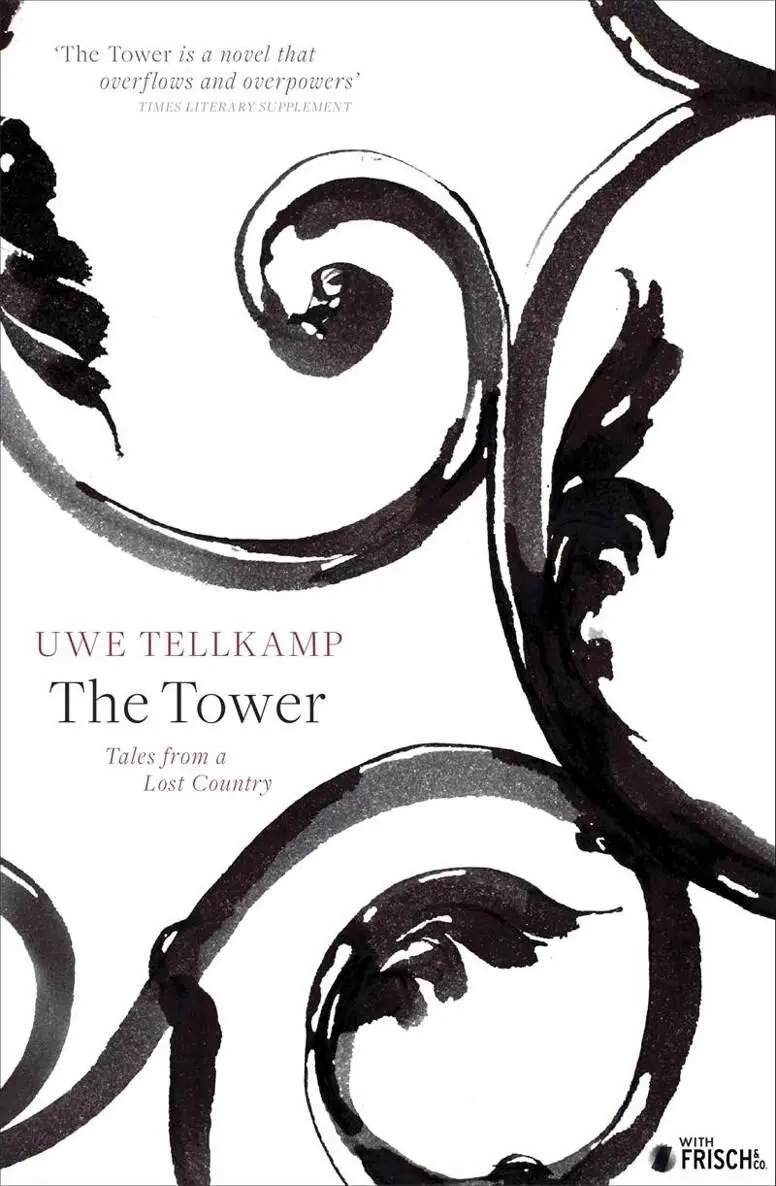
- Название:The Tower
- Автор:
- Издательство:Penguin
- Жанр:
- Год:2014
- ISBN:нет данных
- Рейтинг книги:5 / 5. Голосов: 1
-
Избранное:Добавить в избранное
- Отзывы:
-
Ваша оценка:
The Tower: краткое содержание, описание и аннотация
Предлагаем к чтению аннотацию, описание, краткое содержание или предисловие (зависит от того, что написал сам автор книги «The Tower»). Если вы не нашли необходимую информацию о книге — напишите в комментариях, мы постараемся отыскать её.
The Tower — читать онлайн бесплатно полную книгу (весь текст) целиком
Ниже представлен текст книги, разбитый по страницам. Система сохранения места последней прочитанной страницы, позволяет с удобством читать онлайн бесплатно книгу «The Tower», без необходимости каждый раз заново искать на чём Вы остановились. Поставьте закладку, и сможете в любой момент перейти на страницу, на которой закончили чтение.
Интервал:
Закладка:
‘UA.’ Unauthorized absence, Christian thought. Unauthorized. Absence. Morally degenerate. You have a sister. ‘And you?’ That was to Pancake.
‘Hey — can’t you open your mouth?’
‘Shut your trap.’
‘And you, mate?’ That was to Christian. He was sitting on the stool and heard it as if it came from far away. He didn’t reply. The soldiers swore. Pancake and Christian stayed in the detention cell for three days, Friday, Saturday, Sunday. They were given their food in the guardroom, in their mess tins. A piece of cake on Sunday. If they needed the toilet, they had to shout. The sun moved across the cell in thin stripes from left to right, towards evening the stripes became longer, thinned out, leaving one stripe that disappeared over the edge of the folding table. Christian spent most of the time sitting on the stool, by the evening he couldn’t bear the precise awareness of the slight dips, lumps, cracks in the wood, the places smoothed by the clutches of his predecessors (hands under their thighs). Despite that it was important for him to get to know this small square on which he sat, on which after a few hours sitting he felt sore — look closely, Meno and Richard had taught him that.
He couldn’t lie on the bunk during the day. The bells rang from the tower of Grün church at 6 p.m.; Christian had never registered the peal before. Then he would lie down on the floor, as close as possible to the radiator and its lukewarm fins. Five fins: ivory on the colour of the silicon stove-enamelling (silver). It had flaked off in 117 places, none of them triangular. The window was accessible.
Transport . ‘Hoffmann, Kretzschmar, I warn you that I must use my gun if you resist.’ Nip tapped the pistol on his belt. ‘Get in.’ A converted, military-green Barkas van, folding seats, bars between the driver and loading space.
Examining judge . ‘The examining judge is waiting for you.’ They didn’t go across the bridge, across the courtyard with the monument and the guard in front of it; they approached Coal Island from the restricted area. A civilian official waved the van through with a friendly gesture after she had taken down their personal details and passed them on over a black telephone.
‘Prisoners’ escort.’ A first lieutenant took over. The barrier opened at the checkpoint. Coal dust from the pithead frames drifted through the mild spring air. A large yard, concrete slabs, pansies in tractor tyres painted white, pansies had come into bloom , as the lieutenant pointed out to Nip, whom he addressed by his first name. ‘So what have you brought for us today?’
‘Two two-twenties.’
‘Problems?’ The lieutenant tapped the handcuffs he had on his belt.
‘Nah. Kretzschmar here’ — he prodded Pancake, who was trotting along apathetically, head bowed, in front of Christian, in the ribs — ‘has already got quite a record. A big mouth but nothing behind it. A good driver, though, pity to lose him.’
‘Aha,’ the lieutenant said as the shrill whistle of Black Mathilda was heard. The yard was surrounded by a barbed-wire fence. There was a blossom on one of the concrete slabs. Christian bent down and picked it up: from the apple trees on the slope across the Elbe, from the Italian-looking gardens. He was punched and doubled up, gasping for air. ‘Do that again and there’ll be trouble,’ the lieutenant said. Corridors like catacombs. Christian smelt the stale air — not a window anywhere. The echoing tramp of boots. The clink of metal, harsh orders, sticks hitting bars rhythmically, challenges shouted out across distances — signals? — regularly, as if separate transports were trying to avoid each other. The corridors had been painted black on the lower half, yellow above. There were buttons on the walls at regular intervals. The ceiling was cross-vaulted, bare bulbs hung down from the intersections of the ribs.
‘Halt!’ A steel door with a number.
‘The comrade major has gone for lunch,’ the secretary said.
‘Then you two will take your nourishment as well,’ the lieutenant told Christian and Pancake. ‘Open ration bags!’ They had been given the ration bags before setting off on the transport, the guard had whispered to them, ‘Eat the lot, the examining magistrate can take a long time.’
While they were still eating (standing up) a major came out of the door. The army judge, not the examining magistrate.
‘Atten-shun!’ the lieutenant roared. Christian and Pancake didn’t know what to do with their food as they tried to stand to attention. The judge took it good-humouredly. He read out their names. After that they were called the accused . ‘The accused are suspected of having committed offences according to section two hundred and twenty of the Criminal Code.’ He read out the relevant section. ‘After detailed examination of the facts in the case the investigating officers recommended the accused be taken into custody on the grounds that they might attempt to abscond.’
That made Christian laugh: attempting to abscond. He was wearing the uniform of the National People’s Army. Well, yes, if he could fly. Then he found he was flying, saw a rubber truncheon raised.
‘Comrade First Lieutenant, I must ask you to treat the prisoners according to regulations.’
The examining magistrate strolled back from lunch chatting with two colleagues about gardening, the problems of growing pumpkins. Not looking at anyone, he indicated with a nod that they should go into the room. Christian had to stand behind a wooden barrier with a view of greying curtains, a standard government-issue desk, filing cabinets. Instead of the smiling portrait of the Comrade First Secretary the grim one of the Chairman of the Ministerial Council was hanging on the wall above the examining magistrate’s chair with, beside it, a certificate for an ‘Exemplary Combat Collective in Socialist Competition’. There was a seedling rubber tree on the window ledge with a little copper watering can beside it. The examining magistrate listened calmly to Christian’s stammering Sorry, won’t happen again, I didn’t say it like that, I didn’t mean it like that.
‘You have the right of appeal. You will be remanded in custody while further investigations are carried out.’
Trial judge advocate . Stairs, corridors, bare light bulbs. This part of Coal Island seemed not to be linked to the administrative offices unless by secret tunnels. Christian had already been in Central Registration with the counters with the letters of the alphabet above them, and then in the rotunda with the statues before, on the day he’d handed in his identity card and received his military service identity card in return, that grey document with the pease-pudding-yellow pages — these corridors, however, along which the lieutenant had led them unerringly, seemed to be from a previous age. On the surface, in the daylight, the blocks made of prefabricated slabs hadn’t suggested this labyrinth, it must branch off deep into the mine and sometimes, when the lieutenant ordered them to stop after a challenge from a guard, Christian thought he could hear the clunk of hammers and the sound of distant explosions. And then something was ticking, regularly, it sounded like a metronome set at slow, the walls of the basement corridors seemed to bring it from afar. Or were they cellars? He’d lost his sense of direction some time ago. The corridors had no windows. Then they went even deeper, down a spiral staircase that made Christian dizzy; now and then there was a barred door at which the lieutenant ordered them to halt and shortly afterwards a guard would appear. The guards wore dark-blue uniforms that Christian had never seen before. He thought, the Navy? what’s the Navy doing here? They reached a vault that must have been very extensive, the light from the bulbs didn’t illuminate the whole of it. There was another major sitting at a desk not far from the entrance, he seemed to have the same seniority as the other two majors: promotion-according-to-years-of-service, sitting-your-way-up-the-ladder, as per regulations. As per regulations, Christian thought. Things are clearly as-per-regulations here. The lieutenant reported to him. The major nodded, put a sheet of paper in the black Erika typewriter. Nodding to Christian, he pointed to a spring folder in front of him on the desk. ‘I have studied the documents. I disapprove of your behaviour. I have to institute preliminary hearings against you.’ He nodded to the lieutenant and Nip, who took Pancake into a room by the bottom of the stairs. The major read out a statement. ‘You are supposed to have said that. Now we all know what witnesses are sometimes like, so my lad, what was it really like. After all, we want to get at the truth.’
Читать дальшеИнтервал:
Закладка:
Похожие книги на «The Tower»
Представляем Вашему вниманию похожие книги на «The Tower» списком для выбора. Мы отобрали схожую по названию и смыслу литературу в надежде предоставить читателям больше вариантов отыскать новые, интересные, ещё непрочитанные произведения.


Обсуждение, отзывы о книге «The Tower» и просто собственные мнения читателей. Оставьте ваши комментарии, напишите, что Вы думаете о произведении, его смысле или главных героях. Укажите что конкретно понравилось, а что нет, и почему Вы так считаете.