John Domini - Talking Heads - 77
Здесь есть возможность читать онлайн «John Domini - Talking Heads - 77» весь текст электронной книги совершенно бесплатно (целиком полную версию без сокращений). В некоторых случаях можно слушать аудио, скачать через торрент в формате fb2 и присутствует краткое содержание. Год выпуска: 2015, Издательство: Dzanc Books, Жанр: Современная проза, на английском языке. Описание произведения, (предисловие) а так же отзывы посетителей доступны на портале библиотеки ЛибКат.
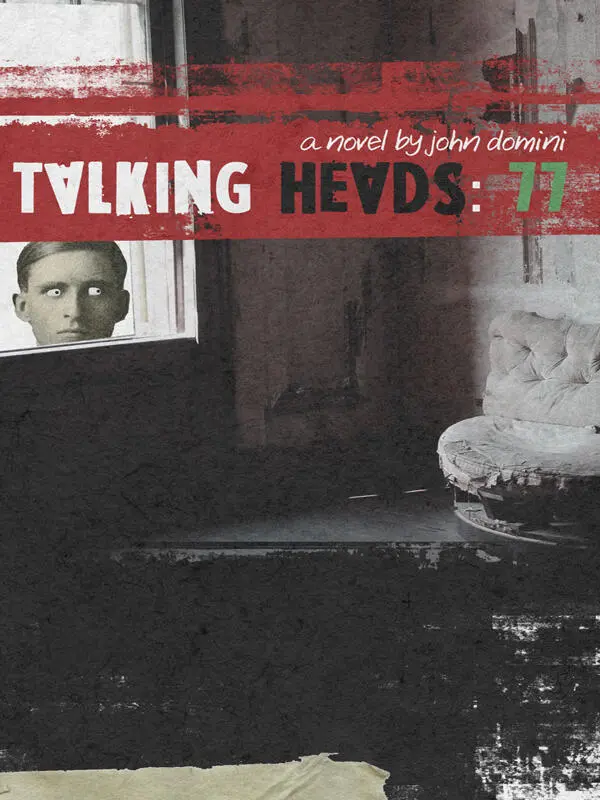
- Название:Talking Heads: 77
- Автор:
- Издательство:Dzanc Books
- Жанр:
- Год:2015
- ISBN:нет данных
- Рейтинг книги:4 / 5. Голосов: 1
-
Избранное:Добавить в избранное
- Отзывы:
-
Ваша оценка:
Talking Heads: 77: краткое содержание, описание и аннотация
Предлагаем к чтению аннотацию, описание, краткое содержание или предисловие (зависит от того, что написал сам автор книги «Talking Heads: 77»). Если вы не нашли необходимую информацию о книге — напишите в комментариях, мы постараемся отыскать её.
Talking Heads: 77 — читать онлайн бесплатно полную книгу (весь текст) целиком
Ниже представлен текст книги, разбитый по страницам. Система сохранения места последней прочитанной страницы, позволяет с удобством читать онлайн бесплатно книгу «Talking Heads: 77», без необходимости каждый раз заново искать на чём Вы остановились. Поставьте закладку, и сможете в любой момент перейти на страницу, на которой закончили чтение.
Интервал:
Закладка:
*
The worst of the Boston’s new construction was in the old West End. Just below Beacon Hill between the expressways and the Charles, you got a series of Cold War bunkers, a chain-mail cityscape: Massachusetts General Hospital, Government Center, and one steel-and-glass cereal box after another, packed with offices and condominiums. Even the plaza spaces wore on the soul. Flat swaths of brick or concrete, they suggested a firing range. The area was one big shrine to brute force, a Fascist temple cluster, and Kit always felt particularly disheartened to find it at the foot of Beacon Hill. The Hill of course showed you the city of the previous century and earlier, the stoops and cobblestones. Kit loved its quirks of layout, architects on foot thinking of people on foot. No building stood taller than four stories and every block presented a stipple of differently colored house fronts: not exactly a rainbow, but variations on brick red and stone-gray at least, with occasional flashes of yellow or even blue.
But then you came down the Hill into an airport: monochrome, fortified, echoing. It was a wonder that anyone could walk from one neighborhood into the other without turning into a militant Marxist. Just coming off Beacon Hill and into the West End, you saw the capitalist machine breaking down. You saw the bourgeoisie hunkering into a defensive camp. All in all, it didn’t seem like the place for Corinna’s family counselor.
But here they were, Corinna and Kit going to see her Arturito’s therapist, in a not-quite-articulated test of whether she could continue to work for him.
On the MTA, the woman avoided saying anything specific about what she had in mind. Back at the office, likewise, she’d set the trip up mostly by implication. “How about,” she’d said, “you come with me and meet Arturito? Meet the boy, meet our counselor — you got time for that?” The only suggestion that her resignation depended on Kit’s answer had been a slow sideways glance at the letter in his hand. Very slow glance, her thick Latin lashes barely moving. And she’d said that today she could “use” him. In fact, now that Kit had agreed to coming, Corinna seemed concerned mostly about whether he didn’t have anything more important to do.
“You sure you don’t need to be seeing your lawyer now?” she asked. “You sure you can put that off?”
Kit nodded, folding his coat-collar up around his throat. They’d come out into the wind of the Government Center plaza. The brick flats like a firing range, the wind like a runway.
“When are you supposed to talk to that Grand Jury anyway?” Corinna asked. “Thursday?”
He nodded again.
“Hmm, Thursday. Deadline day, you know? Or I guess I should say, Thursday would’ve been our deadline day.”
Kit couldn’t catch her eyes, the way this wind whipped up her thick career-girl hair. In fact Popkin hadn’t liked being put off. It didn’t help, either, that Kit couldn’t explain with any clarity just what he found so much more important.
“Anyway you rescheduled, right?” She headed across the bricks. “You and the man, you set another time.”
Eleven o’clock, tomorrow; Popkin must’ve repeated it a dozen times. And the lawyer had told Kit to start drafting his testimony. He’d said he wanted to see something by tomorrow. Longhand, typewritten, index cards, the lawyer didn’t care — so long as he had something he could work with. Tomorrow, eleven o’clock. Popkin said Kit could even give him a recorded statement, something on cassette.
“What about your Uncle Pete?” Corinna asked. She muscled through the cold, a hardheaded bundle. “You sure there’s not some big emergency back in Minnesota?”
Again Kit shook his head. Whatever it was that had Pete so determined to talk with him, apparently it could wait. Mom was fine, Uncle Chris was fine. Then too, Kit hadn’t exactly been baring his soul either. Ah, Bette and I, ah, we haven’t been home much these last couple of days. At least Kit had arranged for the uncle to call him back at the office, that afternoon. At least he wouldn’t have to be lying to his family while sitting in his own empty kitchen.
“Okay Kit,” Corinna said. “Okay if you say so. Anyway this won’t take long, here.”
Her building was the ugliest bunker on the block. Nothing but shaded riot-proof glass at sidewalk level, and Kit couldn’t have said where the door was. But as Corinna approached she picked up speed, almost breaking into a trot. Inside, at the far end of the lobby, stood Arturo.
The nine-year-old bore only a passing resemblance to the photo on his mother’s desk. In the flesh, the boy kept showing Kit surprises, his hair especially, a carrot red curling at the tips. Irish hair. Also you couldn’t see the kid’s hands in the picture, quick-pecking dark-nailed hands; the boy was in the middle of some fantasy play when Corinna and Kit arrived. He packed a real sting when he slapped five hello.
“Not like that, Arturito,” Corinna said. “You shake hands with Mr. Viddich.”
In Kit’s grip the boy’s hand felt more ordinary, sticky with lunch and fragile. But Arturo held on several seconds longer than necessary, smirking, squint-eyed. If he’d been a few years older, and maybe eighty pounds heavier, Kit would’ve said the kid was sizing him up for a fight. Kit looked to Corinna, but she was speaking with the woman who’d brought the boy from school, a heavy old nonna with a growth on one eyelid. The two women used a shorthand neighborly Spanish, made still harder to follow by the difference in their accents. Corinna’s friend had a back-of-the-throat sound, upcountry, like the Mexicans Kit had worked with in the Carolinas.
“Hey,” the boy said, “I get it. Mama ain’t told you what the scene is yet.”
Corinna broke off her conversation, turning and taking the boy’s chin in one swift hand.
“I told you,” she said in firm English, “in this family we don’t say ain’t .”
Aw, Viddich, what have you got yourself into now? For someone whose chosen work was supposed to be bringing the news back to sea level, Kit was spending a lot of time out at the hard-to-figure farther edges. He wondered if there weren’t some quick fix he could offer Corrina. We have to close or we’re as bad as they are .
At least the mother’s conversation with her ugly old babysitter made one thing clear — she was glad he’d come. He was some sort of good luck, apparently. Maybe a last-minute substitution. Other than that, he understood only that Corinna would handle Arturito from here. After the “session” (did Kit have the expression right?), she’d take over. In his goodbyes to the sitter Kit tried warming things up with a brief display of his Spanish, and then in the elevator he floated a small trial balloon.
“Corinna,” he said, “it’s no problem you taking the afternoon off. The way we set up your weekly schedule …”
Abruptly she squatted beside her boy, whispering. No indication she still gave a hoot about her “weekly schedule.”
The counselor’s office, at first, set Kit in a more familiar world. One brown bookshelf held a dormitory-style tea setup, complete with a cheap immersion heater, and the mug read “Ver-I-Tas.” It smelled as if Dr. Halsey — finally Kit learned his name — preferred chamomile. Bifocal’d, at home behind a desk, the man wore a sweater vest in a bright scotch tartan. He looked so utterly unhip, un-streetwise, that Arturo stared wide-eyed. The first Kit had seen the boy look like his photo. The counselor knew the uses of keeping his distance, yes; he didn’t waste time. No sooner had Corinna finished introductions than Halsey thanked Kit for volunteering.
“You don’t know what it means to this child”—the doctor nodded towards Arturo—“to spend time alone with a grown man.”
Читать дальшеИнтервал:
Закладка:
Похожие книги на «Talking Heads: 77»
Представляем Вашему вниманию похожие книги на «Talking Heads: 77» списком для выбора. Мы отобрали схожую по названию и смыслу литературу в надежде предоставить читателям больше вариантов отыскать новые, интересные, ещё непрочитанные произведения.












Обсуждение, отзывы о книге «Talking Heads: 77» и просто собственные мнения читателей. Оставьте ваши комментарии, напишите, что Вы думаете о произведении, его смысле или главных героях. Укажите что конкретно понравилось, а что нет, и почему Вы так считаете.