John Domini - Talking Heads - 77
Здесь есть возможность читать онлайн «John Domini - Talking Heads - 77» весь текст электронной книги совершенно бесплатно (целиком полную версию без сокращений). В некоторых случаях можно слушать аудио, скачать через торрент в формате fb2 и присутствует краткое содержание. Год выпуска: 2015, Издательство: Dzanc Books, Жанр: Современная проза, на английском языке. Описание произведения, (предисловие) а так же отзывы посетителей доступны на портале библиотеки ЛибКат.
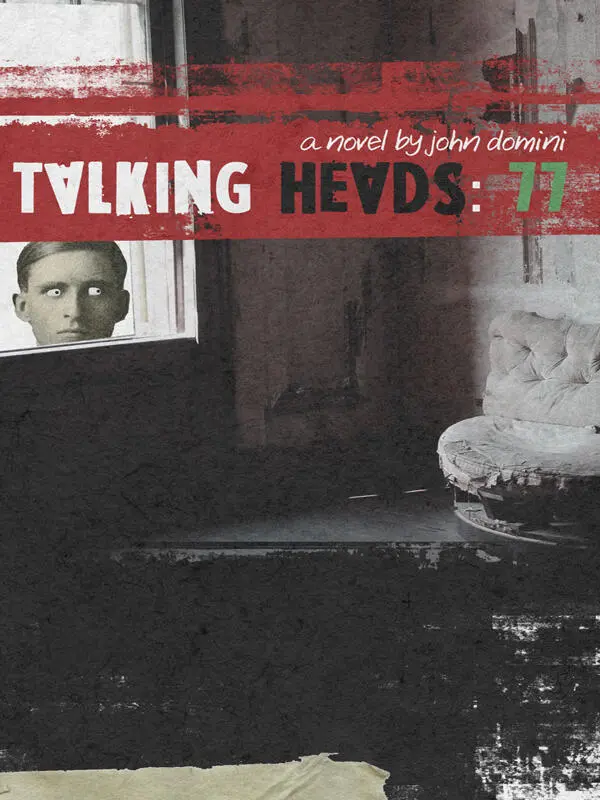
- Название:Talking Heads: 77
- Автор:
- Издательство:Dzanc Books
- Жанр:
- Год:2015
- ISBN:нет данных
- Рейтинг книги:4 / 5. Голосов: 1
-
Избранное:Добавить в избранное
- Отзывы:
-
Ваша оценка:
Talking Heads: 77: краткое содержание, описание и аннотация
Предлагаем к чтению аннотацию, описание, краткое содержание или предисловие (зависит от того, что написал сам автор книги «Talking Heads: 77»). Если вы не нашли необходимую информацию о книге — напишите в комментариях, мы постараемся отыскать её.
Talking Heads: 77 — читать онлайн бесплатно полную книгу (весь текст) целиком
Ниже представлен текст книги, разбитый по страницам. Система сохранения места последней прочитанной страницы, позволяет с удобством читать онлайн бесплатно книгу «Talking Heads: 77», без необходимости каждый раз заново искать на чём Вы остановились. Поставьте закладку, и сможете в любой момент перейти на страницу, на которой закончили чтение.
Интервал:
Закладка:
Mistical union of happisits rejaculates the essence of the blesséd Snigr’s theologizmo. We are hair not solely to naked butt as well to jackalhope. To this Snigr. Hardnose was consummated, the moaning when flesh and grace collide in a hole. The hole truth!
Then there was Louie-Louie Rebes, mammoth and colorful. Louie-Louie, glowering over Kit’s front wall.
The brother spoke first: “Where’s everybody at?”
Louie-Louie, and he must have made a racket coming in.
“Hey man,” he said, “you there?”
Come back, Shane. At least exhale.
The brother circled the glass towards Kit’s office. The clomp of his biker boots echoed in the American Empire spaces, and the glass rattled, the floorboards whined. Kit couldn’t believe it. When Leo Mirini went by in the hall, Kit never failed to notice. The first words he managed were by rote: “Come in, sit down. I’m sorry.” Louie-Louie’s voice, on the other hand, was as hard on the rickety office as his boots. “You come to my place, man, I come to yours. And where’s the, where’s the secretary and shit?
“Man.” Louie-Louie turned in the doorway, frowning. “Is this place really a newspaper?”
“The secretary and shit have the afternoon off,” Kit surprised himself by saying. “It’s a paper, Louie-Louie.”
As the brother had come closer, he’d appeared less intimidating. Louie-Louie took up most of Kit’s office, no question, and his outfit was the same ruckus as yesterday. A fatigue jacket over disco threads. But he’d changed the shirt, going instead for a formal look, starched white and better fitting. More than that, the man looked like he was wrestling with trouble of his own. Twisting the kinky ends of his beard, Louie-Louie wouldn’t sit. He wouldn’t take off his jacket. Now Kit was the only one talking, filling space with an abbreviated version of why Sea Level wasn’t such a crazy idea. The Phoenix , you know, had probably started with less.
Another rote. It allowed Kit to try and recall what Mrs. Rebes had told him about her younger boy. The father had left, she’d said, before he could hurt Louie-Louie. He was still a baby, she’d said.
“You know something?” the brother said suddenly. “One team I always hated was the Boston Red Sox.”
Kit blinked. “The Sox?”
“Always hated those Red Sox.”
“Well, the pitching’s weak. They need a stopper.”
“Ain’t talking about no pitching, man. Ain’t talking about no Louie Tiant. You got a Harvard mug on the desk there, you oughta know what I’m talking about. It’s racism . Man, the Red Sox’re the most lily-white organization in baseball. Always nine white guys and a big nigger with a bat. Racist team.”
Kit checked the urge to apologize. “True enough.”
“And the Celtics ain’t any better.”
“Aw, come on. The Celts were the first team to draft a black player. They made Bill Russell—”
“Man, I don’t care what they did a hundred years ago. It’s practically the ‘80s now, man.” The brother was facing the street windows, the bulgy brownstones across the way. “Practically the ‘80s, and here you got a professional ball club with white guys getting all the minutes.”
Louie-Louie had turned towards the windows, Kit realized, before he’d said “nigger.”
“White boys,” the brother went on, “that’s what brings in the money in this town. In Boston you need white boys.”
Kit exhaled slowly. In his mind’s eye was the famous Globe photo from ‘76, four or five white teens assaulting a black man on the steps of the city courthouse. They were bashing the man’s face in with a flagpole they’d grabbed off its stand.
“Boston,” Louie-Louie said.
In the photo, the white kids were using the stolen pole like a lance, thrusting the eagle at its tip into the falling man’s face. And the American flag hung rippling from their grip, filling a corner of the shot. 1976, the Bicentennial. The photo had been all over the media.
Kit began to say he understood, he agreed. Boston …
“Man, tell me something. Tell me something, okay?” Louie-Louie turned to face him, and Kit knew what he’d ask: Did you kill my brother?
“Tell me, man,” he said. “How could you come to my house and tell my Mama what a sweet old time your Daddy had with a racist Red Sox like Ted Williams?”
Kit touched his neck.
“What kind of a crazy white boy are you, telling my Mama something like that?”
He hadn’t expected to get insulted, either. “Aw, Louie-Louie. I hope that’s not the burning question that brought you all the way over here in the dead of winter.”
The younger man’s beard changed shape. He might have been smiling; the window glare left his face largely invisible.
“She gets to you, doesn’t she?” the brother said. “My Mama. She gets to your head.”
Kit managed a small grin himself. He gestured at his bruises and repeated that he’d been in bad shape when he’d come by their house. And with that a more reasonable motive for today’s visit occurred to him. “You know,” he said, “I also told your mom I’ve got no ownership of this story. No legal claim or anything.”
The younger man at last reached for a seat.
“Louie-Louie, this is your story. Yours and your mom’s.”
The brother moved with less noise. He turned the chair around before sitting and settled with his chest against the struts of the back.
“You can do what you want with it,” Kit said. “You don’t need my permission.”
Still he didn’t seem to have a handle on this big little brother, this guerilla suddenly gone soft. Almost in a whisper, Louie-Louie said he wasn’t looking for Kit’s permission.
“You know there’s a black-owned paper in town,” Kit kept on. “There’s the South End Community News , too.”
The more the merrier, he figured. Or the more the moral-er. After the Grand Jury, Sea Level’s precious scoop would be history — and who knew who Bette might be telling, out wherever she’d gone.
“Aw, that South End paper,” the brother said, “that’s mostly a gay thing, you know.”
Kit found himself looking over his desk, wondering if he didn’t have some crackers in a drawer somewhere. A bite to eat would help them both. He continued to search while Louie-Louie said that his mother called the Community News an abomination before the Spirit. “Mama, she’s old-timey,” Louie-Louie said. “But she’s sharper than what you might think. She didn’t used to be so spacey either.” Nodding, Kit found a box of Triscuits down beside his office Johnnie Walker, and a shrink-wrapped gift packet of mustard and sardines from the publication party. Wow, was he actually going to put together a meal? Grain, oil, protein, spices?
Kit spread the goodies on his desktop, then fished his jackknife from a coat pocket. Meantime the brother bundled up his fatigue jacket and laid the bundle on top of the chair back; he used it as a pillow. If he was Castro, he was a worn-out and dispirited Castro, hunched over with an ear to the chest of a fallen comrade.
“Mama didn’t used to be so down in the bottle either,” Louie-Louie said.
“Yesterday she was worse than I’d seen her before,” Kit said. “Worse by a long shot.”
“Yesterday was one of her better days.” Louie-Louie kept trying to get comfortable on his bundled jacket, shifting his baggy body. “One of her best days this week, I’d say. Viddich, man, you’re good for her.”
What? Kit picked at his food’s wrapping. Five minutes ago Louie-Louie had all but called him a racist.
“See,” the brother went on, “where my Mama’s coming from, yesterday just proved she was right going to you. Where she’s coming from, when you started in to crying that meant she could trust you.”
Читать дальшеИнтервал:
Закладка:
Похожие книги на «Talking Heads: 77»
Представляем Вашему вниманию похожие книги на «Talking Heads: 77» списком для выбора. Мы отобрали схожую по названию и смыслу литературу в надежде предоставить читателям больше вариантов отыскать новые, интересные, ещё непрочитанные произведения.








Обсуждение, отзывы о книге «Talking Heads: 77» и просто собственные мнения читателей. Оставьте ваши комментарии, напишите, что Вы думаете о произведении, его смысле или главных героях. Укажите что конкретно понравилось, а что нет, и почему Вы так считаете.