John Domini - Talking Heads - 77
Здесь есть возможность читать онлайн «John Domini - Talking Heads - 77» весь текст электронной книги совершенно бесплатно (целиком полную версию без сокращений). В некоторых случаях можно слушать аудио, скачать через торрент в формате fb2 и присутствует краткое содержание. Год выпуска: 2015, Издательство: Dzanc Books, Жанр: Современная проза, на английском языке. Описание произведения, (предисловие) а так же отзывы посетителей доступны на портале библиотеки ЛибКат.
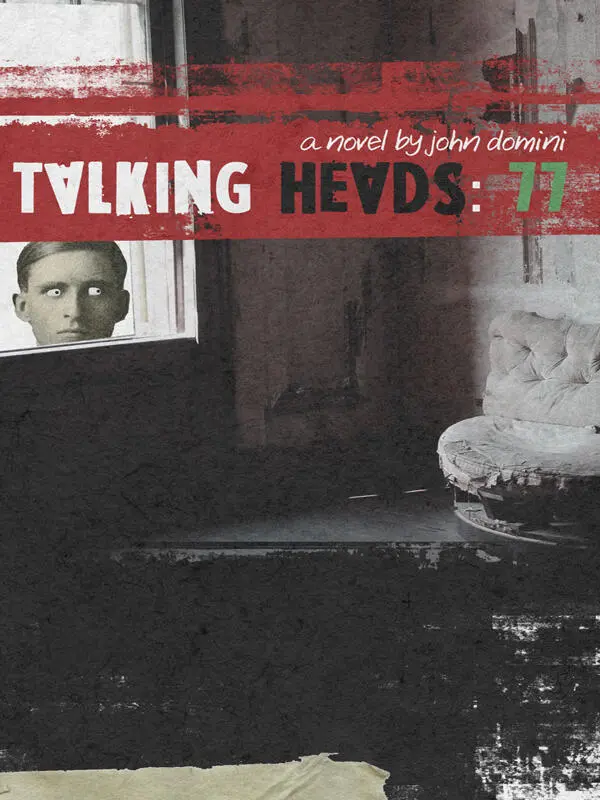
- Название:Talking Heads: 77
- Автор:
- Издательство:Dzanc Books
- Жанр:
- Год:2015
- ISBN:нет данных
- Рейтинг книги:4 / 5. Голосов: 1
-
Избранное:Добавить в избранное
- Отзывы:
-
Ваша оценка:
Talking Heads: 77: краткое содержание, описание и аннотация
Предлагаем к чтению аннотацию, описание, краткое содержание или предисловие (зависит от того, что написал сам автор книги «Talking Heads: 77»). Если вы не нашли необходимую информацию о книге — напишите в комментариях, мы постараемся отыскать её.
Talking Heads: 77 — читать онлайн бесплатно полную книгу (весь текст) целиком
Ниже представлен текст книги, разбитый по страницам. Система сохранения места последней прочитанной страницы, позволяет с удобством читать онлайн бесплатно книгу «Talking Heads: 77», без необходимости каждый раз заново искать на чём Вы остановились. Поставьте закладку, и сможете в любой момент перейти на страницу, на которой закончили чтение.
Интервал:
Закладка:
Corinna gave a startled laugh, behind Tad’s back.
“Yeah, yeah,” the Manager said. “But m’tellin’ya Kit. Ninety-nine people out of a hundred out there, they don’t want to hear about the scum in Monsod. Junkies, killers — they don’t care about those losers. The only way they’ll read about it, is if they think it’s hip.”
“Hip,” Kit said.
“Hip. They need to think it’s part of the scene.”
Zia’s laughter, behind Kit, was refreshingly acid.
“I see,” Kit said. “And what I’m doing now, this beautiful Yaqui thing, it’s also very hip.”
“Well, no offense, Kit. I realize how you feel about it.”
“It’s going to sell papers.”
“When we start up again, Kit — it’s going to be so big, the newsstands’ll have to pay us in elephant dollars. Hey, to be hip, m’tellin’ya, it’s important. It’s a dream to people. The dream business, that’s our business. Unless you’re putting out a paper for sociology professors.”
Kit didn’t take offense. In fact it was a relief bashing away like this, not having to apologize for once. After a moment he asked Tad if he’d read Hamlet .
“Oh great,” Tad said. “We’re expanding our readership base now. We’re reaching out to English professors.”
“ Hamlet , Tad. You’ve read Hamlet . You know what Hamlet says he’s reading, in there?”
Tad stroked his mustache, his grin holding steady.
“Words, words, words,” Zia said.
Kit turned sideways in his chair, eyeing the writer. “Words, words, words,” he repeated, smiling. He turned back to his Circulation Manager. “I’d like to think, Tad, that we can do better than that.”
It was a relief to bash away, a relief to hear that at least one person who worked for Sea Level believed the paper would be back on the stands some day. But after the Circulation Manager had finished going over his figures and left — maybe the bank balance would stretch through Valentine’s after all — Zia noisily began to pack up. She was taking the rest of the day off. “In fact,” she said, gathering her bright blue pens, “let’s make it the rest of the week.” And there was her glare again, the equals signs on either side of her nose. Kit went to her, to the half-wall before her.
“I thought,” she said, “like, I’m a writer now, I should write. I thought, okay, this is how I deal with depression now. This is what I do instead .”
Kit checked Corinna. She glared back with eyes very different from Zia’s, very round, two zeros. Some tough arithmetic in the office today.
“I thought like, okay, it’s just a delay. You’ve got your whole life ahead of you, young lady. But I’m like, non-functional.”
Kit made a few stabs at calming her: reassurances, reminders. The woman kept shaking her head, slowly zipping up her black leather. “The coming and going, Kit, all this coming and going. It’s too much for me. I mean, when the whole enterprise seems so shaky to begin with.” Kit knew better than to touch her, to give her any provocation. Also he was finding it hard to disagree. He could feel the relief his office had given him that morning, feel its therapy in his neck and his bruises — yet nonetheless Zia was right. Sea Level had to rank among the most ill assorted menageries ever. On the one hand Kit had a fire-eater like Rick Dimirris, storming in with the names of the bad guys, and on the other hand he had a happy-face like Tad Close. And these two women couldn’t have been more at cross-purposes. One was upwardly mobile, the other downwardly. One was full-hipped in full makeup, the other all eyeliner and anorexia. They had the generational difference too: Corinna a Movement woman like Mrs. Rebes, eyes on the prize, and Zia whatever had come since.
Gently now Kit asked Zia to think about it, to check in tomorrow morning at least. But his eyes kept shifting back and forth between her and Corinna. Zia was packing away the last of her writing, smoothing her chicken-scratched legal pages before she slipped them into her satchel. Corinna was ratcheting a fresh sheet of letterhead into her typewriter and beginning to tap out a note.
The checks and balances of the working world, Viddich. And there could be no denying that it was his preferred world, no denying the relief it afforded him or the way it cleared his head of imaginary layout & pasteup. Knocking this hole in his schedule of deadlines and press days, in fact, might well have been the most difficult penance he could set himself. Kit couldn’t dissuade Zia, no. He agreed with her. When the phone rang again, he felt another distinct pick-me-up.
He couldn’t believe who was calling, though. “My uncle?” he asked Corinna.
“Uncle Pete, that’s what he says.”
Zia, her satchel over her shoulder, was coming through the halfwall doorway beside him. “Kit, the best I can tell you is, I’ll try to check in.”
“Zia, please, wait. Uncle Pete, really? Calling here?
“You want me to tell him it’s not a good time?”
“I’ll try, Kit. But I mean, a letdown like this, a disappointment like you laid on me today …”
“No no, I’ll, ah, I’ll take it in a minute.”
“You want this phone?”
“ … I’m not too big on handling that kind of disappointment.”
Zia was out the door by the time Kit and his uncle had finished their hellos. Maybe she caught Kit’s last look, uncertain, showing her — Zia, do you know the best way to test the worth of your work? — maybe she saw it, maybe not. Anyway Uncle Pete was a bad tangle, himself. A demanding tangle. Uncle Pete was the gay one, in the closet but no secret.
To begin with there was the problem of the man’s voice. “Mnhm, Kit. How’re you doing?” No way Kit could assimilate that voice. No way, not here; it made no difference even when he switched the receiver so he could no longer hear Zia’s diminishing footsteps. To properly appreciate Pete’s voice, packed in the cotton of long cattleman silences, a person had to be just finishing up a long night’s difficult calving. A person had to be standing in the flashlight’s sepia, in the placental stink. Then you had room for that voice, you were weary and pliant enough for its good sense and its capacity for hope: astonishing stuff at such an ungodly hour.
“How am I doing?” Kit said finally. “Think of how Rod Carew stands at the plate.”
Even his uncle’s laugh sounded barn-like. “.388 last year.”
“And he does it looking like a pretzel.”
“Mnhm. Are you going to get back here this summer, Kit? Are you and I going to take in a ballgame?”
“Aw, Uncle Pete. You know I’m an Easterner now.”
Then the silence. In Pete’s case, there was always more to it, more than cowboy ways or the Minnesota Shys. Kit too suffered a long tongue-tied moment, thinking how often lately he’d brought up this man’s secrets. Again and again he’d brought it up: I have an uncle who’s … He’d become a city boy, a talker.
But the hardest thing to deal with was Corinna’s note. As Kit leaned against her desk trying to think of the next icebreaker — trying to imagine why Pete had called — his Administrative Assistant yanked what she’d been writing out of her typewriter. A rackety yank. Bette’s Apple had nothing to match the loud finality of pulling a sheet out of a typewriter carriage. Then she handed it to him: a resignation letter.
It ran three lines, under the letterhead. Formal business English: I therefore give you my notice to resign, as of the end of this pay period .
“You know, Kit,” Uncle Pete said in his ear, “I’ve tried to reach you at home.”
Hard to assimilate. The distance seemed suddenly a matter of light years — and the likelihood of getting anywhere seemed far less than with this wide-faced young mother beside him. Corinna hadn’t moved, after she’d handed him the note. She hadn’t taken those round eyes from him. She was still giving him a chance.
Читать дальшеИнтервал:
Закладка:
Похожие книги на «Talking Heads: 77»
Представляем Вашему вниманию похожие книги на «Talking Heads: 77» списком для выбора. Мы отобрали схожую по названию и смыслу литературу в надежде предоставить читателям больше вариантов отыскать новые, интересные, ещё непрочитанные произведения.










Обсуждение, отзывы о книге «Talking Heads: 77» и просто собственные мнения читателей. Оставьте ваши комментарии, напишите, что Вы думаете о произведении, его смысле или главных героях. Укажите что конкретно понравилось, а что нет, и почему Вы так считаете.