Esmé Wang - The Border of Paradise
Здесь есть возможность читать онлайн «Esmé Wang - The Border of Paradise» весь текст электронной книги совершенно бесплатно (целиком полную версию без сокращений). В некоторых случаях можно слушать аудио, скачать через торрент в формате fb2 и присутствует краткое содержание. Год выпуска: 2016, Издательство: The Unnamed Press, Жанр: Современная проза, на английском языке. Описание произведения, (предисловие) а так же отзывы посетителей доступны на портале библиотеки ЛибКат.
- Название:The Border of Paradise
- Автор:
- Издательство:The Unnamed Press
- Жанр:
- Год:2016
- ISBN:нет данных
- Рейтинг книги:3 / 5. Голосов: 1
-
Избранное:Добавить в избранное
- Отзывы:
-
Ваша оценка:
The Border of Paradise: краткое содержание, описание и аннотация
Предлагаем к чтению аннотацию, описание, краткое содержание или предисловие (зависит от того, что написал сам автор книги «The Border of Paradise»). Если вы не нашли необходимую информацию о книге — напишите в комментариях, мы постараемся отыскать её.
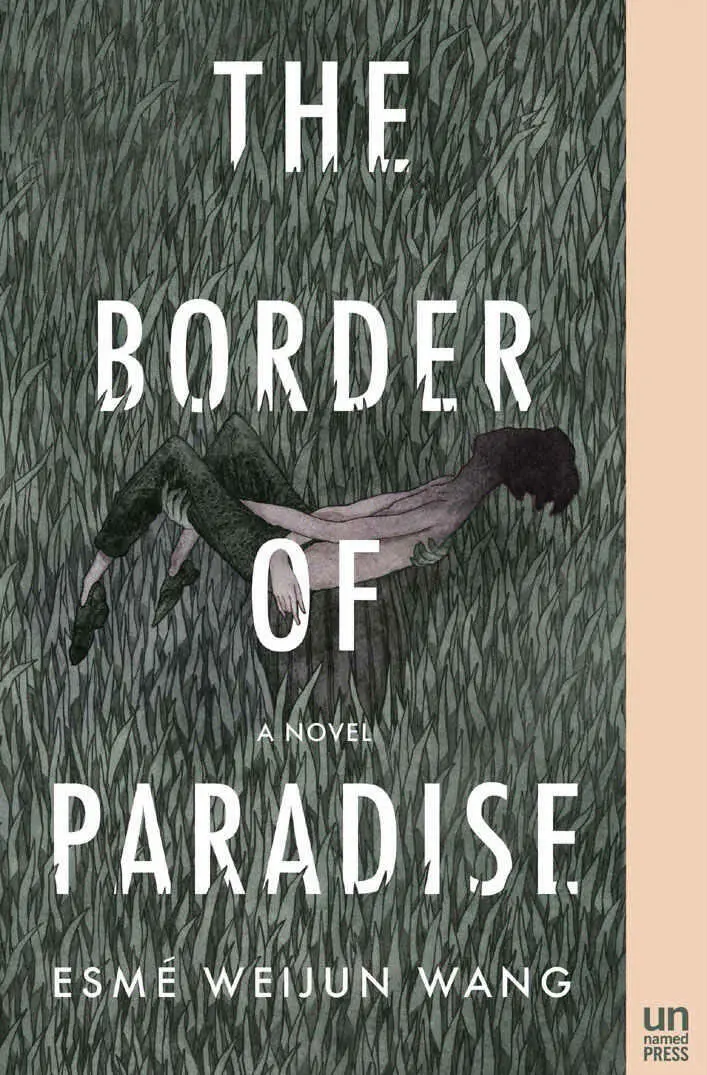
transports readers into the world of an iconoclastic midcentury family.
In booming postwar Brooklyn, the Nowak Piano Company is an American success story. There is just one problem: the Nowak’s only son, David. A handsome kid and shy like his mother, David struggles with neuroses. If not for his only friend, Marianne, David’s life would be intolerable. When David inherits the piano company at just 18 and Marianne breaks things off, David sells the company and travels around the world. In Taiwan, his life changes when he meets the daughter of a local madame — beautiful, sharp-tongued Daisy. Returning to the United States, the couple (and newborn son) buy an isolated country house in Northern California’s Polk Valley.
As David's mental health deteriorates, he has a brief affair with Marianne, producing a daughter. When Marianne appears at their doorstep, the couple's fateful decision to take the child as their own determines a tragic course of events for the entire family. Told from multiple perspectives,
culminates in heartrending fashion, as the young heirs to the Nowak fortune must confront their past and the tragic reality of their future.
The Border of Paradise — читать онлайн бесплатно полную книгу (весь текст) целиком
Ниже представлен текст книги, разбитый по страницам. Система сохранения места последней прочитанной страницы, позволяет с удобством читать онлайн бесплатно книгу «The Border of Paradise», без необходимости каждый раз заново искать на чём Вы остановились. Поставьте закладку, и сможете в любой момент перейти на страницу, на которой закончили чтение.
Интервал:
Закладка:
After the first try I’d look at David and think, You’re leaving me.
He’d go out into the woods and I’d think about what it would be like if he never came back.
I thought of Fatty, the failed tongyangxi, the girl who wasn’t beautiful, not like Gillian; yet she’d brush her lips against the back of my neck, and my heart would respond with quickness. It would be easier for my children. Gillian could be William’s bride if he loved her, if I raised them right. Yet for years my notion of reprising the old ways remained only a notion: I still hoped that David would live.

While downtown he talked to storekeepers about the price of milk. He chatted with the kids about a green Cadillac, or a tree crowded with invisible birds. William and Gillian each moved in strollers, with each parent pushing his or her favorite child, and the kids absorbed who knows how much of it. But they liked his attention, as I did. We all wanted his light, which showed its face and lingered in his mood at times despite everything. So he would live, I thought, as long as I kept that light going, as long as I could stoke the flame.
But for him it was an exhausting act. It took no time for me to see how tired it made him, and in the spaces between having to interact with others he went dead. In the Buick, especially, on the drive home, that silence became petrifying, and I would have thoughts about him jerking the wheel and plunging us off a cliff, or heading straight for a tree, because cold, still silence meant no boundaries and no rules of behavior. He was similarly comfortable with us at home. He was the most frightening when the showmanship left him and he felt no need to please, and I’d never seen someone get so dangerously quiet. I’m not saying that his silence was a prelude to beatings or storms. He almost never struck us. He never threw tantrums. It was the silence. It was either listless and half dead, or tense and unable to be loosed. In the beginning of it I thought, David is not himself when he is quiet. Then I realized that the real thought was David is not himself in town. We would come home and he’d go straight to the couch and lie there. He was too tall for the couch, but he would tuck in his legs slightly and stay.
It was no surprise, then, when he announced in bed one morning that he no longer wanted us to go off the mountain, because Polk Valley was full of idiots. His main example was Sam, a mechanic from the gas station who had the magical ability of showing up wherever we went.
“He is not bad,” I said.
“That’s not the point,” David said. “I’m tired of seeing his face.”
“How are we going to get anything if we don’t go to town?” I asked.
“I’ll go by myself. If you want something,” he said, “you can tell me and I’ll get it for you.”
I said, “I’m going to go for a walk.” This I rarely did. He was the one to go out into our property while I cared for the children, but I was suffocated and went into the field. I wandered around the perimeter in the dead field. In my old life I knew the names of plants and birds, but I didn’t know them here either then or now. Everything was nameless and I experienced them as they were in my waking dream.
David had two projects the year that Gillian came to us. The first was homeschooling. He thought Polk Valley idiocy was the result of Polk Valley schooling. He’d gone to private schools his entire life and there was no such thing in Polk Valley, which he thought was hideous. (When he explained the concept of “private” and “public” schools to me, all I understood was that private meant “good” and public meant “bad.”) He had gone down to the only grammar school in Polk Valley to speak to the teacher, and when he came back he was wild with fury about things that I didn’t understand, but evidently meant that there was no way whatsoever that our children would go to a Polk Valley school and get a “secular” education. (This also made no sense to me, because in Kaohsiung there were no educational options. If you were lucky enough to go to school, as I had been, you were very lucky indeed. Poor families scrabbled to have their children go to the local school.)
It was good for him to have projects, I decided, in the same way that I had decided that going into town was good for him. He had a small number of books that he had delivered to town for himself, and he brought them into the house with electric brightness in his face. He sat at the kitchen table and made lesson plans in a ledger. He had particular fountain pens that he liked to use with three kinds of ink, which he chose from depending on what he was writing about: green, red, and black. He bought pencils for the children. He also had plain notebooks with cream-colored canvas covers with labels like GENERAL VOCABULARY: WN and GENERAL VOCABULARY: GN.
When he started making these lesson plans, William was two and Gillian was a few months old. David was still using the flashcards with William, but he said that William was too old for Goodnight Moon and needed to learn more complicated things. I believe he once said that the most important thing for a parent was to raise his child to be intelligent. How stupid this sounds now, I know.
The second hobby that David took up was stuffing animal corpses, which started when he brought bags with him in the car to pick up the bodies of raccoons and skunks, and took home to empty in the shed out back. I wanted to ask him how could he do something so foul. But by then I chose my moments carefully, and I chose to say nothing. Once I went into the shed and saw his ghoulish animals with sewed-shut eyes on shelves and tables. This was when he was still learning the basic skills of taxidermy, and because he was a beginner the animals lacked their proper shapes and looked distended like monsters. I emitted a small scream and backed out of the shed.
“I saw the animals,” I said one morning, before either of the children was awake. Watery light rushed through the kitchen window, over our feet and shins. “Why do you want them? The animals in the shed.”
I thought this was a safe thing to ask, but he scowled. “It’s not a question,” he said.
I was confused. We were in a corner again. “Promise me, you lock the shed. I don’t want the children to go in there, get into trouble or get scared.”
“Fine.”
“And,” I added, “lock on the outside .”
It wasn’t so bad all the time, but I remember certain things that are impossible to repeat without ruining his face. The children were sometimes afraid of him. He would say, later, that he had never had a happy day. In the worst of it he would forget that he had ever experienced happiness, however fleeting, and we argued. But what about this time? I would ask. When you did such-and-such? No, he would say, that was fakery, it was pretend, that wasn’t actually happiness. It was not a lie so much as a sincere belief in an untruth. At least I imagine it this way, because I can’t stand the idea that he was never happy. He said this and it felt like he was being cruel. I wanted to ask him if he was happy when we were first married, or when we lived in San Francisco, but I was too afraid of what he would say. For comfort I told myself that it was a demonic trick of the spirit, but I recall this argument as one of the worst. I had left the house. William ran to the back door and I yelled at him to go back inside, I didn’t want him — it was one of the worst things I could say.
Читать дальшеИнтервал:
Закладка:
Похожие книги на «The Border of Paradise»
Представляем Вашему вниманию похожие книги на «The Border of Paradise» списком для выбора. Мы отобрали схожую по названию и смыслу литературу в надежде предоставить читателям больше вариантов отыскать новые, интересные, ещё непрочитанные произведения.






Обсуждение, отзывы о книге «The Border of Paradise» и просто собственные мнения читателей. Оставьте ваши комментарии, напишите, что Вы думаете о произведении, его смысле или главных героях. Укажите что конкретно понравилось, а что нет, и почему Вы так считаете.