Esmé Wang - The Border of Paradise
Здесь есть возможность читать онлайн «Esmé Wang - The Border of Paradise» весь текст электронной книги совершенно бесплатно (целиком полную версию без сокращений). В некоторых случаях можно слушать аудио, скачать через торрент в формате fb2 и присутствует краткое содержание. Год выпуска: 2016, Издательство: The Unnamed Press, Жанр: Современная проза, на английском языке. Описание произведения, (предисловие) а так же отзывы посетителей доступны на портале библиотеки ЛибКат.
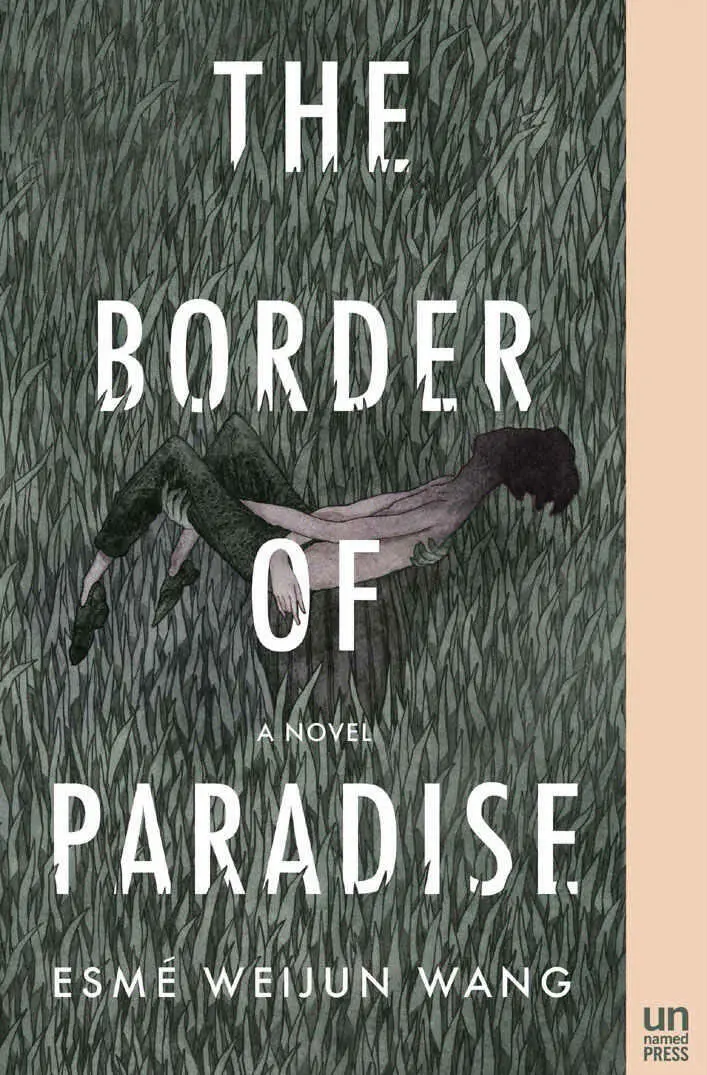
- Название:The Border of Paradise
- Автор:
- Издательство:The Unnamed Press
- Жанр:
- Год:2016
- ISBN:нет данных
- Рейтинг книги:3 / 5. Голосов: 1
-
Избранное:Добавить в избранное
- Отзывы:
-
Ваша оценка:
The Border of Paradise: краткое содержание, описание и аннотация
Предлагаем к чтению аннотацию, описание, краткое содержание или предисловие (зависит от того, что написал сам автор книги «The Border of Paradise»). Если вы не нашли необходимую информацию о книге — напишите в комментариях, мы постараемся отыскать её.
transports readers into the world of an iconoclastic midcentury family.
In booming postwar Brooklyn, the Nowak Piano Company is an American success story. There is just one problem: the Nowak’s only son, David. A handsome kid and shy like his mother, David struggles with neuroses. If not for his only friend, Marianne, David’s life would be intolerable. When David inherits the piano company at just 18 and Marianne breaks things off, David sells the company and travels around the world. In Taiwan, his life changes when he meets the daughter of a local madame — beautiful, sharp-tongued Daisy. Returning to the United States, the couple (and newborn son) buy an isolated country house in Northern California’s Polk Valley.
As David's mental health deteriorates, he has a brief affair with Marianne, producing a daughter. When Marianne appears at their doorstep, the couple's fateful decision to take the child as their own determines a tragic course of events for the entire family. Told from multiple perspectives,
culminates in heartrending fashion, as the young heirs to the Nowak fortune must confront their past and the tragic reality of their future.
The Border of Paradise — читать онлайн бесплатно полную книгу (весь текст) целиком
Ниже представлен текст книги, разбитый по страницам. Система сохранения места последней прочитанной страницы, позволяет с удобством читать онлайн бесплатно книгу «The Border of Paradise», без необходимости каждый раз заново искать на чём Вы остановились. Поставьте закладку, и сможете в любой момент перейти на страницу, на которой закончили чтение.
Интервал:
Закладка:
The distraction worked for a while. At the same time, David was hanging himself in the bedroom. There are high beams in every room. I was playing with our child, and David was tying a rope to a beam. I don’t know how he learned to tie a knot like that, but he hadn’t thought about the strength of the rope, which might have been half rotten in the damp of wherever he retrieved it from, or maybe he knew that it was a gamble. I heard a crash and I screamed. I wouldn’t have had such a reaction if the sound were less violent. It was the sound of something gone truly wrong, and not just a lamp knocked over. It was declarative.
There was no answer after I cried out. I lifted William, who was crying, into my arms, and I hurried to the bedroom. I yanked at the locked door. William said, “What’s bad?” I yelled David’s name again, and when he didn’t answer I took William to his room, sat him on the bed, and said, “Stay.” Then I closed the door. He was scared. I didn’t blame him for his fear. He shrieked for me, but I couldn’t let him see.
I am glad for flimsy doors and the strength of frightened wives. With a hammer from the kitchen I smashed a hole in the door and reached inside to unlock it, the splinters scraping my skin like teeth. When I stepped inside I saw that a swaying rope, like a fishing line that had nonchalantly lost its prey, was hanging from a ceiling beam, and David was on the floor, lying next to a toppled chair with the rope’s remainder around his neck. I thought, You’re a coward. You can’t leave me here. I think I may have also thought, This is it, but I thought this so many times between then and the end, when what felt like possible endings were not really endings, when he died a little bit more by the year, by the month, by the day. And yet I’m surprised that I didn’t actually think he was dead. It was shock, I think, that let me believe he could be alive, and it was that which coaxed me into going to him. I could save him. It would be like bandaging his bad hand. If only I could make the blood go away. If only I didn’t have to see the redness everything would be all right. I rubbed at the floor with my bare arm until I remembered that I had to tug at the loop around his neck. I was numb as I untied the rope chafing against his skin, and I shook my husband, thinking it was possible that he had so badly hit his head that he would be gone quickly. It was possible that he would die, and it was possible that he would live, but either way his death was staring at me whether it was now or later, then or now — the possibility of suicide had come into the house like a stubborn relation, and it would never leave until it got what it wanted, or until we rid ourselves of it, and what was the likelihood of either? In that way his attempt was an awakening like the one during our honeymoon, when he’d stayed in bed for weeks and said nothing. But I didn’t think he would die, back there in San Francisco. What had I thought? Perhaps something about his problem being surmountable.
I’ll also note that before I took on more responsibility in the house, I had no idea how to contact anyone for help, I had so little power then. All I could do was wait and shake him and hope that he had not broken his back. As I knelt there I thought, Would it have been so bad to stay in Taiwan? Was it really so urgent that I leave? I could have gone to Taipei, Taichung, or even Pingtung, and perhaps my disgrace would not have followed. Perhaps it would have been better than this.
After a few minutes he opened his eyes. I didn’t think to kiss him, or say that I was glad. Nor did I think to yell. I stared at him and I said nothing.
“Oh God,” he said. “My leg.” He gestured. Only then did I realize that it looked wrong. And then he said, “I didn’t mean to live.”

The only way I could respond was to be kind. But his attempt to hang himself woke in me an inconsolable fear. I stopped sleeping more than five hours in any night. I had trouble falling asleep, and when I awoke before the sun rose I found it impossible to sleep again. Opening my eyes immediately triggered panic. I started smoking, too, which pushed down the terror a little. He’s been gone for months now and I still feel this panic, as it’s a fear that never leaves — the fear of the disappearance of things, and of people. This is a fear that all people must have, because we’re all dying every second of our lives. Some of us choose not to think about this. And some of us do forever.
Now I have exactly two attachments. Notice that I include the girl. Of course she’s an attachment, because I raised her regardless of where she had come from. The question is never whether I agreed to take the baby, but only to make sense of how I am supposed to live my life now, and to ask myself how so much tragedy has befallen me in this way. Knowing that this white woman had suffered at David’s hands, I concluded that the baby shouldn’t be punished for its existence. I told David right away, while he had his leg set, that I forgave him. What choice did I have about any of it?
He had me call Marianne, who was staying in a hotel in Sacramento. He thrust the phone at me like a weapon. She began to cry as soon as I said hello. “My baby,” she said.
“I want to take care your baby,” I said. She kept crying, and in hearing her cry I was angry at being surrounded by so much weakness. I added, “I will love your baby like the child is my own blood.”
“God bless you,” she said.
David disappeared to aid Marianne in the birth when the time came, and he came home with a baby in his arms. That was Gillian, and when I saw him come into the kitchen, holding her with a tenderness that I’d never seen before, I nearly screamed, but I was sitting with William in my lap, so I did not. William reached for her with wide eyes.
David said she was beautiful, but I had no opinion. She had only light fuzz on her scalp when she came into our home, whereas William, as a baby, had plenty of dark, thick hair. Her eyelashes were so light that it looked as though she had no eyelashes, and her cheeks were rough and flushed. I told David that I thought she had a rash. He said that was the way babies looked. Not our baby, I wanted to say.
For some time we were on two teams; Gillian’s presence soothed him in a way that I couldn’t. He carried her everywhere. He fed her. He changed her diapers. To make up for this I doted on William. Two-year-old William was at first intrigued by the baby, but before long he’d repeat “Where’s Baba? Where’s Baba?” if we were alone together, and he began to say it even if all four of us were in the same room, which I think says something.
I wanted to be generous to Gillian, I really did. I struggled to overlook where she’d come from, and I sang Chinese songs to her, which was my version of kindness. After she lost her redness and her white hair came in, I saw that she looked like the angels of magazine advertisements, and David claimed that she would be a stunning woman in her years.
But golden sons remain their mothers’ flesh long after they’ve grown. This is truest for immigrants, who have no homes either in country or by blood; immigrants only have the homes that they create. I knew as soon as I first held William that he would cause me pain as a man because he would leave me for his own life, as David left Mrs. Nowak with my hand in his years ago, and I’d have the same frightened, angry look to my face when he did, the departure of a son from his mother being the worst betrayal of all. What would I do when William grew up? What would I do when he wanted a girl of his own? I’ve become so frightened of having nothing. I need to have my hands on everything at all times to make sure that it won’t disappear. “Never leave me,” I used to whisper to William in the bed, when the three of us slept with our limbs everywhere and touching, and he’d laugh his father’s old, bubbly laugh as though I’d said a great joke — because I brought him pleasure and milk; because he loved me most.
Читать дальшеИнтервал:
Закладка:
Похожие книги на «The Border of Paradise»
Представляем Вашему вниманию похожие книги на «The Border of Paradise» списком для выбора. Мы отобрали схожую по названию и смыслу литературу в надежде предоставить читателям больше вариантов отыскать новые, интересные, ещё непрочитанные произведения.











Обсуждение, отзывы о книге «The Border of Paradise» и просто собственные мнения читателей. Оставьте ваши комментарии, напишите, что Вы думаете о произведении, его смысле или главных героях. Укажите что конкретно понравилось, а что нет, и почему Вы так считаете.