Esmé Wang - The Border of Paradise
Здесь есть возможность читать онлайн «Esmé Wang - The Border of Paradise» весь текст электронной книги совершенно бесплатно (целиком полную версию без сокращений). В некоторых случаях можно слушать аудио, скачать через торрент в формате fb2 и присутствует краткое содержание. Год выпуска: 2016, Издательство: The Unnamed Press, Жанр: Современная проза, на английском языке. Описание произведения, (предисловие) а так же отзывы посетителей доступны на портале библиотеки ЛибКат.
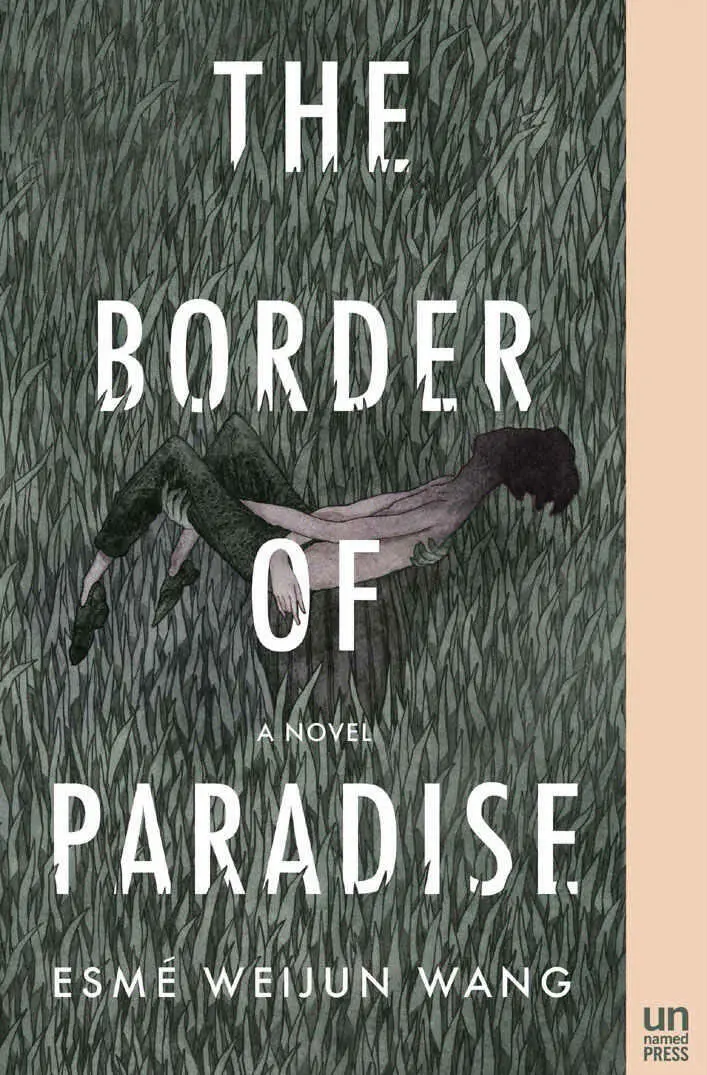
- Название:The Border of Paradise
- Автор:
- Издательство:The Unnamed Press
- Жанр:
- Год:2016
- ISBN:нет данных
- Рейтинг книги:3 / 5. Голосов: 1
-
Избранное:Добавить в избранное
- Отзывы:
-
Ваша оценка:
The Border of Paradise: краткое содержание, описание и аннотация
Предлагаем к чтению аннотацию, описание, краткое содержание или предисловие (зависит от того, что написал сам автор книги «The Border of Paradise»). Если вы не нашли необходимую информацию о книге — напишите в комментариях, мы постараемся отыскать её.
transports readers into the world of an iconoclastic midcentury family.
In booming postwar Brooklyn, the Nowak Piano Company is an American success story. There is just one problem: the Nowak’s only son, David. A handsome kid and shy like his mother, David struggles with neuroses. If not for his only friend, Marianne, David’s life would be intolerable. When David inherits the piano company at just 18 and Marianne breaks things off, David sells the company and travels around the world. In Taiwan, his life changes when he meets the daughter of a local madame — beautiful, sharp-tongued Daisy. Returning to the United States, the couple (and newborn son) buy an isolated country house in Northern California’s Polk Valley.
As David's mental health deteriorates, he has a brief affair with Marianne, producing a daughter. When Marianne appears at their doorstep, the couple's fateful decision to take the child as their own determines a tragic course of events for the entire family. Told from multiple perspectives,
culminates in heartrending fashion, as the young heirs to the Nowak fortune must confront their past and the tragic reality of their future.
The Border of Paradise — читать онлайн бесплатно полную книгу (весь текст) целиком
Ниже представлен текст книги, разбитый по страницам. Система сохранения места последней прочитанной страницы, позволяет с удобством читать онлайн бесплатно книгу «The Border of Paradise», без необходимости каждый раз заново искать на чём Вы остановились. Поставьте закладку, и сможете в любой момент перейти на страницу, на которой закончили чтение.
Интервал:
Закладка:
I knew that this was tricky. By asking him these things, I was letting him know that I no longer felt safe having him in charge. I was telling him that he was troubled and that I knew it. I may have even been hinting at the worst. If he said no, I had little recourse. I’d have to accept it or force it, and I doubted I would be able to do the latter.
He said, “You think I’m not going to keep you safe.”
When he said this, I wanted to take it all back.
“I want to have skills,” I said.
David sighed. He was behind me in the tub and his legs were on either side of me. He took his good hand and put it on my pale knee, which was sticking out of the water. I had paid so much attention to his bad hand for all of those years that I had forgotten what nice hands he really had. He had long, thin fingers, not knobby; the back of the good hand was smooth, with blue veins below the surface. There were hairs, but not many. They were hands that knew pianos and the skins of animals and a body. My body.
“You’re a good wife,” he said. “But you know what this means, don’t you?”
“I’m not giving you permission,” I said.
“I don’t need your permission.”
“Don’t say that.”
“I’ll teach you anything you want to know,” he said.
“Promise me,” I said, and that was all — because I couldn’t bring myself to finish, because I knew he wouldn’t answer.

He took the Buick around the side, on the dirt and gravel, and I followed on foot. He nosed past the house to the field out back, knocking over a garbage can in the process and spraying trash over the dirt, and when he got out of the car he gestured at the driver’s seat. “Here you go,” he said. “Just sit right here.” I went to him, and I wrapped my arms around him without rising on my toes. “What?” He said this softly. He kissed the top of my head, patting my sides with his hands.
In the passenger seat he drank an icy bottle of Coca-Cola. He spoke calmly about the ignition, which I used to bring the car to a rumble. He informed me about the gearshift. “Shift slow,” he advised.
I stuttered the Buick around the field, rocking across its bumps and molehills, pressing the weight of the vehicle into the frosted grass, making maps of where I’d been. And even though I would call his mother later that day, and Mrs. Nowak would beg me to help David with so much force that I would have my husband sent to Wellbrook the day after that, which seemed like a sign of hope; even despite this, I could see the end already as clearly as I could see the far trees beneath the sky, with white above and white below. David slurped at the soda with his lips hooked over the glass mouth, and then he kept the empty bottle between his thin legs. I stopped the car occasionally, trying to park, and then, after releasing the parking brake, I would turn the ignition again.
“Ease into it,” he said.
PART III. WILLIAM AND GILLIAN
THE ARRANGEMENT. WILLIAM (1972)
Our father was in Wellbrook Mental Hospital from 1962 to 1963, and he made a few shorter visits after that. As I recall, Wellbrook had a brick facade crawling with patches of psoriatic ivy, wooden white front doors, and, over the entrance, an enormous half-moon of a stained-glass window that read HYGIENE OF THE MIND in black across an autumnal mosaic. This is where the doctors attempted to scrub my daddy’s psyche clean, and this is where he lived for seven months, upstairs, off of one hallway-spoke from the nurses’ fishbowl station. Every room had a sad little bed screwed to the floor, green-gray walls, and a wardrobe, which is where Gillian hid the first time we heard the too-close sound of screaming. Back then, I put on a brave face while Ma coaxed her out.
The fact that he was there drove Ma crazy. “I don’t know what they can do for him,” she’d say to us in Mandarin, “and they’re talking about shocking his brain.” (Gillian and I conversed almost exclusively in Mandarin or Taiwanese with Ma, especially in public, but we are primarily English speakers when together, as we were with David.) Ma was in denial, but Gillian and I knew plenty of the devilry that our father had pulled in his throes, including the incident with the spiders and the one with the orange, and we didn’t understand how she seemed so capable of ignoring them, let alone appealing to have him released. The doctors said that he was sick, and didn’t everyone want the best for him? Of course they did. Of course we did, if we were sensible. There was nothing Ma could do but smoke her skinny cigarettes with a moony face and pace around the house and cook more food than we could possibly eat, all in an effort to distract herself from the fact that David had, more than once, wandered in the woods in his underwear all night, and on one occasion returned claiming to have seen Jesus Christ our Lord and Savior cooking hot dogs by His very own holy fire pit, and what is there to say to that?
There was one particular Friday visit. Gillian had prepared a song-and-dance routine. Ma did her hair in French braids — Gillian, for as long as she’s been old enough to have long hair, has had her hair in all manner of configurations — and that day her twin tails were tied with red velvet ribbons, secured by elastics beneath awkward bows. She wore a red-and-white dress with a collar and cuffs, and the skirt of her dress flared out like a bloody swan’s tail as she twirled to the Buick.
I wore a button-down shirt and trousers, though I had a morbid and aesthetic distaste for buttons. Ma told me that David liked to see me in a button-down shirt; he’d left a life of East Coast privilege, but signifiers of that privilege lingered, and in his lucid spells, my father even wanted me to wear collar stays. So I dressed ten times my age to go see my father, who was too out of his mind to care about what I was wearing. I could’ve doffed a top hat or donned a trash bag for all he cared, but I still ironed my own shirts, and I got every last wrinkle out. I also tied my own ties. So we were a sartorially excellent threesome standing in a row in front of the first-floor nurses’ counter: two handmade dresses and a small, neatly knotted tie in a place none of us wanted to be in.
“David Nowak,” Ma said, and took out her purse, preparing to show her identification. Beside me, Gillian hopped on one leg. But before Ma could say or do anything more, the woman behind the counter told Ma, apologetically, that David Nowak would be having no visitors that day.
It was rare that I saw Ma encounter conflict with a stranger. Strangers were dangerous, she’d always said; they didn’t understand us. So I nervously watched as she drew herself up before this woman like some puffed-up bird.
“No visitors?” she asked.
“That’s right.”
“But I am his wife. I brought our children to see him.”
The woman sighed. “I’m sorry, but that’s the way it is.”
“Why?”
“It’s not a good day for a visit, I’m afraid. I’m sorry, but I don’t feel… comfortable discussing such matters, under these circumstances.” She looked down at Gillian and me. Then she crooked her finger toward herself and cupped her hand to the side of her mouth, and Ma leaned in, reluctantly, to listen.
The day that we were turned away from Wellbrook was the day Ma assembled us in the master bedroom. She’d been tense the whole drive home, chain-smoking and periodically rolling down the window to throw her cigarette butts out before rolling the window back up again, clouding the Buick interior with suffocating smoke, and neither Gillian nor I said a word or coughed for fear of blowing her up. At home, in that sparse room of theirs, she told us that Daddy was very sick, and that Daddy would want her to tell us that she and Daddy had big plans for us. She told us that Gillian was my tongyangxi.
Читать дальшеИнтервал:
Закладка:
Похожие книги на «The Border of Paradise»
Представляем Вашему вниманию похожие книги на «The Border of Paradise» списком для выбора. Мы отобрали схожую по названию и смыслу литературу в надежде предоставить читателям больше вариантов отыскать новые, интересные, ещё непрочитанные произведения.










Обсуждение, отзывы о книге «The Border of Paradise» и просто собственные мнения читателей. Оставьте ваши комментарии, напишите, что Вы думаете о произведении, его смысле или главных героях. Укажите что конкретно понравилось, а что нет, и почему Вы так считаете.