Anne Korkeakivi - Shining Sea
Здесь есть возможность читать онлайн «Anne Korkeakivi - Shining Sea» весь текст электронной книги совершенно бесплатно (целиком полную версию без сокращений). В некоторых случаях можно слушать аудио, скачать через торрент в формате fb2 и присутствует краткое содержание. Год выпуска: 2016, Издательство: Little, Brown and Company, Жанр: Современная проза, на английском языке. Описание произведения, (предисловие) а так же отзывы посетителей доступны на портале библиотеки ЛибКат.
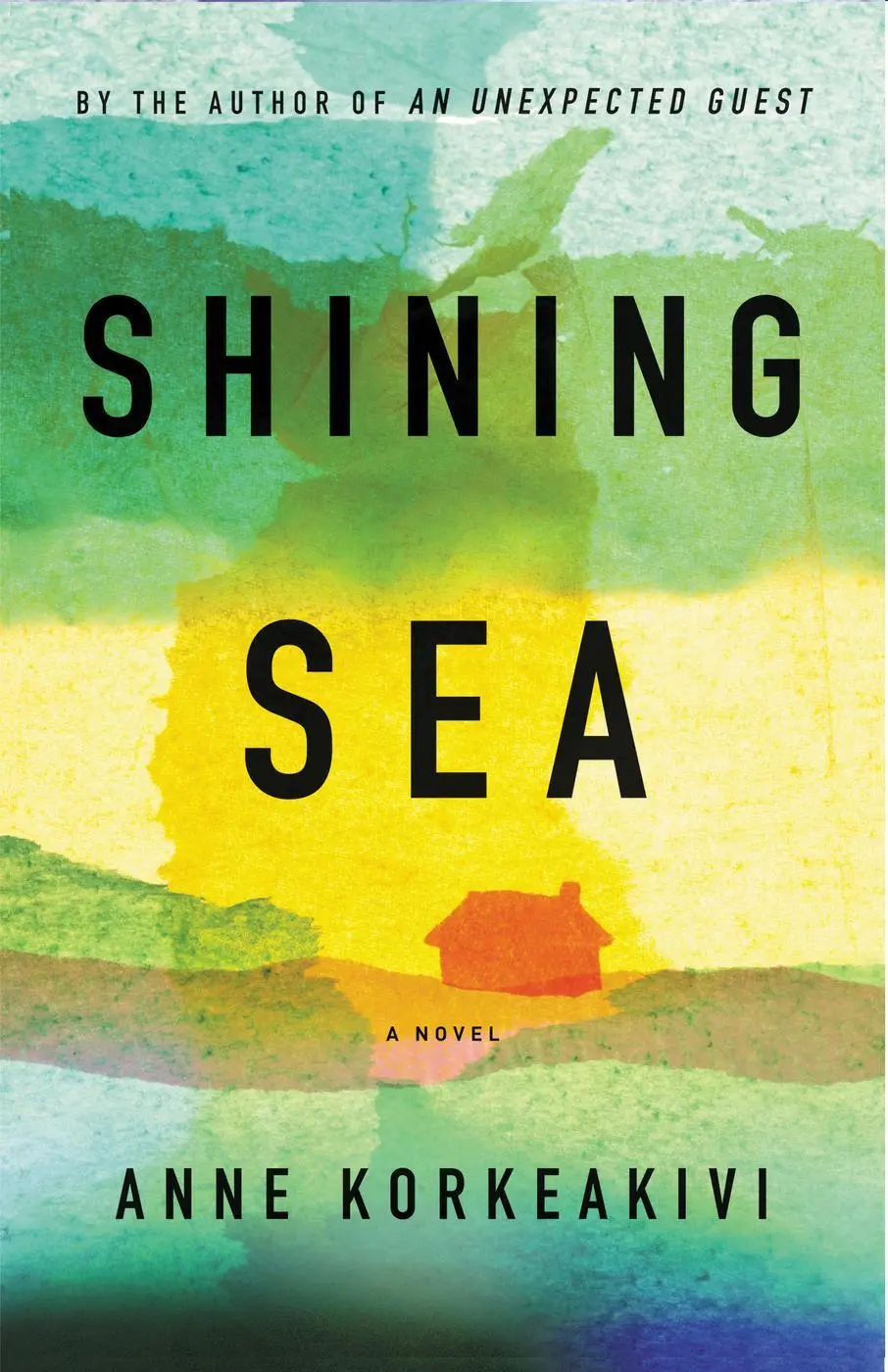
- Название:Shining Sea
- Автор:
- Издательство:Little, Brown and Company
- Жанр:
- Год:2016
- ISBN:нет данных
- Рейтинг книги:5 / 5. Голосов: 1
-
Избранное:Добавить в избранное
- Отзывы:
-
Ваша оценка:
Shining Sea: краткое содержание, описание и аннотация
Предлагаем к чтению аннотацию, описание, краткое содержание или предисловие (зависит от того, что написал сам автор книги «Shining Sea»). Если вы не нашли необходимую информацию о книге — напишите в комментариях, мы постараемся отыскать её.
Shining Sea — читать онлайн бесплатно полную книгу (весь текст) целиком
Ниже представлен текст книги, разбитый по страницам. Система сохранения места последней прочитанной страницы, позволяет с удобством читать онлайн бесплатно книгу «Shining Sea», без необходимости каждый раз заново искать на чём Вы остановились. Поставьте закладку, и сможете в любой момент перейти на страницу, на которой закончили чтение.
Интервал:
Закладка:
He stared down at Mike’s strong hand, wrapped tightly around his arm, stared at it until Mike let go.
Don’t be ridiculous, he said. I’m a grown man now. You can’t pick me up and carry me home if I don’t want. Why would I run off?
They made a plan to meet at 8:00 p.m. — They eat so late here! his new sister-in-law said, but it’s okay…y’all know, the jet lag —and in the back of his new sister-in-law’s guidebook he wrote out detailed instructions on how to get from Mike’s hotel to a nice but not too snails-and-frog-legs restaurant he felt sure they would like. Then he kissed the raccoon-eyed girl good-bye and hitched a ride to Spain.
Ghislaine has piled flatbread on a plate. He helps himself. “Not much,” he says. “I haven’t seen my family in a while. Haven’t those beans jumped around enough in that pot? I’m starving.”
“ Voyez? He can’t wait for that French haute cuisine.” She slaps his hand.
Rufus pitches a stump at the fire. “Watch out you don’t burn yourself.”
“You’re going to get ash in our beautiful dinner,” Ghislaine says.
Rufus sits down on the other side of Ghislaine, a small bottle of whiskey in his hand. Katie looks on with interest as he reaches over Ghislaine for it and takes a sip.
“Don’t even think about it,” he says to her.
“What a spoilsport,” Katie says. “You of all people.”
“What’s that supposed to mean?”
Rufus waves a hand. “Peace, everyone. Francis, you’ve never said how old you are.”
“Thirty-one. Almost thirty-two.” His birthday will be in less than two weeks.
“So you were about twelve? Thirteen? When you lost your father, I mean.”
He takes a second tug from the bottle and hands it back. “I was nine.”
Ghislaine stops spooning beans onto tin plates. “I’m sorry. That’s young.”
He shrugs. “I lost a brother, too. In Vietnam. And a friend. My best friend.”
Rufus nods sympathetically. Ghislaine rests her hand on his shoulder and gently rubs it.
Here he is on some island off the coast of Scotland — he can’t even remember which one right now — with these people he barely knows, and he’s telling them all this stuff he never tells anyone. He, of all people, doesn’t deserve anyone’s sympathy. Especially not if they knew how he lost his best friend, that he was with him that very night. That maybe, if he were stronger, if he were better, if he had only been listening, he might not have lost his best friend at all.
“Isn’t anyone else hungry?” he says, moving his shoulder out from under Ghislaine’s hand.
They gobble down Ghislaine’s meal and brush their teeth at the side of the road. “Right,” Rufus says. “We have another early start tomorrow.”
The others withdraw into the bothy. But the sky is still light, he had that nap earlier, and talking about his family — just thinking about them — has awakened something long dormant in him that doesn’t want to lie down again. He stays outside, staring at the sea, the rolling waves, the swallowing expanse. Birds fly off into that void, some alone, some in pairs. The odd thing about the sea is, its huge expanse means freedom to some and emptiness to others.
He extracts the book of Greek mythology from his plastic barrel and opens it to the words his brother Luke penned once, years ago, on the back flap.
Good luck to you, father stranger; if anything has been said amiss may the winds blow it away with them, and may heaven grant you a safe return…
Ghislaine appears in the doorway of the bothy. “What are you reading?” She sits down beside him.
He closes the book. “Nothing.”
The sun is finally setting, falling over the line of the Atlantic. There are haddock and mackerel and even whales out there, some heading west toward America.
“I was telling you about my family earlier,” he says.
“Yes.”
“Well, my father died of a heart condition from being a prisoner of war during World War II. And my brother — he was killed in Vietnam.”
“That’s terrible. War is terrible.”
“But my friend. He killed himself. After he got back from Vietnam.”
He waits for her to ask why. She doesn’t. Instead she takes his hand. The skin on her fingers is hard and calloused but warm.
“He said something to me. Before.” He pauses, remembering that gentle late August night, the full moon rising. Eugene in his stupid blue coveralls with GENE written on them when no one had ever called him Gene in his life. “He said: I knew I was going to get called up. And you wouldn’t be. I knew I’d be the one to get a low number.”
And he recognized, when Eugene said it, that he also had always known this was how it would happen, just like all the good luck that had come his way but not Eugene’s. But he brushed the thought right out of his head. Instead, he said: That’s just stupid, man. You’re just talking bullshit .
Eugene had lost his one special gift. Hope.
He lets go of Ghislaine’s hand. “We should get some sleep.”
He unrolls his sleeping bag inside the bothy and slips inside. The late night sun, the currach, the moon rising over the Hebrides.
“Bonne nuit,” Ghislaine says softly, sliding into her own bag.
He pulls the flap of his sleeping bag over his head.
* * *
Rufus’s alarm rings before the moon has gone to sleep and the sun has awakened. It’s cold, and in the damp and insinuating air, last night feels like a nasty dream physically stuck to him. His legs itch; the space between them and his crotch, the front of his thighs, his ankles, the back of his neck and hollow of his back. Maybe it’s the salt from his brief swim two days earlier or from the sweat of rowing or the combination. He hasn’t bathed since leaving Iona. No one has. They take their places in the currach under the moon, pick up their oars, and head into the sound. Once so shiny, Ghislaine’s straight hair, in front of him, has self-sectioned into clumps.
“Don’t get too close to me,” she says from her bench.
“You’re going to keep your arms down when you row?”
“Nice.”
They slip through silky black water. At least it is calm; yesterday’s tempestuous sea is as hard to imagine as winter’s cold is during the summer. An otter paddles by, the struggling fish in its mouth catching silver in the moonshine. They pass an entire colony of seals lined up along a strip of sand, one slick fat body squeezed next to another. Two pups thump their way down into the water.
“Did you know, Francis,” Rufus says, “that the male Atlantic seal mates with up to ten different females during their mating season?”
“Oh, for Christ’s sake.”
“You think you might be a selkie?”
“Shut up, Rufus.”
If Rufus keeps this up, their next stop may be his last. Leaving is one of his best-honed skills, after all. They’re supposed to berth in Port Ellen, at the bottom of Islay. There’s bound to be a ferry from there to somewhere. Katie can make the final stretch in his place.
The sun begins to rise. They enter the Sound of Islay and let the tidal race take hold of the boat. Suddenly, they are moving so quickly the currach is nearly slipping out from under them. The compulsion is strangely exhilarating, half frightening and half thrilling. They speed by the island of Jura on one side and Islay on the other, passing a handful of larger boats whose captains toot their horns.
The sound throws them out into the sea, and they have to start working again. It’s becoming a fine day; once they are out of the tidal race, the sea is royal blue and slack. Any bad feeling he may have had evaporates with their mutual strokes. Dig and pull, dig and pull . For the moment, there’s only rowing across the water. He unwraps sandwiches with the others, joins Rufus in a string of weirdly chosen songs. They pass Ghislaine’s tube of ChapStick around, smearing it over their burned, broken lips. A pod of dolphins follows them for a while, and Rufus points out an eagle soaring over the water in the distance.
Читать дальшеИнтервал:
Закладка:
Похожие книги на «Shining Sea»
Представляем Вашему вниманию похожие книги на «Shining Sea» списком для выбора. Мы отобрали схожую по названию и смыслу литературу в надежде предоставить читателям больше вариантов отыскать новые, интересные, ещё непрочитанные произведения.








Обсуждение, отзывы о книге «Shining Sea» и просто собственные мнения читателей. Оставьте ваши комментарии, напишите, что Вы думаете о произведении, его смысле или главных героях. Укажите что конкретно понравилось, а что нет, и почему Вы так считаете.