Anne Korkeakivi - Shining Sea
Здесь есть возможность читать онлайн «Anne Korkeakivi - Shining Sea» весь текст электронной книги совершенно бесплатно (целиком полную версию без сокращений). В некоторых случаях можно слушать аудио, скачать через торрент в формате fb2 и присутствует краткое содержание. Год выпуска: 2016, Издательство: Little, Brown and Company, Жанр: Современная проза, на английском языке. Описание произведения, (предисловие) а так же отзывы посетителей доступны на портале библиотеки ЛибКат.
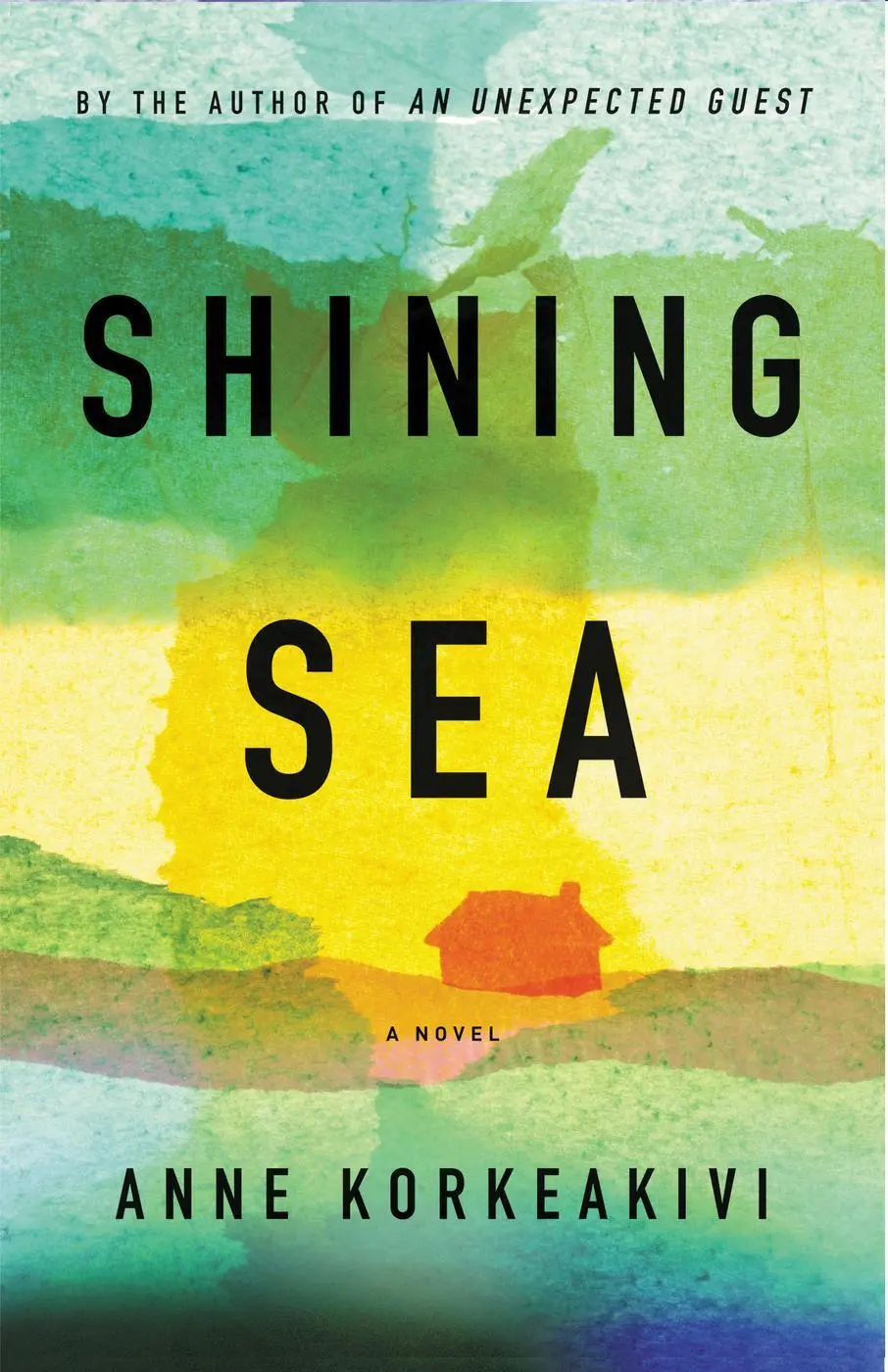
- Название:Shining Sea
- Автор:
- Издательство:Little, Brown and Company
- Жанр:
- Год:2016
- ISBN:нет данных
- Рейтинг книги:5 / 5. Голосов: 1
-
Избранное:Добавить в избранное
- Отзывы:
-
Ваша оценка:
Shining Sea: краткое содержание, описание и аннотация
Предлагаем к чтению аннотацию, описание, краткое содержание или предисловие (зависит от того, что написал сам автор книги «Shining Sea»). Если вы не нашли необходимую информацию о книге — напишите в комментариях, мы постараемся отыскать её.
Shining Sea — читать онлайн бесплатно полную книгу (весь текст) целиком
Ниже представлен текст книги, разбитый по страницам. Система сохранения места последней прочитанной страницы, позволяет с удобством читать онлайн бесплатно книгу «Shining Sea», без необходимости каждый раз заново искать на чём Вы остановились. Поставьте закладку, и сможете в любой момент перейти на страницу, на которой закончили чтение.
Интервал:
Закладка:
“You’re dreamin’, man,” Katie says. “That’s a skua.”
“Come on, Francis,” Rufus says. “You have the eyesight. You tell her.”
“Tell her what? I wouldn’t know a skua or an eagle if I saw one.”
“Are its wings straight across and thick like a glider plane or curved?”
“I dunno. Straight, I guess.”
“Ha!” Rufus says.
“He doesn’t know his arse from his elbow,” Katie says. “He wouldna know if it were a sheep flyin’.”
“I’d know if it were a sheep. It’s not a sheep or a cow. It’s not a goat, either.”
Slowly the day has become beautiful. His hands are raw, but his body feels awake in a way it hasn’t since longer ago than he can remember.
His mind feels awake also. He feels strangely, inexplicably free. Inexplicably, because here he is, tied, almost literally, to these others.
Dig, pull, dig, pull.
They reach Port Ellen five hours later in a stream of sunshine. The harbor comes into view, low-lying and flat, rimmed with a string of white and gray peaked houses.
As soon as they hit the shallows, Katie jumps out of the boat. “I’m away for a bath.” She grabs her small barrel and sloshes onto the beach. A border collie runs up to greet her.
“Where?” Ghislaine calls, tucking her oars along the floor of the currach, grabbing her own barrel and taking off after Katie.
The rest of them climb out of the currach also. Eamon drags the boat to the edge of the sand and ties it to a low pier. Rufus sorts out the oars, then faces back out over the sea and hoots. “Just one more leg. We’re going to make it by Columba’s Day.”
“Rufus,” he says.
“Yes.”
“Can I ask you something, man?”
“Fire away.”
“Why is this so important to you? I mean, why this? ”
Rufus crouches down on his haunches and, removing his rowing gloves, runs his hand over the black coating on the boat’s bottom. “Any war affects all of us. We’re the common family of man.” His short, strong fingers crawl over the bitumen, inspecting its surface, pushing, poking, prodding.
If it can handle the weather in England, it can handle the sea . Like an advertising slogan.
“Holy shit,” he says. “The material you got Katie’s father to use on the boat — the bitumen. Are you making money off it? Is this, like, one big advertisement we’re risking our fucking lives for?”
Rufus continues to explore the state of the bitumen, showing no sign of having heard. “She’s doing just fine, she is.”
He kicks the side of the boat. “Do you have shares in the company? Are they paying you something to use it?”
“Francis,” Rufus says, standing, turning now to face him. “What are you going to do with your life to make up for those who have lost theirs? Like your father, your brother, your friend?”
“Fuck,” he says. “Fuck.”
The high of the morning comes crashing down on him. Has Rufus been lying to him this whole time? Is he the only one of the others to realize it? Just how much is one person supposed to take? Measure it out, toss the moon, the earth, the sun up in the air and juggle them, throw this person together with that — his whole life has been spent trying to catch balls someone else tossed up when they came tumbling down again. Did he ever say he knew how to catch? Did anyone ever ask him? Why does everyone always expect so much from him?
He shoves Rufus’s barrel-like chest with both his palms. Rufus flies backwards onto the sand, narrowly missing the side of the boat.
Eamon’s broad arms swiftly wrap around him. “Enough of that, ye.”
He shakes Eamon off. “What are you? His fucking bodyguard?”
Rufus rights himself, gets back onto his feet, brushes the sand from his pants. “Pacifist, eh?” And then, laughing, “Let’s go find the girls.”
“Fer feck’s sake,” Eamon says before joining Rufus in walking toward the white houses, “get yerself together.”
He feels sluggish, almost drunk with his sudden outburst. As an adult he’s thrown a punch a few times — at one girl’s boyfriend, at another’s brother. The time Georgina got into a fight with a dealer in a club. But never to inflict damage, only to deflect it. And, yet, he’s felt the urge to punch Rufus pretty much ever since they met. Why? He likes Rufus. He admires Rufus.
The truth is that Rufus is a beautiful person, everything they all tried to be back in the days of Woodstock and the Summer of Love. If Rufus is getting money for testing out the bitumen, it’s just to fund this project. Rufus hasn’t lost hope. Rufus is a true believer. Rufus is everything he isn’t.
He leans down and scoops some pebbly sand into his hand. He throws it at the air, feeling like a five-year-old boy again.
* * *
The border collie belongs to an ample, good-natured woman named Fiona. Her two sons have left home, freeing up a bedroom for the two girls. He, Rufus, and Eamon will get the floor of the sitting room. They all can have a swift shower. And then they’ll eat.
“Ah’ve nothing in,” Fiona says. “A’ll have tae away to the shap.”
“Do you understand anything she’s saying?” he whispers to Ghislaine. She stifles a laugh and inclines her head once: no.
Rufus gives them a look. “We’ll bring some things from the shop for dinner, ma’am. We have to set out anyhow to talk to people before evening comes, share with them what we’re doing.”
“Aye,” Fiona says. “But furst you best all wash. You smell like the bottom of a fishing boatie. With the fish still innit.”
This he understands.
To everything Fiona says, Rufus nods, adding a word here or there. The bastard probably even studied up on Scots these past six months, preparing for the journey. Rufus really is about the most amazing guy he’s ever met. And it rubs off — he’s felt better these last days than he has in years. Ever, maybe. It’s almost as though he’s courageous, too. At the very least, he’s useful.
“Listen, man. I’m sorry about back there on the beach,” he whispers, after the girls and Eamon have withdrawn to get cleaned up.
“Ah’ve never met an American afore,” Fiona says, putting the kettle on.
“Don’t look at him for an example, ma’am,” Rufus says. “They kicked him out.”
“Did they? Whit fer?”
“Threat to the ladies,” Rufus says and claps him on the back.
It’s good between them.
Rufus picks up a well-worn copy of The Daughter of Time by Josephine Tey from the kitchen table and begins to thumb through it, wrinkling his brow in concentration.
He leans back in his chair and stretches his legs. “Rufus,” he says, “why didn’t you go to Oxford? You look like an Oxford man to me.”
Rufus puts the book down. “My father thought so, too. But none of the colleges at Oxford agreed.”
“Oh, shit.” He looks at Fiona. “Excuse me.”
“I’m glad I went to Imperial,” Rufus says. “First of all, it’s a great uni. Secondly, I’d never have met Ghislaine if I hadn’t.”
“Oh, right. I’m sorry about that, too, man.” Really, there’s nothing going on between him and Ghislaine. But she is a tonic. It’s hard to ignore.
“Sorry about what?”
“Here you go.” Fiona sets the teapot on the table and herself on a chair. “Ghislaine — that’s a different name. Welsh, is it?”
“I don’t think so,” Rufus says, laughing. “Ghislaine is from France. But this journey would never have happened without her. We met at a dinner for the rowing club at Imperial. She was telling a group of us about a French windsurfer, Arnaud de Rosnay. Do you know what I’m talking about?” He and Fiona shake their heads. Rufus adds, “Sort of a cross between sailing and surfing — one person on a board with a sail.”
Читать дальшеИнтервал:
Закладка:
Похожие книги на «Shining Sea»
Представляем Вашему вниманию похожие книги на «Shining Sea» списком для выбора. Мы отобрали схожую по названию и смыслу литературу в надежде предоставить читателям больше вариантов отыскать новые, интересные, ещё непрочитанные произведения.








Обсуждение, отзывы о книге «Shining Sea» и просто собственные мнения читателей. Оставьте ваши комментарии, напишите, что Вы думаете о произведении, его смысле или главных героях. Укажите что конкретно понравилось, а что нет, и почему Вы так считаете.