Anne Korkeakivi - Shining Sea
Здесь есть возможность читать онлайн «Anne Korkeakivi - Shining Sea» весь текст электронной книги совершенно бесплатно (целиком полную версию без сокращений). В некоторых случаях можно слушать аудио, скачать через торрент в формате fb2 и присутствует краткое содержание. Год выпуска: 2016, Издательство: Little, Brown and Company, Жанр: Современная проза, на английском языке. Описание произведения, (предисловие) а так же отзывы посетителей доступны на портале библиотеки ЛибКат.
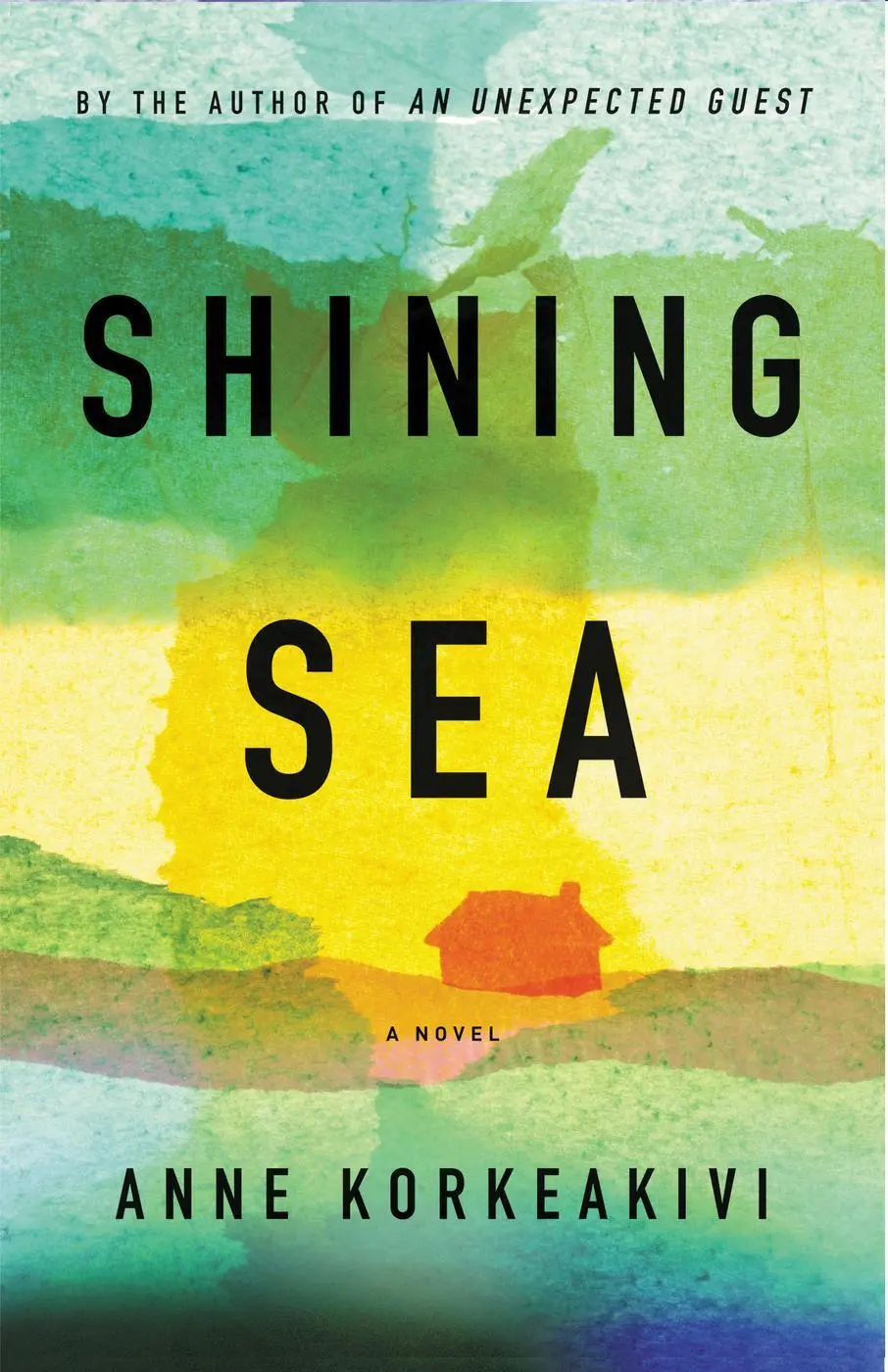
- Название:Shining Sea
- Автор:
- Издательство:Little, Brown and Company
- Жанр:
- Год:2016
- ISBN:нет данных
- Рейтинг книги:5 / 5. Голосов: 1
-
Избранное:Добавить в избранное
- Отзывы:
-
Ваша оценка:
Shining Sea: краткое содержание, описание и аннотация
Предлагаем к чтению аннотацию, описание, краткое содержание или предисловие (зависит от того, что написал сам автор книги «Shining Sea»). Если вы не нашли необходимую информацию о книге — напишите в комментариях, мы постараемся отыскать её.
Shining Sea — читать онлайн бесплатно полную книгу (весь текст) целиком
Ниже представлен текст книги, разбитый по страницам. Система сохранения места последней прочитанной страницы, позволяет с удобством читать онлайн бесплатно книгу «Shining Sea», без необходимости каждый раз заново искать на чём Вы остановились. Поставьте закладку, и сможете в любой момент перейти на страницу, на которой закончили чтение.
Интервал:
Закладка:
The rain has ended, but the sea remains heavy. They zip up their rain gear, tie on their life preservers, and drag the boat out into the waves. The air is a veil of mist; the wet is everywhere, not falling but floating. Underneath his fingerless gloves, his chafed hands grip the oars uncomfortably.
They navigate out of the shallow bay, down past the main port of Scalasaig. Two men and a woman standing on the dock, waiting for the ferry or mail boat, wave. They reach the bottom of Oronsay, cut off from Colonsay by the tide.
Ghislaine points at the dark sky. “When clouds look like black smoke, a wise man will put on his cloak,” she says.
“That’s all right, then. We’re all wearing our cloaks already,” Rufus says.
Rufus’s endless cheer is maddening. “Ghislaine,” he says, “how come you speak English so well?”
“My mother is from Dorset. That’s why I went to school in London.”
He knows nothing about these people he’s been sitting in a boat with for hours, sleeping alongside in a barn. “You went to school in London?”
“Of course. That’s how Rufus and I met.”
“You were in class together?”
Ghislaine laughs. “No. I read psychology. Rufus read economics. We were both in the rowing club.”
“At Oxford?”
“Didn’t I just say in London?”
“Imperial College London,” Rufus says. “Best rowing club in the country.”
“I used to get up at five thirty, five days a week to train,” Ghislaine says.
“Only five days?” Rufus says. “When I was captain, we were on the water six days a week.”
“We weren’t there at the same time,” Ghislaine explains. “We met through the club after we’d both graduated. Which it sounds as though might have been lucky for me.”
Rufus laughs. “Oh, you would have gotten used to it. There still was a day off.”
“I wouldnae want to live in London,” Katie says.
Ghislaine’s oars send a tiny flash of water against his cheek. “No?” she says. “It’s fun for a young girl. I had fun.”
Katie looks markedly worse for wear, her broad, fair face stained from the sun and wind of being on an open boat, her hair matted from the salt. “I wouldnae have fun. Too many cars. Too many people. Everyone tryin’ to steal somethin’ from everyone else. Boys who are liars.”
“It’s not like that,” Rufus says, laughing. “When we’re done, if your father agrees, you can come down to visit. My mother will show you around.”
“Look,” Eamon says.
A minke whale loops through the dark gray-blue water, his back an almost matching color. The beast glides beside them, his dorsal fin slicing the sea, disappears, then rises again, creating another loop through the water.
“He wouldn’t go under the boat?” he says.
Everyone laughs at him, but good-naturedly. There’s a good feeling in the boat this morning.
“You want to start a song for us, Francis?” Ghislaine says.
The wind is growing stronger.
“I’ve done a bit of singing in my time,” Rufus says. “I even was a choirboy.”
“Start us off, then,” he says.
Rufus launches into the Eddy Grant hit “Electric Avenue,” affecting a reggae-style accent so confident that everyone loses his or her stroke. He joins the laughter. And then they get their oars going again and all sing along. Even Eamon hums. The wind carries their voices away, across the sea. They share a few more songs as the water swells beneath them but eventually fall into silence, focused on the dancing waters. The boat bobs, slapped by the sea. It rocks them from side to side.
He pulls his oars in, leans out of the boat, and throws up.
“See, that’s one of the beauties of the currach,” Rufus says. “No matter how heavy the seas, the waves rarely get in. The sides are too high, and the currach rides too high on top of the sea. She just bounces along on top of the waves. It’s almost impossible to knock her over.”
He wipes his mouth and takes a drink of water before picking up his oars again. “What’s that for, then?” he says, nodding at the plastic jug tied to Katie’s bench.
“No boat, not even a whaler, can resist everything the sea has to offer,” Rufus says. “This is just a little swell. It’s a nice breeze, though. Time to put the sail up.”
He and Eamon stroke, with Eamon moving into Rufus’s place, while the others work together to set the currach up for sailing. Putting the mast up, getting the sail ready, and attaching the ropes proves no easy feat with the boat in a continuous rocking motion. No sooner do they have it up and the sail fills, however, then the currach takes off at a clip. They tuck the oars away.
“If the wind keeps up like this, we’ll make it to Islay in no time,” Rufus says, reclaiming his bench. “We can just sit back and enjoy it.”
He is ashamed by the relief he feels when Eamon grabs the side of the boat and also retches into the ocean.
* * *
Once they reach Islay, they again have to figure out where they’ll spend the night.
“If you want to look for another byre, fine,” he says. “But then we’re parting ways for the night. Sorry, man. Too claustrophobic.”
Rufus points toward a small stone structure, not much bigger than the byre was but with a window and door, on a low, square-topped grassy bluff. “There’s a bothy. Maybe it’s empty.”
They tramp up to look. The bothy is clean and dry with a steeply pitched tin roof. A faded poster for a church Christmas sale back in 1978 is taped to one interior wall. There’s no other trace of human habitation.
Rufus steps back out onto the road to survey their surroundings. “All right. It’s close by the boat, too. Ready for tomorrow morning’s departure. Let’s bring our stuff up.”
While the others go looking for civilization, he settles against an exterior wall of the shepherd’s hut. The wind has calmed, and the sea grass stirs gently. Seabirds fill the air with cries and shouts that become a kaleidoscopic shanty. He falls fast asleep.
A shoe kicks his boot. Rufus looks, if possible, even more ebullient than usual.
“You should have come with us, man! We got a ride into Port Askaig, and everyone promised to spread the word. Letters, phone calls to the mainland. Someone knew someone working for the Campbeltown Courier. ”
“If you want to get the word out, you’re going to need more than some small local newspapers,” he says, standing up, stretching. The others gather around them.
“Of course! But I’ve already written to the bigger newspapers. Ghislaine even translated a letter into French for Le Monde, Le Figaro, and”—Rufus turns to Ghislaine—“what’s that Jean-Paul Sartre one?”
“ Libération, ” she says.
“ Libération . I knocked on some doors and took some reporters to lunch also. But it’s great to get these local newspapers. Grass roots, Francis. People power!”
He laughs. When it’s not annoying, Rufus’s enthusiasm is infectious. “You belong back in the sixties, Rufus. Power to the people. Peace, love, and harmony.”
“Well,” Rufus says with a smile, “peace, love, harmony…and money.” It’s no secret Rufus has bankrolled this endeavor. He wouldn’t be surprised to find Rufus has cleared out his bank account to do it.
“Some people hae some words fer the English,” Katie mutters. “Bloody English.”
“I’m English,” Rufus says. “Ghislaine’s half English.”
Katie kicks the ground. “Sorry.”
“It becomes a habit, you see,” Rufus says, “passed from one person to another. That’s just what we’re trying to break out of.”
Katie flushes.
“Are we going to catch some fish?” he says. Katie’s just a kid. And probably some of the islanders the others spoke with today did have some choice things to say about the English.
Читать дальшеИнтервал:
Закладка:
Похожие книги на «Shining Sea»
Представляем Вашему вниманию похожие книги на «Shining Sea» списком для выбора. Мы отобрали схожую по названию и смыслу литературу в надежде предоставить читателям больше вариантов отыскать новые, интересные, ещё непрочитанные произведения.








Обсуждение, отзывы о книге «Shining Sea» и просто собственные мнения читателей. Оставьте ваши комментарии, напишите, что Вы думаете о произведении, его смысле или главных героях. Укажите что конкретно понравилось, а что нет, и почему Вы так считаете.