Anne Korkeakivi - Shining Sea
Здесь есть возможность читать онлайн «Anne Korkeakivi - Shining Sea» весь текст электронной книги совершенно бесплатно (целиком полную версию без сокращений). В некоторых случаях можно слушать аудио, скачать через торрент в формате fb2 и присутствует краткое содержание. Год выпуска: 2016, Издательство: Little, Brown and Company, Жанр: Современная проза, на английском языке. Описание произведения, (предисловие) а так же отзывы посетителей доступны на портале библиотеки ЛибКат.
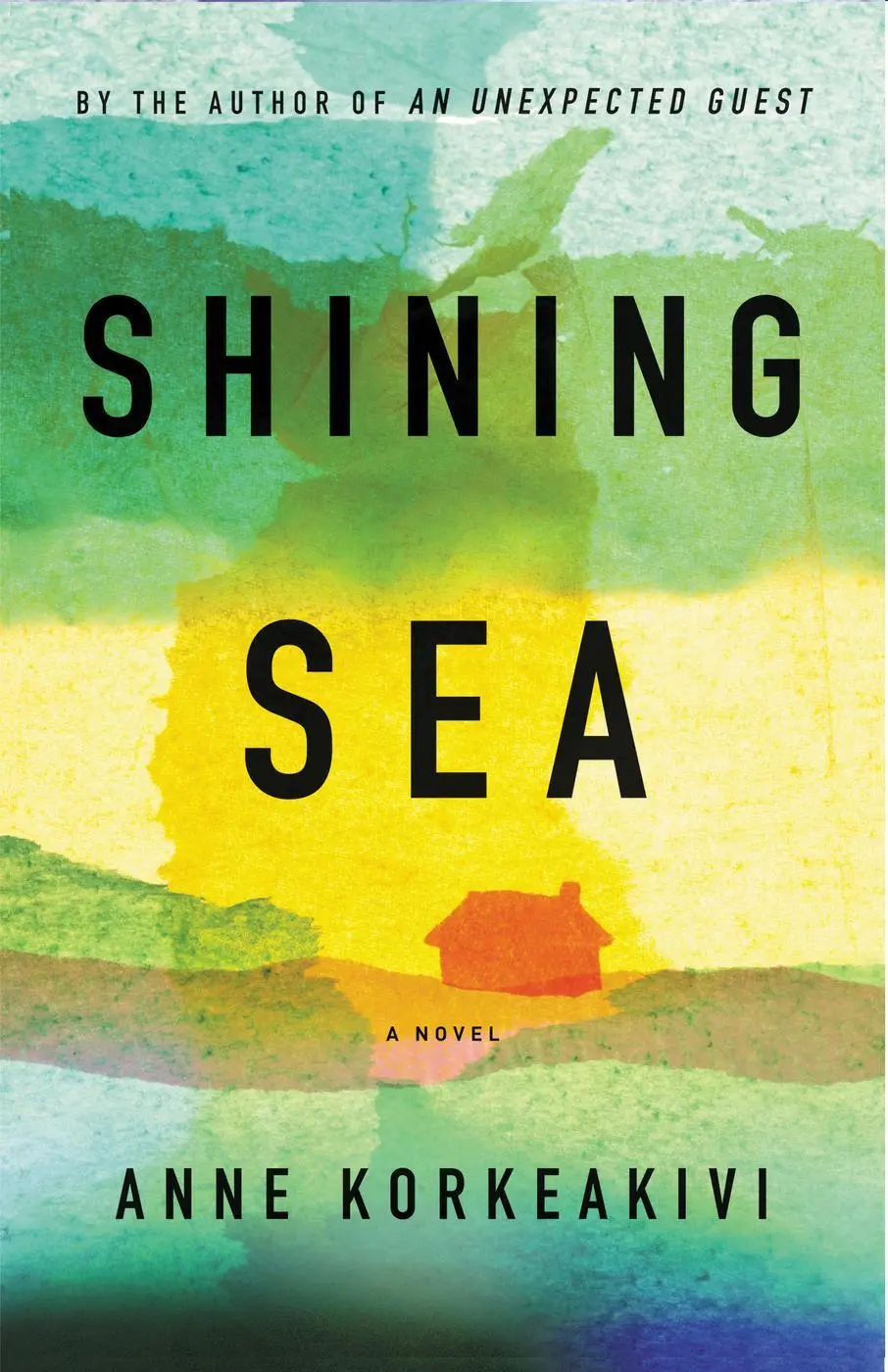
- Название:Shining Sea
- Автор:
- Издательство:Little, Brown and Company
- Жанр:
- Год:2016
- ISBN:нет данных
- Рейтинг книги:5 / 5. Голосов: 1
-
Избранное:Добавить в избранное
- Отзывы:
-
Ваша оценка:
Shining Sea: краткое содержание, описание и аннотация
Предлагаем к чтению аннотацию, описание, краткое содержание или предисловие (зависит от того, что написал сам автор книги «Shining Sea»). Если вы не нашли необходимую информацию о книге — напишите в комментариях, мы постараемся отыскать её.
Shining Sea — читать онлайн бесплатно полную книгу (весь текст) целиком
Ниже представлен текст книги, разбитый по страницам. Система сохранения места последней прочитанной страницы, позволяет с удобством читать онлайн бесплатно книгу «Shining Sea», без необходимости каждый раз заново искать на чём Вы остановились. Поставьте закладку, и сможете в любой момент перейти на страницу, на которой закончили чтение.
Интервал:
Закладка:
“Let’s move westward,” Rufus calls out.
“See that?” Katie points to an ugly round black rock with a lighthouse perched on top of it about a mile off in the direction of the horizon. “They built that one hundred years ago efter twenty-four boats went doon in the course of twenty-four hours in the waters here. Stop alang the Torran Rocks, my arse.”
They row until the Torran Rocks are finally safely and entirely behind them, and Katie can put the steering oar away. The sea becomes smooth and oily again, and, to his relief, drinking water gets passed around.
“Who has to use the bucket?” Rufus says. “Come on. Just get up and do it.”
Once everyone has both drunk and peed, they return to rowing. Hours of open sea still lie between them and the Isle of Colonsay. “Perfect conditions!” Rufus exclaims from time to time. Small islands, long and low in the water like the backs of submerged cattle, dot the sea. A little farther, the bigger islands — Mull to the north, Jura to the southeast, and Colonsay directly south — shimmer. The sky becomes brighter as the sun climbs higher.
More drinking water gets passed around. They grab egg sandwiches from their plastic barrels and wolf them down between strokes. They row.
His arms become machines. His body hums alongside the others. Toward late morning, the wind picks up. Low, white rolls of wave skate toward them over the sea’s surface, rocking the boat in a constant urgent rhythm. The egg sandwich in his stomach starts to turn on itself. He wills himself to ignore it.
The wind dies down again.
Still, they row.
The morning grows long. Katie switches places for a time with Ghislaine. The sight of her thick back in front of him throws him off, and he has to recall the song that gave him the rowing rhythm.
Still, they row.
Hours upon hours later, tired, salty, sweaty, they round the northern tip of Colonsay.
* * *
Terra firma beneath his feet, he strips off all his clothes but his briefs and throws himself back into the water. Kittiwakes circle above in a needling chorus of protest. The others watch him from the empty white-sand beach, looking half bemused and half amused. He turns away. He doesn’t care if he’s showing off his naked skin, that smooth hairless chest that has over the years drawn so much comment. He doesn’t care, either, that the water is so cold it burns. This was the longest day of rowing, and he made it through as though he were one of them. Something opens up inside him. Maybe Rufus isn’t so crazy. Maybe this journey is doable. And he will be able to see it through.
“What a great first day!” Rufus shouts happily, over the cry of the kittiwakes. “We’ve got a nice stretch of sea behind us now.”
A farmer appears on top of the dune, edging the beach. While Rufus and Ghislaine climb up to greet him, he stands spread-armed by the shore under the June sun, his face tipped toward its rays. It’s still early afternoon. Although the air isn’t warm, he feels barely chilled.
“Put yer pants on, man,” Eamon says, betraying a heavy Northern Irish staccato.
It may be the first time he has heard Eamon speak.
“What’s your story, Eamon?” he says.
But Eamon has turned away, busying himself with the oars. Katie is settled on a boulder nearby, her face back to being as inscrutable as it was in the shop.
He grabs his pants and pulls them on over his damp legs. He can hear snippets of Rufus up above, explaining their mission, while the farmer nods his head and fingers the collar of a thick gray wool sweater. By the time he’s dressed again, Rufus has won an invitation for them to spend the night in an empty byre beside the farmer’s house; it turns out, with all his planning, Rufus didn’t arrange a place for them to sleep at each stop.
The farmhouse lies about a quarter mile up over the rocky, eruptive hillside. After they’ve met the farmer’s pretty young wife and parked their gear in the small stone shed, Rufus says, “If the plan is to spread the word, it’s time to start talking. How far is the walk to the village?”
“I’ll take you,” the farmer says.
“You go ahead,” he says. “I’m going to hang out.”
Rufus glances at the farmer’s wife. “Not a chance, my man. You are coming also.”
“What’s that supposed to mean?”
“You’re part of the team, Francis. We stick together.”
For fuck’s sake. Just because he’s popular with the ladies doesn’t make him some sort of predator. “I’m not part of anything,” he says. “I’m just along for the ride.”
He turns to the farmer. “Do you have a bicycle I can borrow?”
He rides across wide green fields. Fulmars and guillemots fly overhead. Cicadas buzz and saw. At the top of a hill, he leans the bike against a mossy cairn. It’s an old bike, two-speed, with no kickstand, curiously similar to the one he had as a kid: green, with a curved upper crossbar, like the lid of an almond-shaped eye. A hand-me-down from Luke, one of the last hand-me-downs he ever had from his older brothers. By the time he was thirteen, he was as tall as Mike and Luke; in retrospect, it’s nothing less than a miracle that his mom managed to keep him in shoes and pants and a decent bicycle. Eugene’s was a one-speed, with a rusty chain that kept slipping off. It don’t matter. With your asthma, you can’t go pedaling fast anyhow, Eugene’s mom said.
The wind has risen, bringing the smell of algae and salt, and fat drops of rain begin to fall. Two black cows amble down the hill below him to another large and sandy beach. Even in the clouding air, with his remarkable eyesight— Don’t tell anyone about that, buddy, Luke warned him before he was shipped out, or when your time comes up they’ll have you on the first plane out —he can make out seals on this beach, one flipping a fish back and forth in its mouth. He’s pretty sure he sees an otter.
He stands the bike upright and starts pedaling.
* * *
After an early dinner of nettle soup, oysters, soft crowdie cheese, warm brown bread, and a slice of sponge cake with marmalade, washed down with ale, he falls asleep as soon as he’s pulled the zipper up on his sleeping bag. He wakes a few hours later, his body heavy and a little sore, to find another bag pushed up beside his — he can’t tell whose. With the door to the byre closed, it’s pitch-black.
His first thought is of Katie. He gives the bag a shove.
“Mais quoi…” comes Ghislaine’s sleepy voice.
He rolls over and tumbles back into sleep.
He wakes next to the sound of Rufus’s tiny portable alarm clock. Eamon, closest to the door, pushes it open. A gust of wind, dense with raindrops, blows in over them. Eamon pulls the door shut again.
There’ll be no getting back on the sea today.
“It’s okay. We’ll make use of the delay to visit Colonsay’s school,” Rufus says. “And there’s a radio broadcast from the island. We’ll make an announcement.”
He hangs out on the farm, lending a hand as he can, until the others return. Toward evening the clouds open, leaving a violet wash above the fields. Rufus studies his tidal charts. “Good news for you lazy buggers. No hurry heading out tomorrow morning. We’ll hit the northern end of the Sound of Islay, then wait until the day after tomorrow to catch the ebb tide to move on to Port Ellen, at the bottom of Islay.”
“Is Islay close?” he asks.
“Closer than Iona was. It’ll be an easy row.”
With Rufus, that could mean anything.
Sleeping is more difficult this night. He is less tired, and at the same time his body feels stiffer. The floor of the byre is unforgiving. The breaths of the others fill the small, darkened space and trap him in their dreams. He’s almost glad when Rufus’s alarm goes off at 6:30 a.m.
Читать дальшеИнтервал:
Закладка:
Похожие книги на «Shining Sea»
Представляем Вашему вниманию похожие книги на «Shining Sea» списком для выбора. Мы отобрали схожую по названию и смыслу литературу в надежде предоставить читателям больше вариантов отыскать новые, интересные, ещё непрочитанные произведения.








Обсуждение, отзывы о книге «Shining Sea» и просто собственные мнения читателей. Оставьте ваши комментарии, напишите, что Вы думаете о произведении, его смысле или главных героях. Укажите что конкретно понравилось, а что нет, и почему Вы так считаете.