Anne Korkeakivi - Shining Sea
Здесь есть возможность читать онлайн «Anne Korkeakivi - Shining Sea» весь текст электронной книги совершенно бесплатно (целиком полную версию без сокращений). В некоторых случаях можно слушать аудио, скачать через торрент в формате fb2 и присутствует краткое содержание. Год выпуска: 2016, Издательство: Little, Brown and Company, Жанр: Современная проза, на английском языке. Описание произведения, (предисловие) а так же отзывы посетителей доступны на портале библиотеки ЛибКат.
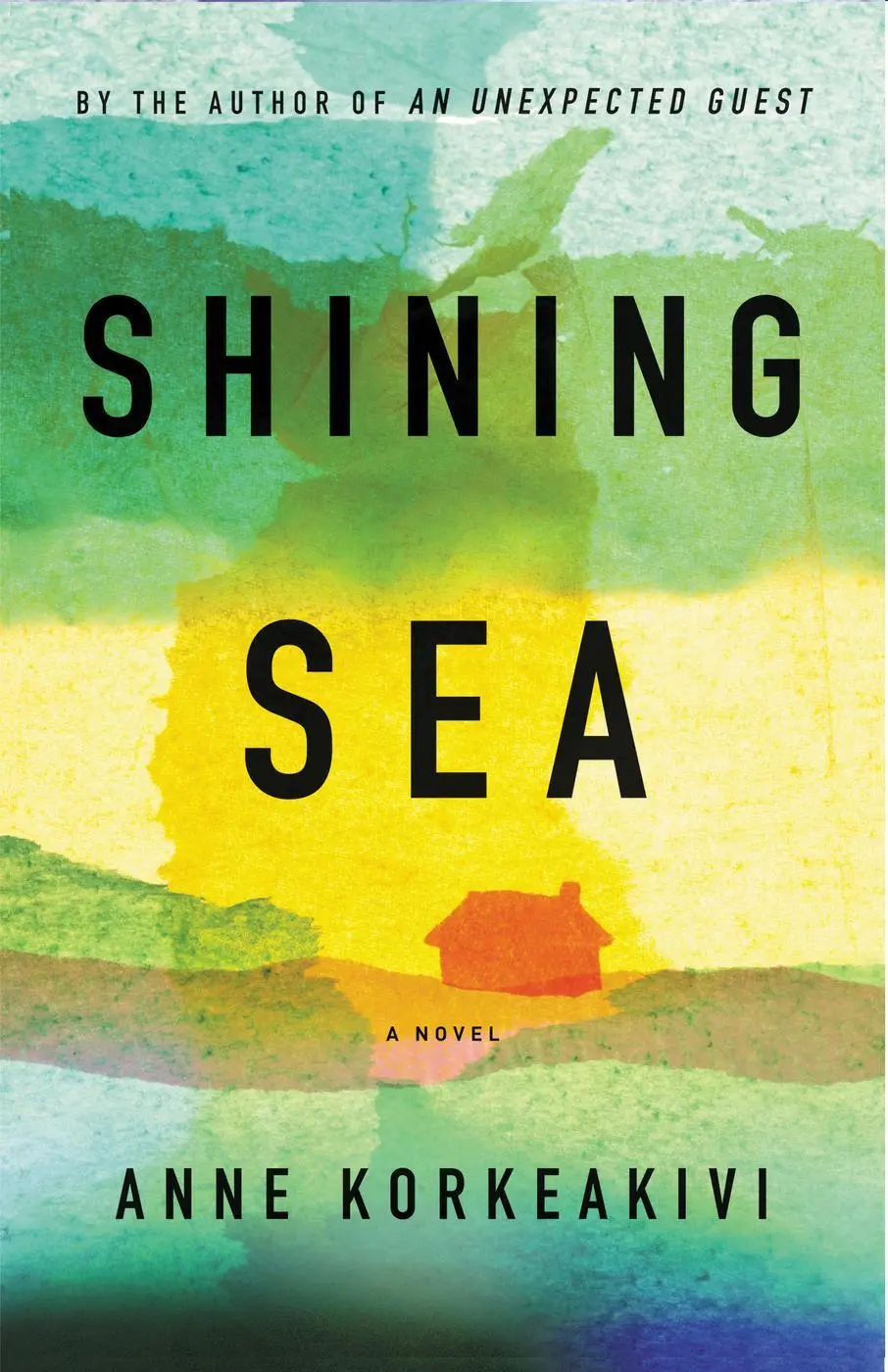
- Название:Shining Sea
- Автор:
- Издательство:Little, Brown and Company
- Жанр:
- Год:2016
- ISBN:нет данных
- Рейтинг книги:5 / 5. Голосов: 1
-
Избранное:Добавить в избранное
- Отзывы:
-
Ваша оценка:
Shining Sea: краткое содержание, описание и аннотация
Предлагаем к чтению аннотацию, описание, краткое содержание или предисловие (зависит от того, что написал сам автор книги «Shining Sea»). Если вы не нашли необходимую информацию о книге — напишите в комментариях, мы постараемся отыскать её.
Shining Sea — читать онлайн бесплатно полную книгу (весь текст) целиком
Ниже представлен текст книги, разбитый по страницам. Система сохранения места последней прочитанной страницы, позволяет с удобством читать онлайн бесплатно книгу «Shining Sea», без необходимости каждый раз заново искать на чём Вы остановились. Поставьте закладку, и сможете в любой момент перейти на страницу, на которой закончили чтение.
Интервал:
Закладка:
“Well, that was good,” he says. “Thanks for the meal. Best of luck on your journey.” He squeezes his napkin into a ball and drops it on the table. Maybe he can sneak out before she comes back.
“I do not think he is interested,” Ghislaine says.
“Where are you from?” he asks her.
“Bordeaux, in western France,” she says. “My family has owned vineyards there for centuries. We’re Huguenot,” she adds. “That means I am Protestant. That’s how I can add the second Protestant to the crew.”
“You are a sailor?”
She smiles, catlike. “I have a wall of trophies at home.”
“Of course he’ll do it,” Rufus says. “We’d have to cancel otherwise. And look at him. Not just the right size, the right religion, and available, but beautiful . It’s like a gift dropped right down from the skies. They’ll put him on the front page of the Times, the Guardian, and the Daily Mirror . He looks like a rock star.”
“I don’t want my photo on the front page of the Times, ” he says. Georgina doesn’t read the Times or the Guardian and certainly not the Daily Mirror, and no one reads any of them in the United States. But someone who does might recognize him. Not that he’s an outlaw. He just likes to live under the radar. That’s his way.
Ghislaine tilts her heart-shaped face to one side. Her hair, black and straight, cut along the length of her jaw, swings against her pointy chin. “No. Not a rock star. Jesus, maybe.”
“Well, isn’t that what the handsome rock stars look like? Jesus Christ with a hard-on?” Rufus says.
“You’re an ass,” he says.
“Come on, man. Don’t be offended. It’s a good thing.”
“Oh, for Christ’s sake, show some fucking class.”
At this, Rufus and Ghislaine burst out laughing. Eamon says nothing. God only knows how Rufus bullied him into being part of this venture.
Through the kitchen door, Moira/Muira reappears. As far as he’s heard, she doesn’t work in the restaurant, but she fiddles with the salt and pepper on an empty table until she catches his eye. He shakes his head. She returns the salt and pepper to their places and slips back into the kitchen.
“Nice people on this island,” Rufus says, watching. “Friendly.”
“Nice enough.” He can’t leave, with Moira/Muira hovering. How the hell can he not even remember which one was named what? The two of them weren’t that much alike. Truth is, he decided he couldn’t be bothered and never even tried. “You know, I saw the three of you boarding in Mull this morning. I thought you were Jesus freaks.”
“You saw us all the way from Iona? You could make us out?”
He shrugs. “Yeah.”
Rufus and Ghislaine exchange looks.
“Francis,” Rufus says, “I thought you’re a pacifist. Isn’t that what you told me down at the seashore this morning? You would never hold a gun because you are a pacifist?”
Moira/Muira on one side. Rufus on the other. Eugene would have had a field day with a predicament like this. So would Georgina, for that matter — she’s the only other person he’s ever known with an equal appreciation for irony. Maybe Molly.
“And what of it?” he says. “I don’t need to prove it to you.”
“No. Not to us. But how about to the world? Or prove it to yourself. Or don’t prove it to anyone and just come along for the hell of it. Come along because it will be a great story to tell your children someday. We’re going to do something really important together, something you’ll remember all your life.”
“Maybe I don’t need to do something important I’ll remember all my life. Maybe I’m not looking for that. Anyhow, I don’t know anything about the sea. I’ve probably never even rowed a boat.” He looks at his hands, tries to remember if they’ve touched oars. “This is just stupid.”
“You look strong,” Ghislaine says. “You work in manual labor?”
“Trust me, man,” Rufus says. “We know what we’re doing, and we will carry you. You just give us your body and your looks.”
It’s like being punched in the gut. When he first discovered girls and what he could do for them, he felt like a wizard. Every encounter felt like a little miracle, an escape to a place where no one could catch him. He was set free and, at the same time, made powerful. Almost like a hero. That was a long time ago now, though.
The emptiness of his life hits him with the force of a heavy wave. Here he is, in his thirties, tossed about like dreck on the sea, sleeping wherever he can find a welcome pillow, fucking women whose names he can’t even keep straight. What the hell does that make him? Whom is he kidding? No one would recognize him. He’s not anyone’s memory.
Rufus’s and Ghislaine’s faces look so hopeful. If he’s nothing more than a body, maybe it is time to find a better use for it.
Except — they’ll end up in Northern Ireland, where they pop bombs off like they’re lighting candles on a birthday cake. They killed fifteen in one day three weeks ago.
If he’s going to be flotsam, at least he doesn’t need to wash up on those shores.
He rises. “Sorry, man. The world needs people like you. Sincerely. People ready to get involved. It’s just not my bag.”
Rufus stands up, too. “Are you scared?”
From behind the kitchen door, Muira/Moira reappears. Their waitress follows close behind her. They pretend to fuss over the salt shakers again, but the waitress is a bad actress. He can feel her give him a careful once-over.
“Okay,” he says, because fucking fuck. Fuck. “When and where?”
* * *
At 2:50 a.m., the water is shiny and black, and the white trim along the boat’s top edge reflects the rays of the moon. There is no sound apart from the voices of Rufus and the man who refitted the boat, come down to see them off, and the rippling of water. They need to depart just before high tide at 3:29 a.m.; his pack was bundled, his sailing attire in order, and his guitar enveloped in a plastic sleeve within a large plastic barrel before he had time to think twice about having agreed to the journey.
I won’t get to tell the groundskeeper at the Community I’m off.
They’ll be following you via the news, Rufus said. They’ll be cheering for you.
You can send them a postcard from Northern Ireland, Ghislaine added, with an edge that lets him know she realizes he’s not the type to send postcards.
The boat is about twenty-five feet long and narrow, with high sides and one blunt and one upturned pointy end. It slides sideways in the water while Ghislaine restrains it with a rope and Eamon trundles small plastic barrels containing their clothes, rain gear, and sleeping bags out of a cart, setting one under each of four wooden benches. Another, medium-sized barrel, with food, tools, and cooking supplies, goes in the blunt end of the boat, by a fifth bench without a foot brace. A larger barrel holding his guitar is tied down in the other, pointy end of the boat. The mast for the sail, plus what looks like a spare oar, lies lengthwise atop the benches, along one side.
There are no permanent fixtures within the boat’s shell apart from the benches and foot braces. No wheelhouse or shed or equipment box or anything. The floor is an open plaid of long, thin, light-colored wooden slats and curved-rib frames. More than anything, the currach looks like an oversize wooden bassinet.
“We’re going to cross open sea in this?” he says.
“We are,” Rufus says.
He doesn’t bother telling Rufus how crazy he is. “Who’s the last bench for?”
“My daughter,” the boat refitter says, pointing. “She’s your spare man.”
Читать дальшеИнтервал:
Закладка:
Похожие книги на «Shining Sea»
Представляем Вашему вниманию похожие книги на «Shining Sea» списком для выбора. Мы отобрали схожую по названию и смыслу литературу в надежде предоставить читателям больше вариантов отыскать новые, интересные, ещё непрочитанные произведения.










Обсуждение, отзывы о книге «Shining Sea» и просто собственные мнения читателей. Оставьте ваши комментарии, напишите, что Вы думаете о произведении, его смысле или главных героях. Укажите что конкретно понравилось, а что нет, и почему Вы так считаете.