Anne Korkeakivi - Shining Sea
Здесь есть возможность читать онлайн «Anne Korkeakivi - Shining Sea» весь текст электронной книги совершенно бесплатно (целиком полную версию без сокращений). В некоторых случаях можно слушать аудио, скачать через торрент в формате fb2 и присутствует краткое содержание. Год выпуска: 2016, Издательство: Little, Brown and Company, Жанр: Современная проза, на английском языке. Описание произведения, (предисловие) а так же отзывы посетителей доступны на портале библиотеки ЛибКат.
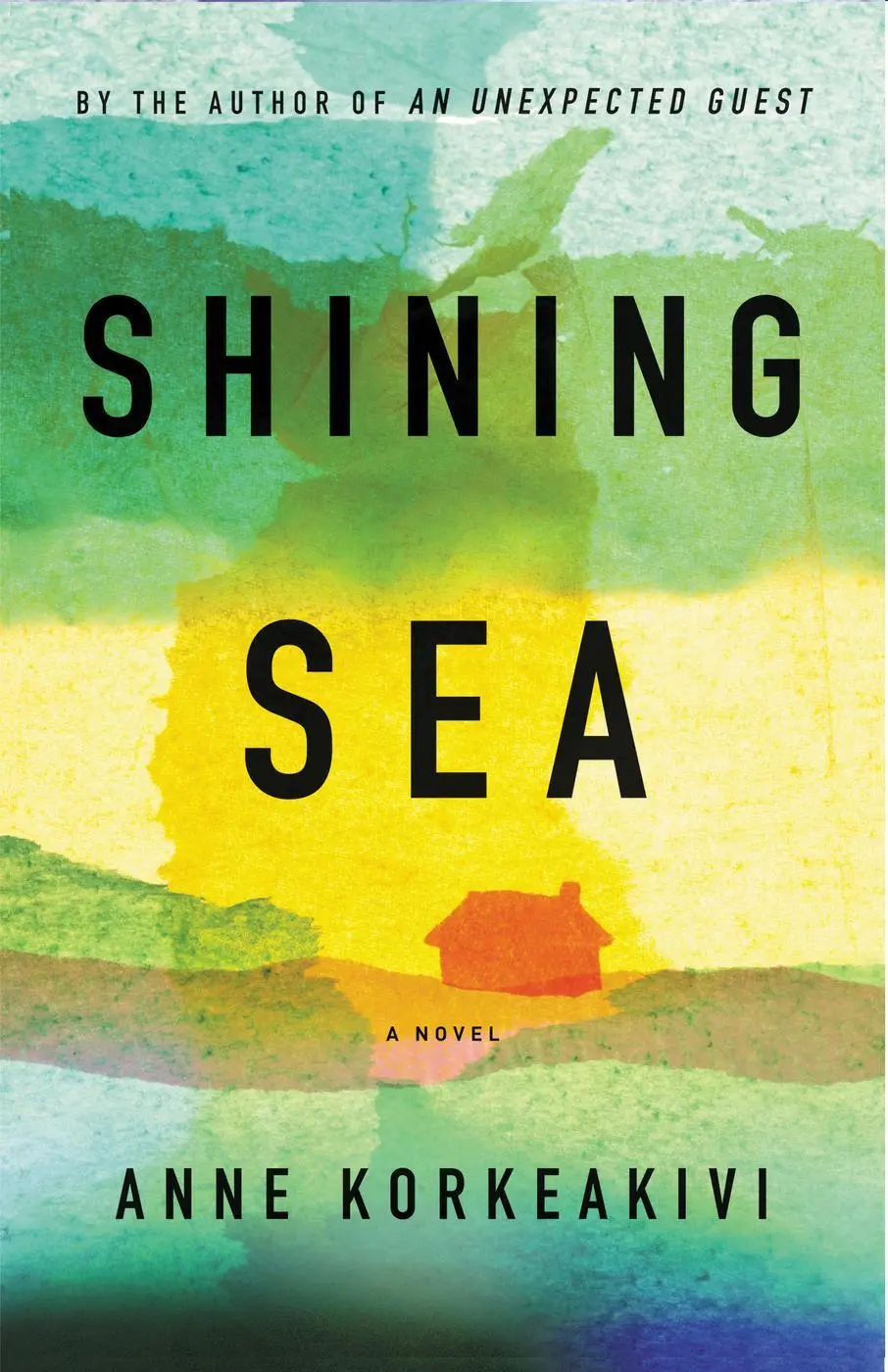
- Название:Shining Sea
- Автор:
- Издательство:Little, Brown and Company
- Жанр:
- Год:2016
- ISBN:нет данных
- Рейтинг книги:5 / 5. Голосов: 1
-
Избранное:Добавить в избранное
- Отзывы:
-
Ваша оценка:
Shining Sea: краткое содержание, описание и аннотация
Предлагаем к чтению аннотацию, описание, краткое содержание или предисловие (зависит от того, что написал сам автор книги «Shining Sea»). Если вы не нашли необходимую информацию о книге — напишите в комментариях, мы постараемся отыскать её.
Shining Sea — читать онлайн бесплатно полную книгу (весь текст) целиком
Ниже представлен текст книги, разбитый по страницам. Система сохранения места последней прочитанной страницы, позволяет с удобством читать онлайн бесплатно книгу «Shining Sea», без необходимости каждый раз заново искать на чём Вы остановились. Поставьте закладку, и сможете в любой момент перейти на страницу, на которой закончили чтение.
Интервал:
Закладка:
There’ve been some hard times in Paris, one very difficult winter in Amsterdam. But something or someone has always come through. When not caught up in wars, the world is a pretty hospitable place.
By the far end of the machair, the relentless beadlike rattle of the corncrake call is almost deafening. He heads up over the hillock, past the tiny heather-ringed loch, and down toward the bay, almost stepping on a nest containing four large eider eggs. The sea opens up before him, a deep blue seething expanse ringed by an orange-, green-, and black-pebble beach divided in half by a large rocky outcrop jutting into the sea. He settles into a nook on the eastern side of the outcrop, out of the wind and not too far from the water’s edge, knocking a couple of carrot stubs out of the way with his boot. The remains of someone’s picnic, maybe the rest carried off by the seabirds swooping overhead. Maybe the picnicker was carried off by the birds as well. Or a mermaid or a selkie. It feels wild enough here for that.
There’s a song one of his Iona ladies was singing the other night. He asked her to repeat it, slowly, committing to memory the words and melody.
An earthly nourris sits and sings,
And aye she sings, “Ba, lily wean!
Little ken I my bairn’s father,
Far less the land that he staps in.”
He figures out the chords as he goes: G F…
Then in arose he at her bed fit—
And a grumly guest I’m sure was he—
“Here am I, thy bairn’s father
Although I be not comely.
“I am a man upo’ the land
An’ I am a silkie in the sea
And when I’m far and far frae land
My dwelling is in Sule Skerry.”
Now he has ta’en a purse of gold
And he has put it upo’ her knee
Sayin’, “Gi’e to me, my little young son
An’ take thee up thy nouriss-fee.
“And it shall come on a summer’s day
When the sun shines het on evera stone
That I will take my little young son
And teach him for to swim the foam.
“And thou shall marry a proud gunner
An’ a proud gunner I’m sure he’ll be
An’ the very first shot that e’er he shoots
he’ll shoot both my young son and me.”
A cormorant pedals the sky directly overhead, throwing a flitting shadow over his face and guitar. The song itself is a darkness, rumbling with the waves of the sea, skirting its frothy surface, sinking into its opaque depths, at odds with the brilliance of the morning: the seal-like sea creature who can only mate when transformed into human form, the unsuspecting maiden who gives birth to his son, fated to be taken back to the sea by his father, then felled by his mother’s new husband, the maritime gunner. The truth of fairy tales is, they rarely have happy endings.
Something dim and spectral has sunk into his heart. Another old ballad he’s learned since arriving on the island comes to mind, about a Molly. Not his sweet, funny cousin — wherever she is and whatever she may be doing. It’s been years since he’s spoken with anyone in his family. About a Molly Bawn, who, shielding herself from the rainfall with a white apron, is taken for a swan by her lover, shot, and killed.
I shot my own true lover — alas! I’m undone
While she was in the shade by the setting of the sun…
The sea seems to be listening to him. He lays his guitar down on his knees and listens back.
“Well!” a voice says.
A young guy, with a rush of shiny dark curls framing rosy cheeks, is suddenly right there, almost at his side. “The obvious moral being never to play fast and easy with the gun.”
The guy’s accent is as posh as Georgina’s. Not many people speak like that on Iona. He clasps the neck of his guitar. “I never play with guns, period.”
“No?” The guy drops onto his haunches and sticks a hand out. “Rufus.”
Could Georgina — or her father — actually have sent someone after him? He has to have been as expendable to her as any of the beautiful objects decorating her flat. People like him and Georgina, what could they ever really know about love? After he took off, she undoubtedly spent a few nights in histrionics, drinking to excess, fucking everyone in sight, calling him names they hadn’t taught her in her string of fancy schools. But she did that most nights anyway.
Thick blue-jeaned legs tucked into galoshes. A sturdy neck and back, sporting a white scarf and a bright red Windbreaker. So healthy looking. None of Georgina’s crowd would look this square.
“No. I’m a pacifist, man,” he says, reluctantly putting his own hand out.
Rufus pumps it. “Conscientious objector?”
Here it’s not like in the US, where some people consider conscientious objectors to have been traitors and others consider them to be heroes. Few older Brits get far away from their experiences in World War II, but no Brit his age or younger could care less who fought or not in Vietnam. There’s no reason to lie. “No. Never got called up.”
“But you are American. I thought for certain from the song you’d be Irish.”
“I learned that song here, in Scotland.”
“Well, it’s originally Irish.”
He shrugs. “My father’s ancestors were Irish.”
“You look like your dad, then.” The guy picks up a stone and dances it one, two, three times across the surface of the sea. “What are you? About six foot one? One hundred and eighty pounds?”
The questions are weird, but there’s something curiously appealing about this Rufus, something strangely familiar. “My dad’s dead,” he says. “Twenty-two years.”
“Whew, young. Cancer?”
“He was a POW in the Pacific during World War II. Got to him eventually.”
Rufus hops another stone across the face of the water, bestowing tiny kisses. “My regrets, man. War is hell.”
“Yes.”
“You get seasick?”
Where is this leading? He shakes his head.
Rufus jumps to his feet and claps him on the shoulder. “Ghislaine! Eamon! We’ve found our man.”
He turns his head to discover a young man and woman, also wearing bright red jackets, standing a little ways down on the edge of the beach, tossing pebbles into the sea.
The trio from the ferry in Mull this morning.
“Hey, wait a minute—”
“We’re staying at the inn, the Argyll,” Rufus says. “Meet us in the dining room at seven p.m.”
“Right,” he says, picking up his guitar. People don’t decide things for him. That’s the one thing he has in his life.
Rufus laughs and twirls a dark curl. “Seven p.m. Dinner is on me.”
They don’t look anything alike, other than the dark curls. Rufus is the picture of health, the glowing pink cheeks, the shining eyes.
It’s that same boundless enthusiasm.
Eugene was the most cheerful son of a bitch on the planet.
He looks out to the sea, out over that huge body of water, spanning his today and his yesterday. Eugene was cheerful, that is, until that gentle evening when, with a full moon rising, having plowed through three six-packs, Eugene shot himself in the head. He himself having gone off to meet some girl.
If he could cram the memory into a bottle and throw it far out into the waves, send it back to America.
Remember when we were kids? Eugene said. They were sitting in his parents’ backyard, drinking Buds. Eugene had just gotten off from work at the lumberyard and was still wearing navy blue coveralls with GENE written in red script over his heart. And I never got picked for any teams because I had asthma?
Читать дальшеИнтервал:
Закладка:
Похожие книги на «Shining Sea»
Представляем Вашему вниманию похожие книги на «Shining Sea» списком для выбора. Мы отобрали схожую по названию и смыслу литературу в надежде предоставить читателям больше вариантов отыскать новые, интересные, ещё непрочитанные произведения.



Обсуждение, отзывы о книге «Shining Sea» и просто собственные мнения читателей. Оставьте ваши комментарии, напишите, что Вы думаете о произведении, его смысле или главных героях. Укажите что конкретно понравилось, а что нет, и почему Вы так считаете.