Jonis Agee - The Bones of Paradise
Здесь есть возможность читать онлайн «Jonis Agee - The Bones of Paradise» весь текст электронной книги совершенно бесплатно (целиком полную версию без сокращений). В некоторых случаях можно слушать аудио, скачать через торрент в формате fb2 и присутствует краткое содержание. Год выпуска: 2016, Издательство: William Morrow, Жанр: Современная проза, на английском языке. Описание произведения, (предисловие) а так же отзывы посетителей доступны на портале библиотеки ЛибКат.
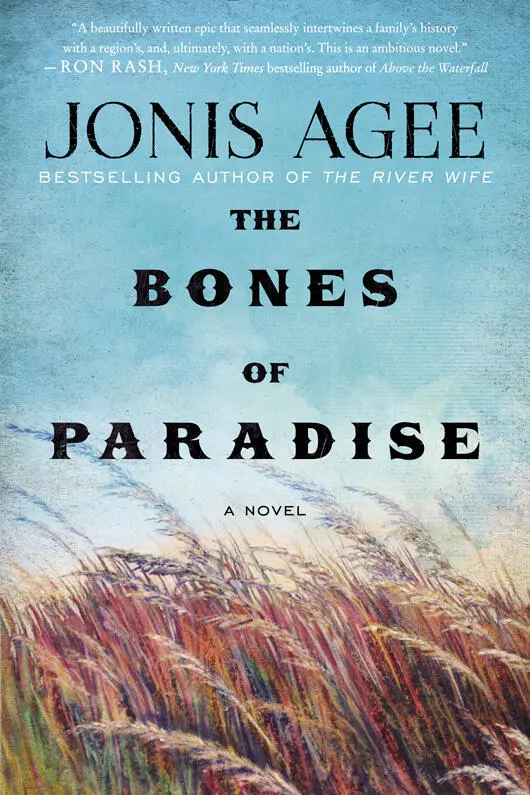
- Название:The Bones of Paradise
- Автор:
- Издательство:William Morrow
- Жанр:
- Год:2016
- ISBN:нет данных
- Рейтинг книги:3 / 5. Голосов: 1
-
Избранное:Добавить в избранное
- Отзывы:
-
Ваша оценка:
The Bones of Paradise: краткое содержание, описание и аннотация
Предлагаем к чтению аннотацию, описание, краткое содержание или предисловие (зависит от того, что написал сам автор книги «The Bones of Paradise»). Если вы не нашли необходимую информацию о книге — напишите в комментариях, мы постараемся отыскать её.
returns with a multi-generational family saga, set in the unforgiving Nebraska Sandhills in the years following the massacre at Wounded Knee—an ambitious tale of history, vengeance, race, guilt, betrayal, family, and belonging, filled with a vivid cast of characters shaped by violence, love, and a desperate loyalty to the land. Ten years after the 7th Calvary massacred more than 200 Lakota men, women, and children at Wounded Knee, J. B. Bennett, a white rancher, and Star, a young Native American woman, are murdered in a remote meadow on J. B.’s land. The deaths bring together the scattered members of the Bennett family: his cunning and hard father, Drum; his estranged wife, Dulcinea; and his young sons, Cullen and Hayward. As the mystery of these twin deaths unfolds, the history of the dysfunctional Bennett’s and their damning secrets are revealed exposing the conflicted heart of a nation caught between past and future.
At the center of
are two remarkable women. Dulcinea, returned after bitter years of self-exile, yearns for redemption and the courage to mend her broken family and reclaim the land that is rightfully hers. Rose, scarred by the terrible slaughters that have decimated and dislocated her people, struggles to accept the death of her sister, Star, and refuses to rest until she is avenged.
A kaleidoscopic portrait of misfits, schemers, chancers, and dreamers, Jonis Agee’s bold new novel is a panorama of America at the dawn of a new century. A beautiful evocation of this magnificent, blood-soaked land—its sweeping prairies, seas of golden grass and sandy hills, all at the mercy of two unpredictable and terrifying forces, weather and lawlessness—and the durable men and women who dared to tame it. Intimate and epic,
is a remarkable achievement: a mystery, a tragedy, a romance, and an unflagging exploration of the beauty and brutality, tenderness and cruelty that defined the settling of the American west.
The Bones of Paradise — читать онлайн бесплатно полную книгу (весь текст) целиком
Ниже представлен текст книги, разбитый по страницам. Система сохранения места последней прочитанной страницы, позволяет с удобством читать онлайн бесплатно книгу «The Bones of Paradise», без необходимости каждый раз заново искать на чём Вы остановились. Поставьте закладку, и сможете в любой момент перейти на страницу, на которой закончили чтение.
Интервал:
Закладка:
Somewhere above them in his room sat Mr. Eastman, who let his daughter’s charms do the business he was too old or ill or negligent to conduct, and his coughing, which the boy could hear as he stood so completely in this moment, the guns heavy in his hands, pulling him to the earth, and others to follow in this small space of time, losing time breath by breath by breath.
It was as if he could peer into the small houses and shacks behind Main Street and see the lives lived into the future. There was Black Bill at Vera’s side, packing for the journey to her family, finally right again in her preacher father’s eyes. Frank would not know this until he received her letter, and he would never be the same, a man broken into pieces by the weight of a single piece of paper.
The boy was put to mind of all the lives around him, and how they toiled, until there was such an accumulation, they were knocked apart for simply being present.
The Peacemaker was heavier than he was used to, for he had never killed a man, not even shot at one. He lifted the silk cradle from his neck and looped it over the saddle horn, ignoring the dun’s flat-eyed expression. The horse sank his shoulder away from the imaginary weight and warmth of the pig’s body—and it struck the boy that none of us wanted to shoulder the life of another. Then the horse snorted and straightened, and relaxed hipshot where he was tied and commenced dozing, eyelids sinking, as close to benign as he’d ever been, hide rumpled with dried sweat, tail burr clumped, mud and ticks twisting his mane in a wild apotheosis; he was finally at peace. The boy almost reached out and patted him, but stopped so the horse’s world would remain inviolate, circumscribed by its nature. There could be no breach. That was their fate, Cullen thought. Theirs and mine. So you’re suddenly a man of words, the voice in his head mocked. No, that’s the last of them, he answered, taking one final look around. He tipped his hat at the old men sitting in chairs along the hotel porch, glanced at Stubs, who bared his long yellow teeth, and waited like a shadow to walk into their time.
It took three places to find them, Sergei the Russian, Carter, Faro Jack, and Dance Smith, all laid out drunk and naked at Reddy’s Shack, put up after the storm, where the girls now worked. Cullen stopped at the other bars, half hoping they’d gone, that he’d have time to consider whether to chase them or not, or hell, that they went back to the ranch to sleep it off. When he pushed open the door, there was a scurrying like mice when you go into a dark barn of a sudden. The first girl in her “room,” divided off from the others by blankets, grabbed fistfuls of filthy sheet to hide, and gave them a dirty look and opened her mouth to protest until she noticed the gun swinging upward. He couldn’t say he wanted to shoot them, but now that the blood rose in his head, the black howl, he couldn’t say he wouldn’t. It was Stubs pushed down the barrel of the shotgun and growled, “Wait a minute.”
The man opened his eyes, took a moment to recognize them, and scrambled for clothes or guns or whatever, it made no never mind. The shotgun rose and there was a noise as it went off, splattering Sergei the Russian’s head against the ample breasts of the whore, who howled as the buckshot punched holes in her arms. A tinny sound said, “Stop, damn it, stop!” as the boy let loose the second barrel. The left side of the Russian’s face disappeared and the whore went quiet. A man crawled behind Cullen, who turned, took aim at the naked back, and this time used the Peacemaker. The body collapsed with a shiver on the bloody floor. He nudged it with the toe of his boot, and the sight of Carter’s familiar weak chin and beak nose bent to one side evoked nothing. When the man opened his eyes, Cullen shot him in the face.
“That’s enough.” Stubs put his hand on his arm, not the one holding the pistol, and Cullen wondered where his shotgun had gone. He slipped on the bloody floor and Stubs held him up. “Them others is hiding back there. Let them go.”
He looked at Stubs, who now seemed lost, tears in his eyes as if he hadn’t urged this war, brought him to fight it. Cullen shook his head, let himself ride the clear even tide as he tore down the blanket and prepared to squeeze the trigger on a bed holding two young whores, naked bodies pressed together as if made whole, whimpering, then shook his head again and lowered the gun.
This was not what he meant—and then he heard a terrific roar and the room was suddenly red and black and he was on his back, watching the flies bump the low pine ceiling as the flood rose quickly up his legs, spread into his chest, filling him so he could not catch his breath to ask the man leaning over him, rifle barrel pressed to his throat, who would ride his mother’s horse now?
CHAPTER THIRTY-FIVE
Markie Eastman stood and smiled at the table of men she had just convinced to sell their mineral and subsurface rights when a ragged boy ran into the dining room and yelled, “Shootin’ at Reddy’s place!”
Judge Foote, Harney Rivers, and Percival Chance stood as Drum Bennett leaned back and drained the remaining inch in his brandy glass. He knew the Eastman woman was prepared to pay more, but the other men were greedy and couldn’t wait. He hated doing business when others gummed it up.
“Aren’t you coming?” the judge asked.
“None of my dogs in that fight.” Drum reached for one of the cigars the lawyer had passed around so freely before they were interrupted. Rivers hesitated, glanced between the judge and Miss Eastman while Chance strode away.
“Go on,” Drum urged. “Might meet a man needful of your services.” He laughed and twirled the cigar in his fingers. He shook his head. First he thought Dulcinea was going behind his back, now he had to figure out how to convince her to sign over those rights so he could make his deal and drive her out of the hills again. He and Rivers had lied about the deal, and he was thankful that damn grandson of his hadn’t shown up to cause more trouble. Far as he knew Cullen was out in the hills running horses to pieces and tending cows like he was supposed to be doing. He’d make a decent hand he ever grew past those notions of his.
As he smoked he noticed the dining room had cleared, and he heard shouting in the street and voices like a crowd gathered. Maybe somebody got themselves killed, he thought, maybe it was their lucky day. He grimaced as his leg and arm picked up the staccato of the street voices with a steady jabbing ache in the healing bones, despite the whiskey he’d used to numb the pain. Must be weather moving in. Now he was going to be one of those old farts who sat around complaining and prognosticating, like that damn Stubs with his war wounds.
He gazed at the empty room, the tables covered in stained white cloths that’d seen too many days of service, the fireplace along the far wall with the pale green marble columns and mantel, over which hung a big oil painting of Indians chasing down buffalo. He never understood why people made such a thing of the past, as if white men hadn’t come in and killed the buffalo and as many Indians as they could so they could take the land. It was warfare, and a person didn’t sit around feeling sorry about all those Southern boys got themselves killed protecting a bunch of rich sons of bitches wanted their Negroes waiting on them, did they? Better to hang a painting of men working cattle. He’d mention that to Riley, the hotel owner, soon as he got the chance. He stretched his legs and stared at the dingy ceiling with its sooty plaster roses clustered in the center.
“Drum Bennett here?” someone yelled into the lobby, followed by the irregular thumping of Stubs, hobbling toward the table.
Читать дальшеИнтервал:
Закладка:
Похожие книги на «The Bones of Paradise»
Представляем Вашему вниманию похожие книги на «The Bones of Paradise» списком для выбора. Мы отобрали схожую по названию и смыслу литературу в надежде предоставить читателям больше вариантов отыскать новые, интересные, ещё непрочитанные произведения.









Обсуждение, отзывы о книге «The Bones of Paradise» и просто собственные мнения читателей. Оставьте ваши комментарии, напишите, что Вы думаете о произведении, его смысле или главных героях. Укажите что конкретно понравилось, а что нет, и почему Вы так считаете.