Jonis Agee - The Bones of Paradise
Здесь есть возможность читать онлайн «Jonis Agee - The Bones of Paradise» весь текст электронной книги совершенно бесплатно (целиком полную версию без сокращений). В некоторых случаях можно слушать аудио, скачать через торрент в формате fb2 и присутствует краткое содержание. Год выпуска: 2016, Издательство: William Morrow, Жанр: Современная проза, на английском языке. Описание произведения, (предисловие) а так же отзывы посетителей доступны на портале библиотеки ЛибКат.
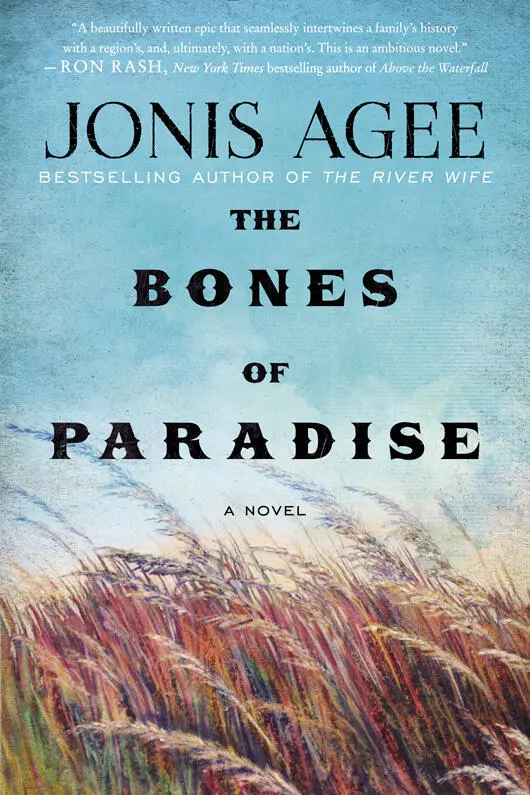
- Название:The Bones of Paradise
- Автор:
- Издательство:William Morrow
- Жанр:
- Год:2016
- ISBN:нет данных
- Рейтинг книги:3 / 5. Голосов: 1
-
Избранное:Добавить в избранное
- Отзывы:
-
Ваша оценка:
The Bones of Paradise: краткое содержание, описание и аннотация
Предлагаем к чтению аннотацию, описание, краткое содержание или предисловие (зависит от того, что написал сам автор книги «The Bones of Paradise»). Если вы не нашли необходимую информацию о книге — напишите в комментариях, мы постараемся отыскать её.
returns with a multi-generational family saga, set in the unforgiving Nebraska Sandhills in the years following the massacre at Wounded Knee—an ambitious tale of history, vengeance, race, guilt, betrayal, family, and belonging, filled with a vivid cast of characters shaped by violence, love, and a desperate loyalty to the land. Ten years after the 7th Calvary massacred more than 200 Lakota men, women, and children at Wounded Knee, J. B. Bennett, a white rancher, and Star, a young Native American woman, are murdered in a remote meadow on J. B.’s land. The deaths bring together the scattered members of the Bennett family: his cunning and hard father, Drum; his estranged wife, Dulcinea; and his young sons, Cullen and Hayward. As the mystery of these twin deaths unfolds, the history of the dysfunctional Bennett’s and their damning secrets are revealed exposing the conflicted heart of a nation caught between past and future.
At the center of
are two remarkable women. Dulcinea, returned after bitter years of self-exile, yearns for redemption and the courage to mend her broken family and reclaim the land that is rightfully hers. Rose, scarred by the terrible slaughters that have decimated and dislocated her people, struggles to accept the death of her sister, Star, and refuses to rest until she is avenged.
A kaleidoscopic portrait of misfits, schemers, chancers, and dreamers, Jonis Agee’s bold new novel is a panorama of America at the dawn of a new century. A beautiful evocation of this magnificent, blood-soaked land—its sweeping prairies, seas of golden grass and sandy hills, all at the mercy of two unpredictable and terrifying forces, weather and lawlessness—and the durable men and women who dared to tame it. Intimate and epic,
is a remarkable achievement: a mystery, a tragedy, a romance, and an unflagging exploration of the beauty and brutality, tenderness and cruelty that defined the settling of the American west.
The Bones of Paradise — читать онлайн бесплатно полную книгу (весь текст) целиком
Ниже представлен текст книги, разбитый по страницам. Система сохранения места последней прочитанной страницы, позволяет с удобством читать онлайн бесплатно книгу «The Bones of Paradise», без необходимости каждый раз заново искать на чём Вы остановились. Поставьте закладку, и сможете в любой момент перейти на страницу, на которой закончили чтение.
Интервал:
Закладка:
Conway bothered Star, he said, and she had found two white boys to take her away. She trusted too much. Rose had tried to warn her, but it was already too late. She wondered which white boy it was, of the two of them, Cullen or Hayward. Which the lover and which the jealous one?
CHAPTER THIRTY-FOUR
Soon as Cullen stopped the rank dun horse in front of Drum’s house, it was clear nobody had worked in the week since that stupid dinner. Cullen had spent the five days following in town with the Eastman woman trying to convince her not to return to Denver. This was the thanks for all his hard work. Geese and chickens wandered the porch, crapping everywhere. The old sow had rooted her way out of the pen and sprawled in his vegetable garden, wallowing in the mudhole she’d dug by butting the loose pipe he’d rigged for watering. She’d used her huge snout to plunder the lettuce and carrots, and the seedling tomato plants were tipped on their sides. When he rode closer, he saw wriggling around her and realized she’d given birth and was squashing half the babies. He climbed down, tied the horse to the rail, and ran into the garden to scare her up. She gazed at him with a lazy half-open eye, snorted, and flopped her head down on one of the babies. There were almost too many to count, and they mewled like newborn kittens. The sow snored.
He kicked her, but she couldn’t feel it, so he got his rope, noosed it around her thick neck, and pulled. She had to weigh three hundred pounds. He tied it around her front legs, too, and wrapped the end around the saddle horn and made the dun back up, which it did like it’d been a cow pony its whole worthless life. It must hate that pig as much as I do, Cullen thought. He had a time stopping the horse, and they about pulled off the sow’s hide. Once he untied the rope, she clambered to her feet, baby pigs crying and wobbling around her. The ones he’d thought she killed were up and at ’em, too. Still, he didn’t want her killing the rest of his garden, so he looped the rope around her middle and drove her back to her dry pen, which would have plenty of mud once he refilled the water trough with its rusty bottom flaking in the heat.
“Those sons of bitches.” Cullen cursed steady and low as he turned on the windmill and hand pumped the water. Soon as it was going good, he took up the boards and tied and nailed the pen back into some kind of shape, knowing it was hopeless if she decided to push her three hundred pounds of lard against it. She was down again, this time letting the babies nurse, packed in two layers lined up at her teats. Wouldn’t you know it, he thought, there was an extra one, number thirteen, smallest, already runty-looking, and when it whimpered, sounded so damn pathetic, Cullen reached down and picked it up, snotty nose and all, and slipped it inside his shirt while he went to find some grain for the sow. The barn was a wreck inside. Drum would have a fit when he saw how the men had slung saddles, halters, blankets, pitchforks, and shovels every which way. Manure in the stalls looked a month old, and the grain was down to a sack the mice had started working on. When he grabbed a canful, corn slipped out the hole in the bottom. Then he realized the milk cow was missing. Lazy bastards must’ve turned her loose and let her dry up or stole her. How was he gonna feed the runt that squirmed and mewled against his stomach?
He poured the corn on the ground in front of the sow’s snout so she could eat and feed the youngsters at the same time. There were no horses waiting for the noon change in the corral either. It was like the hands left the sow, geese, and chickens in charge. The cattle would be grazing the river pasture this time of year. Only trouble they’d be having was deerfly, mosquitoes, blackleg, pink eye, and other assorted diseases, with the rare snakebite and broken leg thrown in. He would have to ride out and check on the herd.
“I told you,” he muttered. “I told you this would happen.” He led the dun back to the house and tied him to the rail again. The horse heaved a sigh. Cullen loosened the girth and the animal only halfheartedly snapped his teeth.
“You never listen. Think you’re God on earth, and now look at this mess we’re in. Men gone. Place can’t run itself. Animals every which way. I don’t even want to know what the cattle are doing out there.”
The door was ajar and he wasn’t surprised by the wreckage within. They’d gone through, looking for what they could steal since they didn’t dare ask for quitting wages. Drum was known to make a man fight him or Cullen for those. He couldn’t go light either, or Drum would be next in line with his fists. Cullen didn’t blame the men as he picked up the cans stripped of labels, a childish meanness, and righted the chairs around the table. They’d smashed Drum’s big wooden chair with the arms that made it look like a crude throne. He grabbed the kindling it’d become. “This took some doing,” he said, but the men had enough history here that they would spend the time. A nice breeze blew in the broken window, which accounted for the thick dust that coated all in sight. The stovepipe was askew. He reattached it, stuffed in the chair pieces, and lit the fire. The small saucepan was on the floor under the stove and rocked now with a big dent in its bottom. He picked up the cans and shook them to figure out which might hold evaporated milk. It took him several tries with his knife blade pounded into the top to find it. The others were canned peaches and pears and beans and corn. He figured he’d eat some and give the rest to the sow.
When the milk was heated, he fished one of Drum’s leather work gloves from the pile in the wooden window seat the men hadn’t discovered. There was also an extra rifle, an old Colt Peacemaker, several boxes of shells, a hatchet, and a bowie knife, the blade rimed with rust. He’d take those when he went after the hands, who wouldn’t have made it much farther than town. Spending what they stole on liquor and those worn-out girls at Reddy’s.
Meanwhile, he poured the warm milk into Drum’s glove, cut a hole in a finger, and held it to the runt’s mouth. At first it squirmed and fretted until he squeezed out a bit of milk, smeared its lips, and stuck his finger in its mouth to get it to suck, then replaced his hand with the glove and it nursed so hard it had to stop, gulp and gasp for air, then went back, slower and more steady until its eyes drifted shut and its belly was a hard pink ball, and the milk dribbled down its chest onto Cullen’s shirt. They sat for a bit, the sun warming the room, the pig pressed into his chest, its breath a steady little whistle against his shirt, and it seemed that maybe this was the best of times: without Drum, without the other men, without his mother and brother, just him and the animals and the Sand Hills breeze bearing the scent of tall fresh bluestem and wildflowers, sweet and green against the dust and greasy odor of bad food and old grudges. He pictured his mother’s big gray stallion out in the corral, his sleek body dancing lightly around the pen, waiting for Cullen. He dozed for a few minutes, an unheard-of thing to do, until the dun snorted and stamped its feet, and gave a high questioning whinny, like he worried he was the last horse on earth.
Cullen carefully cradled the pig, laid it in Drum’s overstuffed chair by the hay-twist stove, and looked through the rest of the house, which didn’t take but a minute. Drum’s room was in pieces, literally, every bit of paper or cloth shredded with a special hatred. The room he used to sleep in was tossed around some but there was never anything worth having in it. He found an old shirt his mother sent him a few years ago wadded under the mattress where he had left it an hour after it arrived. Green silk. Hard to even guess what was in her mind that day. Buttoned up with sleeves tied together, it made a fine pouch to carry the pig.
Читать дальшеИнтервал:
Закладка:
Похожие книги на «The Bones of Paradise»
Представляем Вашему вниманию похожие книги на «The Bones of Paradise» списком для выбора. Мы отобрали схожую по названию и смыслу литературу в надежде предоставить читателям больше вариантов отыскать новые, интересные, ещё непрочитанные произведения.







Обсуждение, отзывы о книге «The Bones of Paradise» и просто собственные мнения читателей. Оставьте ваши комментарии, напишите, что Вы думаете о произведении, его смысле или главных героях. Укажите что конкретно понравилось, а что нет, и почему Вы так считаете.