Carmen Boullosa - Leaving Tabasco
Здесь есть возможность читать онлайн «Carmen Boullosa - Leaving Tabasco» весь текст электронной книги совершенно бесплатно (целиком полную версию без сокращений). В некоторых случаях можно слушать аудио, скачать через торрент в формате fb2 и присутствует краткое содержание. Год выпуска: 2002, Издательство: Grove Press, Жанр: Современная проза, на английском языке. Описание произведения, (предисловие) а так же отзывы посетителей доступны на портале библиотеки ЛибКат.
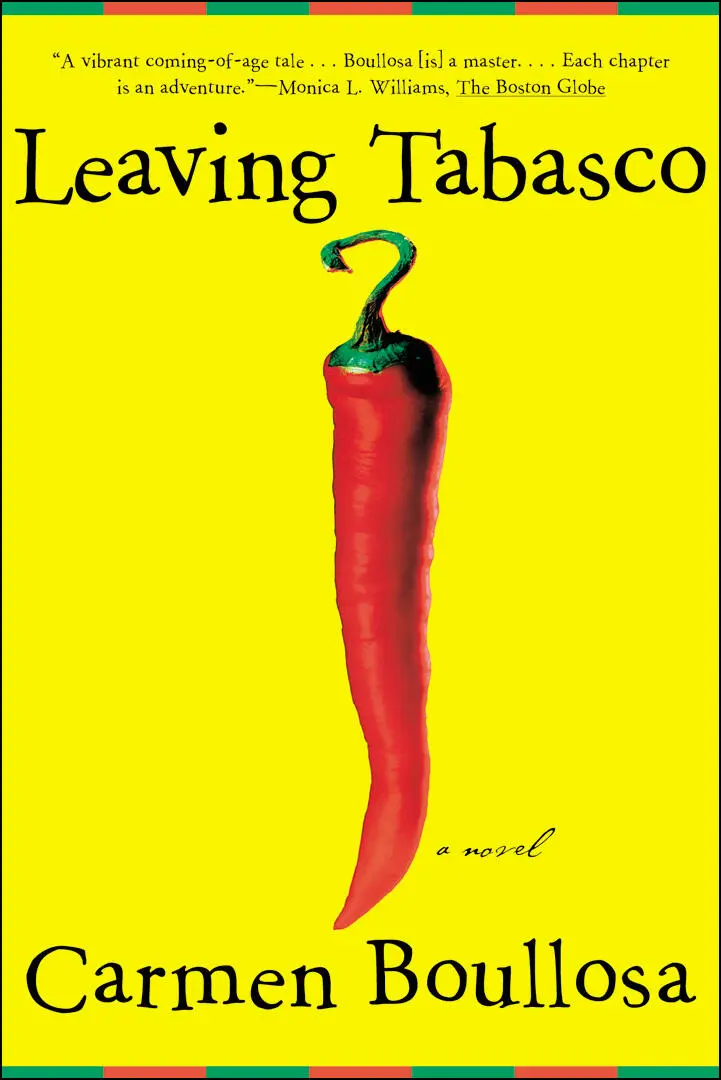
- Название:Leaving Tabasco
- Автор:
- Издательство:Grove Press
- Жанр:
- Год:2002
- ISBN:нет данных
- Рейтинг книги:4 / 5. Голосов: 1
-
Избранное:Добавить в избранное
- Отзывы:
-
Ваша оценка:
Leaving Tabasco: краткое содержание, описание и аннотация
Предлагаем к чтению аннотацию, описание, краткое содержание или предисловие (зависит от того, что написал сам автор книги «Leaving Tabasco»). Если вы не нашли необходимую информацию о книге — напишите в комментариях, мы постараемся отыскать её.
Leaving Tabasco — читать онлайн бесплатно полную книгу (весь текст) целиком
Ниже представлен текст книги, разбитый по страницам. Система сохранения места последней прочитанной страницы, позволяет с удобством читать онлайн бесплатно книгу «Leaving Tabasco», без необходимости каждый раз заново искать на чём Вы остановились. Поставьте закладку, и сможете в любой момент перейти на страницу, на которой закончили чтение.
Интервал:
Закладка:
A pair of soldiers grabbed their prisoner and with a few pushes showed her the way to go. No white-skinned person had ever walked the streets of Agustini in this fashion, never had been paraded like this, with wrists bound by metal, tied up like a dog, as docile as any dog, because I put up no resistance, striding along where their jabs and pushes told me to go. We turned the corner. I looked back, but my house was no longer in sight. Nobody had followed me. However, a few paces behind, a mule trotted after us. The soldier boys started to threaten me. “Let’s see if this knocks some sense into the little bitch. Hey, blondie, you don’t have a clue what’s in store for you, do you? This little bird is gonna sing, and how.”
From every balcony of the town they saw me go by. On every street they stood on the sidewalk watching me pass, because the soldiers chose to lead me down the middle of the road, the place for dumb animals, donkeys, horses, and cars. Blond Delmira had lost her status in Agustini, at the hands of those creeps who kept dragging her along without pity, for no good reason. Agustini was not raising its voice in my defense. It didn’t seem to be the same town as the day before, where one and all, in total solidarity, had welcomed the protest against the murder of Old Baldy. This was a town in terror, a town that didn’t understand what was going on, a town under the control of a power wholly foreign to it. But neither did any witch fly over me or toads leap out into our path. No albino crocodile used its tail to block the passage of the two pigs who were manhandling me more and more offensively. The pictures of the saints didn’t dance, but everything in the town struck a pose and then came tumbling down, though the birds did keep on flying. The leaves on the cocoa pods and coffee plants had their tips all shriveled, but their fruits, almost ready to be picked, remained unharmed. The pitayas didn’t rot, the mangoes didn’t rot, the papayas didn’t fall, and the bananas showed no reaction to the first white slave in Agustini, only the leaves of the plants, as if an unexpected frost had arrived that morning, a frost that the plants themselves could take lightly, without too much concern.
Dr. Camargo came out of his house when he saw me go by. He, apparently, was not aware of anything that had happened that morning in Agustini, nobody could have gone to tell him or ask for his assistance, by a stroke of good luck leaving him without a single wound to heal. He came out dressed in his pajamas, with a dressing gown on top. Clad like that, he was the only resident of Agustini who came to my defense. Stopping in front of my two custodians, he stared at me with a look of compassionate surprise, and said to them, “Gentlemen, whether or not you have to take her away, I’ll stand surety for her before the law. I’m the doctor of this town, Dr. Camargo, at your service, and I’ve no cause to stick my nose in here. But you ought to know — though apparently you don’t, because you’re not from around here — that we don’t treat young ladies this way.”
With two blows to his face they laid him on the ground, making him bleed, one of his eyebrows pouring out blood. The mule still trotted after us, as if we were some kind of fascinating carrot, and almost collided with him, except that Sara and Dorita, his wife and daughter, ran and picked him up, scaring the stupid animal which seemed more like a hyena than a mule because it showed no sign of letting the carrion out of its sight. Nobody else in the neighborhood came to the doctor’s rescue. What happened to you that morning, Agustini? Did the blood of strangers and of your own kin darken the light of reason? Did your magic that day consist of tying down your people with inescapable fear?
The majority of the demonstrators had already left Agustini. The soldiers had massacred those heading toward the market in the light of dawn. The Indians who had come down from the hills to sell seeds or bundles of fruit also formed part of the slaughter. Most of the others, when they learned of the crime, had run off to warn Villahermosa, Tampico, and Mexico City. Others had caught the eight o’clock bus, fleeing from the horror and trying to forget it. Two buses belonging to the union had left, completely packed with its members.
In the central park, groups of visitors clustered around the bandstand, standing shoulder to shoulder and back to back, without daring to look one another in the eye and barely uttering a word. The soldiers, I don’t know if out of a wish to provoke them, crossed the park with me in front of them, passing to one side of them. They all turned toward me. I recognized some faces I had gotten to know the day before. One of them belonged to the man I’d found a hammock for at the Juarezes’ place, and over there stood another who’d arrived with his doctor’s briefcase to see what was going on, and over there the reporter in the light suit who’d asked me for a copy of my pamphlet and called me cute.
“Can we take your photos?” he asked the soldiers. “Just to show how well you’re doing your duty. I’m from the Tabasco Sun , the government daily.”
We halted in front of him, with the stupid mule still following us.
“Well, of course.”
The photographer, who had snapped the musicians the previous day, was eating an ice cream at one of the tables of the ice-cream parlor. His companion called him over. “Hey, look what a great photo I got you!” He came running toward us. For the first photo the soldiers did nothing special. The two who had their hands on my buttocks and back moved them to my shoulders, clasping them like two hooks.
For the second they lifted up my skirt.
For the third one of them hugged me shamelessly.
For the fourth they made me kneel down and lay my face on the ground while one of them put his enormous boot on my back.
The reporter didn’t dare ask them for a fifth, seeing that with each photo they were turning into bigger and bigger bullies.
“Thanks, you guys. Why have you taken her prisoner?”
“For revolutionary activities. We’ve just left the evidence with her grandmother. This is Delmira, the girl from Agustini.”
The reporter was startled. He didn’t know I was Delmira, but what he did know was that he was the one who had told them about me. He didn’t work for the government daily, which belonged to the governor’s brother. He reported, in fact, for the Villahermosa Daily . He was the one who, the day before, had called the paper to tell them word for word what the flyers we were giving out said, so that they could publish it on the first page. It was because of that article that they were now taking me away as their prisoner, the article he’d had published, and with it he’d condemned me to prison.
“Is she the one who published that thing in the Villahermosa Daily ?”
“Dead right she is. Now she’s going to find out what happens to blondes who act like little bitches. We’re gonna clean up this town before the day’s out.”
“Can I ask the girl a question, guys?”
“Go ahead.”
“In the meantime, my friend, the photographer, invites you all to an ice cream.”
The soldiers gave a pleased laugh and clustered around the counter of the ice-cream parlor.
“Do you want me to tell anybody, Delmira? I’m really sorry. I’m to blame for this mess. I don’t know what else I can do to help you.”
He explained to me rapidly who he was. I gave him the phone number of my uncle Gustavo. “He’s my mother’s brother, Gustavo Ulloa, the engineer.” He was startled again to hear my surname. “Yes, don’t jump out of your skin. We’re the Ulloas of Agustini. I’m sure he can get me away from these cavemen. He’ll have a word with the governor. They’re friends.” And at the same time I gave him my father’s number and my paternal family name, explaining, “He’s Italian. He lives in London. Tell him to get me out of here.” The reporter took rapid notes, then, holding me carefully by the arm, he left me with the squad of soldiers, each one now armed with a frozen ice cream.
Читать дальшеИнтервал:
Закладка:
Похожие книги на «Leaving Tabasco»
Представляем Вашему вниманию похожие книги на «Leaving Tabasco» списком для выбора. Мы отобрали схожую по названию и смыслу литературу в надежде предоставить читателям больше вариантов отыскать новые, интересные, ещё непрочитанные произведения.


Обсуждение, отзывы о книге «Leaving Tabasco» и просто собственные мнения читателей. Оставьте ваши комментарии, напишите, что Вы думаете о произведении, его смысле или главных героях. Укажите что конкретно понравилось, а что нет, и почему Вы так считаете.