Carmen Boullosa - Leaving Tabasco
Здесь есть возможность читать онлайн «Carmen Boullosa - Leaving Tabasco» весь текст электронной книги совершенно бесплатно (целиком полную версию без сокращений). В некоторых случаях можно слушать аудио, скачать через торрент в формате fb2 и присутствует краткое содержание. Год выпуска: 2002, Издательство: Grove Press, Жанр: Современная проза, на английском языке. Описание произведения, (предисловие) а так же отзывы посетителей доступны на портале библиотеки ЛибКат.
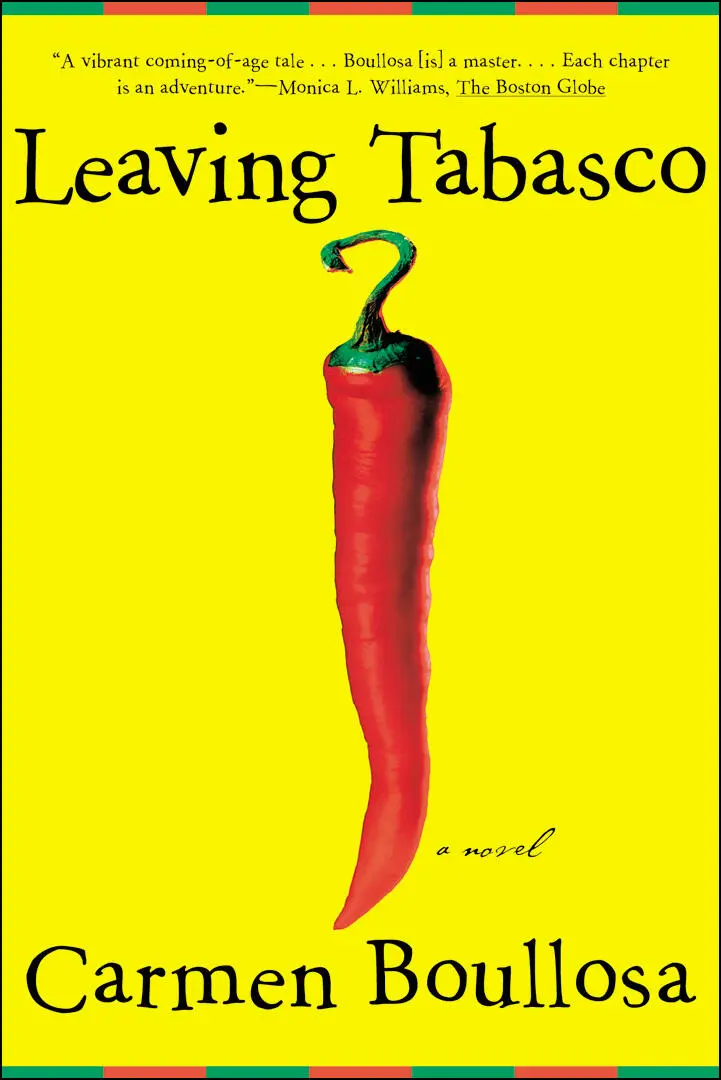
- Название:Leaving Tabasco
- Автор:
- Издательство:Grove Press
- Жанр:
- Год:2002
- ISBN:нет данных
- Рейтинг книги:4 / 5. Голосов: 1
-
Избранное:Добавить в избранное
- Отзывы:
-
Ваша оценка:
Leaving Tabasco: краткое содержание, описание и аннотация
Предлагаем к чтению аннотацию, описание, краткое содержание или предисловие (зависит от того, что написал сам автор книги «Leaving Tabasco»). Если вы не нашли необходимую информацию о книге — напишите в комментариях, мы постараемся отыскать её.
Leaving Tabasco — читать онлайн бесплатно полную книгу (весь текст) целиком
Ниже представлен текст книги, разбитый по страницам. Система сохранения места последней прочитанной страницы, позволяет с удобством читать онлайн бесплатно книгу «Leaving Tabasco», без необходимости каждый раз заново искать на чём Вы остановились. Поставьте закладку, и сможете в любой момент перейти на страницу, на которой закончили чтение.
Интервал:
Закладка:
39 The Demonstration
I’d lost track of the time while I was listening to the seller of scarves. So I raced the rest of the way to the teacher’s house. They were running off the last of the pamphlets that the teacher had written. Under my arm I was carrying a bunch of notes I’d scribbled down in the night.
“Excuse me, sir. I brought you these, excuse me—”
He ignored me.
“Can I make a stencil to print them off? I wrote all this.”
“We haven’t got time for anything now, Delmira.”
“I can print them off myself, I promise.”
“Go ahead,” he said, mostly to shut me up.
They left me alone while I was still marking out the stencil and making rather a mess of it all. I printed off as many as I could, till I felt the need to go eat. By that time I had run off hundreds of copies of my pamphlet, to which I had appended my signature: Delmira of Agustini. This barely readable text was my first publication, and my only one before this present work. And I had committed the unforgivable error of inadvertently using the name of a great Uruguayan poet. An error which maybe ruined my career as a writer. Or maybe the reason was my foolish arrogance, a vanity that filled every corner of my soul. Or maybe it was my haste, my eagerness to see the world, to gobble down whole continents in a single mouthful, to suck up oceans and all their fish in one fell swoop. Or maybe it was the wild, revolutionary ideas I had absorbed at third hand while meditating on my actionless, endless, impractical novel, ideas that inspired me to write three dangerous paragraphs and thereby damage my literary future and in the process the whole of my life.
As soon as I was outside the door of the teacher’s house, I began distributing my pamphlet to one and all. Some balladeers were singing a song they had improvised:
Old Baldy was a warrior.
They went and shot him dead.
But he is still among us,
Though his body’s full of lead .
Though his body’s full of lead, my friend,
Baldy lives and always will.
They can never kill Old Baldy
For his spirit’s with us still .
His spirit’s with us still, my friend
For Baldy loved the poor.
He’s thinking of us all the time.
Each day he loves us more .
Each day he loves us more, my friend.
So let us raise a cheer!
We cannot lack for justice when
Old Baldy’s always here .
I hung around with them, handing out my propaganda, sometimes listening to them, other times daring to join in. When they took a break, a young man came over to me. He was dressed in a white suit with brown shoes, with a straw hat, his outfit completely at odds with the clothes of the other demonstrators. Next to him came a photographer, and the two of them were visibly hot and tired.
“What’s that you’re handing out?”
“Something about the death of Old Baldy.”
“Let me see.” Then he added in a different tone, “My, but you’re cute.”
I smiled at him and handed him one of my pages. He took a second one from the pile, and the photographer snapped the musicians. Then they suddenly vanished. There were so many people around it was like looking for a needle in a haystack to find my classmates. By the time I found them, not a single one of my sheets was left.
The demonstration lasted all afternoon. We walked back to the street alongside the public gardens, men and women together, but our numbers were so great that we couldn’t all get in. The end of the line, where we were, started to trample on those in front, until the teacher who was in control of us halted us completely. All the surrounding streets were jammed tight. We spilled over into the park itself, into the flowerbeds. From the bandstand, where the orchestra normally played its Sunday melodies, the teacher and a young fellow from the union harangued us. The crowd bellowed its approval, chanted slogans, and sang songs. A violent emotion swept us all off our feet, so different from the churchy feelings of Sunday Mass, when the priest addressed his passive, motionless congregation. What must he have been thinking as he saw this? What must he have felt as the tide of emotion surged through the breasts of his normally unresponsive parishioners, many of whom were in church only out of loyalty to him? What would he answer now when challenged to assess the faith of his flock? We had all heard him say, “In this town nobody believes in anything. If you’re hungry, all you need do is raise a hand and grab a banana. If you’re thirsty, you bend down to drink. If you want anything more elaborate, you stick your hand in the river and pull out a big fish. The heat of the day will cook it for you. All you have to do is pop it in your mouth. Who feels any fear of the Lord in those circumstances? These people here don’t even believe there’s a Creator, everything comes so easy to them, so ready to hand. They’ve got no worries. They’ve got no conscience to tell them right from wrong. On the slightest pretext they chop each other to pieces with machetes. Then they just as easily forget what the fight was all about, like nothing had happened. Life here is just a ghastly joke …”
40 A Scolding
That Sunday night I got back late to the house, so I had to bang on the door till they opened it. It was Grandma who let me in, her white hair loose about her shoulders, while Dulce looked on with alert eyes, waiting to see what Grandma would say to me. Before dropping the bar into place she spat out at me, “Disgusting troublemakers, that’s what you all are!” She was furious. I went into my bedroom without closing the door behind me. Dulce didn’t follow, either to do my hair or to offer me supper, staying beside my grandmother, sharing her rage, into which Grandma had no doubt indoctrinated her. I’d taken off only my sandals and was on the point of lowering my jeans when I heard Grandma’s voice.
“Dulce, what are you thinking of? Go and see if the kid wants anything for supper and pick up her clothes so that she doesn’t leave the place a mess. In the meantime, I’ll secure the door and you can come back to do my hair. With all this coming and going it’s gotten into a complete tangle. Maybe combing it out will calm me down. I’m all of a dither.”
I was sitting on my bed, with my pants undone, when Dulce came into my room, prematurely aged, without a trace of youthfulness, eaten alive by the two bony creatures of the household, the smooth one and the round, her head covered by her rebozo, her feet shoeless as always. She looked me in the eyes and then immediately glanced away, but contact had been made. Our two bodies felt the presence of each other in the room. If she hadn’t exchanged that glance with me, I’d have proceeded to take off my pants in front of her and toss them on the floor, and after them my panties, and hurl away my blouse with a careless fling of my arm over my head, and flip my earrings and necklace, maybe, onto the bed, while she picked up one garment after the other, saying nothing, folding up the clean ones, smoothing out the rumpled stuff, taking away the dirty clothes to wash, like a shadow, effective and unobserved. She’d also have put my tire-soled sandals onto the shoe rack, my earrings and necklace into the jewelry box. But since we’d exchanged glances, we both sat down. I wasn’t going to strip naked now in front of this girl who’d grown old before her time, courting resentment and prematurely resigned to it, but she felt uncomfortable too, not knowing what to do in front of someone who normally didn’t notice her presence, a woman of about her age but with a radically different lifestyle, whom she’d been used to waiting on since she was seven years old, working efficiently but without any personal contact, replacing it with abruptness and yells, like a machine whose functions had been determined by long tradition. I felt embarrassed in front of her, both by myself and by the role it had been my fate to adopt. Together, we two composed one personality, we were the two fragmented halves of one being. On her side, she shared a conspiratorial warmth with my grandmother, though it condemned her to servitude. On mine, I had a room of my own.
Читать дальшеИнтервал:
Закладка:
Похожие книги на «Leaving Tabasco»
Представляем Вашему вниманию похожие книги на «Leaving Tabasco» списком для выбора. Мы отобрали схожую по названию и смыслу литературу в надежде предоставить читателям больше вариантов отыскать новые, интересные, ещё непрочитанные произведения.



Обсуждение, отзывы о книге «Leaving Tabasco» и просто собственные мнения читателей. Оставьте ваши комментарии, напишите, что Вы думаете о произведении, его смысле или главных героях. Укажите что конкретно понравилось, а что нет, и почему Вы так считаете.