Carmen Boullosa - Leaving Tabasco
Здесь есть возможность читать онлайн «Carmen Boullosa - Leaving Tabasco» весь текст электронной книги совершенно бесплатно (целиком полную версию без сокращений). В некоторых случаях можно слушать аудио, скачать через торрент в формате fb2 и присутствует краткое содержание. Год выпуска: 2002, Издательство: Grove Press, Жанр: Современная проза, на английском языке. Описание произведения, (предисловие) а так же отзывы посетителей доступны на портале библиотеки ЛибКат.
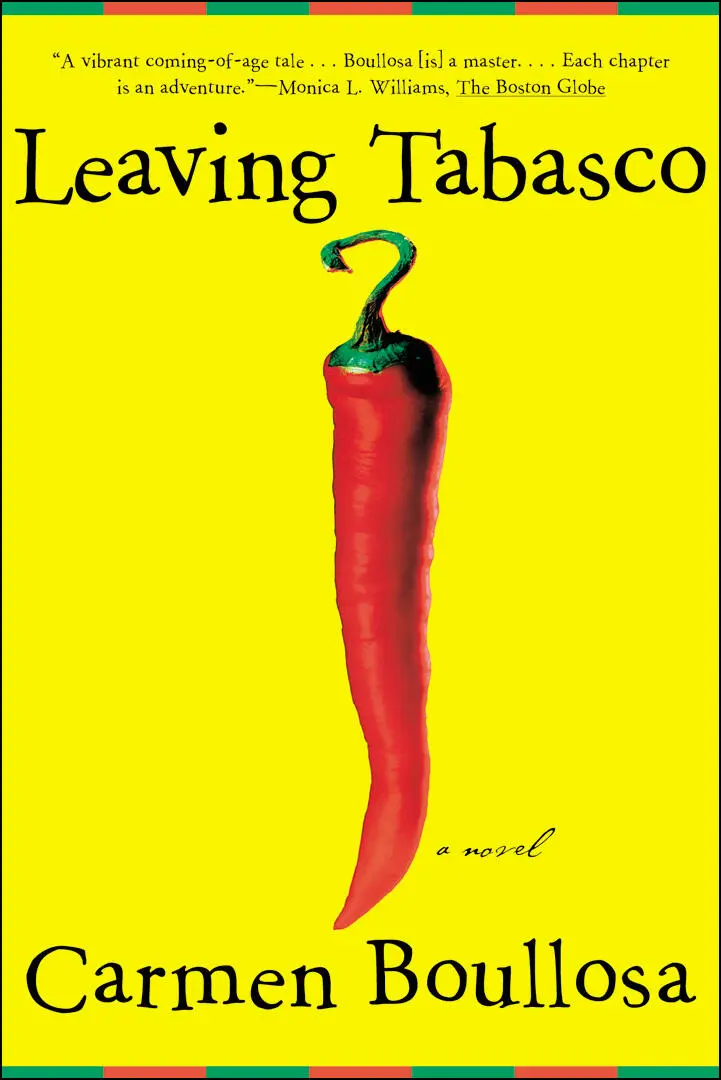
- Название:Leaving Tabasco
- Автор:
- Издательство:Grove Press
- Жанр:
- Год:2002
- ISBN:нет данных
- Рейтинг книги:4 / 5. Голосов: 1
-
Избранное:Добавить в избранное
- Отзывы:
-
Ваша оценка:
Leaving Tabasco: краткое содержание, описание и аннотация
Предлагаем к чтению аннотацию, описание, краткое содержание или предисловие (зависит от того, что написал сам автор книги «Leaving Tabasco»). Если вы не нашли необходимую информацию о книге — напишите в комментариях, мы постараемся отыскать её.
Leaving Tabasco — читать онлайн бесплатно полную книгу (весь текст) целиком
Ниже представлен текст книги, разбитый по страницам. Система сохранения места последней прочитанной страницы, позволяет с удобством читать онлайн бесплатно книгу «Leaving Tabasco», без необходимости каждый раз заново искать на чём Вы остановились. Поставьте закладку, и сможете в любой момент перейти на страницу, на которой закончили чтение.
Интервал:
Закладка:
The slogans that we’d recently been shouting still rang in my ears. All day long I’d heard instant recipes for saving mankind and promises that the Revolution was coming, sailing this way across the Gulf of Mexico, in a boat headed from nearby Cuba, under a flag bearing the feather and sickle. I had handed out flyers printed early that morning, both those which the schoolteacher had written and those I had signed, a long string of saving formulas without rhyme or reason, not realizing what I was doing by signing this enormous literary sin I have already confessed to. After running around all day, wearing myself out, and venturing on the high seas of a political demonstration, here I was, in front of the nanny I had enslaved all my life.
“Leave it, Dulce,” I managed to say, in my vast confusion. “It’s late now. I promise to pick it up.”
My grandmother heard my promise.
“What? Her ladyship clean up a room! That’ll be the day! Go and get your pajamas on, girl. And you still haven’t said if you want your cup of chocolate—”
“Yes, I want chocolate.”
“With milk or water?” Dulce asked me, relieved by my grandmother’s intervention.
“With milk.”
“Shall I bring some cookies? A slice of cake?”
“There wouldn’t be a tamal , would there? I haven’t eaten.”
“A sweet tamal or with mole ?”
“Which is best?”
“They’re all still hot. Lucifer made tamales today. I’ll be right back.”
She left my room and I undressed, respectfully leaving my panties on the floor, my jeans on the floor, my Indian blouse there too, my sandals with the tire soles tossed aside without care. She wasn’t long in coming back with a tray on which she brought the wooden beater, my cup, and a plate with a steaming tamal wrapped in a banana leaf. She put it on a small table in the central patio and I sat down to eat. Dulce hurried over to my grandmother’s side and like good, safe always, ran the comb through her loose hair, as Grandma launched into her story.
41 Grandmother’s Story
“Today I’m going to tell you about the time the Indians got the alushes to start walking. You see, when I was a kid, about six or seven years old, it was still usual for Indians to have statues of alushes at the entrance to their houses. The alushes looked like tiny people, thin, with pronounced features, their arms crossed, wearing around their waist a sort of skirt made from corn leaves. The complete figure was no bigger than a just-ripened corncob. The little man or little woman emerged from the foliage in place of the cob itself, and their lines were so delicate it was hard to believe that the Indians could have made them with their own hands, since we’re used to seeing them make such crude figures, with the look of monsters, when they don’t look like cooking vessels nobody’s had the goodness to give a finishing touch to. For sure, my nanny, Lupe, said that these clay figures actually grew out of the corn plant itself, that nobody but God could have made them with his hands, but how were we supposed to believe that God went around giving credence to the superstitions of Indians.”
Grandma was looking for a chance to provoke me, because she realized I always bridled when she made disparaging remarks about Indians, and that I defended them with increasing vehemence, obsessed by the issue, but on this occasion I made no reply, for I wasn’t going to take the bait and she wasn’t going to get a rise out of me. If she wanted, she could deny Indians had souls and the power to reason, that was her business. My tamal , an Indian concoction for sure, was delicious. My chocolate was just right too, covered in froth, and I was worn out. Dulce had already given Grandma’s hair its first combing, and all the while they’d probably chatted about what they’d heard tell of the demonstration — the gossip spreading among the rich folk of the town, scared by the presence of so many people, all because of the death of that troublemaker, Old Baldy, “nothing but out-and-out commies who’ve come here to stir up the Indians”—and since Dulce had made such a smooth job of it, she was already plaiting the hair, before the nightly story had barely gotten under way.
“The Indians, I was telling you, had one or more alushes in front of their houses. There were those who placed them by the door hinges, others nailed them to one side or other of the doorframe, while some stuck them in the ground at both sides. At one Indian house that I went into with my papa — it was a scorching-hot noonday, and we were on horseback, with his men, checking out something or other on the farm — they gave us some coffee to drink in these enormous mugs, scalding-hot coffee, brewed in a clay pot with sugar and cinnamon, so that we could ‘cool off,’ they said. I’d have given a king’s ransom for a glass of chilled soda pop. But back then, in those heat waves, in the middle of the jungle, without ice or fridges, well — in fact, I think they still don’t have electricity out there even now, no doubt because the Indians said no when the government offered it to them, because there’s nobody more stupid than those people, total sticks-in-the-mud when it comes to changing their beliefs, so used to living in misery that they even enjoy it, and if I’m wrong about that, then explain to me why they choose to live in such appallingly hot places where you can’t even build a decent road, because …”
Dulce had finished dressing Grandma’s hair and had now started combing out mine, while I was eating the last of my tamal , which was quite glorious. Without taking her eyes off Dulce, Grandma turned to face me.
“Then the alushes started to stir and move. It was when this region had its worst drought ever, much longer than the one we suffered through a couple of years back, and the coffee beans withered and not even a blade of new grass was to be seen, and only the trees managed to survive, though they produced no fruit, not one mamey or banana or mango or papaya, absolutely nothing. Anyway, one day all the alushes left the doorways of the Indian shacks, and turned into creatures of flesh and blood, talking among themselves in their own language, and there wasn’t a single spot anywhere where you didn’t hear their strange mutterings and there wasn’t a single house where they didn’t get up to their tricks. An alushe would show up here and there, making a horse skid in its tracks, tossing a little girl out of her swing, throwing a seesaw out of balance, removing the plug from the fountain, putting too much salt in the food, knocking over cooking pots, and pulling off the tablecloths after the table had been set. Every day that went by, they got bolder and bolder, and if you heard their mutterings here and there at first, it wasn’t long before you heard their cackling laughter. Soon their shouts became an everyday thing in the center of town. We learned to keep our mouths shut, because if we told a secret to somebody, some alushe or other would soon be shouting it out till the whole of Agustini knew. If we did anything really private and personal, we ran the risk of the alushes broadcasting it far and wide. They gave my grandfather diarrhea and went around chanting, ‘Old Melo’s got flu in his asshole.’ They started to grow bigger, and went from causing us major and minor irritations and lots of embarrassment to breaking the law. They stole corn, they stole coffee, they stole pumpkin seeds, they stole cocoa and sugar, and bags of flour, and sacks of rice from the market. It was uncanny how tiny creatures could carry off such heavy loads to the Indians. And one day, because of their pranks, we woke up without a thing to eat. Every cupboard was bare; there wasn’t one they spared, while the crafty Indians went around wearing faces like nothing had happened, just their faces of course, because their bellies were stuffed with our chocolates and our cheeses, our hams and our flour. Somebody had a dream that showed him that these uncivilized critters, who knew only how to handle maize, would meet in the evenings to eat the pick of our wheat by the handful, dying of laughter at us because of our habit of eating this stuff, not realizing, of course, that we ground the wheat and baked it in the oven to make it into bread, and he also dreamed that when they were covered from head to toe in flour, they decided to toss the rest of it into the river. I’ve no doubt his dream was true, because I never saw them giving us back anything that the alushes had stolen from us. And we still didn’t get a drop of rain, thanks to those alushes .
Читать дальшеИнтервал:
Закладка:
Похожие книги на «Leaving Tabasco»
Представляем Вашему вниманию похожие книги на «Leaving Tabasco» списком для выбора. Мы отобрали схожую по названию и смыслу литературу в надежде предоставить читателям больше вариантов отыскать новые, интересные, ещё непрочитанные произведения.





Обсуждение, отзывы о книге «Leaving Tabasco» и просто собственные мнения читателей. Оставьте ваши комментарии, напишите, что Вы думаете о произведении, его смысле или главных героях. Укажите что конкретно понравилось, а что нет, и почему Вы так считаете.