Carmen Boullosa - Leaving Tabasco
Здесь есть возможность читать онлайн «Carmen Boullosa - Leaving Tabasco» весь текст электронной книги совершенно бесплатно (целиком полную версию без сокращений). В некоторых случаях можно слушать аудио, скачать через торрент в формате fb2 и присутствует краткое содержание. Год выпуска: 2002, Издательство: Grove Press, Жанр: Современная проза, на английском языке. Описание произведения, (предисловие) а так же отзывы посетителей доступны на портале библиотеки ЛибКат.
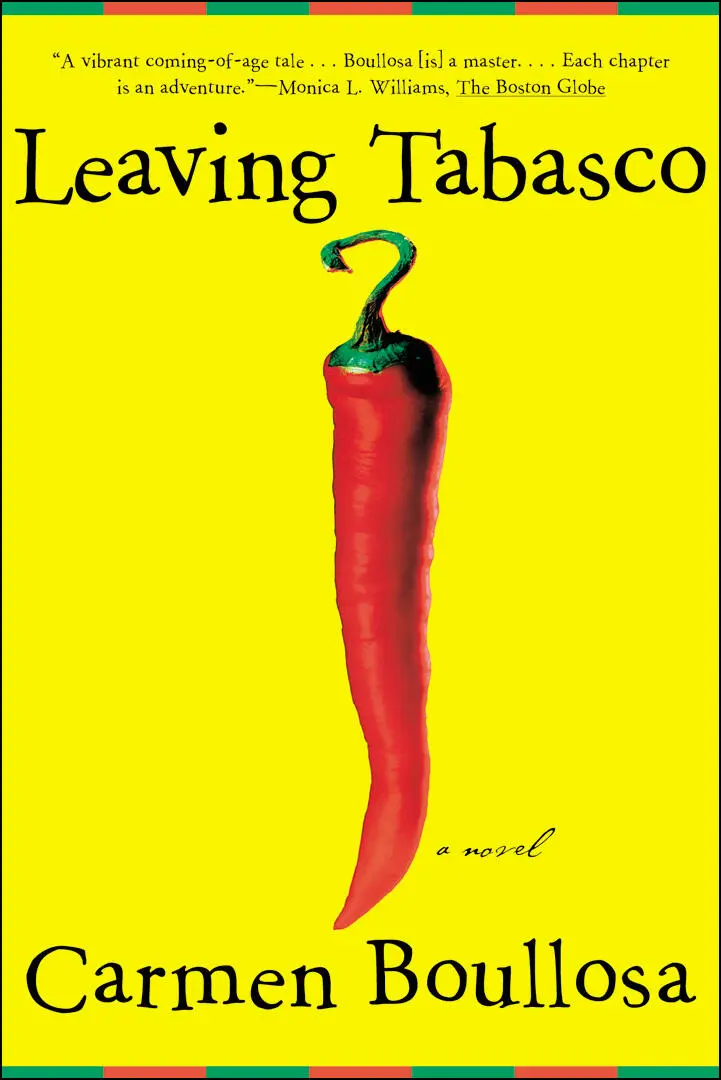
- Название:Leaving Tabasco
- Автор:
- Издательство:Grove Press
- Жанр:
- Год:2002
- ISBN:нет данных
- Рейтинг книги:4 / 5. Голосов: 1
-
Избранное:Добавить в избранное
- Отзывы:
-
Ваша оценка:
Leaving Tabasco: краткое содержание, описание и аннотация
Предлагаем к чтению аннотацию, описание, краткое содержание или предисловие (зависит от того, что написал сам автор книги «Leaving Tabasco»). Если вы не нашли необходимую информацию о книге — напишите в комментариях, мы постараемся отыскать её.
Leaving Tabasco — читать онлайн бесплатно полную книгу (весь текст) целиком
Ниже представлен текст книги, разбитый по страницам. Система сохранения места последней прочитанной страницы, позволяет с удобством читать онлайн бесплатно книгу «Leaving Tabasco», без необходимости каждый раз заново искать на чём Вы остановились. Поставьте закладку, и сможете в любой момент перейти на страницу, на которой закончили чтение.
Интервал:
Закладка:
Obviously, my fantasies were ungrounded and inconsistent. Like an old woman eager for gossip at sunset, I dragged a rocking chair out in front of my house to observe people walking by and busily made notes, but I was equally keen to chat all afternoon with my teacher about revolution, about the new order of things that we youngsters were eager to found, while Young Baldy strummed his guitar and sang his protest songs in the background.
1967
34 They Killed Old Baldy
One afternoon a bunch of gossips came to tell us that Old Baldy de la Fuente had been killed. It had happened on the highway. The car he’d been driving had been forced off the road. Then they put two bullets into him, so that nobody would mistake his death for an accident. While the gossips passed on the news, Young Baldy was strumming away on his guitar, practicing the chords for “We Shall Overcome.” Suddenly he realized what they were saying. He had built a protective fence around himself with his nonstop music, but their words finally penetrated it. And while the women were going over the details for the third or fourth time, he threw down his instrument, bellowing crazily, “It isn’t true, it isn’t true!” The teacher placed a firm hand on his shoulder and said, “Be strong, Young Baldy. It is true.” But the more the teacher said so, the louder Young Baldy screamed it wasn’t, but without shedding a single tear.
The teacher’s aunt marched out of the kitchen, where she invariably made us sandwiches, dry-eyed also, and the group of gossips followed her into the sitting room. The door to the street had been left open and neighbors were gathering outside. Some came in, in the wake of the gossips, while others left to be replaced by others arriving from the market. They poked their heads and shoulders around the door, watching to see when Young Baldy would snap.
“Is everybody heartless in this town?” asked the aunt in her high-pitched, schoolmistressy voice. “Ladies, you don’t give people this sort of news in that way. Excuse me.” She took one of the women by the elbow and shepherded her to the door, and the rest of the sheep followed close behind. “Can’t you see the man’s son is here? Is it too much to expect you to show a bit of tact? Really, I’ve never seen anything like it! Go to the church and pray for the man’s soul. Give his relatives a chance to deal with their terrible grief. Out of here, all of you! Really, the lack of consideration …”
The women had fallen silent and the aunt shut the door behind them. Young Baldy, trembling from head to foot, was still shouting, “It’s not possible!” The teacher still held him by the shoulder.
“Don’t you have any feelings, either?” the aunt barked at her nephew in a tone that was both angry and surprised. She pulled his hand away from the boy’s shoulder. “Come here, Young Baldy, my dear. Come and cry with me.”
She hugged him tight. The skinny body of Young Baldy lost all its force and he crumbled in her arms. She drew him over to the armchair and sat him on her lap. He started to cry, clinging to her neck, his face hidden on her chest, while she stroked his head and shoulders, crying herself now.
“My poor Young Baldy,” she was saying. “How could those miserable types do this to my poor Young Baldy?”
The boy arched his back, almost in a convulsion, letting out howls that were broken by “Papa, Papa.” He slumped down to the floor and rested his head in defeat on her knees, one hand drooping from the chair and rubbing against the cement floor. You might have been tempted to think that the strengthless body of Young Baldy himself, supported by the aunt’s arms, was that of the dead man.
By the time the priest arrived, they had assumed the posture of Michelangelo’s Pietà. We clustered around them, mourning, buried in grief. Except for the teacher. His cheeks were totally dry. The priest, pronouncing staunch words of comfort, knelt down in front of the Pietà and started to recite the “Our Father,” and everyone but the teacher joined in. More people had gathered outside the house, beside the first group of inquisitive neighbors and the gossips who had brought the bad news, and when they heard us praying, they joined in too. “Thy will be done,” we were saying when the teacher abruptly stormed out of the door, pushing his way through the praying people, leaving the metal door ajar. The gossips and their crowd, kids, neighbors, Indians, people coming and going in the direction of the market, had all knelt down in the street. They were crying too as we said three “Our Father”s in a row.
“Young Baldy,” said the priest, “we should go see your mother. She needs you. You’ve got to be strong. You are the man of the house now. Come with me. Let’s go.”
The mother figure of the Pietà remained where she was, her lap a gaping space, while the Christ figure passed through the mourners and the rest of the crowd that blocked his way. They did not raise their heads as he went but began yet another “Our Father.” I and the other friends of Young Baldy went to look for the teacher. We found him sitting under the porticos, staring pensively at a glass of water.
35 The Fly
Holding a trembling glass of water the waiters had placed in front of him to calm him down, but unable to set it down on the wooden surface of the table, the teacher brooded over the fate of Old Baldy. “So they went and killed him, eh? It doesn’t take much imagination to realize who did it. We all know who wanted to get rid of him. The ones who tried to bribe him, the ones who offered him a house in Acapulco, who brought a Mercedes-Benz to his front door, who sent him the notorious baskets of goodies every Christmas.”
A messenger brought them all the way from Tampico, but Old Baldy was never willing to accept them.
“The engineer has sent you guys this.”
“Well, tell him thanks, but no thanks. We don’t take gifts at this house. We don’t approve of them.”
“That’s what they told me you’d say, but I gotta leave ’em anyway. I’m not gonna take ’em back with me. Come on, you guys. Don’t be like that.”
“There’s no way we can take them. How about you? Want a glass of guanabana pop?”
The messenger would accept the pop and ended up leaving the basket in the middle of the public park. People would pull out a can of God knows what imported garbage, others walked off with a bottle of champagne, somebody else some Spanish wine, while others grabbed sugared almonds, or candies and dried fruits, or brandy and nuts. These people were all “nice,” either businessmen or professionals, because no Indian would have dared touch the basket. Only those in the know, only the respectable folk, would help themselves, for they ran no risk of being accused of theft. Who was going to level a charge against the spotless reputation of Dr. Camargo? Or against Don Epitacio de las Heras, whose honor was as unquestioned as the quality of his locks and chains, or against Florinda Becerra, as far above reproach as the ham, jam, and jugs she sold, a woman as hard as a coin. Or against the prosperous owners of enormous farms, some of the best-established names in Mexico City, who came to Agustini around Christmastime, to visit their mothers and loyal younger brothers who hung on to their properties tooth and nail. Last Christmas, though, there’d been a difference. The engineer had learned what had happened to his baskets, that they were looted by people of no use to him. Not that they were shy about what they did. They would even thank him for what he’d sent. “Fabulous champagne, old man!” and “Next time you’re in Agustini, drop by for a glass of the great brandy you were kind enough to give us.” So he had sent one of his gun-toting henchmen, who forced the wife of Old Baldy to accept the basket at gunpoint. And it was more grand and more varied than normal, with a complete leg of smoked ham, three big cans of foie gras, several bottles of wine, three of champagne, two more of brandy, canned clams, candies, chocolates, and more.
Читать дальшеИнтервал:
Закладка:
Похожие книги на «Leaving Tabasco»
Представляем Вашему вниманию похожие книги на «Leaving Tabasco» списком для выбора. Мы отобрали схожую по названию и смыслу литературу в надежде предоставить читателям больше вариантов отыскать новые, интересные, ещё непрочитанные произведения.






Обсуждение, отзывы о книге «Leaving Tabasco» и просто собственные мнения читателей. Оставьте ваши комментарии, напишите, что Вы думаете о произведении, его смысле или главных героях. Укажите что конкретно понравилось, а что нет, и почему Вы так считаете.